What Happens When a Hot Dog Gets the AI Treatment?
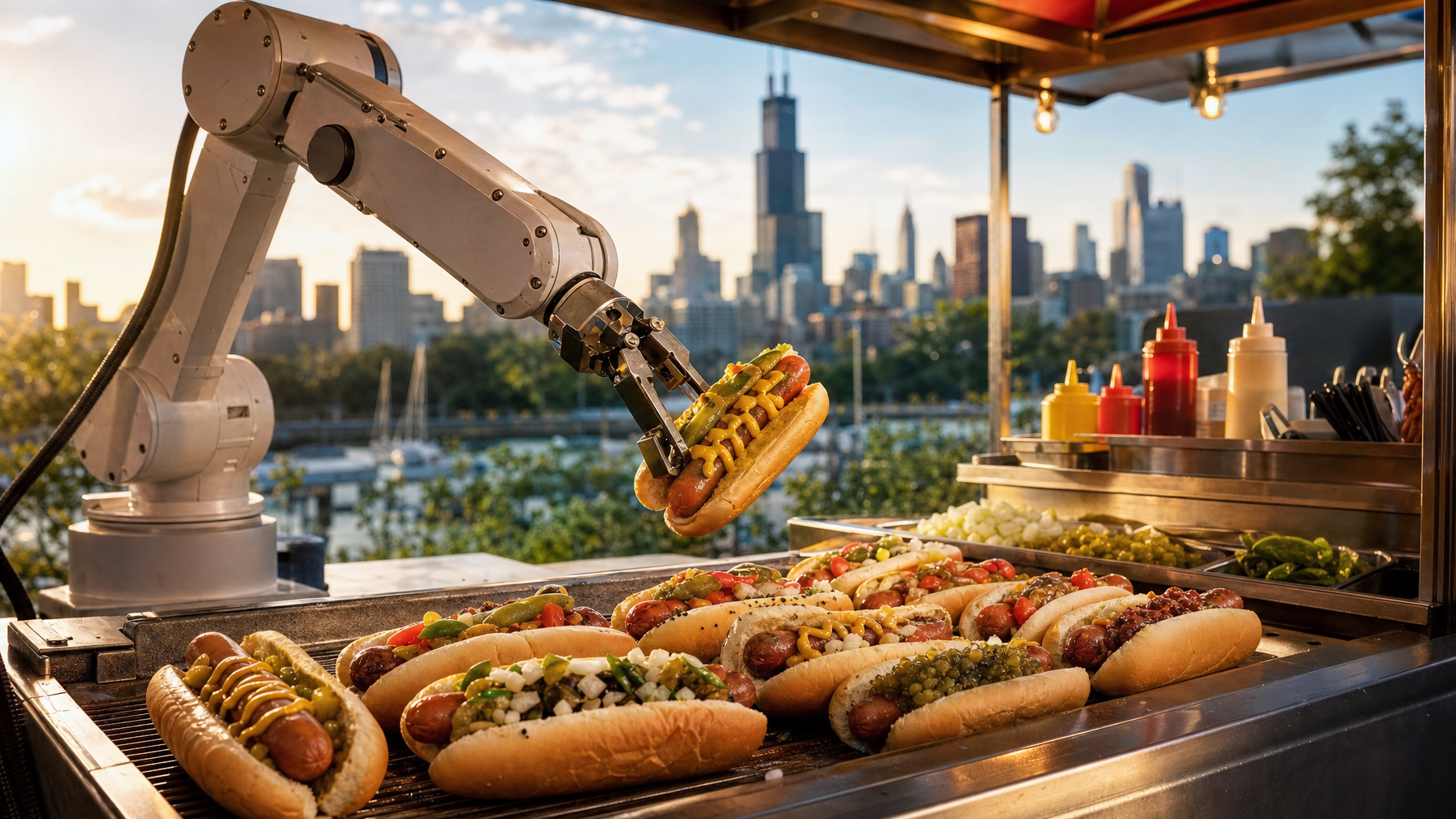
When a hot dog gets the AI treatment, it becomes a fascinating draft—not a dinner verdict. AI can remix toppings, invent recipe concepts, write menu copy, or imagine a wildly overbuilt dog, but it cannot taste the snap, judge the bun, or understand why ketchup is a deal-breaker for Jason. For hot-dog obsessives and food-culture readers, the useful question is not whether a machine can say “mustard.” It is whether its ideas survive contact with heat, hunger, and a real human mouth.
So what does “AI treatment” mean once the wiener enters the chat?
For a hot dog, AI treatment means using a generative tool to brainstorm, describe, visualize, compare, or develop an idea. It might produce topping combinations, a recipe draft, a punchy menu description, a photo concept, or an angle for a story about hot-dog culture.
That is creative assistance, not culinary proof. A generated dog is a proposal until someone buys the ingredients, cooks the sausage, steams or grills the bun, takes a bite, and decides whether it deserves a second one. The machine can arrange words like smoky, bright, and crunchy into a handsome little parade. It cannot tell you whether the pickles have turned the whole operation into a salty swamp.
The interesting part is the gap between an ingredient list and a dog worth seeking out. A worthwhile hot dog has context: a cooking method, a place, a bun, a portion, a mood, and often a firm opinion about what absolutely does not belong on it.
AI can dream up a dog before you open the mustard
Speed is the machine’s party trick. Give it a few boundaries and it can quickly suggest variations on a build, possible flavor directions, names, menu language, visual styling, or story ideas. That can be genuinely handy when a cook is stuck in the familiar mustard-onion-relish orbit and needs a respectful shove toward something else.
Constraints make the robot less boring
“Give me a delicious hot dog” is an invitation to receive vague food wallpaper. A better prompt supplies tensions the idea must resolve: cooking method, texture, heat level, acidity, ingredient limits, and a clear no-ketchup rule.
Draft three concept directions for a charcoal-grilled hot dog.
Use no ketchup. Build around char, acidity, gentle heat, and crunch.
Keep the topping load realistic for a standard bun.
Describe the role each component plays, but do not claim this is a traditional regional style.
That prompt can produce useful starting points because it asks for a balance rather than a pile. Char wants brightness. Rich sausage wants acid. Soft bun wants crunch. Heat needs a reason to be there beyond showing off in a tiny chef coat.
Still, a generated combination is a suggestion, not evidence that it works. It has not been cooked, and it has not earned the right to call itself a recipe.
The machine has never heard a bun squeak
AI can write convincingly about snap, char, steam, crunch, and pillowy softness. It does not experience any of them. That sensory gap is not a cute technical footnote; it is the whole ballgame.
Food judgment lives in details that are hard to infer from an ingredient list: whether the sausage is hot enough, whether the onions are fresh, whether the acidic topping overwhelms the meat, whether the bun is too dry, and whether the structure collapses halfway through bite one. A sauce may sound brilliant in prose while making the dog too sweet, too salty, too wet, or impossible to hold without a change of shirt.
Pretty copy can hide a terrible bite
Consider the difference between “a lavish cascade of savory toppings” and “a topping load that buries the sausage and turns the bun into a napkin.” Both can describe the same fictional creation. One is advertising fog; the other is criticism.
Jason’s stated perspective—ten years, 50 states, zero ketchup—is lived food research, not a prompt. It is accumulated comparison: what travels, what holds, what tastes balanced, and what is only loud because it has too many ingredients. No language model has stood at a counter, waited for a grilled dog, and reconsidered its life choices after a soggy first bite.
When AI starts inventing hot-dog evidence, put the relish jar down
AI can confidently generate fictional vendors, products, restaurant histories, availability claims, awards, and supposedly famous local traditions. Confidence is not verification. Sometimes it is merely nonsense in a nice blazer.
For food publishing, the rule should be blunt: every real place, purchasable product, current availability claim, and historical detail needs human verification before publication. A destination story needs a real, current destination. A product find needs a product that readers can actually obtain. News needs checkable reporting rather than a machine’s enthusiastic guess.
An image is not a receipt
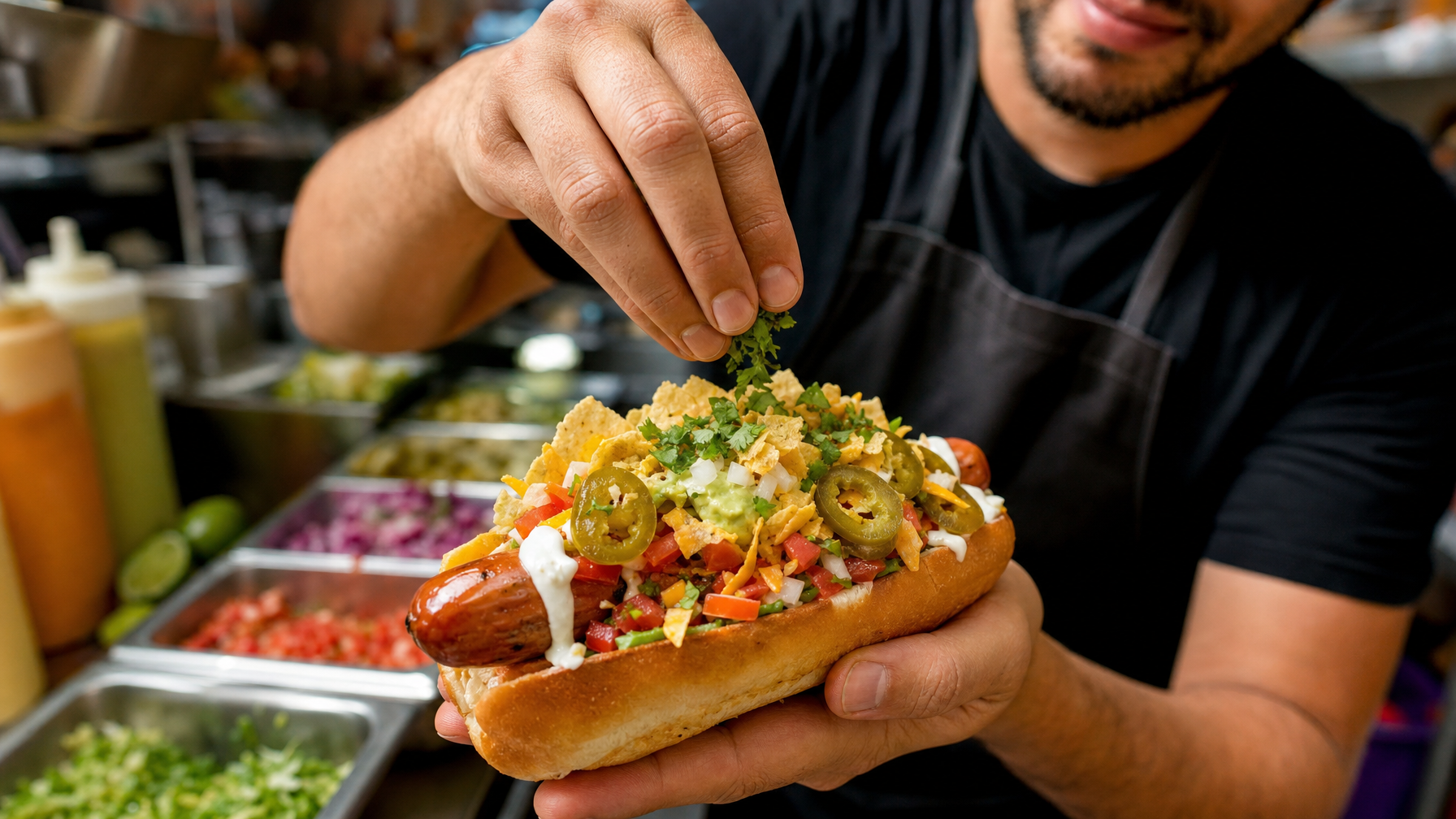
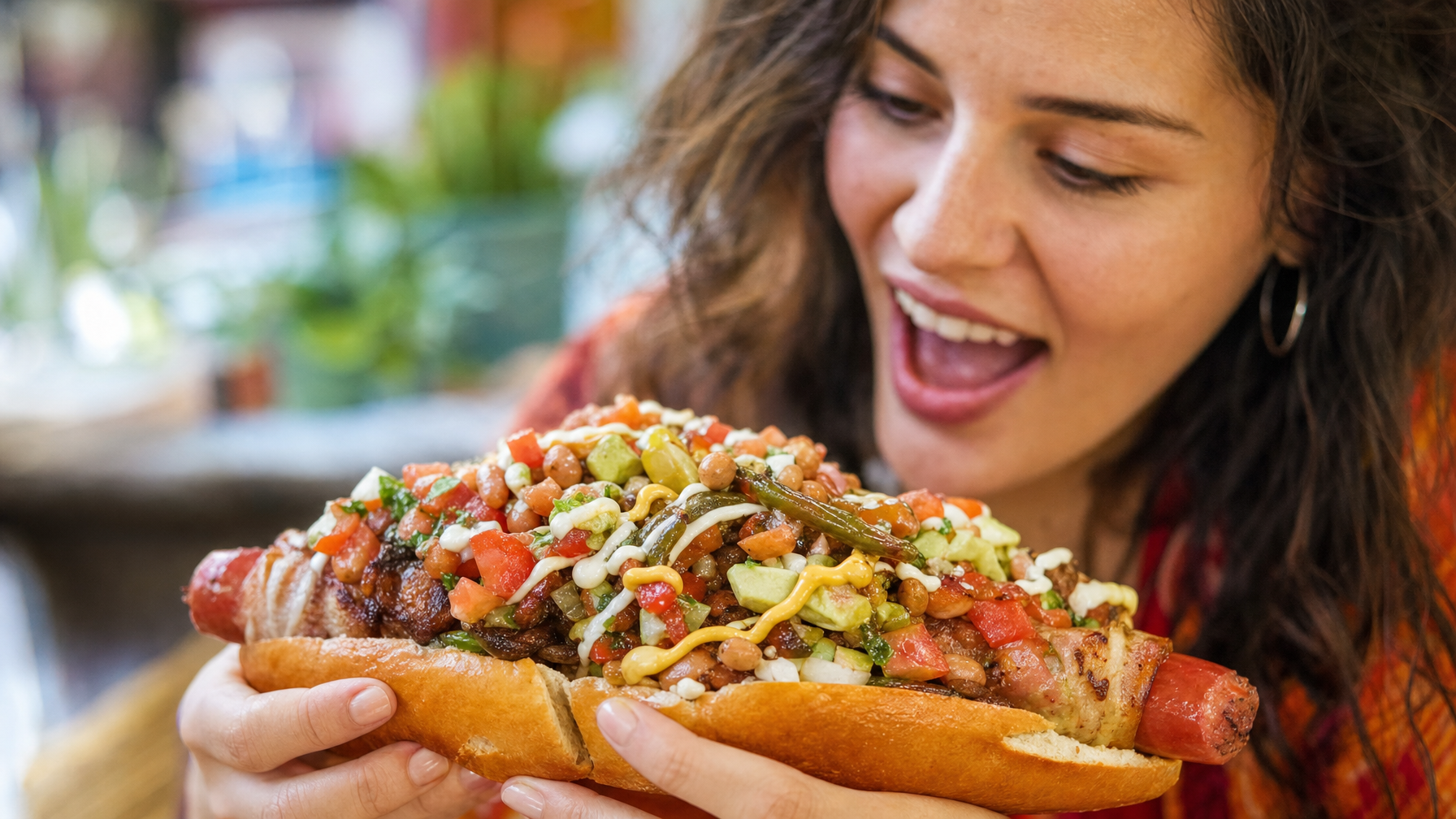
An AI-generated image can be an illustration or a concept. It is not proof that a hot dog exists, is sold somewhere, or arrives looking that way in real life. A glossy image of a towering sausage with perfect toppings may also be physically impossible to eat, which is a small problem for dinner and a huge problem for credibility.
Imaginative work deserves a plain label: concept, illustration, or untested draft. Calling make-believe food reporting is how a fun tool becomes digital gristle.
Let AI pitch, then make it defend the bun
The best use of AI is as the strange sous-chef with infinite suggestions, not the person signing off on dinner. Give it a tightly defined brief, collect a few concepts, and then force those concepts through a real-world test.
- Set boundaries: cooking method, flavor goal, ingredient limits, and any hard rules.
- Ask for several distinct concepts rather than one supposedly perfect dog.
- Discard suspicious claims, impossible proportions, and invented traditions before shopping begins.
- Make the strongest candidate with real ingredients.
- Taste it and revise based on what actually happened, not what the description promised.
- Record the changes. Those human edits are where a draft becomes food.
Questions that deserve more respect than the algorithm gets
- Does the bun hold up from first bite to last?
- Is there contrast in texture, or is every component soft and sad?
- Is the topping load reasonable for the sausage and bun?
- Does sauce support the meat, or bury it?
- Does the acid brighten the dog, or just pick a fight with everything?
- Would anyone make it again when the novelty wears off?
That final question is merciless and useful. Plenty of ideas are fun once. Very few deserve permanent residency on the grill.
What AI gets weirdly right—and spectacularly wrong
AI is good at variation. It can rapidly spin a familiar dog in several directions, suggest unusual pairings, draft concise descriptions, and generate names that may be either inspired or punishable by law. It is also useful for asking a cook to think about contrast: smoke against acid, creamy against crunchy, mild sausage against a controlled hit of heat.
Its repeat offenders are familiar: clichéd flavor combinations, vague claims about regional traditions, wildly overstuffed builds, ingredient quantities that ignore physics, and confident nonsense dressed as food knowledge.
| Concept type | What sounds promising | What a human must check |
|---|---|---|
| Promising draft | A charcoal-grilled dog with one crunchy element, one acidic element, and a restrained spicy condiment. | Whether the proportions preserve the sausage, and whether the bun stays intact. |
| Suspicious draft | A dog presented as a long-established local specialty with a highly specific backstory. | Whether that tradition, place, and history are real before repeating any of it. |
| Exciting-until-the-bun draft | A towering mix of wet slaws, sauces, fried toppings, and multiple heavy proteins. | Whether a person can physically eat it without structural collapse. |
These are concept categories, not tested recipes or reports of actual hot dogs. That distinction matters. The best machine-generated idea may be a tiny nudge that leads a cook somewhere surprising; the worst is an elaborate fantasy that mistakes excess for flavor.
The human still owns the first bite
AI is most useful as a creative provocation. Taste, context, sourcing, cultural accuracy, and editorial responsibility remain human jobs. No exceptions, even if the robot writes a very persuasive paragraph about fermented this-or-that.
That standard applies across hot-dog coverage. Recipes should be cooked, tasted, and adjusted. Destination pieces should feature real places. Product finds should point to items that are currently purchasable. News and social coverage should rest on checkable events, not generated confidence. A hot dog is not merely an ingredient list; it is a place, a habit, a memory, a bun, and occasionally a perfectly justified argument about ketchup.
Use AI to open doors. Then let a real person decide whether the dog should walk through one.
FAQ: five things to ask before giving the robot a relish jar
Can AI create a hot-dog recipe?
It can draft one. Before readers should trust it, a person needs to review the ingredients and quantities, cook it, taste it, and make adjustments based on the actual result.
Can AI tell me where to buy a hot dog?
It can suggest names or search directions, but those suggestions need independent verification. Confirm that a vendor or product is real, current, and actually available before making a trip or publishing a recommendation.
Can AI understand regional hot-dog styles?
It can summarize descriptions it has encountered, but regional food traditions require careful sourcing and specific context. They should not be treated as interchangeable prompts for tossing random toppings onto a bun.
Is an AI-generated hot-dog image showing a real product?
No. It may be an illustration or concept. A separate, verifiable source is needed to establish that a product exists, is sold somewhere, or looks that way in real life.
Should Jason use AI for hot-dog content?
Possibly, as a brainstorming tool. The final authority should remain firsthand research, checked facts, and an actual bite—not a chatbot wearing a tiny paper hat.
Enjoyed this? There's more from Jason's Grub.
Follow on Instagram →