When a Mascot Eats the Dog, the Internet Notices
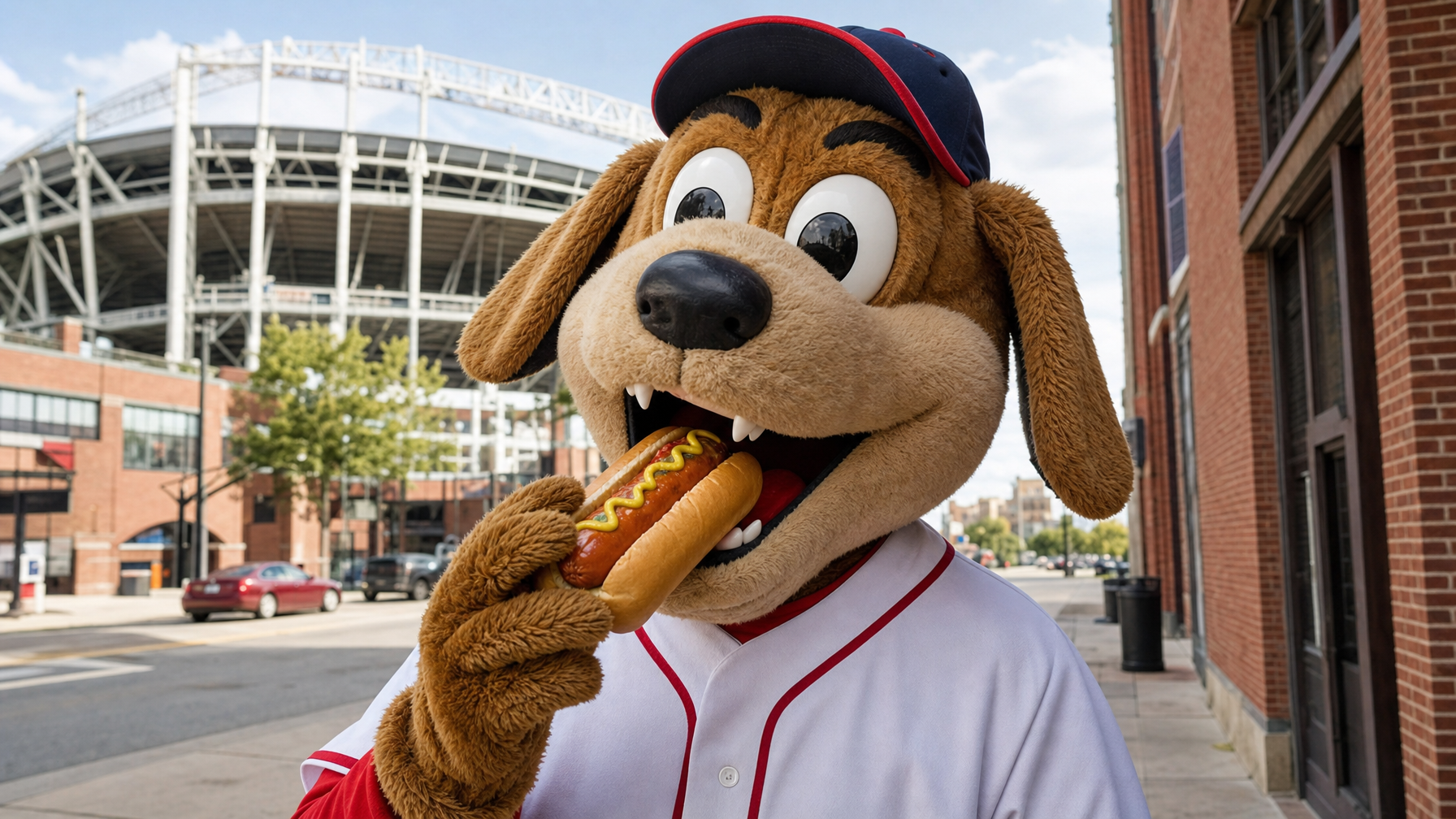
A mascot eating a hot dog gets noticed because it turns a familiar food into tiny, instantly readable theater: the brand character becomes the customer, the joke lands before the caption loads, and the whole scene looks made for a group chat. This is for hot-dog fans and food-culture readers who want to understand the appeal without declaring every foam-headed bite a historic event. Sometimes it is just a big costume having lunch. That is plenty weird enough.
When the pitchman suddenly wants lunch
Mascots usually point, wave, dance badly on purpose, or otherwise promote a team, venue, place, or product. Give that character a hot dog, though, and the direction of the sales pitch flips. The mascot is no longer merely saying, “Look at this.” It appears to be saying, “I would absolutely destroy this.”
Call this a self-consuming endorsement: not a scientific term, not a marketing doctrine carved into a stadium wall, but a useful editorial description. The character associated with an institution is visibly showing appetite for the thing in its giant paws. It is an endorsement with mustard on its chin, metaphorically speaking. Foam heads are not known for chin management.
That reversal is especially effective with a hot dog because a hot dog is already a public-food object. It belongs at ballparks, street corners, cookouts, boardwalks, and anywhere someone has made the brave decision to eat while standing. The mascot becomes less like a logo and more like an enthusiastic customer in line ahead of you.
One giant foam head, one snack nobody needs explained
The visual works at speed. Viewers recognize a mascot. Viewers recognize a hot dog. Viewers recognize an oversized bite—or the attempt at one. No backstory, diagram, or caption written by a committee is required.
That simplicity separates the gag from brand posts that arrive carrying homework. A complicated promotion may need a caption to explain the partnership, the contest rules, the limited-time offer, and the alarming number of hashtags. A mascot holding a hot dog needs none of that. Character. Dog. Chomp. Brain receives the file.
The comedy comes from the mismatch between an ordinary human act and an aggressively non-ordinary body. Everyone eats; not everyone eats while wearing giant paws, an oversized head, and a facial expression permanently frozen somewhere between delight and tax confusion. The familiar action makes the costume’s absurdity louder.
Is that bite a review, a bit, or a performer trying not to pass out?
A single photo or short clip can support several readings:
- Genuine enjoyment: the performer may simply be eating something they like.
- Scripted promotion: the moment may be arranged to put a concession item, restaurant, or event in frame.
- Self-parody: the mascot may be playing up its own ridiculousness, which is usually the job description.
- A candid break: someone may have caught an ordinary snack moment that became funnier because of the costume.
What viewers cannot know from one image is the performer’s intent, the food’s quality, or whether the bite was even possible through the costume. A mascot holding a dog is not a professional review. It is a visual event. Those are different animals, even if one of them is dressed as a bear.
Before an editor turns such a moment into a reported story, the boringly important questions should be answered:
- Who is the mascot?
- What event or venue is shown?
- When was the image or video made and posted?
- Where did the hot dog come from, if that can be established?
- Who posted it first?
- Is the account official, or is the post a repost, fan upload, or context-free scrap of internet confetti?
That checklist does not kill the joke. It keeps the joke from wandering into fiction wearing a press pass.
Food with a face attached: unfairly excellent internet bait
In opinion terms, mascot-and-hot-dog images are shareable-looking because they combine three easy ingredients: recognizable food, exaggerated character design, and a moment that still makes sense after it is stripped from its original context. Someone who has never attended the game, visited the venue, or met the mascot can still understand the picture immediately.
That is not proof that every such post travels widely. “Viral” is a claim that needs evidence: a specific post, a date, an identifiable source, and a reason to use the word. Without those, the more honest observation is simpler: this sort of image has the visual machinery people often pass around.
Would the same bite be funny if the mascot were eating a salad?
Less funny. Not impossible—there are surely spectacular salads out there—but less funny.
A hot dog is compact, handheld, slightly unruly, and culturally loaded with stadiums, cookouts, fairs, and late-night bad decisions that somehow become excellent decisions. It has a visible bun, a familiar silhouette, and toppings that can threaten costume integrity. Salad asks the mascot to negotiate a fork. A hot dog asks the mascot to commit to a bit.
This is not a culinary verdict against lettuce. It is a verdict in favor of props with built-in slapstick potential.
No ketchup, no courtroom drama—just show your work
Jason’s standing position is clear: ten years, 50 states, zero ketchup. But a mascot-food moment is not automatically a topping trial, and nobody needs to summon a tiny jury because a red bottle may or may not be somewhere outside the frame.
The useful hot-dog questions are more specific, and they require evidence:
- Is the dog grilled, steamed, griddled, or impossible to tell?
- Can we see the bun, or is it hidden by a giant paw?
- Are the toppings identifiable, or are they merely colorful rumors?
- Is the food being celebrated, spoofed, or used as a stage prop?
- Does the post identify a vendor or product, or would naming one be guesswork?
Do not invent the team, city, vendor, product, or condiment lineup to make the story feel fuller. A blurry photo is not permission to write fan fiction about relish.
Turn the funny frame into a story worth chewing on
A good mascot-and-hot-dog story has a modest but satisfying arc. First, report the verifiable moment. Then explain the visual reversal: the public symbol becomes the hungry customer. Next, notice any real cultural details that are actually visible or documented—the setting, the food source, the event, the local ritual. Finally, leave room for readers to call it charming, cursed, or the rare achievement that is both.
The best version does not pretend the costume is more important than the dog. It uses the costume to make people curious about the dog: where it came from, how it was made, and whether it looks worth seeking out when the foam head has gone back to its locker.
What we can confirm before calling it a story
This article does not document a particular mascot image or clip. For any future reported example, these details should be established before publication rather than guessed:
| Detail | What should be confirmed |
|---|---|
| Source | The original account, photographer, or organizer that posted the material |
| Date | When the image or clip was created or published |
| Location | The actual venue, city, or event—not a vibe-based guess |
| Mascot identity | The character’s name and affiliated organization, if publicly identified |
| Food details | The vendor, product, preparation, and toppings only when visible or documented |
Jason’s opinion: a mascot food moment earns its keep when it makes you hungry for the hot dog, not merely impressed that a giant squirrel can hold one.
Keep your eyes on the deliciously strange evidence
For more hot-dog places, purchasable finds, recipes, and culture oddities, follow @jasonsgrub on Instagram. Bring curiosity. Leave the invented backstory at home.
Frequently asked questions from the condiment bench
Does a mascot eating a hot dog mean the mascot endorses that specific hot dog?
Not necessarily. It may be a promotion, a joke, a candid meal break, or a prop-driven photo. Confirm the source and context before treating it as a product endorsement.
Can you call a mascot-food post viral?
Only when there is verifiable evidence tied to a specific post or event. Otherwise, “shareable-looking” is a fairer description of a visually simple, funny image.
What makes a hot dog funnier than other mascot foods?
The handheld shape, visible bun, possible topping chaos, and strong connection to public eating all help. A hot dog reads quickly and gives a giant-costumed character a naturally comic object to wrestle with.
Should the topping details be identified from a photo?
Only if they are genuinely visible or documented by a reliable source. If the image is unclear, say they are unclear. Mystery condiment is not a reporting category.
Enjoyed this? There's more from Jason's Grub.
Follow on Instagram →