Mustard, Relish, Celery Salt: When Does a Chicago Dog Become a Salad?
A Chicago dog does not become a salad merely because it has mustard, relish, onions, tomato, pickle, peppers, and celery salt. It becomes salad-adjacent when the toppings mug the frank, the bun turns into decorative upholstery, and nobody can identify the main event. This is for hot-dog obsessives and food-culture readers who want a sharp way to call that boundary—without slapping a nutrition label or a court ruling onto a beloved regional dog.
The Chicago Dog Arrives Dressed Like It Has Somewhere to Be
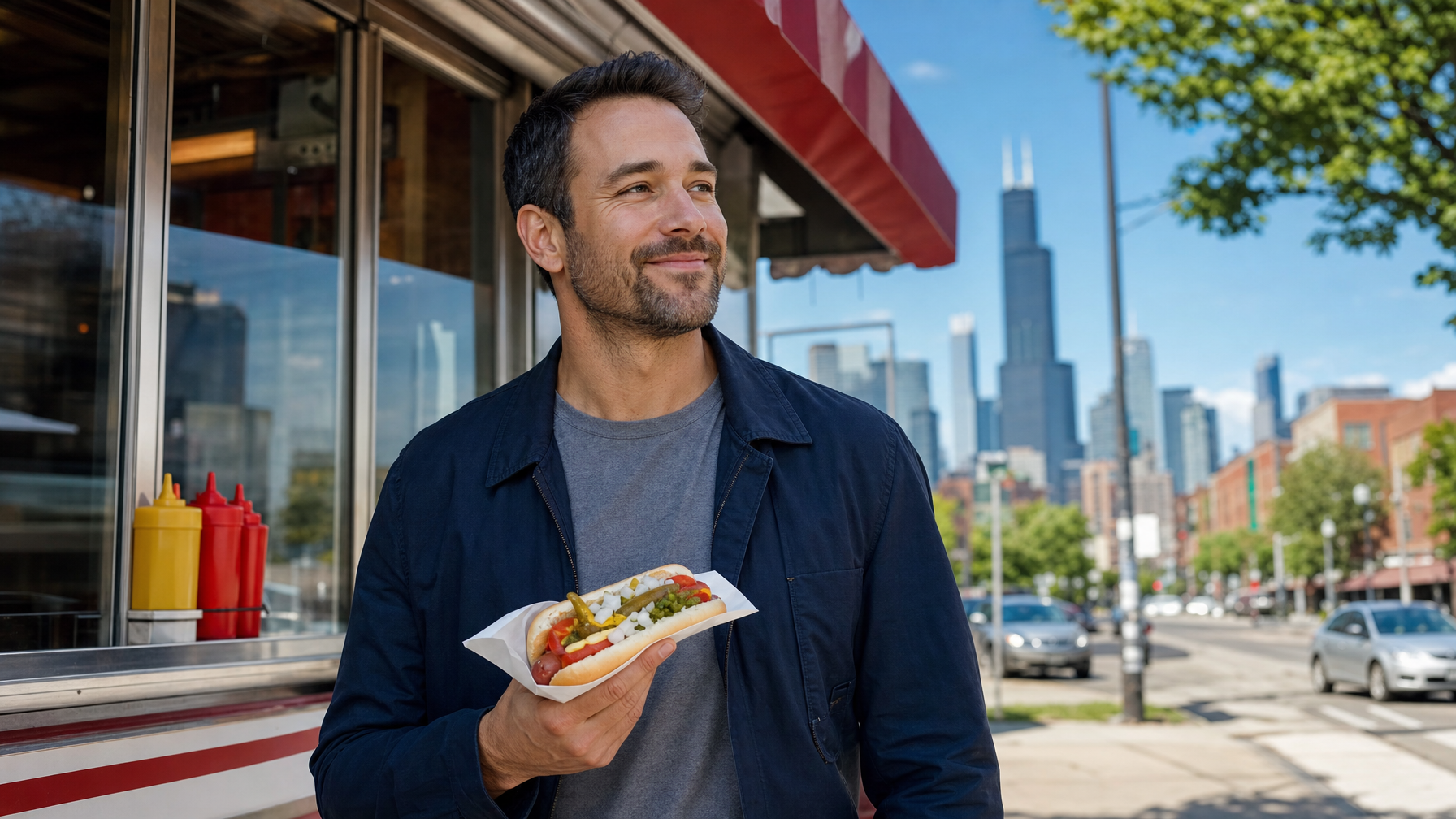
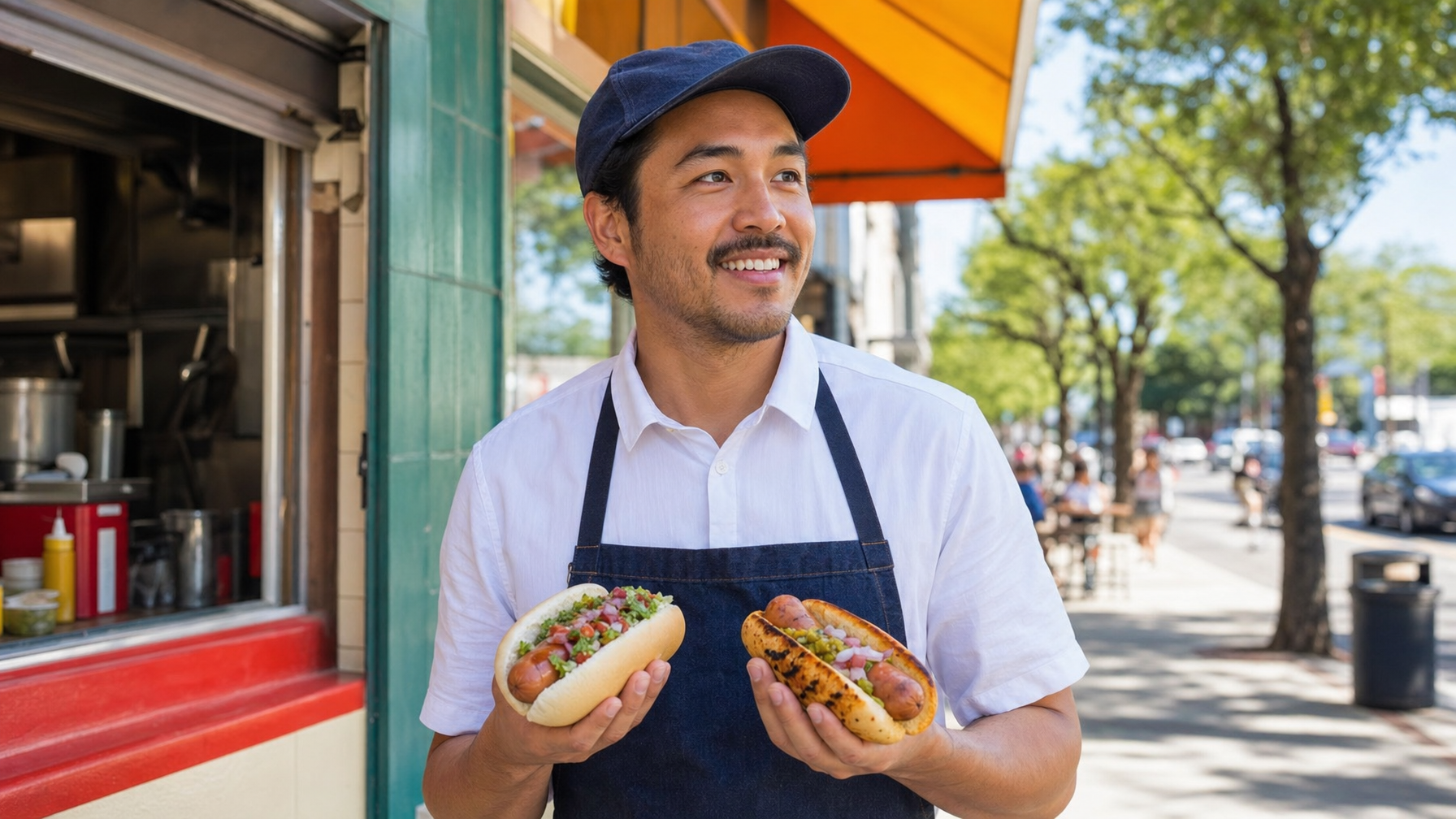
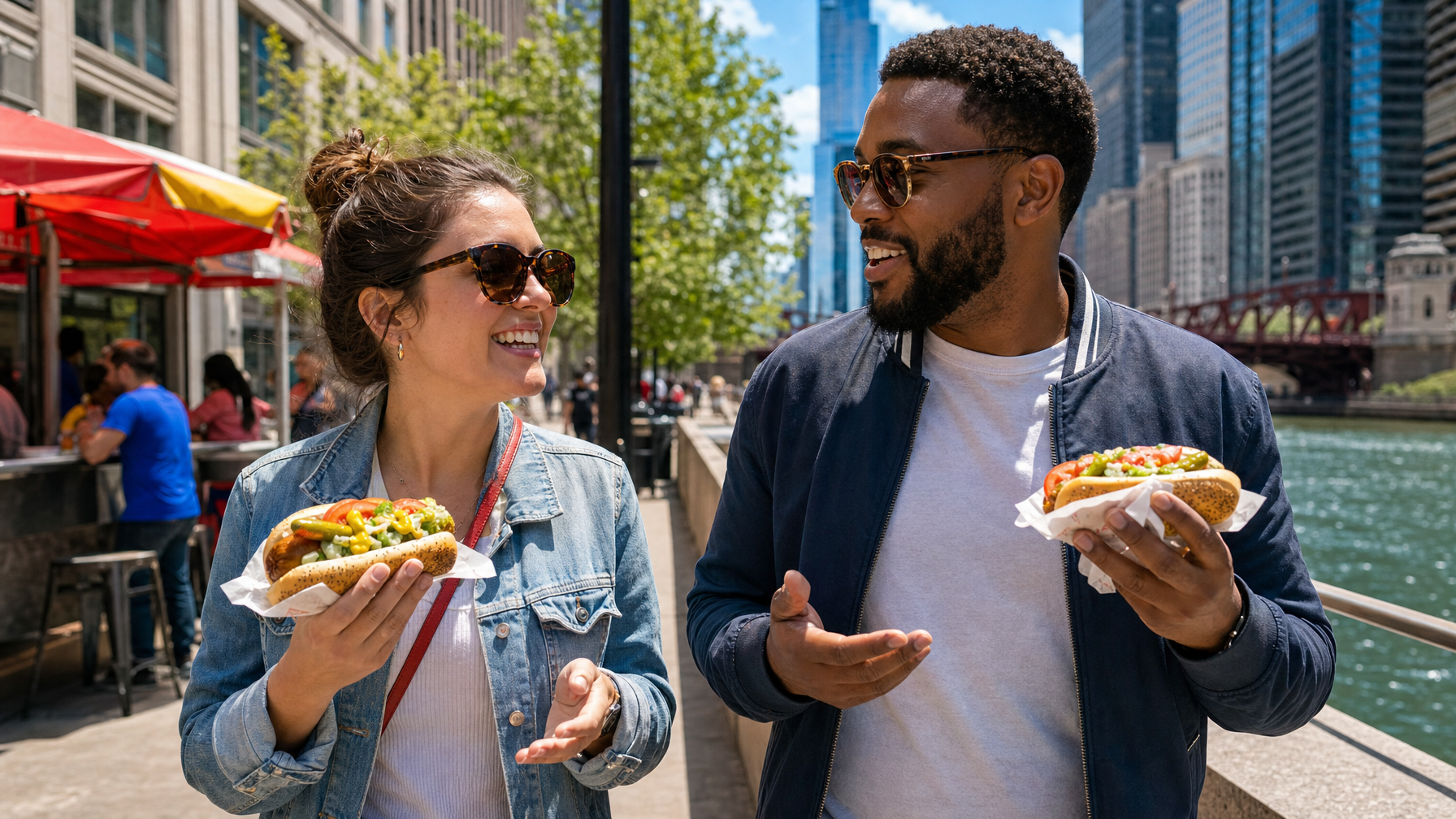
A properly balanced Chicago dog is still, gloriously, a hot dog: frank, bun, and toppings operating as one deliberate, unruly bite. It is not a bare sausage wearing a timid squiggle of mustard. It shows up with mustard, bright relish, onion, tomato, a pickle spear, sport peppers, and celery salt. That is a lot of company, yes. But a crowded guest list is not the same thing as a coup.
Ketchup is not a topping recommendation here. It is a forbidden topic wearing a red disguise. Jason’s Grub has a stated position after ten years, 50 states, and zero ketchup: leave it off. That is Jason’s hot-dog worldview, not an attempt to deputize a condiment police force for every diner on Earth.
More importantly, this is about culinary identity and balance, not a legal definition stamped on every Chicago-style dog. Vendors and diners can vary the details. The useful question is simpler: does the whole construction still read as a hot dog?
The Frankfurter Is the Main Character, Not a Supporting Vegetable
First test: can you taste the frank beneath the toppings? If the answer is yes, the dog is still hot-dog-first. If the lasting impression is mostly wet tomato, cold pickle, chopped onion, and a confused bun, the sausage has been demoted in its own movie.
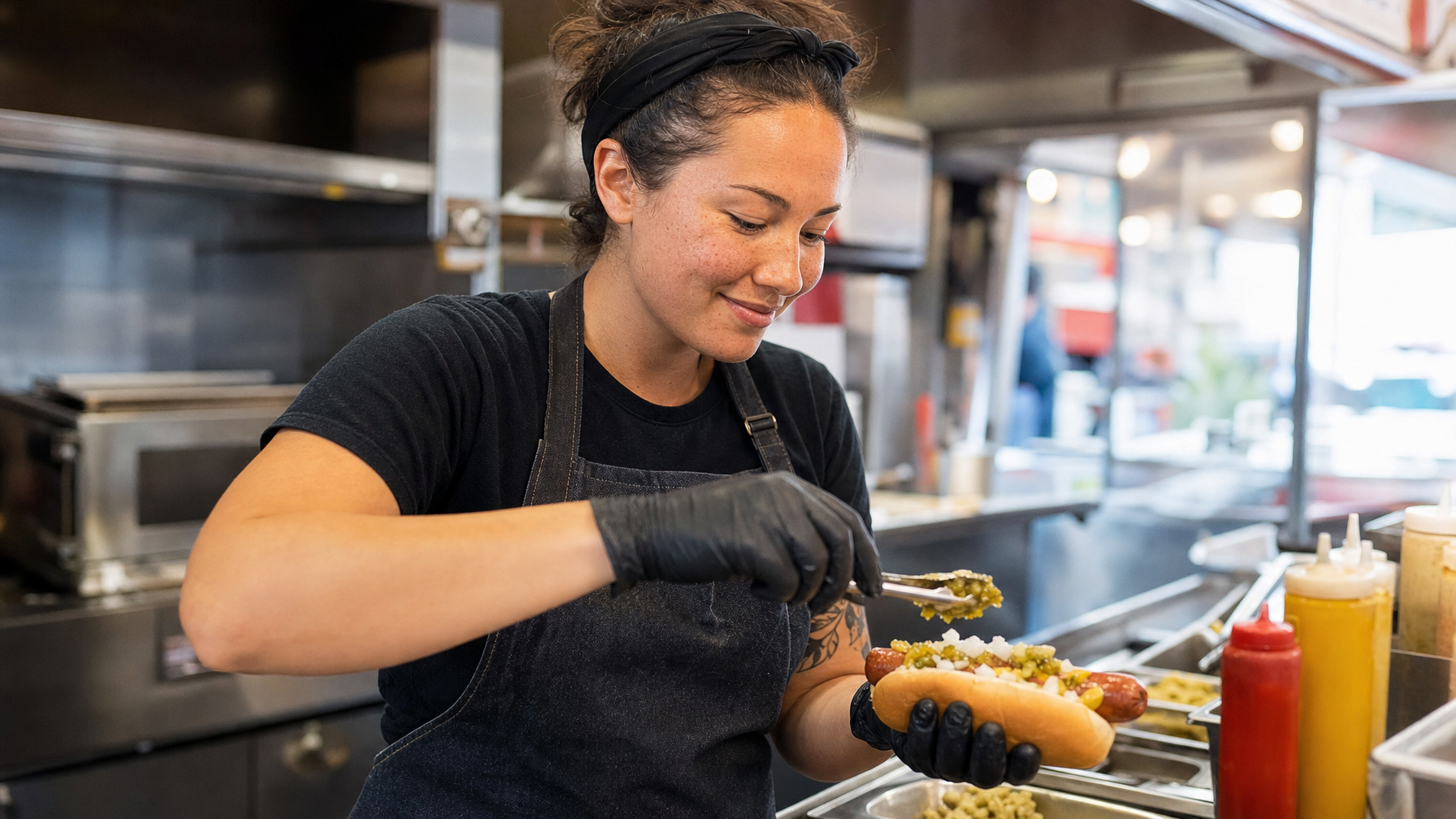
Chicago-style toppings earn their keep by providing contrast:
- Mustard brings sharpness.
- Relish brings sweetness and a vivid little jolt.
- Onion brings bite.
- Tomato brings juiciness.
- Pickle brings acid and crunch.
- Sport peppers bring heat.
- Celery salt adds a savory, herbal finish.
None of those jobs is “erase the sausage.” Take one full bite and ask what lingers after the crunch settles down. The frank should remain audible in the flavor conversation. Toppings are the brass section; they should not throw the conductor into the river.
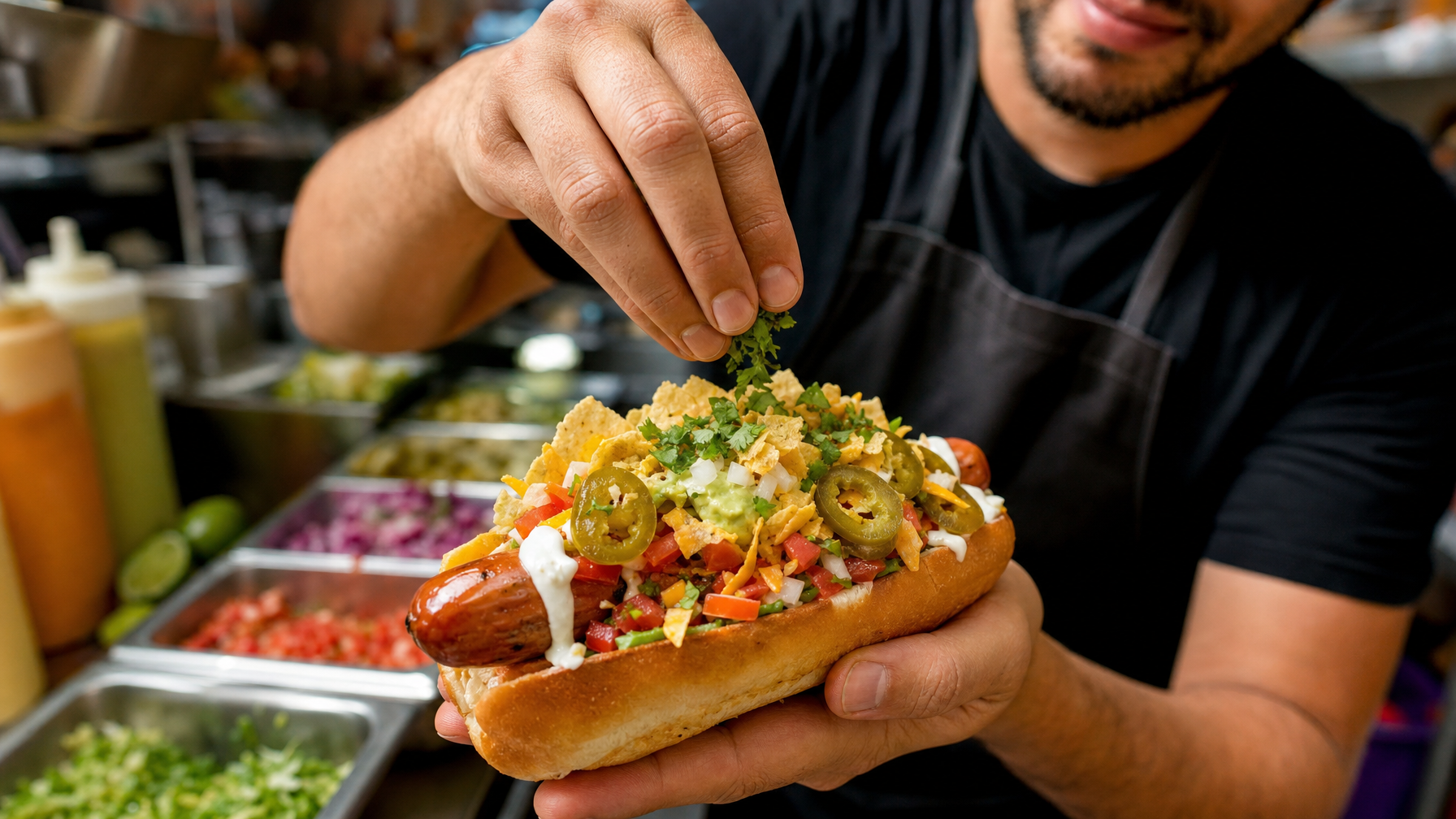
A dog buried under a produce department has crossed from generosity into theatrical costume.
Celery Salt Is the Tiny Bouncer at the Door
Celery salt does not make a Chicago dog a salad. It is seasoning, not acreage. Used with restraint, it brings a concentrated salty, herbal note that links the rich frank to the tangy, sweet, crunchy parts piled around it. Tiny grains, big attitude.
This is where counting toppings leads people astray. Seven toppings can make perfect sense when each is proportionate and each bite remains coherent. One enormous mound of chopped additions can make a mess even if the ingredient list is short. Intensity, proportion, and bite structure matter more than arithmetic.
From Jason’s no-nonsense hot-dog perspective, a dusting of celery salt is a finishing move. A mountain of leafy or chopped additions changes the eating experience altogether. One is an accent. The other is a landscaping project.
The Bun-to-Topping Treaty: Nobody Wins When the Bun Gives Up
The bun has a job. It should hold the frank and its entourage together, provide softness and structure, and deliver a portable bite. When it becomes a soggy plate with a hinge, negotiations have failed.
The salad threshold is a sliding scale, not a precise border drawn with a condiment packet. A dog begins to feel salad-like when toppings dominate its volume, texture, and visual identity. You look down and see a chopped arrangement with a sausage-shaped rumor somewhere underneath.
Warning signs that the toppings have staged a takeover
- You need a fork and knife before you have made it through the first few bites.
- Toppings spill in every direction before the dog reaches your mouth.
- A normal bite contains more tomato and pickle than frank.
- The bun contributes almost nothing except emergency containment.
- You are mentally assembling a salad rather than eating a handheld dog.
Portability is not a trivial detail. A hot dog is built for one-bite cohesion: bread, sausage, and toppings arriving together. If the meal requires flatware, strategy, and a cleanup crew, it may still be delicious. It is just wandering away from hot-dog territory.
Tomato, Pickle, and Pepper: Freshness Without a Produce Coup
Chicago-style toppings are not there to make the dog virtuous. They make it lively. Tomato offers cool juiciness; pickle brings briny acid and snap; peppers wake things up; onion adds a sharp crunch; relish supplies sweetness; mustard keeps the whole thing from getting too polite.
That mix can feel fresh and layered while remaining unmistakably a hot dog. The trick is not reducing vegetables—it is keeping them in proportion to the frank and bun. Vegetables are welcome guests, but they do not get to evict the sausage.
Exact choices and portions can vary from vendor to vendor and diner to diner. That variation is part of the fun, not a defect in the paperwork. A Chicago-style dog should not need identical assembly to preserve its identity; it needs a coherent bite that lets the sausage remain the center of gravity.
The Hot-Dog Salad Border Patrol Has Four Questions
“Hot-dog salad” is a humorous description, not a formal culinary classification. Still, it is useful shorthand when a topping situation has gone fully off the rails. Run this quick field test on any overloaded dog you meet in the wild.
- Can I clearly taste the frank? If not, the toppings are driving the bus.
- Does the bun still matter? It should add structure and be part of the bite, not merely hold the evidence.
- Can I eat it as a hot dog? A little spill is life. Fork-and-knife dependence is a warning flare.
- Do the toppings support the bite rather than replace it? Contrast is good. Replacement is a different meal.
Three verdicts worth keeping in your pocket
| Category | What it looks like | What it means |
|---|---|---|
| Classic Chicago dog | The frank, bun, and traditional-style toppings arrive in balance. | Busy, bright, handheld, and still sausage-led. |
| Overloaded Chicago-style dog | The ingredients may be familiar, but the proportions are getting unruly. | Still potentially a hot dog, though the bun is sweating. |
| Hot-dog salad in spirit | Toppings dominate the volume, texture, and experience. | A playful red flag: the frank has become a warm handle for a chopped pile. |
Use the test for real dogs you encounter. No tribunal required. Just pay attention to the bite, because the bite tells on everybody.
No Ketchup, No Apologies, No Vegetable Amnesty
Jason’s Grub is firmly, cheerfully, explicitly zero ketchup. That is brand opinion, not a universal commandment for people who enjoy making their own lunch decisions. No ketchup does not automatically save a dog from salad territory, and vegetables do not automatically push it there.
The real argument is proportion and identity. A Chicago dog gets its charm from rules, rituals, local arguments, strange little details, and the fact that people care enough to argue about celery salt with suspicious sincerity. Regional hot dogs are not interesting because they are neat. They are interesting because they are specific.
Keep the frank loud, keep the bun employed, let the toppings bring their full weird little orchestra, and do not ask ketchup to testify.
Follow @jasonsgrub on Instagram for more hot-dog places, products, recipes, and culture coverage.
FAQ: Four Questions from the Condiment Jury
Is a Chicago dog technically a salad?
No. Here, “salad” is a playful comparison for a dog whose toppings overwhelm the frank, bun, and cohesive hot-dog bite.
Does celery salt make a Chicago dog taste like vegetables?
It adds a savory, herbal, salty accent. Whether it supports the frank or disappears into a pile depends on the amount used and the balance of the other toppings.
How many toppings are too many?
There is no universal number. Ask whether the toppings still leave the frank and bun clearly present in every bite. A crowded dog can be beautifully balanced; a smaller pile can still be a structural disaster.
Is ketchup allowed on a Chicago dog?
Jason’s Grub takes an explicit zero-ketchup position. Readers can make their own choices, but this brand is not forming a ketchup defense committee.
What should I look for when judging one in the wild?
Check flavor balance, topping proportion, bun integrity, and whether the frank remains the star instead of becoming a warm handle for a chopped salad.
Enjoyed this? There's more from Jason's Grub.
Follow on Instagram →