What Happens When You Treat the Hot Dog Like a Taco?
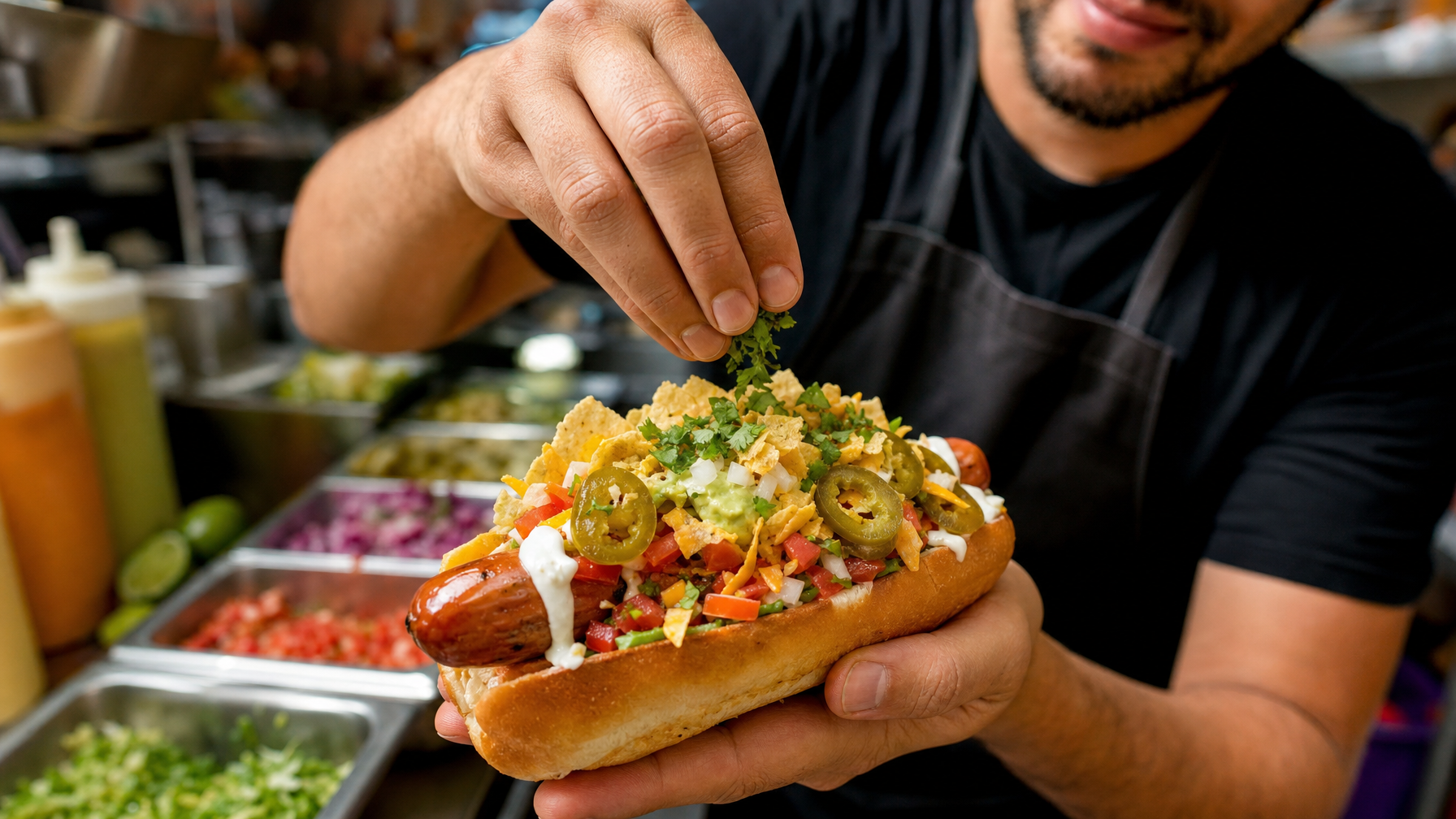
Treating a hot dog like a taco turns the bun into a tortilla-style delivery system: keep the sausage as the anchor, then add contrasting fillings, a sharp sauce, and enough structure to prevent a delicious landslide. This is for hot-dog obsessives and food-culture readers who want a specific build, not another sad pile of toppings. Jason’s ten-years-in-50-states, zero-ketchup perspective keeps the experiment pointed in the right direction: toward the sausage, not away from it.
What happens when the bun starts thinking like a tortilla?
A taco-inspired hot dog is not a regular dog with salsa dumped on its head and a prayer whispered over the napkins. It borrows taco logic: one central protein, a handheld carrier, a few intentional contrasts, and just enough glorious mess to make eating it interesting.
Both tacos and hot dogs thrive on the same basic machinery. You need a savory anchor, something soft or crisp to hold it, fresh elements for lift, creamy or acidic elements for contrast, and a level of mess that stays charming instead of becoming laundry. The difference is non-negotiable: the sausage remains the main event.
Jason’s rule: if the toppings bury the hot dog, the dog has been demoted to furniture. A colorful, loaded build is welcome. A sausage-shaped excuse for a taco salad is not.
First decision: crunchy shell, soft tortilla, or bun with taco ambitions?
Your carrier decides whether this is a clever hybrid or a lap-based emergency. There are three sensible directions, each with a different personality.
| Carrier | What it does well | Watch out for |
|---|---|---|
| Standard split bun | Keeps the experience unmistakably hot-dog-first; works beautifully with restrained, crisp toppings. | Can surrender quickly to wet salsa, loose beans, or an overexcited sauce bottle. |
| Toasted bun | Adds structure and a little crunch; better for heavier fillings and creamier sauces. | Toast it enough to strengthen it, not enough to turn it into edible drywall. |
| Tortilla-style wrap | Leans furthest into taco territory and handles folded fillings differently from a split bun. | Changes the eating experience dramatically; the hot dog can start feeling like a guest at its own party. |
Soft carriers like a standard bun benefit from crisp cabbage, onion, herbs, or tortilla strips because those ingredients provide the texture the bread lacks. A toasted bun can handle a sturdier base and a wetter finish, provided you do not treat it like a drainage ditch.
Before serving, perform the pickup test. Lift the assembled dog with one hand. Does the carrier bend naturally? Fine. Does it split down the middle? Adjust. Does sauce squirt out sideways like it has a personal grudge? You have learned something valuable before it learned it on your shirt.
The filling lineup: build a taco, not a toppings traffic jam
Do not confuse abundance with architecture. A good taco-style dog needs ingredients with jobs. Pick one from each lane, then stop before the bun applies for workers’ compensation.
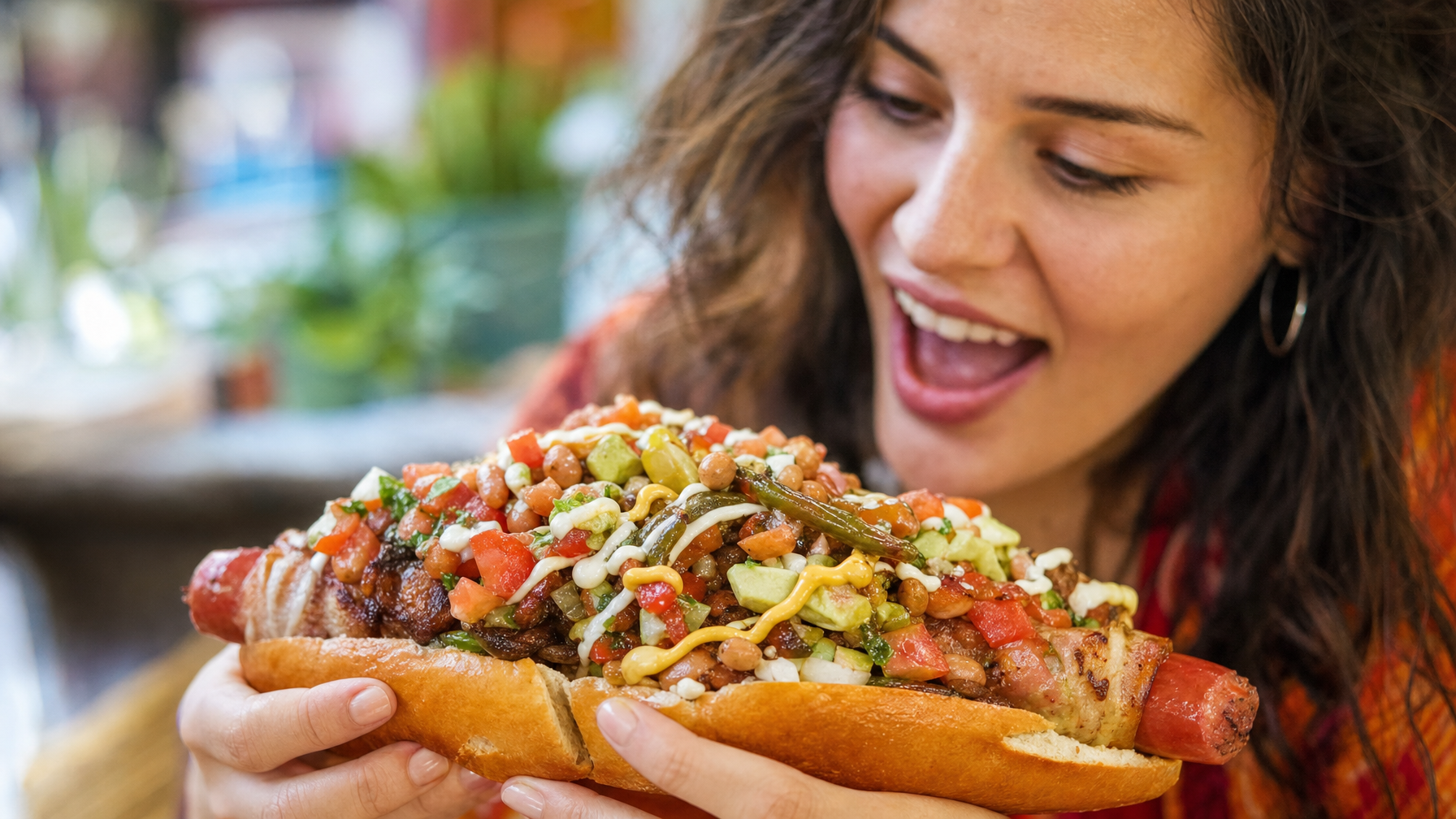
- One substantial element: seasoned beans, corn, or another filling that adds body without hiding the sausage.
- One fresh element: chopped onion, herbs, or another bright, raw note.
- One crunchy element: shredded cabbage, tortilla strips, or another crisp component added near the end.
- One sauce or acidic element: lime-forward crema, salsa, or another sharp condiment used with restraint.
Every addition should earn its spot by changing flavor, texture, or temperature. Beans can make a leaner dog feel more substantial. Corn adds sweetness and pop. Cabbage provides snap. Lime brings a needed jolt of brightness. Two creamy sauces that taste broadly similar? That is not layering; that is paperwork.
And ketchup? Jason’s position is plain: zero ketchup. That is a brand opinion, not a law enforced by a condiment tribunal. But this build has plenty of louder, sharper options—salsa, a lime-forward sauce, pickled elements, or a peppery crema—without bringing tomato sugar into a conversation where it has little to say.
Season the sausage without making it wear a sombrero
This is a playful fusion build, not a claim to traditional Mexican cuisine. The goal is taco-inspired flavor structure around a hot dog, not costume-party seasoning that erases every recognizable thing about the sausage.
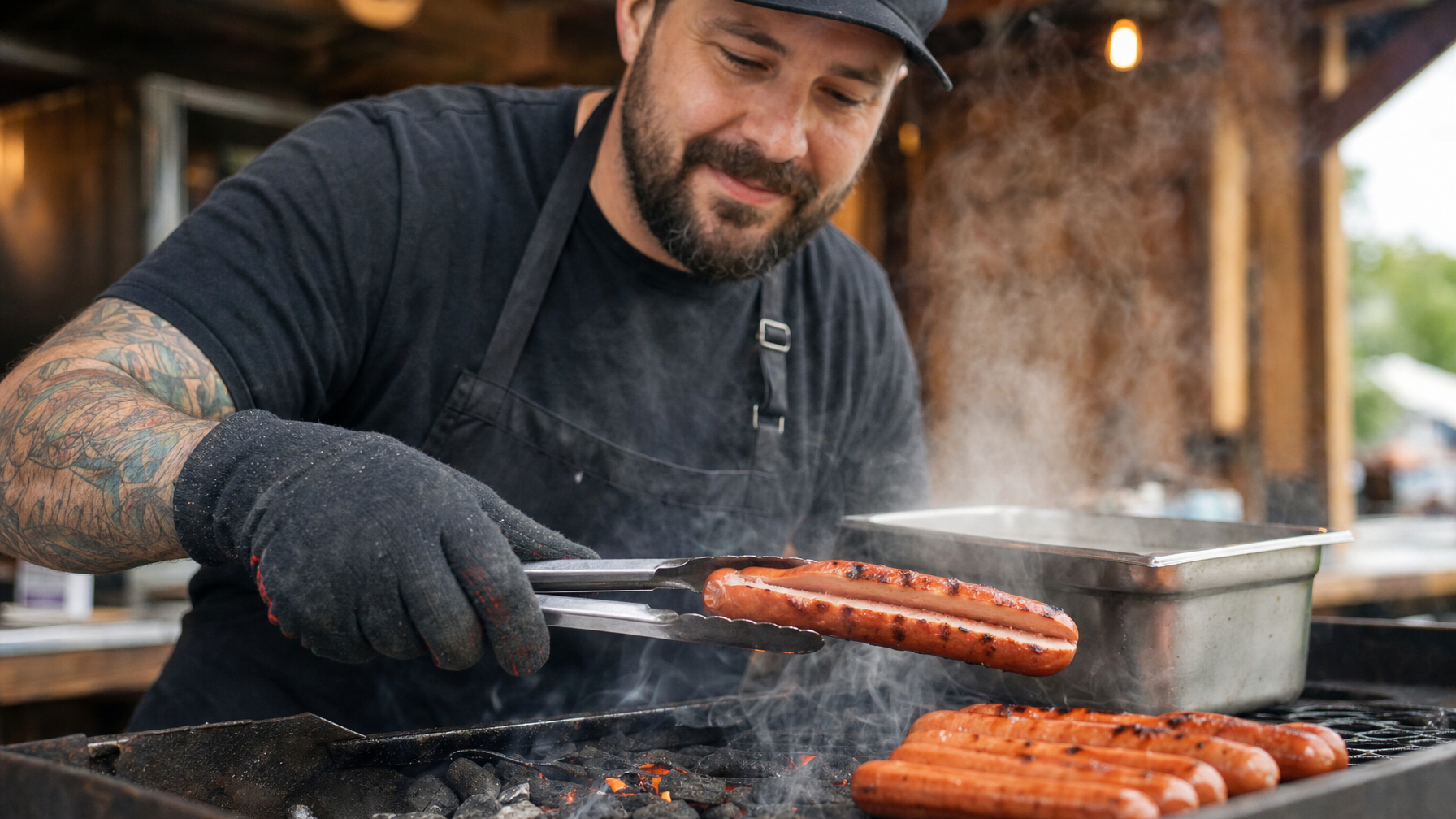
Start with cooking technique. A charred or griddled sausage develops savory depth on its own, which means it needs less help from a blizzard of spices. Put most of the seasoning energy into the surrounding toppings: beans can be seasoned, corn can be cooked with aromatics, and a sauce can bring heat or tang.
Finish with ingredients that wake up the bite rather than bury it. Lime, chopped herbs, crisp onion, and a bright salsa can make a rich sausage feel lively. The sausage should taste more like itself after meeting the toppings—not like it has disappeared under a novelty hat.
Assembly order is the difference between dinner and a lap emergency
Build in layers, because gravity remains undefeated.
- Toast the bun or warm the tortilla-style carrier.
- Add a thin moisture barrier or sturdy base, such as a restrained layer of beans or a small amount of crema.
- Set in the cooked sausage.
- Add the substantial topping, keeping the amount modest enough to preserve the sausage’s visibility.
- Finish with fresh and crunchy ingredients.
- Drizzle or spoon on sauce sparingly.
Wet ingredients should not sit directly against a delicate bun for long. That is how a promising handheld meal turns into a sponge with ambitions. Place heavier elements low, keep loose salsa measured, and save fragile crunch for the finish.
The finished dog should look deliberate: sausage visible, toppings arranged instead of avalanche-prone, sauce accenting the build rather than flooding it. Serve immediately. Crunch fades, buns soften, and nobody has ever said, “Please let this sit for twelve more minutes so it can become emotionally complicated.”
Three taco moods, because one hot dog cannot carry the whole fiesta
Bright-and-fresh: let lime do the heavy lifting
Flavor logic: use a tangy, fresh direction built around lime-forward crema or salsa, chopped onion, herbs, and a modest substantial element such as corn or beans.
Texture target: juicy sausage against crisp onion or cabbage, with enough freshness to keep the richness moving.
Best carrier: a standard split bun or lightly toasted bun. Keep the wet ingredients disciplined.
Smoky-and-savory: char meets a sturdier base
Flavor logic: give the sausage a good char or griddle sear, then pair it with a savory bean-based element, a measured smoky sauce, and something acidic to prevent a brown-on-brown nap.
Texture target: substantial and warm, with a bright finishing note to keep the bite from getting too heavy.
Best carrier: a toasted bun, because this version asks more of the structure.
Crunchy street-snack: loud texture, quiet sauce
Flavor logic: lean on cabbage, tortilla strips, chopped onion, and a sharp salsa or lime-based finish. The sausage still leads; the crunch is the backup band.
Texture target: soft bun, snappy sausage, unmistakable crunch.
Best carrier: a soft bun for contrast, or a tortilla-style wrap if you want the folded format to take center stage.
The bite test: does it still taste like a hot dog?
Jason’s final verdict is an informed opinion, shaped by a stated decade of hot-dog research across all 50 states—not an objective culinary law carved into a grill lid. Still, this checklist catches most taco-dog nonsense before it reaches the plate:
- Can you clearly taste the sausage?
- Is there a real contrast between soft and crisp textures?
- Does acid or freshness keep the richer ingredients from dragging?
- Can you eat it by hand without cutlery, a bib, and an emergency meeting?
Common failures are predictable. Too many wet toppings make the carrier collapse. Competing spicy sauces make the flavor muddy rather than exciting. A flimsy bun cannot support a heavy filling. And aggressive seasoning can make the sausage disappear entirely.
The successful version is not a taco recipe wearing a sausage costume. It is a hot dog that has borrowed a few excellent ideas, returned them with interest, and kept its own name on the mailbox.
Where this wild little hybrid belongs in the Jason’s Grub universe
Jason’s Grub is built for specific builds, real food culture, actual places and products worth seeking out, and strong opinions when strong opinions are deserved. This taco-minded dog belongs beside recipe-focused experiments such as Jason’s Signature Charcoal Snap Dog, not as a replacement for it. Different mood, same core demand: make the sausage count.
There is no prize for adding more toppings than common sense can carry. Make a build with a point of view, then eat it while the crunch is still crunching. For more of Jason’s hot-dog finds and experiments, follow @jasonsgrub on Instagram.
FAQ: the questions that arrive before the napkins do
Is this a taco or a hot dog?
It is a hot dog using taco-inspired structure and flavor logic. The sausage remains the anchor, so there is no need to pretend this is a traditional taco.
Do I need a tortilla instead of a bun?
No. A toasted bun delivers the idea while keeping the dish firmly in hot-dog territory. A tortilla is an optional experiment, not a requirement.
How do I stop the toppings from falling out?
Use a sturdy carrier, restrain wet ingredients, place heavier fillings low, and add fragile crunchy toppings last. Most topping avalanches begin with excessive enthusiasm and no plan.
Can I use ketchup?
Jason’s stated stance is zero ketchup, so this build favors brighter, sharper alternatives such as salsa, lime-forward sauces, or other clearly defined condiments. Readers may disagree. Frankly, disagreement is part of the fun.
What makes the build successful?
The sausage remains noticeable, the toppings provide genuine contrast, and the whole thing can be picked up and eaten without becoming a countertop crime scene.
Enjoyed this? There's more from Jason's Grub.
Follow on Instagram →