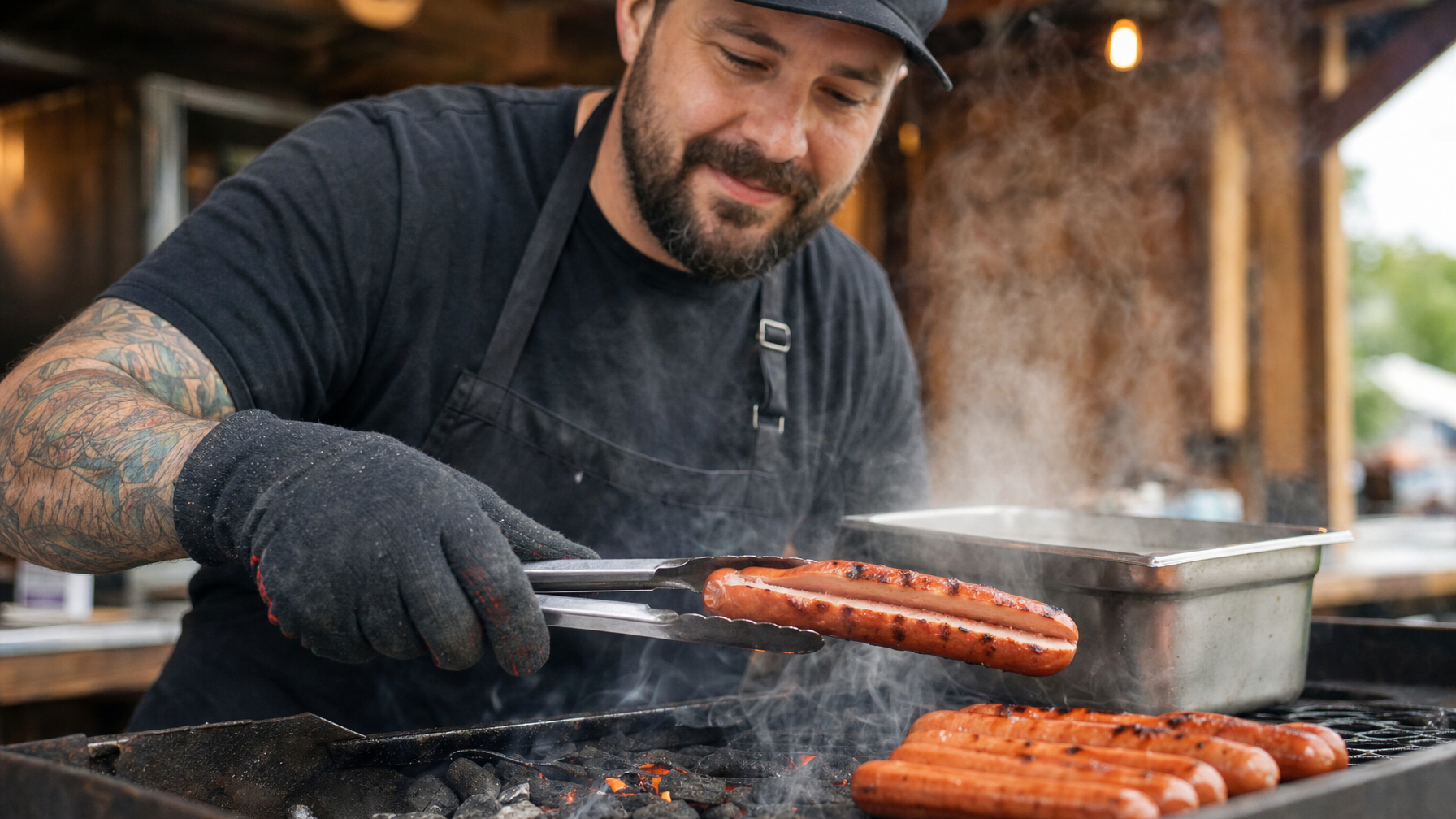
The No-Grill Crispy Dog: Your Oven Has Been Underemployed
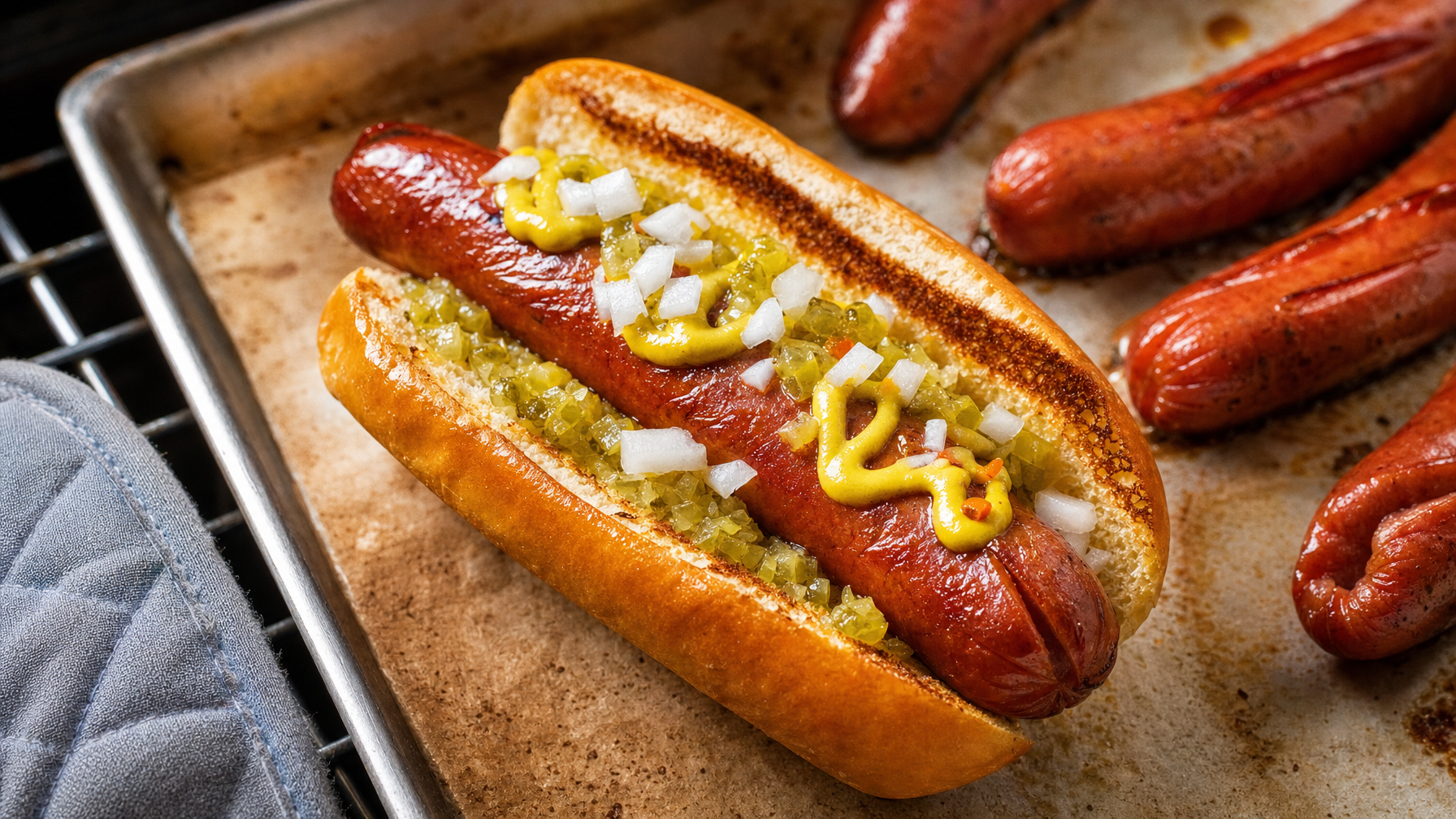
Yes, an oven can make a genuinely crisp, satisfying hot dog without a grill—provided you give it high heat, a dry surface, and a bun that joins the party late. This is for hot-dog obsessives and curious home cooks stuck indoors, dodging bad weather, or simply refusing to fire up a grill for two dogs. Mustard, relish, onions, and pickled things are welcome; ketchup is not invited to this particular bun. Jason’s position after ten years, 50 states, and zero ketchup is not subtle.
Your Oven Is Not a Leftover Cemetery
An oven will not impersonate live fire. It has no smoke, no flare-up, no neighbor asking whether you are “really grilling in this weather.” But it can brown a dog, tighten its casing, and create a lightly blistered exterior with a juicy center. That is a very respectable dinner for an appliance mostly known for baking sad frozen pizza.
This method is built for an indoor crispy dog: no backyard required, no special gadget necessary, and no need to pretend a microwave is capable of romance.
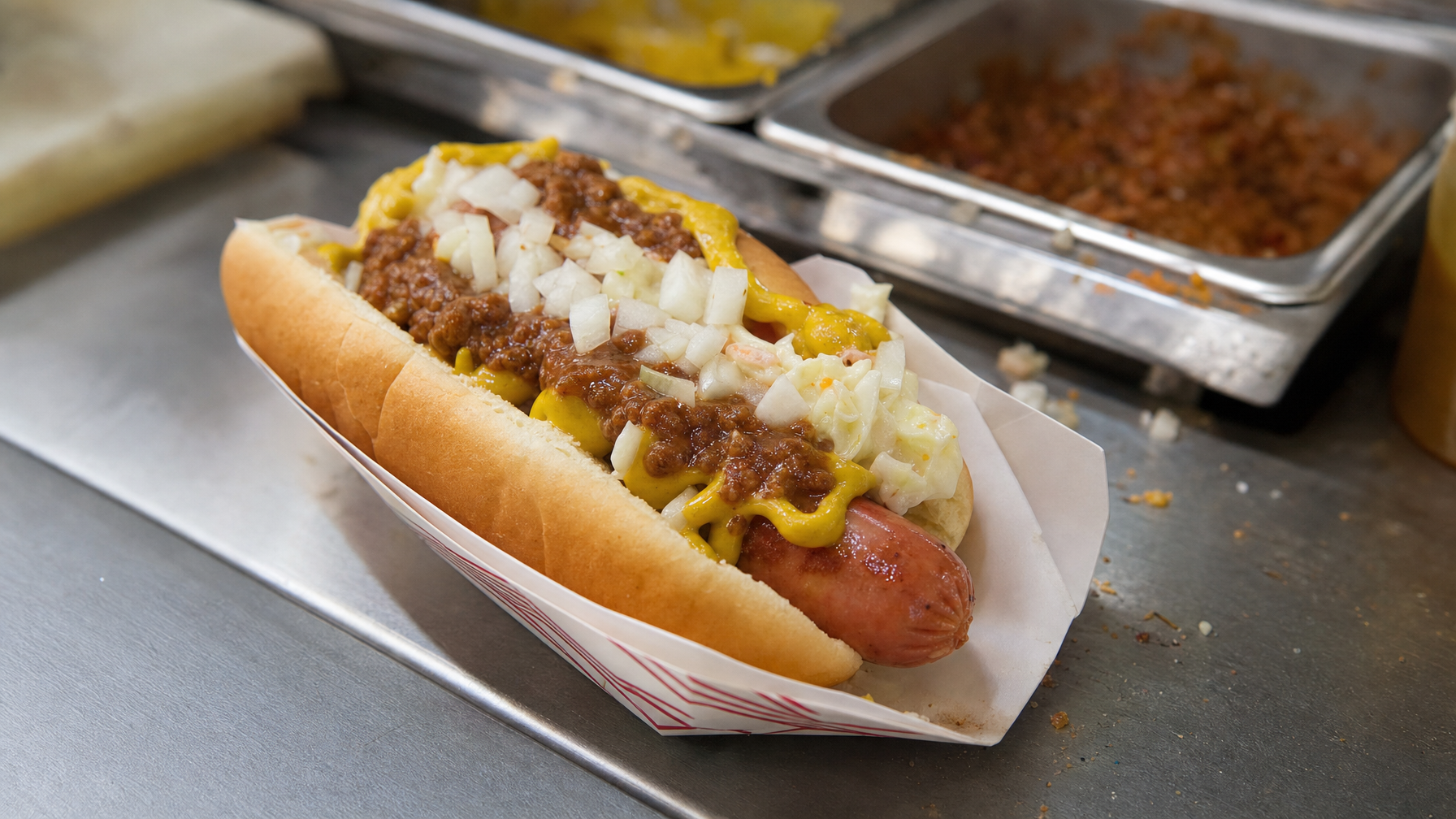
Flavor still needs a point of view. A sharp mustard can bring acidity; relish can add sweet crunch; onions bring bite. The goal is an intentional build, not a red condiment floodplain. Jason’s zero-ketchup rule is a brand opinion with teeth, not a universal food law—but it is the rule in this bun.
Crispness Starts Before Heat Gets Involved
The target is simple: a dog that is browned and lightly blistered outside, hot and juicy inside, and resistant enough to offer a little snap before yielding. Not a shriveled tube. Not a pale, steamed surrender.
Surface moisture is the enemy here. Water on the exterior has to cook away before browning can get serious, so start by patting the hot dogs dry with a clean paper towel. It is a small move with a large payoff.
- Inspect each dog for an already split or damaged casing.
- Pat the exterior dry.
- Give each dog room on the pan or rack. Crowding traps moisture and encourages steaming.
- Choose whether you want an intact casing or extra browned grooves.
That last choice deserves a moment. Shallow scoring exposes more surface area and can create tasty browned ridges. But scoring also interrupts the casing, which can reduce that clean, satisfying snap. Want a tidy bite? Leave it whole. Want more craggy, browned nonsense? Score lightly. Both roads lead to dinner.
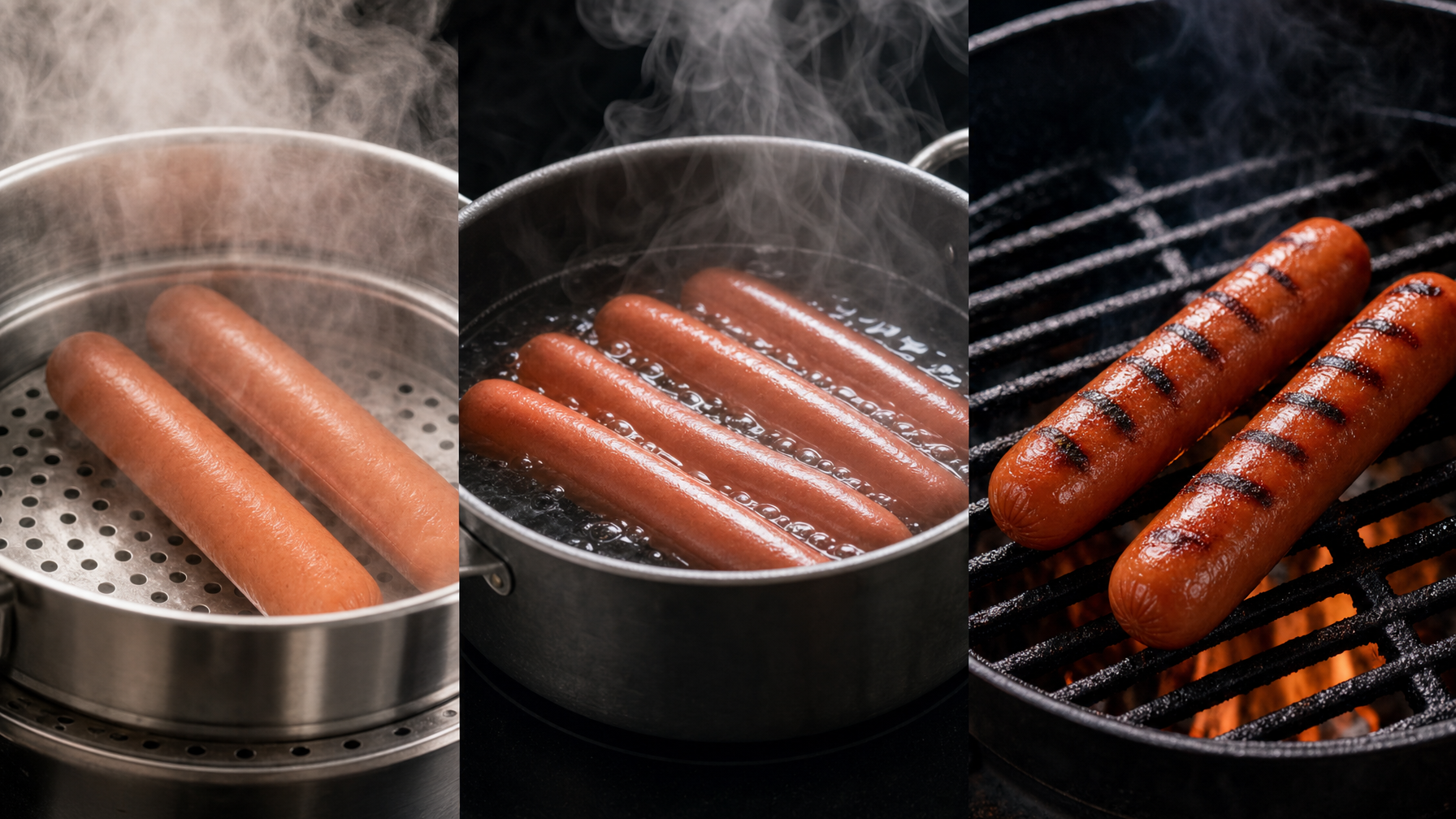
Choose Your Crispness Machine
There are three useful oven setups, and each creates a slightly different dog.
| Setup | What it does well | Watch for |
|---|---|---|
| Hot sheet pan | Builds browning where the dog touches the metal. | Turn the dogs so one side does not get all the glory. |
| Wire rack over a sheet pan | Lets heat circulate and allows excess fat to drip away. | Expect more even cooking, but less direct pan contact. |
| Broiler finish | Adds fast surface blistering and deeper color. | It can darken the exterior quickly, so do not wander off to reorganize a drawer. |
A hot sheet pan is the move for pronounced contact browning. A rack is useful when you want air circulating around the dog and less pooled fat. A brief broiler finish is optional, not mandatory; it is for people seeking a little extra char-adjacent drama.
Whatever setup you choose, follow the package heating and food-safety directions for the hot dogs you bought. Products can have different handling requirements, and the package gets a vote.
Hot Pan, Fast Finish, Zero Backyard
The oven-crisped dog sequence
- Preheat the oven to a high roasting temperature, with an empty sheet pan inside if using the hot-pan method.
- Pat the hot dogs dry and decide whether to leave them intact or score them shallowly.
- Carefully place the dogs on the hot pan, or arrange them on a rack set over a sheet pan.
- Roast until the dogs are heated through and visibly browned in spots. Turn dogs on a sheet pan as needed so browning is not trapped on their undersides.
- If you want more blistering, use a brief high-heat or broiler finish. Watch closely.
- Warm the buns only during the final stage.
Use your eyes, not a made-up stopwatch
There is no honest universal cooking time for every oven, pan, dog size, and starting temperature. Look instead for a dog that is hot throughout, browned in visible patches, and still plump rather than dried out or split into a casing apocalypse.
If you are using a sheet pan, turn the dogs once the contact side has browned. If you are using a rack, turning is less crucial, though a quick roll can still encourage more even color. For the final blast under a broiler, keep the dogs close enough to color but not so close that they become charcoal pencils before their centers are properly warm.
Save the buns for the end. Put them in too early and they can become brittle bread canoes: technically floating, emotionally useless.
The Bun Is a Co-Star, Not Decorative Architecture
A good bun should be warm and flexible, not steamed into submission and not toasted into drywall. Give it a brief warm-up near the end of cooking, protected from the most aggressive direct heat.
Want a sturdier build? Lightly toast the cut interior of the bun. That small barrier adds flavor and helps it stand up to toppings. Want a softer bun? Warm it briefly without toasting. Either way, do not leave it in long enough to turn dinner into an excavation project.
Keep watery toppings under control. Drain relish, shake off pickled toppings, and use sauces with some restraint. The point of oven crisping is to enjoy the dog’s exterior—not immediately drown it in a tiny condiment bathtub.
Let Toppings Enhance the Dog, Not Stage a Coup
Before adding anything, taste the plain oven-crisped dog. Seriously. If you skip that bite, you cannot tell whether the method delivered its promise or whether your toppings simply performed a hostile takeover.
Then build with contrast:
- Sharp: mustard adds acidity and bite.
- Crunchy: chopped onions bring fresh resistance.
- Sweet and crisp: relish can balance salty richness.
- Tangy: pickled toppings add brightness and snap.
- Rich: use one creamy or fatty element if that is your thing, but keep it measured.
A useful rule is one rich or creamy element, one acidic element, and one crunchy element. That is enough contrast to keep a hot dog interesting while allowing it to remain, crucially, recognizable as a hot dog.
And yes: Jason says zero ketchup. That is the house opinion, stated proudly and without pretending every eater must swear the same oath. Mustard, relish, onions, and pickled things have plenty to say without turning the bun into a tomato-sugar incident.
When Crispy Turns Into a Crime Scene
The dog is pale
It was probably too wet, the oven or pan was not hot enough, or the dogs were crowded together. Dry the surface, preheat properly, and leave space between dogs so hot air can do its job.
The casing burst
A burst dog loses some of its clean snap as the interior pushes outward. That is not automatically failure; some people enjoy the ragged browned edges. If you want a neater result next time, use gentler warming before the aggressive finishing heat and avoid overcooking.
The outside browned before the center was hot
Back off the finishing heat. Let the dog warm more gradually in the oven first, then give it a short final blast for color. The broiler is a finishing tool, not a dare.
The bun dried out
It spent too long in the oven or sat too close to the strongest heat. Add it later, warm it briefly, and shield it from direct broiler intensity.
Cross the No-Grill Finish Line
Build in this order: warm bun, hot crisped dog, restrained toppings, immediate bite. An oven cannot reproduce every glorious oddity of live-fire cooking, but it can produce a credible browned, snappy indoor dog when you treat heat, moisture, and timing like they matter. Because they do.
For more hot-dog finds, recipes, places, and culture coverage, follow @jasonsgrub on Instagram.
FAQ: Questions From the Condiment Court
Can I make a crispy hot dog in an oven without a broiler?
Yes. Roast the dog on a hot sheet pan or on a rack over a sheet pan, turning as needed. A broiler is only an optional finishing move for extra surface browning.
Should I score the hot dog before baking?
Only if you want more browned grooves. Leave the casing intact when a clean snap is the priority; score shallowly when extra craggy browning sounds more appealing.
Do I need to boil the hot dog first?
No. Boiling adds surface moisture and is unnecessary for a properly handled packaged hot dog. Follow the product instructions and heat it thoroughly using the oven method.
How do I keep the bun from getting soggy?
Warm it briefly, toast the interior if you want extra structure, and add watery toppings only at the last moment. Draining relish and pickled toppings also helps.
What is Jason’s preferred condiment rule?
Zero ketchup. Mustard, relish, onions, pickled toppings, and other purposeful flavors can support the dog without pretending there is one mandatory build for every person at the table.
Enjoyed this? There's more from Jason's Grub.
Follow on Instagram →