A Winter Hot Dog That Refuses to Taste Like a Summer Cookout
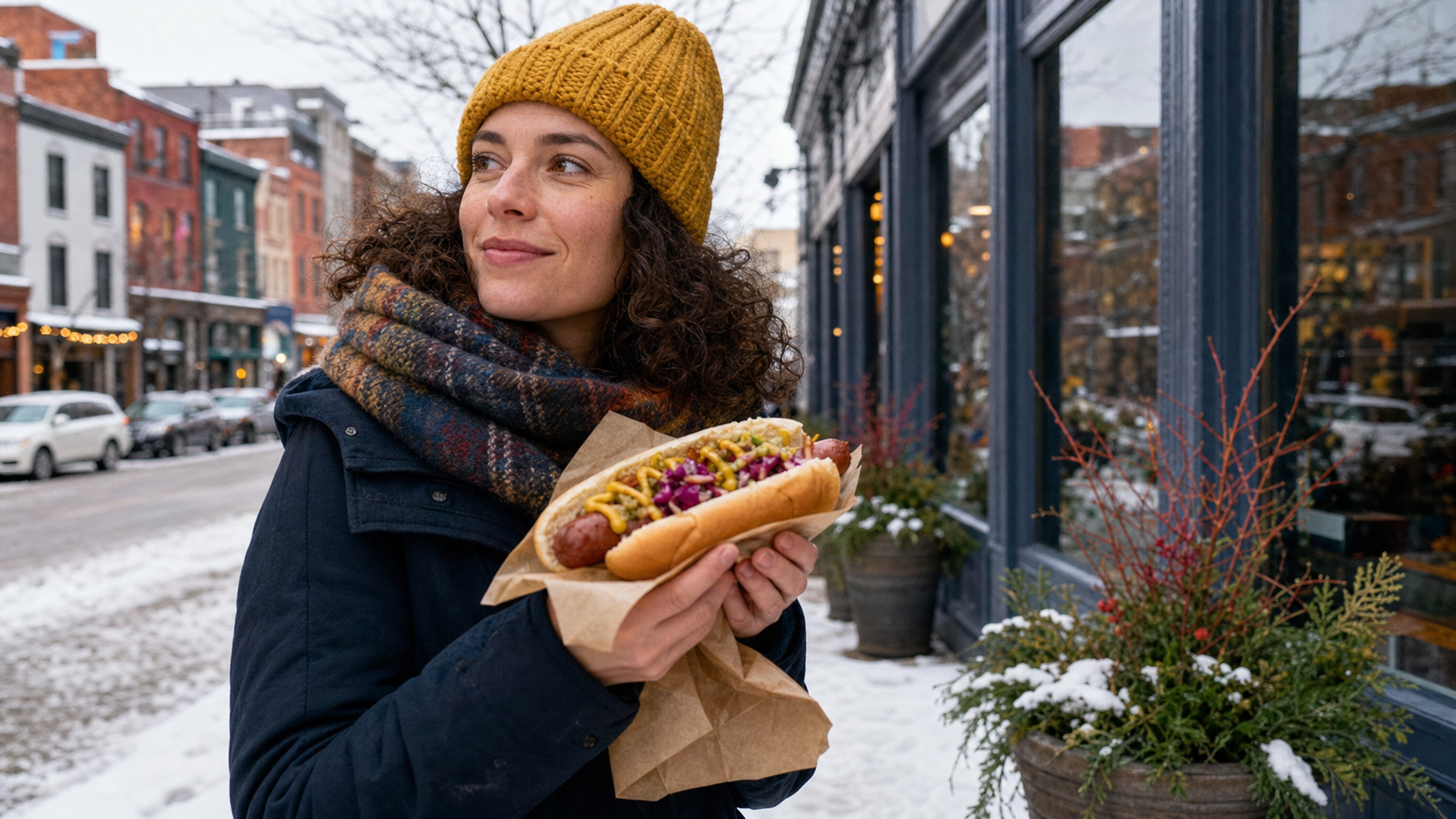
A winter hot dog should taste like cold-weather cooking, not a cookout wearing a scarf. Build it around a snappy grilled or griddled dog, warm braised cabbage, sharp mustard, and one bright, tart element—apple relish, pickled onion, or sauerkraut—to make the whole thing feel deliberate, cozy, and gloriously far away from ketchup season. This is for hot-dog obsessives and food-culture readers who want a seasonal build with an actual point of view.
Give the Hot Dog a Coat, Not a Hawaiian Shirt
Winter flavor is warmth, depth, and contrast. It is not automatically chili. It is definitely not a blizzard of cheese tossed onto a regular dog and declared “hearty” by somebody holding a slow cooker.
A seasonal hot-dog build changes the logic of the bite. The toppings should make sense beside a browned frank on a cold day: something warm and tender, something sharp enough to wake up the richness, and enough texture to prevent the whole operation from becoming edible upholstery.
Use one governing rule: every topping must contribute at least one of these jobs:
- Warmth: a cooked topping that makes the dog feel built for cold weather.
- Richness: a little fat or savory depth, used with restraint.
- Sharpness: mustard, vinegar, pickle brine, or another acidic note.
- Texture: snap, toast, tender crunch, or a small crisp garnish.
If a topping does none of that, it is decorative clutter. A hot dog is not a Christmas tree. Stop hanging things on it.
The Dog Still Needs a Snap in February
The frank remains the center of the build. Winter toppings are supporting actors, not a casserole that happens to contain a sausage somewhere in the back row.
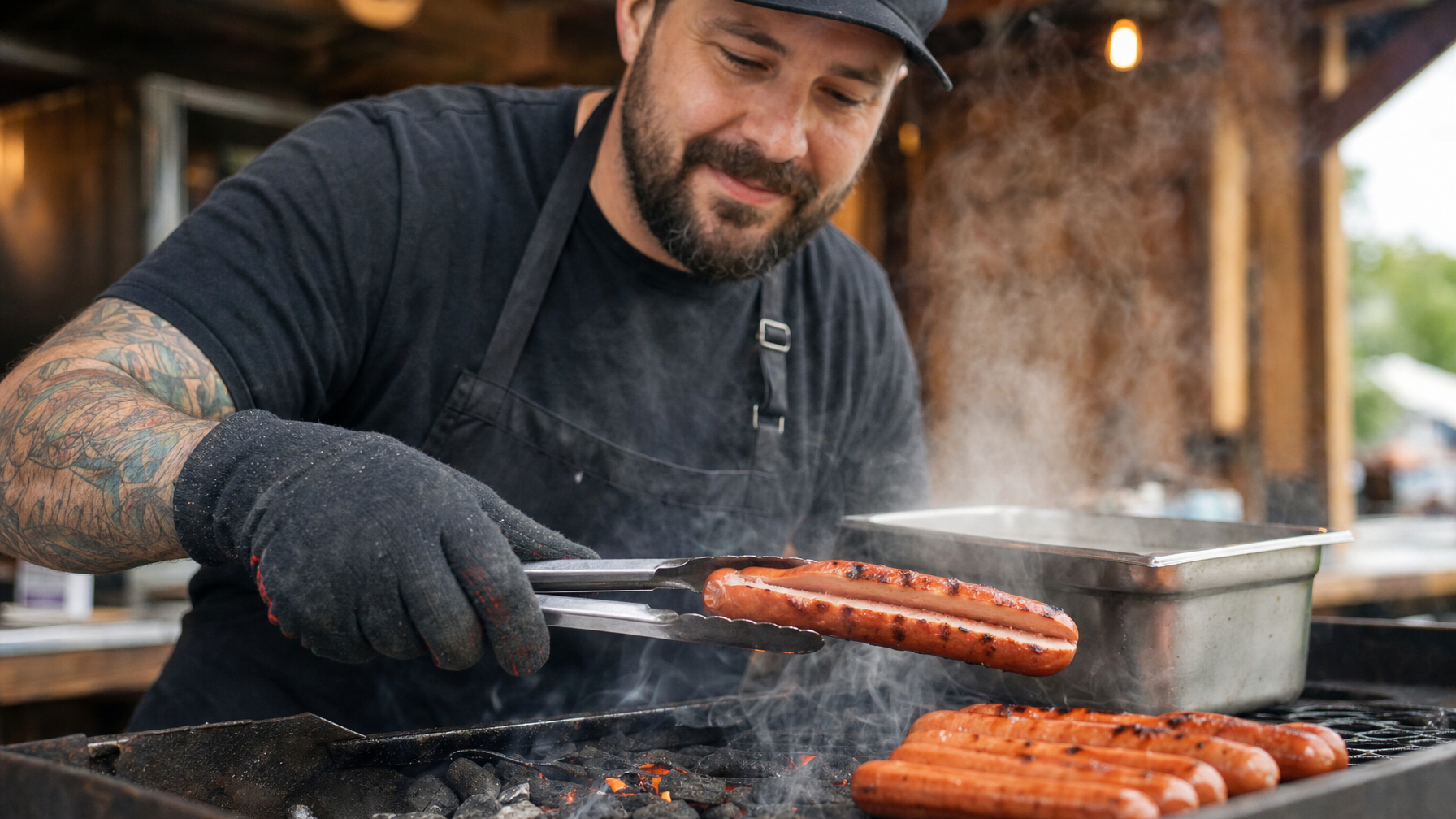
Cook the dog until its exterior is browned and its bite is juicy with a clear snap. A grill, griddle, or skillet can all get you there; use the setup you actually have rather than treating outdoor grilling in February like a moral test. A skillet is not surrender. A pale, steamed frank with limp toppings is surrender.
Pick a dog with enough presence to stand against cabbage and mustard. The final recipe should name a specific product only after it has been tested and its current availability confirmed. Until then, the useful standard is simple: choose a frank you enjoy on its own, with a casing or texture that gives the bite some punctuation.
Keep a recipe-testing notebook, not a pile of heroic guesses
When the final build is settled, record the exact dog, bun, heat level, cooking time, cabbage method, and assembly order. Those details matter because a bun that survives one generous scoop of cabbage may fold like a lawn chair under two. Untested precision is just confidence wearing a lab coat.
Cabbage Gets Its Winter Moment—Try Not to Make It Sad
Warm cabbage is the cozy centerpiece here. It gives the dog a distinctly cold-weather identity without covering the frank in a thick blanket of anonymous brown stuff.
Sauté or braise cabbage with onion until tender but not limp. Butter or oil supplies richness; mustard adds bite; a small splash of vinegar keeps the flavor from drifting into dull, boiled-vegetable territory. The goal is cabbage with a little backbone and a clear point of view.
That texture matters. The dog should snap, the bun should offer a gentle toast, and the cabbage should be soft enough to nestle into the bite without becoming wet confetti. Think tender ribbons, not cafeteria steam-table fatigue.
Jason’s opinion: cabbage belongs on this dog because it can be cozy without being sleepy. Bland boiled vegetables in a bun are not winter cooking. They are an administrative error.
Add One Tart Thing Before the Whole Build Falls Asleep
Cabbage, sausage, and toasted bread can all lean rich and mellow. That is pleasant for exactly two bites. Then the palate starts looking for an exit.
Add one tart counterpoint. Apple relish can bring sweet-tangy brightness; pickled onions offer a sharp, clean edge; sauerkraut adds fermented acidity and familiar crunch. Another tart topping can work too, provided it earns its place during testing.
The purpose is not to make the dog aggressively sour. Acidity is there to separate the flavors: it makes the mustard seem sharper, the cabbage seem more alive, and the frank taste meatier instead of heavier. One tart element is generally enough. Three competing pickles turn dinner into a jar-lid convention.
Do not call any version “traditional” unless it is specifically researched and tied to a documented regional style. This is a seasonal house build, not a borrowed passport stamp.
Mustard Is Doing the Heavy Lifting, as Usual
Mustard is the primary sauce. Jason’s position is zero ketchup, and this particular dog has no use for it anyway. Ketchup would pull the build toward a familiar summer sweetness when the rest of the ingredients are trying to have a perfectly respectable January evening.
The right mustard is a matter of taste:
- Yellow mustard brings clean, direct tang and lets cabbage lead.
- Brown mustard adds a deeper, more assertive bite.
- Grainy mustard contributes texture along with acidity.
There is no objectively correct jar. The useful choice is the one that gives the dog enough zip without turning every bite into a mustard monologue. Spread or squeeze it with restraint, especially if the cabbage is already seasoned with mustard.
The Bun Needs Toasting, Not a Spa Day
Use a sturdy bun, lightly toasted. It needs enough structure to carry a hot frank and warm cabbage without splitting, sagging, or immediately becoming a damp napkin with ambitions.
Toast just until the interior gains a little color and resilience. Do not turn the bun into a cracker. A winter dog already has plenty of personality; nobody needs to wrestle the bread before reaching the sausage.
Assembly order that keeps the peace
- Set the lightly toasted bun on the plate.
- Add a restrained layer of mustard.
- Place the hot, browned dog in the bun.
- Spoon on warm cabbage.
- Add the tart topping.
- Finish with a small garnish only if it adds real flavor or texture.
A few mustard seeds, fresh herbs, or thin onion slices may earn that final spot. A fistful of random garnish does not. The dog should still be visible enough to identify in a lineup.
What This Dog Refuses to Do
This build has boundaries, which is healthy. Winter food can be rich without becoming a traffic jam in a bun.
- No ketchup. Not as a secret base layer, not “just a little,” not because someone panicked near a red squeeze bottle.
- No random summer relish. If it tastes like a picnic table in July, it needs a compelling reason to be here.
- No cold pile of toppings pretending to be seasonal. Cold can be useful for contrast, but it cannot be the whole concept.
- No garnish avalanche. If the toppings hide the frank, the hot dog has been demoted to infrastructure.
- No accidental regional costume. This is not meant to imitate a named regional style unless future testing and research deliberately make that case.
The target is abundance with discipline: browned dog, warm cabbage, tart lift, mustard bite, toasted bun. Every part has a job. Nobody is just standing around looking decorative.
Test the Bite Before Naming It a Winter Classic
“Best,” “classic,” and “perfect” are opinions, not laboratory results. Use them as opinions if you mean them. Before you do, test the actual bite.
A useful tasting checklist
- Snap: Does the frank still have a distinct, satisfying bite?
- Temperature: Is the main topping warm enough to read as winter cooking?
- Cabbage: Is it tender, seasoned, and still texturally awake?
- Acidity: Does the tart element brighten the build rather than dominate it?
- Mustard: Is it noticeable without flattening the other flavors?
- Bun strength: Does it hold together from first bite to last?
- Main-event test: Does it still taste like a hot dog, or has the sausage vanished beneath its own accessories?
Try the dog immediately after assembly, then again after a few minutes. Warm cabbage can soften a bun quickly, and a build that wins at the pass may lose badly at the table. Adjust cabbage moisture, portion size, or bun toast before declaring victory.
A Plate That Looks Like January but Eats Like a Hot Dog
Keep the side dish modest. Roasted vegetables, potatoes, or a sharp winter salad can sit beside this dog without stealing its thunder. The main event is still the bun, the snap, the cabbage, and that tart little interruption doing its crucial work.
This is the point of seasonal toppings: they should make a hot dog feel more intentional, not less recognizable. Give it warmth. Give it tang. Give it a bun sturdy enough to survive the weather. Then let the dog be a dog.
Questions From People Who Take Their Buns Seriously
Does a winter hot dog have to use cabbage?
No. Cabbage is the proposed anchor because it brings warmth, tenderness, and texture without overwhelming the frank. Another cooked seasonal topping can work if it preserves the same balance of warmth, richness, sharpness, and structure.
Can I use ketchup?
Jason’s stated position is zero ketchup. For this build, mustard and a tart topping provide the needed acidity without dragging the flavor back toward a summer cookout.
Should the toppings be hot?
The main seasonal topping should be warm. The tart component can be warm, cool, or room temperature, depending on the texture and contrast you want after testing the assembled dog.
What kind of hot dog works best?
Choose a frank with a clear snap and enough flavor to stand up to warm cabbage and mustard. A final published recipe should name a specific product only after confirming that it is real, currently available, and properly tested in the build.
Can this be made without a grill?
Yes. A skillet or griddle can brown the dog and toast the bun beautifully. The final recipe should specify the tested method and timing rather than pretending every stove, pan, and frank behaves exactly the same way.
Enjoyed this? There's more from Jason's Grub.
Follow on Instagram →