Can a Hot-Dog Photo Start a Regional Argument? Absolutely—Show Your Work
Yes—a hot-dog photo can start a regional argument because one bun can carry a surprising amount of local identity. This is for hot-dog enthusiasts and food-culture readers who want to make strong, specific claims without turning one blurry lunch photo into a fake history lesson: show the dog, the place, the build, and the evidence.
Why Hot-Dog Photos Become Regional Fighting Words
Regional hot-dog identity lives in details that can look tiny until somebody names them wrong: the bun, the sausage, the toppings, the preparation, the wrapper, the plate, the counter, the whole glorious edible situation.
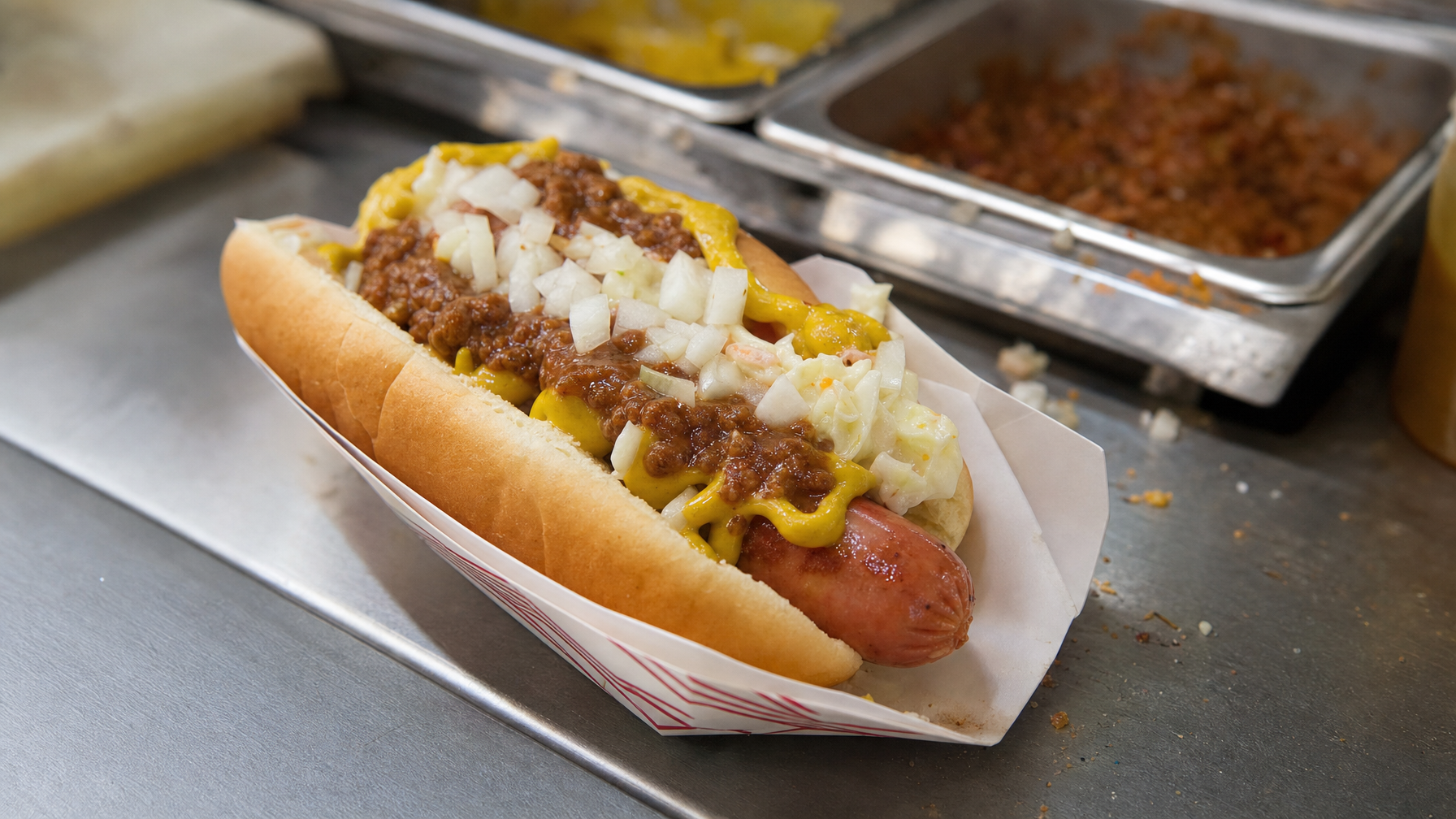
A steamed bun can mean something different from a griddled one. A natural-casing sausage tells a different story from a skinless frank. Mustard, onion, chili, slaw, relish, celery salt, peppers, sauce—none of these automatically settles the matter, but each can be part of the case.
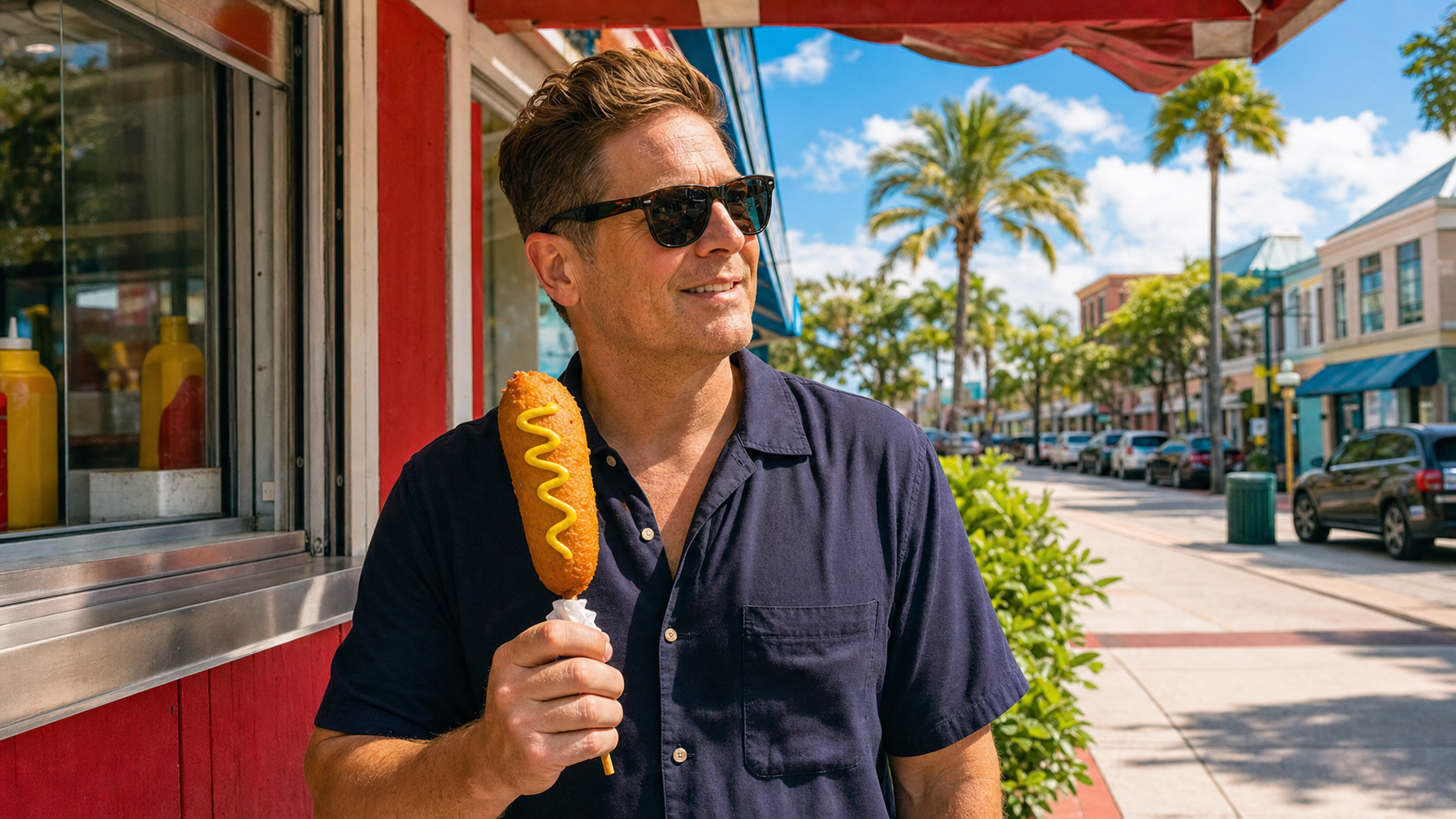
And yes, the way a dog is photographed matters. A close-up that crops out the bun may make a topping pile look heroic while hiding the structure that actually helps identify the build. People will forgive a crooked horizon before they forgive the wrong topping being called “traditional.”
Here is the central rule: a photograph can open the argument, but it cannot settle the argument by itself. It is evidence. It is not a tiny court ruling wrapped in wax paper.
A Photo Is Evidence—Not a Verdict
The useful distinction is between observation and interpretation.
- Observation: “The photo shows yellow mustard and chopped onion.”
- Interpretation: “This is the definitive version of a regional style.”
The first statement can be supported by the image. The second needs more: a verified place, the item ordered, menu language, local context, and ideally comparison with other documented examples.
A single serving might be a vendor’s personal variation, a limited special, a tourist-facing item, or a customized order. It might be a perfectly legitimate local dog that still does not represent every stand, cook, or neighborhood nearby. Regional food is not a police lineup. It is a family reunion where everyone has an opinion and one uncle brought a squeeze bottle.
When posting, separate what you know from what you suspect. Say what the photo proves. Then say what you are exploring.
Show Your Work: The Details Worth Capturing
If you want a photo to do more than make strangers hungry, preserve the details that let readers understand the dog in context.
What a useful photo should show
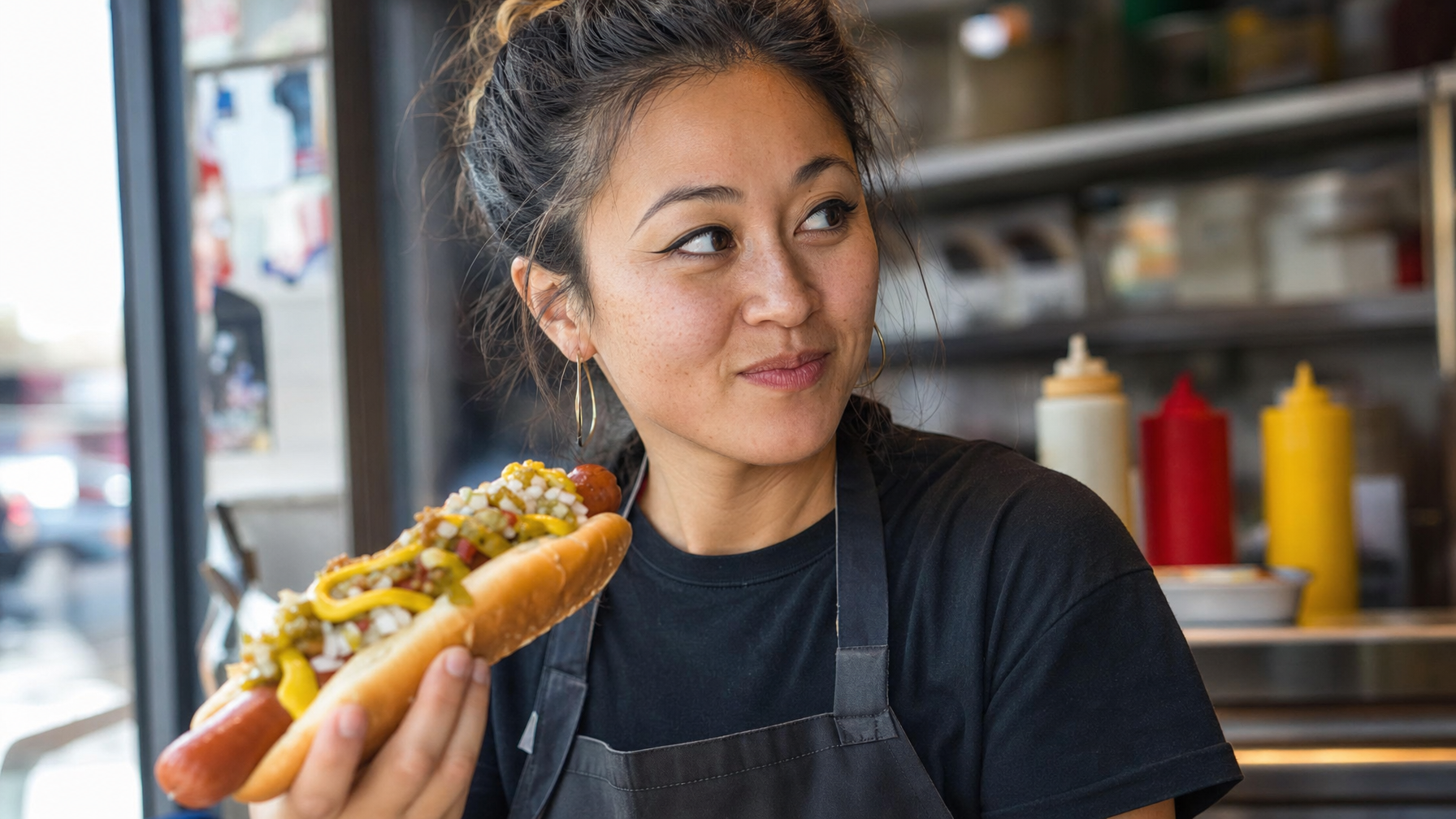
- The full bun, including its shape, size, and whether it appears steamed, toasted, griddled, or otherwise prepared.
- The sausage, including visible casing, size, color, split or char marks, and any identifiable preparation.
- The toppings, with enough separation to see what is actually there.
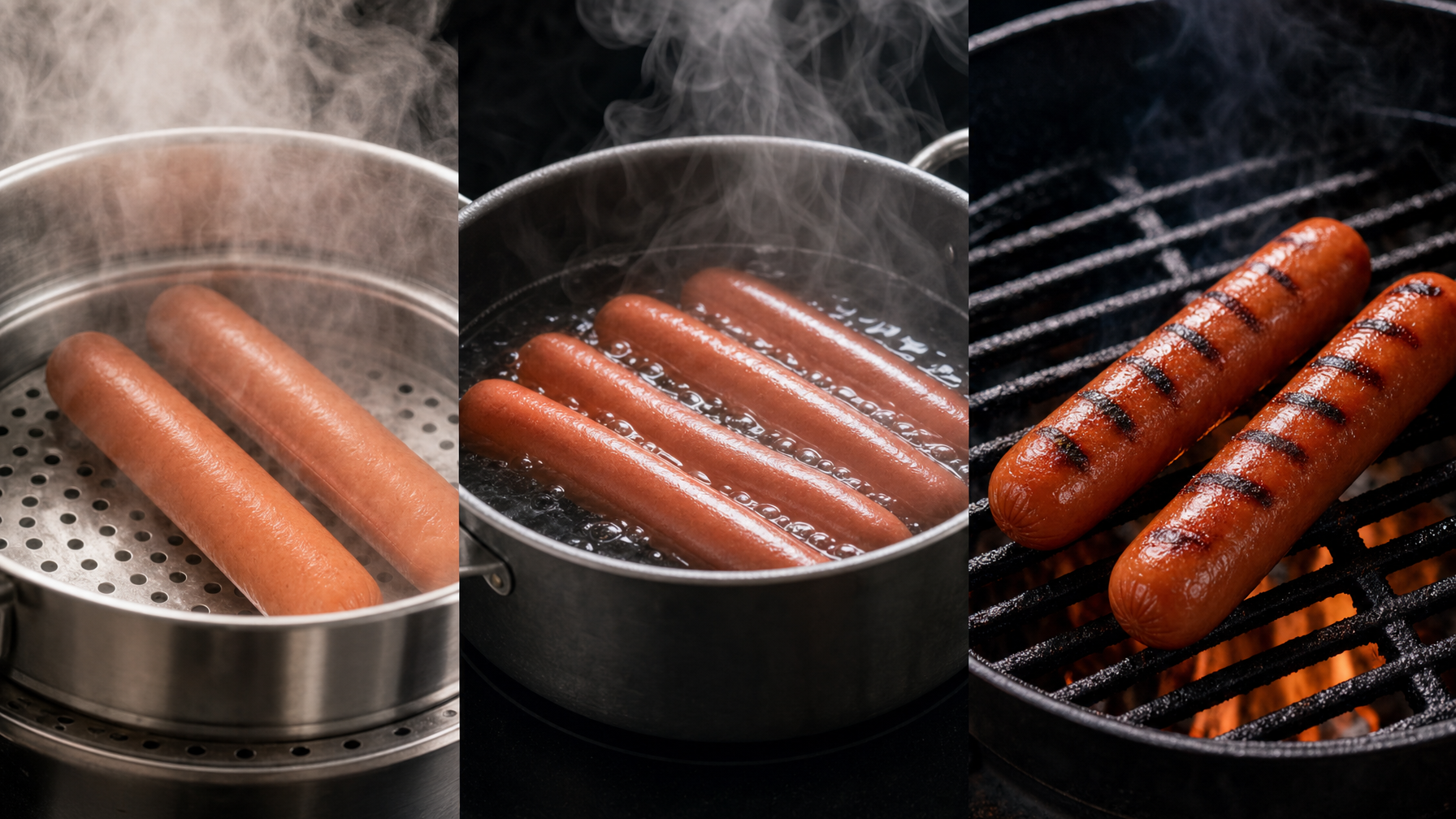
- Preparation clues when visible, such as grill marks, a fried edge, or a steamed presentation.
- Side items and serving vessel: paper tray, basket, wrapper, plate, fries, chips, or other contextual clues.
- Packaging, signage, counter details, or a menu, when it can identify the vendor without guesswork.
- The item name as printed on the menu, receipt, or order ticket when available.
Take two kinds of shots
Take one photo of the dog before toppings conceal its structure. Then take a wider photo that places it in a verified setting: the stand, counter, menu, wrapper, or other identifying context. The close-up is the glamour shot. The wider image is the receipt.
A dramatic toppings avalanche may be beautiful. It may also hide the bun, casing, and cooking method so completely that nobody can tell what they are looking at beyond “a delicious landslide.”
Name the Place, Date, and What You Actually Ordered
Location belongs in the caption, not in a fog of implication. If verified, identify the restaurant, stand, cart, neighborhood, city, or region. Readers should not have to perform bun forensics to figure out where the dog came from.
Include the date, or at least say when the photo was taken. Menus change. Owners change. Suppliers change. A preparation that appeared on a menu years ago may not be there now, and a current menu does not rewrite the past.
Record the exact item name and any changes you requested. “Regional style” must not quietly become “my customized order with three omissions and extra sauce.” If you removed an ingredient, swapped a sausage, or added something off-menu, say so.
For uncertain details, use careful language:
- “The menu describes this as…”
- “This serving appears to include…”
- “I ordered the item listed as…”
- “I cannot confirm whether this was the standard build or a special.”
That is not timid writing. That is honest writing with its shoes tied.
What Makes a Regional Claim Credible?
A stronger regional claim connects a visible build to a named place and a verifiable description, then refuses to pretend one example speaks for every hot dog in the county.
Match the size of the claim to the evidence
| Claim size | What supports it | Careful wording |
|---|---|---|
| What is on this plate | A clear photo and your order details | “This photo shows mustard, chopped onion, and slaw.” |
| What this vendor serves | A verified vendor, menu description, and documented order | “This vendor lists the item as a chili dog and served it with…” |
| What a whole region is known for | Multiple documented examples, local context, and careful comparison | “This combination appears across several documented examples from the area, though builds vary.” |
The broader the claim, the more homework it needs. Compare multiple examples from the same area when you are making an observation about a regional pattern. Look for recurring features, but leave room for neighborhood differences, vendor signatures, and the entirely normal fact that local traditions can overlap.
Variation is not evidence that a tradition is fake. Variation is often the tradition wearing a different hat.
The Most Common Hot-Dog Photo Mistakes
- Calling a dog “authentic” without naming the source. Authentic to whom: the vendor, a family tradition, a city, a menu label, or a commenter who has declared himself Mayor of Mustard?
- Posting a crop that hides the important parts. If the bun, sausage, portion, and preparation context disappear, the image may not support the claim attached to it.
- Treating marketing language as proof of a whole region. A menu can describe its own item. That does not automatically establish a region-wide rule.
- Claiming exclusive ownership of a topping combination. Familiar ingredients travel. Two places can use mustard and onion without becoming the same dog—or enemies in a condiment opera.
- Writing a caption bigger than the evidence. “This is what they eat everywhere” is a much larger claim than “this is what I was served here.”
- Forgetting substitutions and specials. A modified order is still worth sharing. It just needs a label.
How to Caption a Photo Without Starting a Bad Argument
You can be opinionated without inventing a food-history seminar in the caption. Start with the facts, then add the heat.
A practical caption framework
Ordered [named item] at [verified place] in [city or region] on [date]. The photo shows [observable bun, sausage, and toppings]. I ordered it [as listed / with these substitutions]. The interesting question is whether this reflects the vendor’s signature build or a broader local style.
Then offer your opinion honestly: the dog can look magnificent, confused, overburdened, elegantly restrained, or criminally ketchup-adjacent. Those are judgments, not historical claims. Keep the discussion focused on the food and the evidence rather than treating loud disagreement as proof that somebody won.
A Simple Pre-Post Checklist
- Can a reader identify where the hot dog came from?
- Does the image show enough of the dog to support the claim?
- Have visible facts been separated from personal opinion?
- Is the regional label based on more than one unverified assumption?
- Have substitutions, specials, and uncertain details been disclosed?
- Would the caption still be fair if someone from that region disagreed loudly?
If the answer to that last one is yes, post the dog. If not, add context before you light the fuse.
The Jason’s Grub Standard: Strong Opinions, Receipts Included
Jason’s Grub comes at hot dogs from an enthusiast-led perspective built over a stated ten years across all 50 states, with zero ketchup. That last part is a stance, not a universal rule handed down by the hot-dog heavens. People may eat what they like; Jason may still have notes.
The standard is simple: have the opinion, take the photo, name the place, record the order, and do not make history claims your evidence cannot carry. Strong takes are more fun when they come with receipts.
Document the dog properly, then follow @jasonsgrub on Instagram for more specific hot-dog places, products, recipes, and culture coverage.
FAQ
Can one hot-dog photo prove a regional style?
Usually not. It can document what one vendor served at one moment, but a broader regional claim needs context, a verified location, and comparison with other documented examples.
What should I include in the caption?
Name the place, city or region, date, item ordered, visible ingredients, and any substitutions or uncertainty. If the menu uses a particular description, quote or paraphrase it carefully rather than turning it into a sweeping claim.
Do toppings determine a hot dog’s regional identity?
They can be part of the evidence, but they are not the whole case. Bun style, sausage, cooking method, vendor, menu language, serving format, and local context can matter too.
Should I call a hot dog “authentic”?
Use the word carefully, if at all. Explain whose tradition or description you mean instead of using “authentic” as a decorative stamp. Specificity is more useful than a vague gold star.
How can I disagree without making the comments unbearable?
Challenge the claim, not the person. Ask where the dog came from, what was ordered, whether it was modified, and what evidence supports the regional label. A good argument leaves everyone hungrier and slightly better informed.
Enjoyed this? There's more from Jason's Grub.
Follow on Instagram →