The New England Roll Has a Secret Weapon: Butter on Every Available Surface
For hot-dog fans and coastal-sandwich obsessives, the New England-style split-top roll’s secret weapon is not some locked-box regional ritual: it is butter, applied boldly to the outside, inside, and any other bread surface that can handle a little attention. Butter turns a plain bun into a richer, crisper, more flavorful place for a dog to land. A dry bun is not a personality trait.
Butter Has Entered the Bun—and It Refuses to Leave
A New England-style roll is generally a top-split bun: the opening runs down the top rather than one side, so the bun stands upright and presents two broad outer walls. Those walls are not decorative. They are prime real estate for a hot pan and a little butter.
This is for readers who care about regional hot-dog styles, the difference between soft and soggy, and home builds that deserve more thought than “sausage, bread, goodbye.” Buttering bread is a culinary technique. Calling butter the split-top roll’s secret weapon is Jason’s aggressively pro-butter opinion—and it is an opinion with excellent crispy edges.
Used well, butter adds flavor, encourages browning, and gives the roll a gentle crust while keeping the center tender enough to hold a hot dog without turning into a crumb avalanche.
Why the Split Top Is Basically a Butter Landing Strip
The upright shape is the trick hiding in plain sight. Compared with a standard side-split bun, a split-top roll offers broad, exposed sides that can meet the pan evenly. More contact with a buttered surface means more opportunity for browning and crispness.
The target is contrast, not crunch for its own sake: lightly crisp on the exterior, soft through the middle, and flexible enough to cradle the dog. You want a bite that gives way cleanly—not one that shatters like a toast-related personal grudge.
Not every New England cook uses one exact bun, butter amount, or toasting method. But this bun shape is especially friendly to generous pan-toasting, and it makes a strong case for treating bread as part of the dish rather than edible shipping material.
Every Available Surface Means Exactly What It Sounds Like
“Butter everywhere” is less mysterious than it sounds. Think in zones:
- The two outer sides: These are the main browning surfaces.
- The interior cut surfaces: A light coating adds flavor and helps the inside feel intentional, not merely cut open moments ago.
- Any exposed edge that will touch the pan: If bread meets metal, it deserves a chance at golden glory.
Use enough butter to coat the bread evenly, but not so much that the roll develops oily patches or becomes a grease slick with ambitions. The goal is fragrant, browned bread. The goal is not to make your napkin file a complaint.
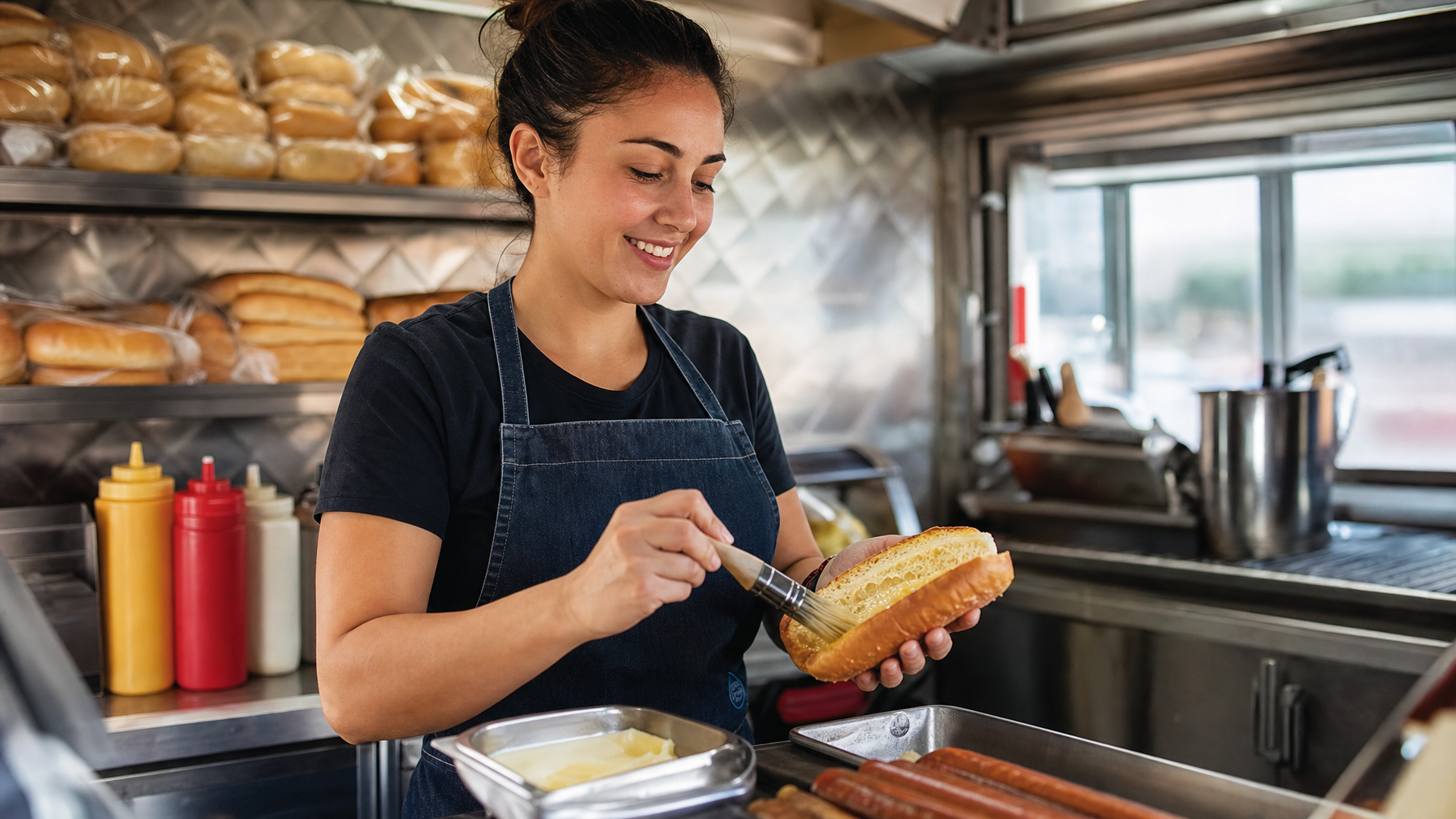
Softened butter is easiest to spread consistently, especially along the outer walls and inside the top split. Melted butter is useful when you want to brush it on quickly and do not need surgical precision. Either works; uneven coverage is the real enemy.
This full-coverage approach is Jason’s signature position, not a claim that every cook in New England butters buns exactly this way. But if you are going to toast the roll, timid buttering is a strange hill to choose.
The Hot Dog Is the Guest, but the Bun Gets the Entrance Music
A properly toasted split-top roll changes the whole build. Its crispness plays against the snap and juiciness of the hot dog; its richness rounds out salt, smoke, spice, and whatever topping plan you have managed to keep under control.
That is why the bun deserves attention before the dog arrives. A good hot dog can survive a mediocre bun. It should not have to.
Keep toppings focused enough that the toasted bread remains part of the bite. A restrained build lets the bun’s butteriness and crisp edges show up. A heavily loaded dog can still be great, but it may bury the very texture you worked to create. There is no universal topping constitution; there is only the practical fact that too much wet stuff turns crusty bread back into sad bread.
If you already make Jason’s charcoal snap dog, this bun treatment is a useful companion move: preserve the dog’s snap, then give it a roll with some actual presence. No need to duplicate the whole recipe when the point here is the bread behaving like it has a job.
Pan, Heat, and the Fine Art of Not Burning Breakfast
A skillet or griddle is enough. Warm it over moderate heat, place the buttered roll where its coated surfaces can make contact, and turn the bun as needed for even color. Stay nearby. Butter can go from nutty and golden to “who left a tire in the pan?” with impressive speed.
- Warm the cooking surface over moderate heat.
- Butter the roll’s outer sides and, if desired, the interior cut surfaces.
- Set the roll on the pan and let the contacted side brown gently.
- Turn it to toast the other side and any edges that need color.
- Remove it while the surface is golden and crisp but the bun still bends open without cracking apart.
The doneness test is visual and tactile, not a stopwatch ceremony: look for a warm golden surface, feel for a light crust, and make sure the center remains soft enough to cradle the hot dog. Split-top rolls have edges that may darken before the middle is ready, so lower heat and attention beat bravado.
What Goes Inside When the Bun Is Doing This Much
When the roll brings butter and toastiness, the filling should bring contrast. Start with a hot dog you like, then choose one or two directions rather than building a condiment skyscraper.
- Acidity: pickled vegetables, a tangy relish, or a sharp mustard can cut through the richness.
- Crunch: finely chopped onion or crisp pickled elements add texture without overwhelming the roll.
- Heat: chile-forward condiments or fresh peppers can wake up the buttery base.
- Freshness: herbs or a bright, simple garnish can keep the bite from feeling heavy.
These are flavor directions, not a declaration of canonical New England toppings. Build the dog you want. Jason’s own stated position remains zero ketchup, because ketchup on a hot dog is a detour nobody asked for—but your toppings are your business.
Judge the result as one bite. The bun, dog, and toppings should act like a band, not three strangers waiting for the same bus.
The Butter Test: Three Questions Before the First Bite
Before you take a bite, ask three brutally useful questions:
- Is there visible browning without a burnt taste? Golden is the goal. Charcoal belongs on certain dogs, not every bun.
- Is the interior tender enough to bite cleanly? The roll should not shatter, collapse, or fling toppings into your lap.
- Does the butter support the dog and toppings? Butter should make the whole thing better, not become the entire meal wearing a bun costume.
Butter is not a garnish here. It is the cooking surface, the seasoning, and the textural upgrade. Let the split-top roll do what it was born suspiciously well equipped to do.
FAQ: Because Someone Will Ask About the Butter
What makes a New England-style roll different from a standard hot-dog bun?
It is typically split from the top and designed to stand upright. That shape exposes broad outer sides that are especially convenient for pan-toasting. Bun styles and recipes vary, so there is no single universal version.
Do I really need to butter every surface?
No. But coating the exposed sides and cut surfaces creates the fullest version of this technique. Use less butter if you want the dog or toppings to take a louder role.
Can I use a regular side-split bun?
Yes. You can butter and toast it, and it can be delicious. It will not have the same upright presentation or the same broad exterior surfaces for browning as a split-top roll.
What toppings work with such a rich bun?
Favor contrast: crunch, acidity, freshness, or heat. Pickled vegetables, mustard, onions, peppers, and tangy relishes are all useful directions. Avoid piling on so many wet toppings that the toasted roll loses its crispness.
Where can I see more of Jason’s hot-dog opinions and finds?
Follow @jasonsgrub on Instagram for Jason’s ongoing hot-dog discoveries and commentary.
Enjoyed this? There's more from Jason's Grub.
Follow on Instagram →