Can You Build a Sonoran-Style Dog Without Turning the Plate Into a Topping Avalanche?
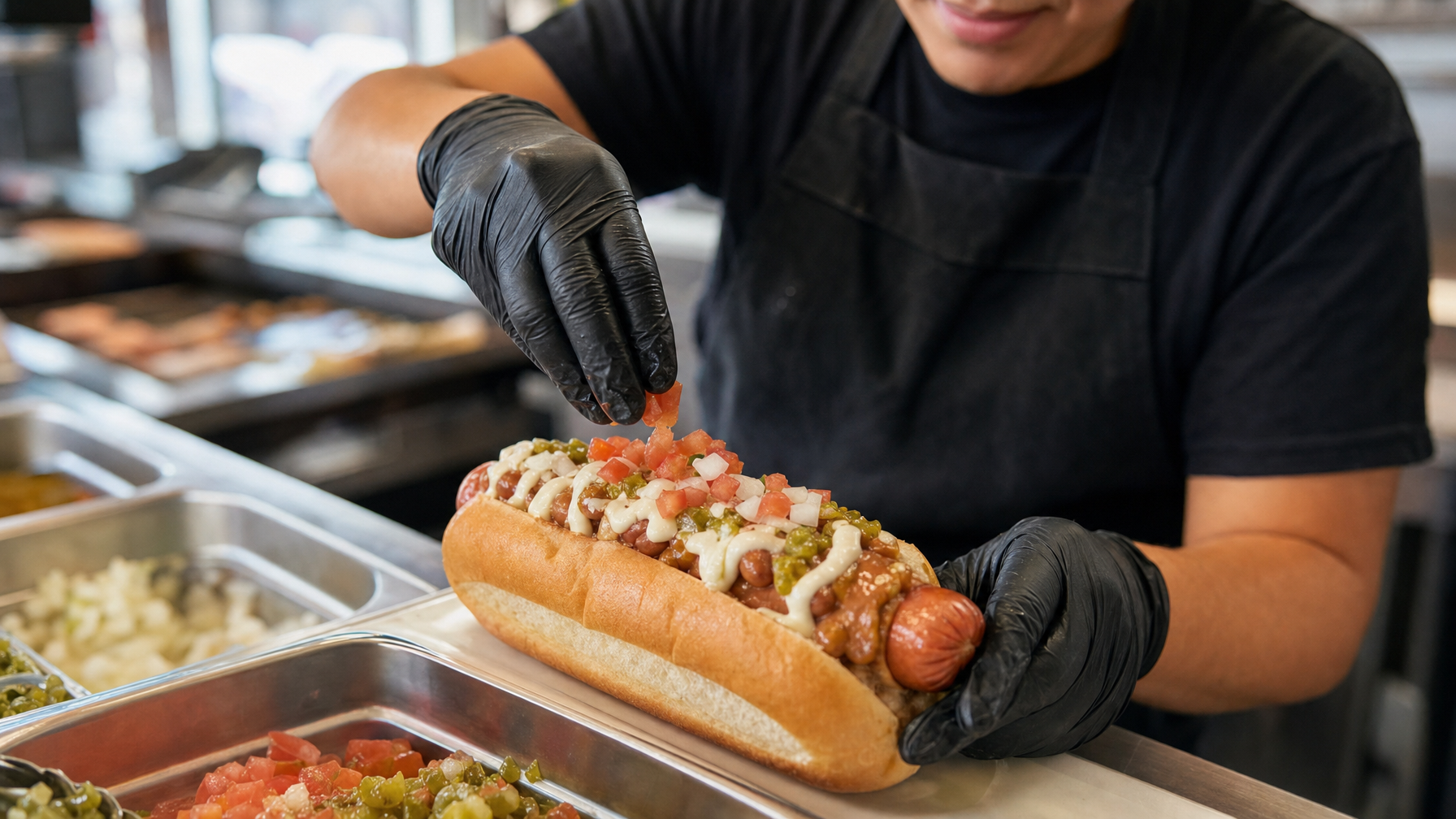
Yes—but the trick is restraint, not deprivation. A Sonoran-style dog can carry bacon, beans, fresh vegetables, creamy sauce, and chile without becoming a fork-and-knife landslide; the build needs contrast, proportion, and a bun sturdy enough to survive the mission. This is for hot-dog obsessives and food-culture readers who want a specific, cookable version—not a vague “add toppings until happy” situation.
The Sonoran Dog’s Real Challenge: Deliciousness Has a Weight Limit
A Sonoran-style dog is built for abundance. That is part of its charm. Bacon brings smoke and salt; beans bring earthy richness; onion, tomato, and chile bring brightness; creamy sauce rounds off the edges. But abundance without structure is just a collapsing snack tower with a napkin problem.
My opinion: every topping needs a job. It should add flavor, texture, temperature, or moisture. If it is merely occupying real estate because somebody mistook height for achievement, it can sit this one out.
The goal is for the frankfurter, bacon, beans, vegetables, chile, and sauce to read as one bite. Not six separate ingredients arguing from different zip codes. This is a practical interpretation of a recognizable Sonoran-style format, not a claim that one exact topping arrangement is the sole regional law of the land.
Start With the Bun, Because Architecture Comes Before Drama
The bun is not a decorative wristband for the hot dog. It is the load-bearing equipment. Choose one that is soft enough to bite cleanly but substantial enough to contain beans, a bacon-wrapped frankfurter, and a few wet toppings without splitting at the first sign of adversity.
Warm it until pliable, not steamed into a damp little surrender flag. A gently warmed bun opens more easily and is less likely to crack when you add the dog.
Before assembling, make a shallow channel by lightly pressing open the center. You want toppings to settle around the frankfurter, not perch on top like they are awaiting evacuation.
If you cannot lift the finished dog with one hand, the build has already lost the plot.
Bacon: The Supporting Actor, Not a Greasy Blanket
Bacon belongs here because it gives the frankfurter a smoky, salty edge. It should hug or wrap the dog—not entomb it in a greasy overcoat.
Wrap the bacon around the frankfurter before cooking so it has a chance to cling. Cook until the bacon has rendered and is pleasantly crisp. If a large amount of grease is still riding along with the dog, let it drain briefly before it meets the bun. Grease is flavor, yes. Grease is also an enthusiastic bun assassin.
Use enough bacon that you get clear smoky bites. Stop before bacon turns every other ingredient into bacon-flavored fog. The frankfurter still deserves to exist as more than a delivery system for pork wearing pork.
Beans Belong in the Build—But They Need Manners
Seasoned beans provide the creamy, earthy foundation that makes this style feel properly substantial. They also happen to be the ingredient most likely to convert a promising dog into a lap-based event.
Use beans that are thick enough to cling rather than run. Whole beans can work if they are cooked down with a little of their liquid; mashed or partially mashed beans are often easier to spread and less likely to escape. The target is a spoonable layer, not a bean soup floodplain.
Spread a modest layer inside the bun before adding the hot dog. That anchors the frankfurter and distributes richness through the bite instead of depositing one giant bean blob at the far end.
Here is the diagnostic: if the beans drip before you take the first bite, cook them down longer or use less. They are not auditioning for a spill-proof test.
Fresh Toppings Should Bring Crunch, Acid, and Color—Not a Produce Market
Fresh toppings are the counterweight to bacon and beans. Chopped onion supplies sharp bite. Tomato brings juiciness and freshness. Chile or salsa can bring heat, acidity, or both. These ingredients keep the dog from tasting like a very delicious nap.
Use restrained amounts, and cut them consistently. Small, even pieces are easier to bite through and less likely to tumble out in a chunky vegetable mutiny. Drain very wet tomatoes or salsa briefly when needed, then season fresh ingredients lightly so they taste intentional rather than merely freshly unpackaged.
The exact mix is flexible. Some cooks may want more onion; others may prefer a brighter salsa or a gentler chile. Preserve contrast rather than obeying a rigid shopping list. A small handful of well-chosen fresh toppings beats an entire salad bar balanced on a bun.
Creamy Sauce Is a Finisher, Not Weather
Mayonnaise or a similar creamy sauce can soften chile heat and tie the build together. It can also erase the frankfurter beneath a white condiment blizzard.
My firmly held position: sauce should decorate the dog, not submerge it. A thin drizzle is enough. Use a squeeze bottle if you have one, or apply small spoonfuls in a controlled line. The aim is coverage, not coastal flooding.
When the sauce is measured, you still taste the bacon, beans, chile, and frankfurter as distinct parts of the whole. When it is piled on, every bite starts tasting creamy first and interesting never.
A Small Engineering Project With Better Snacks
Build from stable and heavy to fresh and delicate. This sequence makes the dog easier to hold, easier to bite, and much less likely to decorate your plate instead of your mouth.
- Warm and gently open the bun.
- Spread a modest layer of thick, seasoned beans inside it.
- Set in the cooked bacon-wrapped frankfurter.
- Add a small, evenly chopped layer of fresh toppings.
- Add chile or salsa in a measured amount.
- Finish with a light creamy drizzle.
Heavier ingredients belong low in the bun. Fragile and wetter components belong near the top, where they can be tasted without being crushed into runoff. Keep chopping consistent; a huge wedge of tomato or a long strip of onion can drag half the dog into your lap with alarming confidence.
Before the first bite, conduct a pre-bite test: lift the dog, look for leaks, and give it a small wobble. If the whole structure shifts like a poorly packed moving box, remove one topping. Editing is not defeat. Editing is adulthood.
The Topping Avalanche Test: Three Signs You Went Too Far
The first-bite test
Your first bite should include frankfurter, bacon, and toppings together. If you have to excavate a mound of vegetables before meeting the dog, the proportions are off.
The plate test
A few escaped onion pieces are normal. A puddle of beans and sauce is evidence. Reduce the wet ingredients, thicken the beans, or reconsider whether that bun was emotionally prepared for this assignment.
The flavor test
No single flavor should seize control. If every bite tastes only smoky, only creamy, only sweet, or only spicy, reduce the loudest ingredient and rebuild the contrast. Great loaded dogs are layered, not loud for the sake of loudness.
A Controlled Sonoran-Style Build for the Nervous and the Reckless
Start with this proportion-based template and adjust after the first bite:
- One frankfurter
- One clear layer of cooked bacon wrapped around it
- A modest bean base
- A small handful of chopped fresh toppings
- A measured spoonful or drizzle of chile or salsa
- A light creamy finish
This is not presented as a single canonical recipe or a universal regional standard. It is a practical way to get the recognizable combination of bacon, beans, fresh toppings, chile, and creamy richness onto a bun without requiring structural rescue services.
Want more heat? Increase the chile component a little at a time. Want sharper bite? Add onion. Want a cleaner, more frankfurter-forward dog? Reduce beans or sauce first. Scaling up the topping load? Choose a sturdier bun before asking a flimsy one to perform miracles.
Specific food worth seeking out deserves attention to detail. Random topping maximalism is not a personality. It is just gravity waiting for its moment.
The No-Ketchup Question Will Arrive; Be Ready
Jason’s stated position is zero ketchup. That is brand perspective, delivered with conviction, not an objective commandment for every person with access to a squeeze bottle.
For this build, try chile, onion, tomato, beans, and creamy sauce first. They already offer heat, freshness, richness, and plenty of tangy or savory complexity. Ketchup can push the balance toward sweet and give an already busy dog a red-sauce identity crisis.
If ketchup is your thing, that is between you and your bun. But taste the dog in its intended balance before inviting another condiment to the party.
One Dog, Fewer Disasters, Better Bites
Yes, you can build a Sonoran-style dog without creating a topping avalanche. Keep the bun supportive, the beans thick, the bacon properly cooked, the fresh toppings restrained, and the creamy sauce light. Layer by function, then taste before deciding that more is automatically better.
Make one, take a bite, and edit from there. The best loaded dog is not the tallest one. It is the one that makes it from hand to mouth with its dignity mostly intact.
For Jason’s hot-dog finds, recipes, destinations, and emphatic no-ketchup opinions, follow @jasonsgrub on Instagram.
The Bun Is Still Standing—Now What?
What makes a hot dog Sonoran-style?
It is generally associated with a bacon-wrapped hot dog served in a bun with substantial toppings such as beans, fresh vegetables, chile or salsa, and a creamy sauce. Exact builds vary, so no single arrangement should be treated as the only legitimate formula.
Can I skip any toppings?
Yes. Preserve contrast rather than forcing every possible ingredient onto one bun. If the dog already feels rich, keep the fresh toppings for balance. If it feels too wet, reduce the beans or creamy sauce.
Should the bacon wrap the hot dog before cooking?
Yes. Wrapping it before cooking helps the bacon cling to the frankfurter. Cook until the bacon is properly done, and handle the hot dog carefully while it cooks so the wrap stays in place.
How do I keep the bun from getting soggy?
Use thick beans, drain very wet fresh toppings, warm the bun without soaking it, and apply creamy sauce lightly. Assemble shortly before eating; even a heroic bun has limits.
Is ketchup allowed?
That is a matter of taste, though Jason’s position is zero ketchup. Try the dog first with chile, beans, fresh toppings, and creamy sauce, then decide whether it truly needs another condiment.
Enjoyed this? There's more from Jason's Grub.
Follow on Instagram →