Can Steam Make a Better Bun Than Toasting? The Hot-Dog Texture Trial
Sometimes—but “better” depends on the bite you want. Steam makes a bun pillowy, warm, and tender; toasting gives it browned edges, contrast, and a little more backbone. This is for hot-dog enthusiasts who would rather compare those two outcomes fairly than trust the loudest toaster in the kitchen. Use the same buns, dogs, toppings, and serving timing, then let your own bite settle the argument.
Can Steam Beat Toasting—or Is It Just Wearing a Softer Shirt?
Neither method wins on every dog. Steaming and toasting are not two routes to the same destination; they make distinctly different bun textures. A steamed bun aims for softness and moisture. A toasted bun aims for a browned surface, light crispness, and more resistance when things get messy.
So this is a controlled comparison, not a decree from the Bun Supreme Court. Jason’s Grub comes at it with ten years of tasting hot dogs across 50 states and a firm zero-ketchup stance, but even a committed condiment skeptic should not pretend every bun wants the same treatment.
Judge each method on five things:
- Softness: Is the crumb tender and pleasant, or merely limp?
- Chew: Does the bun yield nicely, or turn gummy and strange?
- Surface texture: Is there useful crispness or browning?
- Warmth: Does the bun feel freshly made rather than refrigerator-adjacent?
- Structural strength: Can it hold the dog and toppings without splitting, collapsing, or launching onions into your lap?
Two Buns Walk Into a Ring: Cloud Steam vs. Toasted Backbone
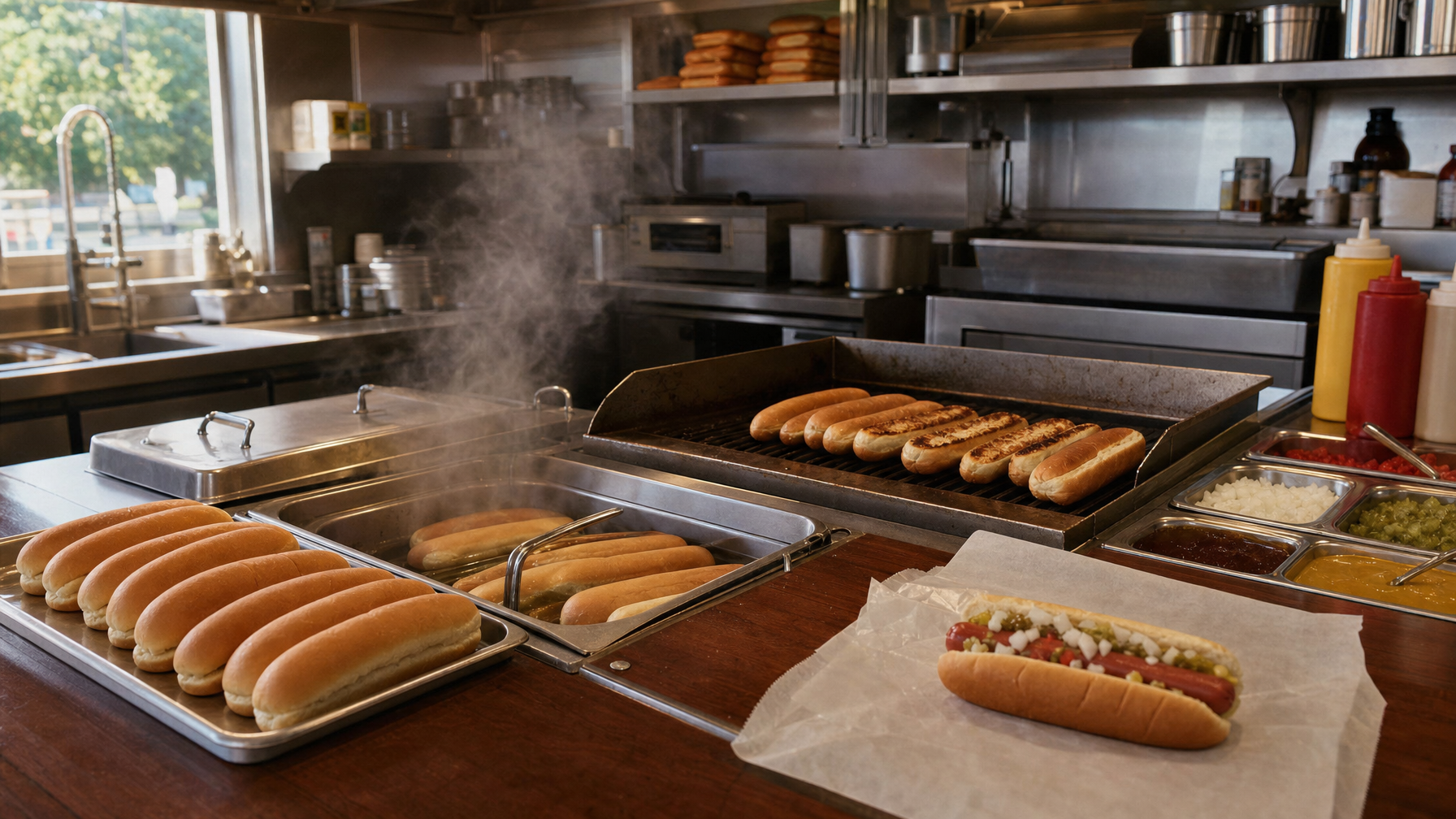
Steaming is expected to emphasize warmth, moisture, and a tender crumb. The result can make the dog and bun feel like one soft, cohesive bite—a very good thing when that is the assignment.
Toasting is expected to emphasize browning, a faint crisp edge, and a sturdier exterior. It can add contrast between the surface and the center, which some people consider character and others consider unnecessary bun theater.
Those are expectations, not recorded trial results. The actual outcome depends heavily on the bun in front of you. Freshness, thickness, sweetness, enrichment, slice depth, and whether the bun is pre-sliced or nearly hinged shut all change the contest. A thin, fragile supermarket bun may react very differently from a thick bakery roll. The bun has opinions. Annoying, but true.
A Fair Fight Needs Matching Dogs, Not Kitchen Drama
Start with two matching buns from the same package. Cook two identical hot dogs by the same method and serve them at the same temperature. If one dog is blistered and the other is barely warm, you are testing chaos, not buns.
Round one: keep the toppings out of it
For the first bite, use the dog and bun alone. This reveals the bread’s texture without mustard moisture, onion crunch, or relish trying to win an election it was not invited to.
Round two: load both dogs exactly the same
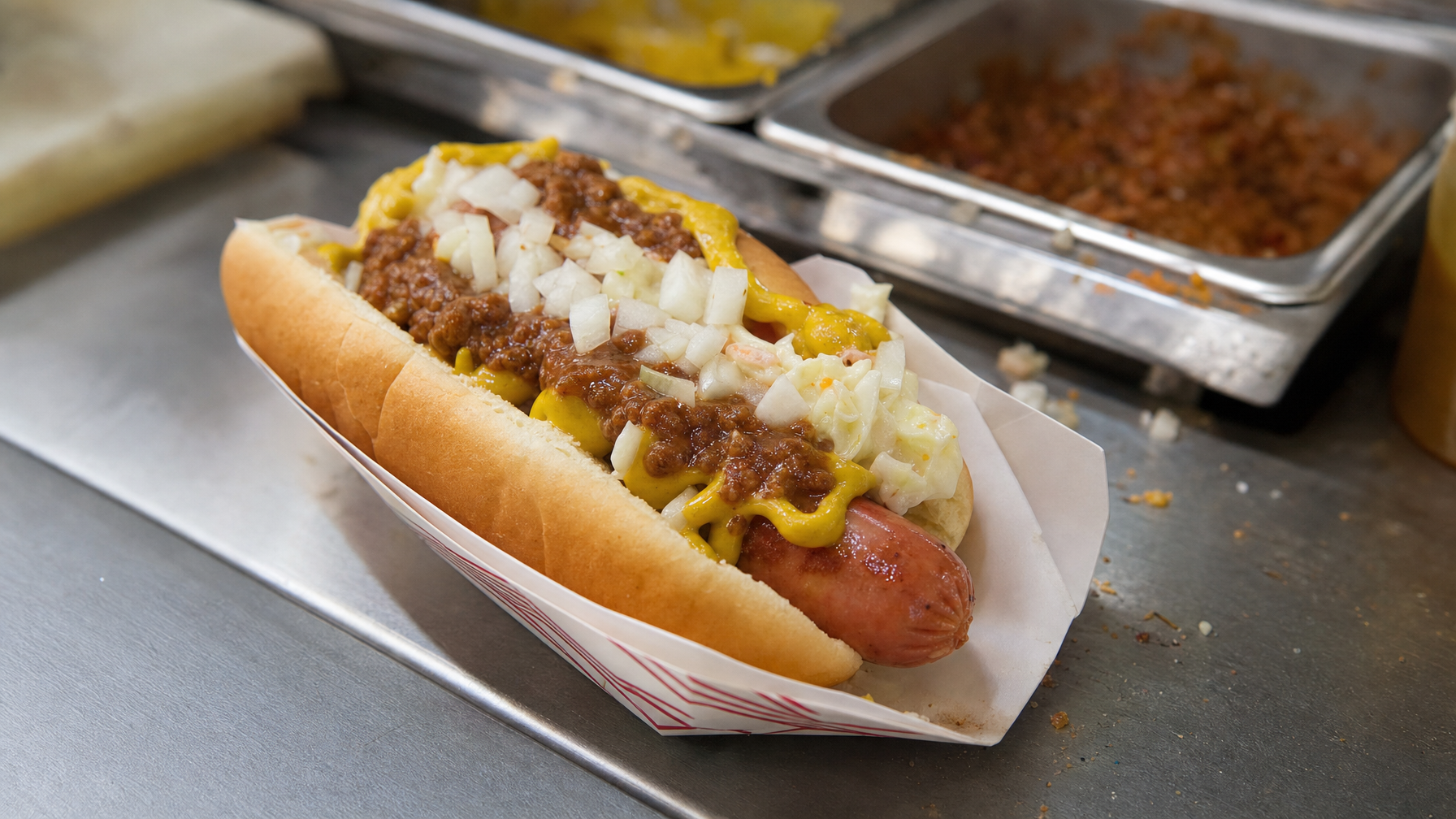
Then add a consistent topping set. Mustard, diced onions, and relish make a useful test group because they introduce moisture and texture without requiring a condiment swamp. Jason’s Grub is proudly no-ketchup; that is a house position, not a universal law. Use the toppings you actually enjoy, but use the same amount on both dogs.
Write down what happened before memory gets theatrical
Record the method and conditions. A phone note is plenty. Photograph or describe each bun immediately after preparation, then again after toppings go on and after a few minutes of sitting. That second look is where a bun may reveal whether it is sturdy or simply posing.
| Variable | Steam bun | Toast bun |
|---|---|---|
| Preparation details | Steam setup and time | Appliance, heat level, and toast location |
| Softness | Score 1–5 | Score 1–5 |
| Chew | Score 1–5 | Score 1–5 |
| Crispness or browning | Score 1–5 | Score 1–5 |
| Stability with toppings | Score 1–5 | Score 1–5 |
| Overall eating pleasure | Score 1–5 | Score 1–5 |
| Notes | Splitting, dampness, tenderness, collapse | Dryness, brittleness, support, useful crunch |
Steam Test: When the Bun Goes Cloudlike—or Goes Too Far
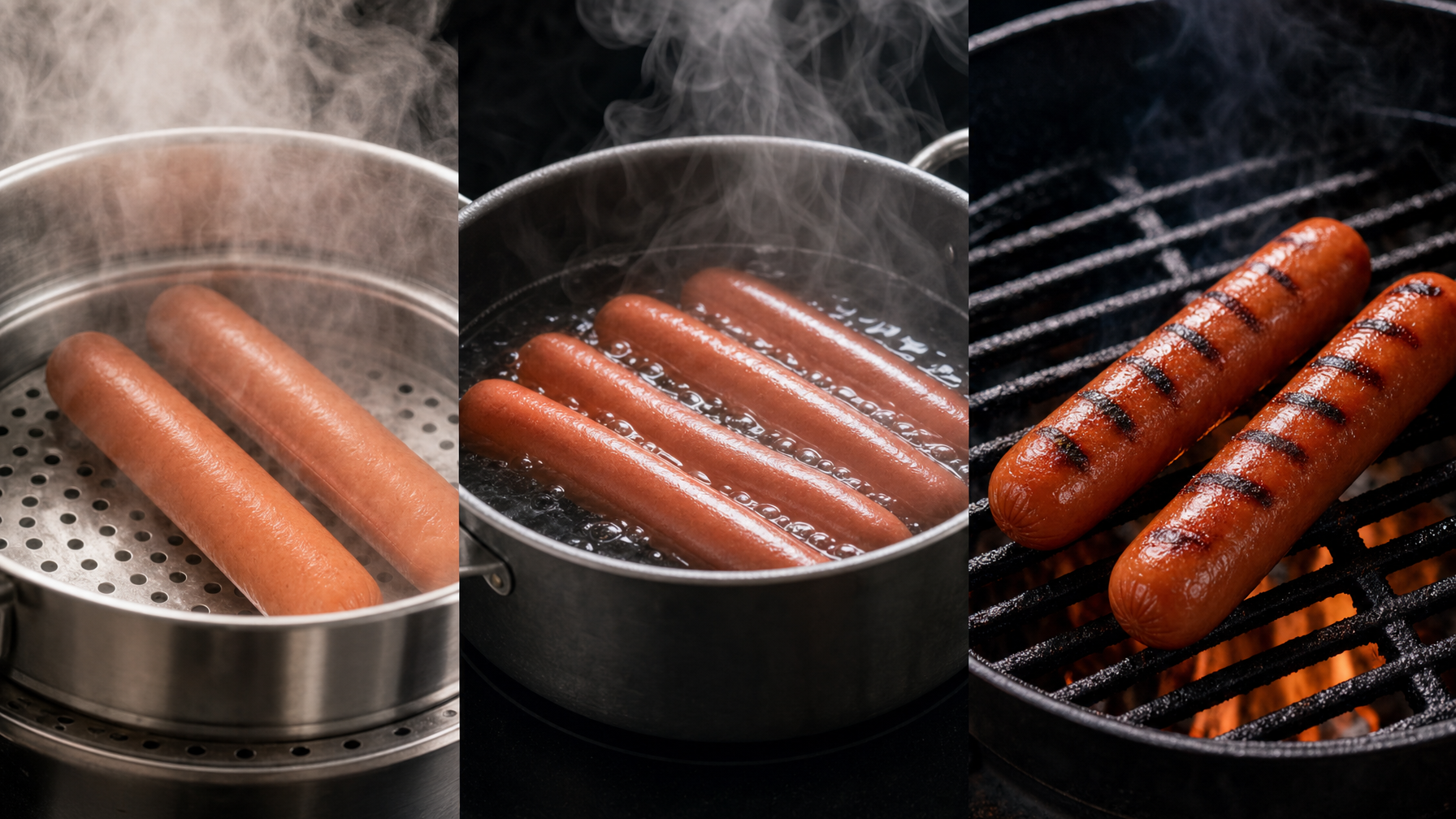
Steam gently. The goal is to warm the bun with steam, not baptize it. Keep it above the water rather than in direct contact with it, and avoid letting condensation pool on the bread. A steamer basket, a covered pan with a rack, or another setup that holds the bun clear of water can do the job.
Exact timing belongs in your test notes, not in a fake universal rule. Different buns respond at different speeds, and a delicate roll can move from soft to sodden with suspicious enthusiasm. Check it as it warms. Stop when it is pliable and heated through.
Then test the steamed bun like it has a job interview:
- Insert the dog and see whether the sides stay intact.
- Lift it and take a normal bite rather than a laboratory nibble.
- Look for moisture buildup, collapsing walls, or a gummy interior.
- Notice whether its tenderness makes the dog feel integrated with the bun rather than perched in it.
A soft bun is not automatically a weak bun. But once it becomes wet, compressed, or gummy, tenderness has taken a wrong turn.
Toast Test: Crisp Edges, Warm Center, Zero Charcoal Crimes
Toast one bun lightly first. A light toast is the cleanest comparison against steam because it creates some browning without converting the bread into a defensive barrier. You may test a more deeply browned bun afterward, but treat that as a separate version. Otherwise you have changed both the method and the intensity, and the results get muddy fast.
Record whether you toast the inside faces, outside, or both. Those choices affect how the bun grips the dog and how quickly toppings soften its surface.
Assess whether the browning contributes flavor and contrast or whether it turns dry, brittle, and distracting. There is a narrow but important line between a useful toasted edge and a hard shell that makes the dog feel like it arrived in a bread helmet.
With toppings applied, watch for splitting at the seam and for squeezing. A toasted bun may resist wet toppings better, but it can also crack if pushed too far. Strong is not the same as inflexible.
The Bite Test: Which Bun Behaves When It Counts?
Take the first bite without toppings. Compare the transition from surface to interior crumb. Does the toasted bun provide a pleasant crackle before the soft center? Does the steamed bun make the whole bite feel warm and unified? Or does either one create an awkward mismatch?
Then take a loaded bite. This is the real courtroom. Watch whether the bun tears, collapses, slides away from the dog, or squeezes toppings out both sides in a tiny edible grievance.
Do not announce a universal winner before you record what happened. This article does not claim an unperformed trial produced a winner. Your scorecard is the conclusion: whichever method delivers the better combination of texture, warmth, and control for that specific bun, dog, and topping load earns the crown.
There is still a useful conditional call: steaming is often the better candidate for a soft, classic, close-knit bite. Toasting is often the better candidate for people who want surface contrast and extra support. “Often” is doing honest work there.
Toppings Are Tiny Lawmakers, and They Change the Verdict
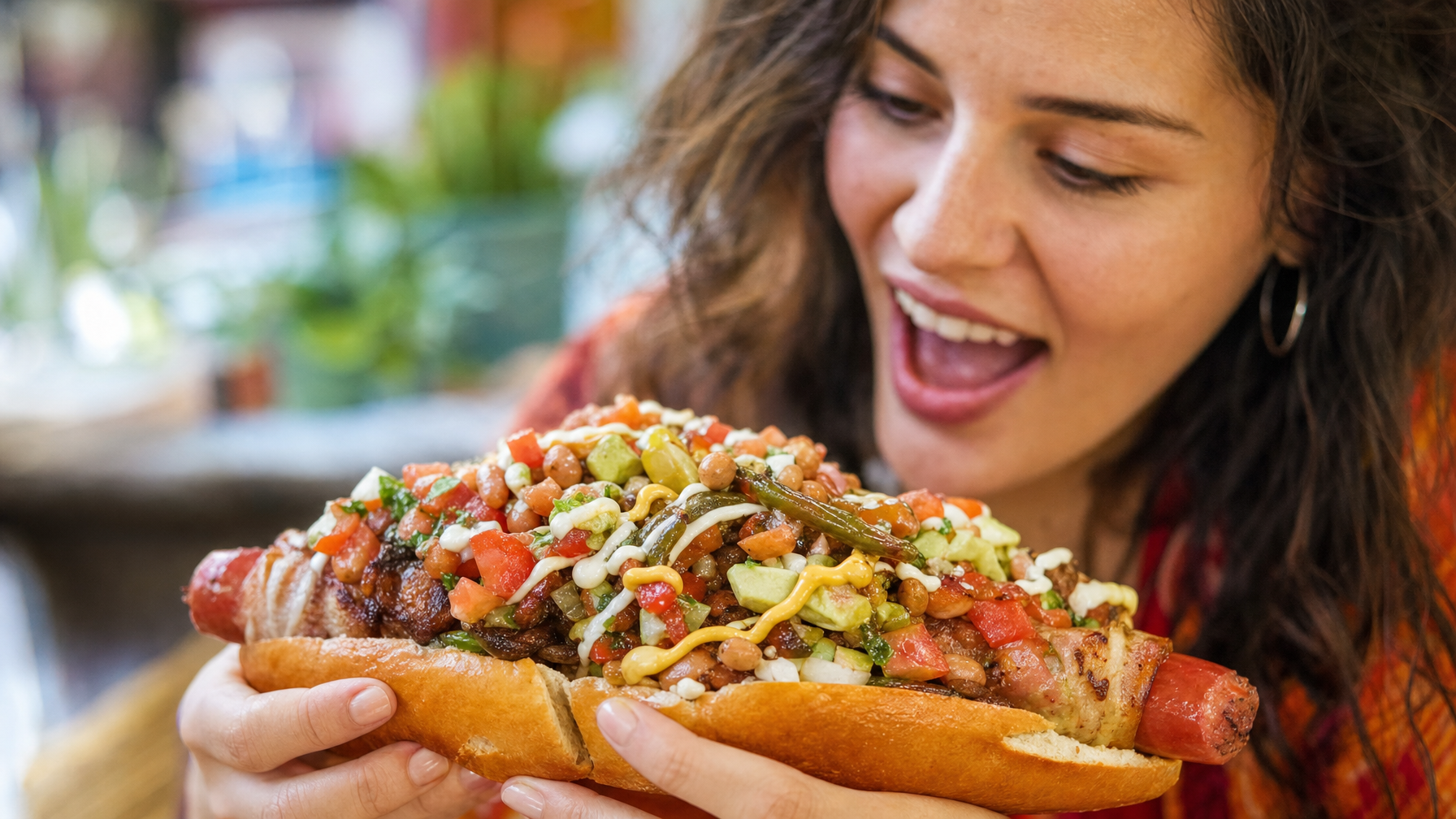
Wet or heavy toppings put pressure on every bun. A tender steamed bun may feel especially fragile beneath generous mustard, relish, saucy onions, or a piled-on topping situation. A toasted bun may offer welcome resistance.
On the other hand, dry or crisp toppings can give a steamed bun the contrast it lacks. Diced raw onion against warm, tender bread can be a very satisfying arrangement. Mustard brings sharpness; relish adds sweetness and moisture. Ketchup remains unwelcome at Jason’s Grub, but your experiment should be honest about the toppings you choose.
Ask one question that cuts through the garnish: Do you want the bun to be a texture feature, or mostly elegant packaging for the dog? Steam favors the second instinct. Toasting makes a more forceful case for the first.
Pick Your Bun Personality, Then Make It Prove It
Use this short decision tree after your side-by-side tasting:
- Choose steam if your preferred bite is tender, warm, and soft from edge to center.
- Choose toast if you want browning, surface contrast, and more support beneath wetter or heavier toppings.
- Choose neither by default if your recorded results show the particular bun performs poorly either way. The bread may be the culprit, not your technique.
- Run it again with another bun style if the score is close. Bun construction can matter as much as the preparation method.
Classic soft-bun loyalists will likely find reasons to love steam. Crisp-edge seekers may prefer toast. Minimalist eaters should taste both methods naked before toppings start lobbying. Heavily topped-dog people should pay extra attention to stability after a few minutes on the plate.
For more specific hot-dog finds, recipes, and food-culture coverage, follow @jasonsgrub on Instagram.
FAQ: Five Bun Questions Before the Next Dog Hits the Plate
Is steaming or toasting better for a hot-dog bun?
Neither wins universally. Steaming favors a soft, tender texture, while toasting favors browning, contrast, and support. A side-by-side test shows which result works best for your bun and topping choices.
Can you steam a bun and toast it afterward?
Yes, but that is a third method, not a pure steam or pure toast result. Test it separately and record it as its own entry on the scorecard.
Which method is better for lots of toppings?
A toasted bun may offer more structural resistance, especially with wet or heavy toppings. But bun thickness, the degree of toast, and the moisture level of the toppings can change that result.
How do you keep a steamed bun from getting soggy?
Use gentle steam, keep the bread out of direct contact with water, and stop as soon as the bun is warm and pliable. Continuing indefinitely is not a technique; it is a moisture ambush.
Should the hot dog be cooked the same way in both tests?
Yes. Keep the dog, its temperature, toppings, and serving timing consistent. Otherwise the sausage hijacks the experiment and the bun never gets a fair trial.
Enjoyed this? There's more from Jason's Grub.
Follow on Instagram →