The Great Hot-Dog Price Screenshot Panic
Short answer: one hot-dog price screenshot can start a conversation, but it cannot explain the whole bill. This is for hot-dog fans and food-culture readers who want to separate a genuinely eye-popping price from missing context, outdated menus, taxes, add-ons, location, and internet theatrics—with Jason’s no-ketchup, 10-year, 50-state perspective keeping the conversation focused on the dog.
Did the hot dog really cost that much, or did the screenshot eat the evidence?
A screenshot is a clue. It is not a sworn affidavit from the Bun Court.
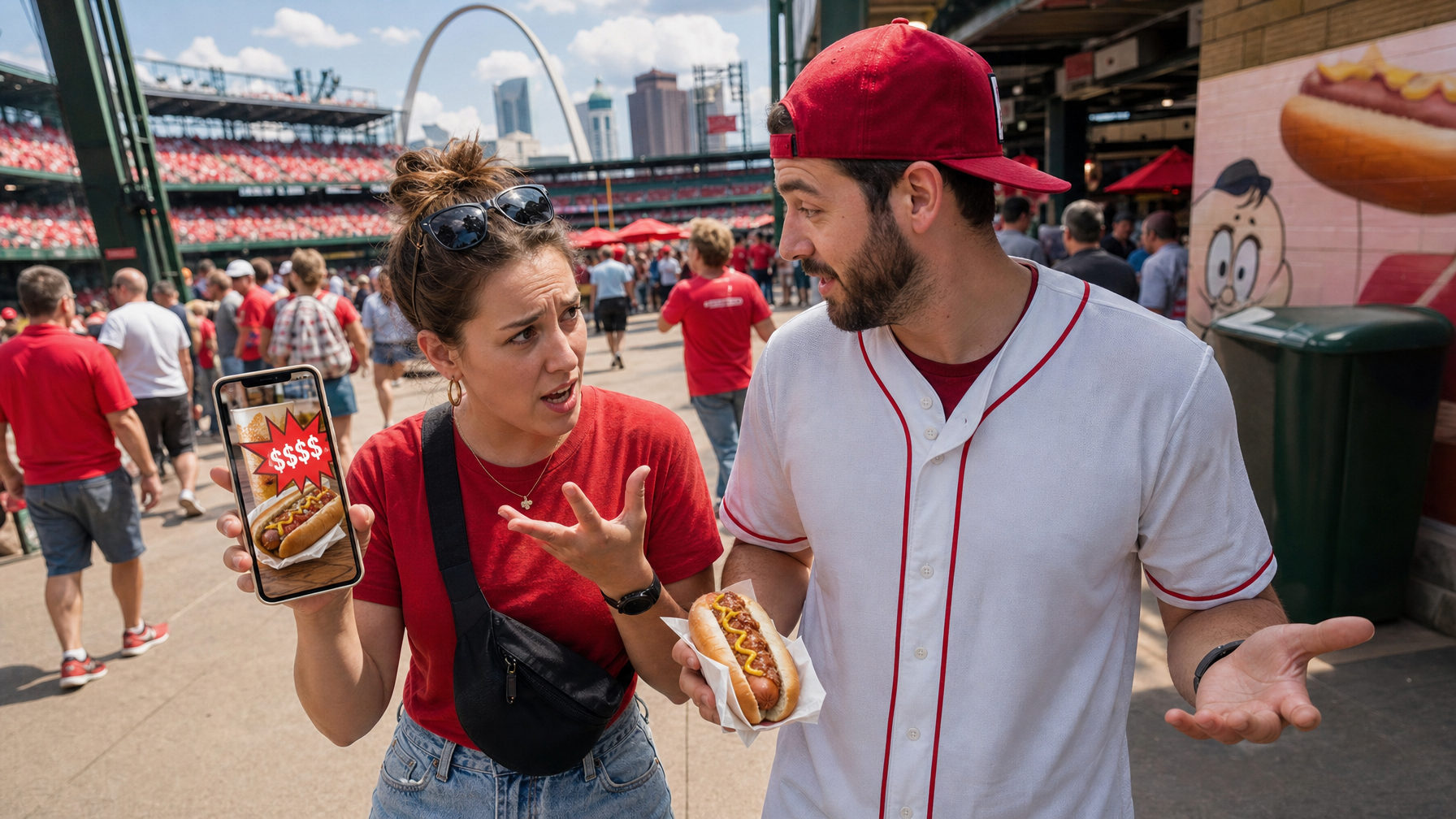
The price screenshot panic is what happens when one image of a menu, receipt, or ordering screen gets treated as proof that hot dogs everywhere have wandered into luxury-goods territory. Outrage is entertaining. It travels fast, wears tiny running shoes, and rarely stops to ask whether the price shown covers a plain dog, a loaded specialty build, a combo, taxes, or a location where practically everything costs more.
A displayed price can absolutely be remarkable. But accuracy requires checking what, precisely, that number represents before declaring the end of affordable lunch. Unless a restaurant, vendor, city, price, or incident has been independently verified, it should not be named or treated as established fact.
A number without a city is just a hot-dog ransom note
Place changes price. A hot dog sold at a stadium, airport, tourist district, neighborhood stand, grocery counter, or roadside cart may look similar in a photo while living under wildly different costs and expectations.
Before comparing anything, identify the exact place, the type of location, and the date. “A hot dog costs this much now” is fog. “This item was listed at this particular destination venue on this date” is information.
- Destination venue: A place people travel to or visit as part of an outing; convenience and setting may be part of the purchase.
- Independent restaurant: A stand-alone restaurant where the dog may be one item in a broader menu.
- Food truck: A mobile operation with its own practical limits and service style.
- Grocery product: A packaged item bought to prepare or eat at home, not a prepared restaurant meal.
- Event concession: Food sold inside an event setting, where entry, access, and convenience shape the experience.
Jason’s city pages and food crawls are built on this basic principle: hot dogs make sense in real places, not in a vacuum-sealed internet argument. A price comparison gets more useful when it starts with where the bun was purchased rather than where the screenshot was reposted.
Before declaring civilization over, inspect the bun-to-bill math
A high menu price and a high final bill are related claims, not identical ones. One is the number printed beside an item. The other is what a customer actually pays after the ordering machine has finished asking whether you would like to financially adopt it.
Check what the number includes or excludes:
- the hot dog and bun
- standard toppings
- fries, chips, or another side
- a drink
- premium toppings or substitutions
- sales tax
- service, ordering, delivery, or other fees
A plain hot dog is not automatically comparable to a specialty build piled with additional ingredients. Neither is a single prepared dog automatically comparable to a packaged product intended for home use. And a combo deserves to be called a combo, not smuggled into the argument as though the fries and drink vanished into another dimension.
Use a simple comparison note before making a judgment:
| What to record | What it clarifies |
|---|---|
| Base item | Whether the price is for a plain dog, specialty dog, combo, or package |
| Included sides | Whether fries, chips, or other food are part of the listed amount |
| Extras | Whether add-ons changed the price |
| Tax and fee status | Whether the image shows menu price or checkout total |
| Final total | What the purchaser actually paid, if a receipt is available |
The screenshot’s fine print is where the mustard-colored bodies are buried
Before sharing a screenshot as evidence, ask a few boring questions. They are boring only until they save you from loudly arguing about a menu that expired ages ago.
- Is the image current or dated?
- Does it show the complete menu or a crop?
- Is the currency visible and clear?
- Is the item still available?
- Does the image show a menu price, an ordering screen, or a final receipt?
- Was the image posted by a firsthand customer, or reposted from somewhere else?
- Could the crop hide item details, included food, taxes, or fees?
Menus, digital ordering pages, and posted prices change. An undated image is not a permanent record, even if the caption is written with the confidence of a man yelling beside a grill. Images can also be cropped, edited, or detached from their original context. That does not mean every screenshot is manipulated; it means a screenshot should be checked before it becomes Exhibit A.
When discussing a specific example, preserve the original post where possible, along with its caption, location, and timestamp. Context is not glamorous, but neither is discovering you were mad at last year’s menu.
Inflation is not a magic word you sprinkle over the bun
Broad cost pressures can affect food businesses. That general reality does not let one screenshot prove a national trend, explain a particular vendor’s pricing, or establish that every hot-dog seller made the same decision.
The sharper question is: is this price unusual for this setting, and what does the customer receive for it? That question has teeth. It asks about the actual dog, the meal around it, the location, and the experience instead of using one number as a foghorn for every lunch counter in America.
Economic explanations should stay general unless current, checkable sources are available. No bun deserves to be used as a prop in an evidence-free economics lecture.
Is it expensive, outrageous, or simply not worth it?
Price and value are cousins, not twins. A purchase can be expensive yet feel worthwhile because of portion, ingredients, preparation, setting, convenience, or the larger experience. It can also be cheap and still be a sad little tube in a tired bun. Both things can be true. Life is complicated; lunch is occasionally tragic.
Jason’s position is an opinionated one: inspect the dog itself before worshipping or condemning the number beside it. Is it properly cooked? Is the bun doing its job? Are the toppings deliberate, balanced, and actually suited to the dog? Is the place offering something specific, or charging fancy money for a forgettable chew?
Those are judgment calls, and they should be labeled as such. Without verified details about a named vendor and item, calling anyone a rip-off is lazy. A stronger verdict starts with a real visit, a clear menu, and a direct look at what landed on the tray.
Post the screenshot like a grown-up before the internet starts barking
If you want to share a hot-dog price screenshot, make it useful instead of merely flammable. Give people enough information to evaluate it.
- Name the place and the type of location.
- Date the image or state when the purchase happened.
- Identify the exact item.
- Show what is included: toppings, sides, drink, or package quantity.
- Note whether taxes and fees are included.
- Say whether it is your firsthand purchase or a repost.
- Ask for the original menu or receipt before making larger claims.
A sharper caption sounds like this: “Here is what this item costs at this specific place on this date.” A weaker caption is: “Hot dogs cost this everywhere now.” One invites discussion. The other is just a siren wearing a baseball cap.
Jason’s verdict: protect the dog, interrogate the screenshot
A screenshot can spark curiosity. Context decides whether the price is actually remarkable.
Hot-dog culture is made of specific places, products, recipes, and real meals—not anonymous clouds of outrage floating over a cropped checkout screen. Jason has spent 10 years tracking dogs across 50 states with zero ketchup in the equation, and the useful question remains stubbornly simple: what was this particular dog, where was it sold, and was it worth the bill?
For ongoing hot-dog observations, follow @jasonsgrub on Instagram.
The internet may bring the screenshot, but somebody still has to inspect the bun, the bill, and the fine print.
FAQ: five questions before you throw your phone at the condiment station
Does one hot-dog screenshot prove prices are rising everywhere?
No. It documents one displayed price. Readers still need the place, date, item details, and relevant comparison points before making a broader claim.
What should I check first?
Check the location, date, currency, item description, included sides or toppings, taxes, and additional fees.
Is a specialty hot dog fair to compare with a basic one?
Only when the comparison clearly explains the differences in ingredients, portion, preparation, and what comes with each item.
Can an old screenshot still be useful?
Yes. It can be a historical snapshot or a conversation starter, but it should not be presented as a current price without verification.
Where can I follow Jason’s hot-dog research?
Follow @jasonsgrub on Instagram for more hot-dog places, products, recipes, and culture coverage.
Enjoyed this? There's more from Jason's Grub.
Follow on Instagram →