New York-Style Simplicity Is Harder Than It Looks
New York-style simplicity is difficult because every topping has to earn its place: the dog, the bun, the mustard, and the restrained extras must work as one clean bite. This is for hot-dog obsessives and food-culture readers building or judging a New York-inspired dog—not a ruling on every cart, borough, vendor, or family tradition. New York has never needed one more person announcing that everybody else is doing lunch wrong.
1. Decide what “New York-style” means before the toppings form a committee
Start with a target: a streamlined, street-cart-inspired hot dog built for a quick, complete bite. That means a frank in a soft bun, mustard doing serious work, and a small supporting cast rather than a toppings summit meeting.
This is an interpretation, not a declaration that every New York hot dog is identical. Different vendors and households have their own habits, ingredients, and loyalties. Treat “New York-style” here as a useful design constraint: keep the build focused enough that the dog remains recognizable from first bite to last.
Before adding anything, ask what job it has. An ingredient should contribute at least one of these:
- Flavor: savory depth, sweetness, tang, or spice.
- Texture: snap, softness, or a gentle bit of chew.
- Contrast: acidity against richness, or a warm topping against a cool, sharp sauce.
- Aroma: the oniony, mustardy signal that tells your brain lunch has arrived.
If it has no job, it is decorative rubble. Leave it off.
2. Choose a dog with enough swagger to survive the bun
Pick a hot dog with noticeable seasoning and a casing or texture that gives some resistance when bitten. The central test is brutally simple: if the toppings are more memorable than the dog, the build has lost the plot.
You do not need a branded shopping list to make this happen. Look for a frank you already enjoy plain or with only mustard. If it tastes timid before assembly, more onions will not turn it into a masterpiece. They will turn it into a shy dog wearing a loud hat.
Several cooking approaches can work:
- Simmering keeps the dog juicy and gives a softer, cart-adjacent character.
- Grilling adds smoke and char, which can be excellent but pushes the flavor in a more forceful direction.
- Pan-searing creates browned flavor and a lightly crisp exterior without making smoke the main event.
For this finished build, choose pan-searing. Heat a skillet over medium heat, add the frank, and turn it regularly until it is heated through and lightly browned. Avoid blasting it until the casing splits wide open; that is not extra snap, that is a sausage panic attack.
3. Find a bun that behaves like a soft little bridge
Use a fresh, soft hot-dog bun with enough give to cradle the frank and toppings. The bun is not scenery. It controls whether the bite stays together, whether mustard lands on your shirt, and whether every mouthful contains something besides bread.
Warm it gently: a brief pass of steam, a few moments in a covered warm pan, or a short warming period in the oven will do. You want it pliable and fragrant, not toasted into cracker territory. A hard bun fractures under a juicy dog and loose toppings; then everybody loses, especially your lap.
Watch the bread-to-dog ratio. There should be enough bun to contain the filling and soften the salty, savory bite, but not so much that you need excavation equipment to reach the frank. When the bun dominates, the hot dog becomes a tunnel project.
4. Give mustard the keys, not a megaphone
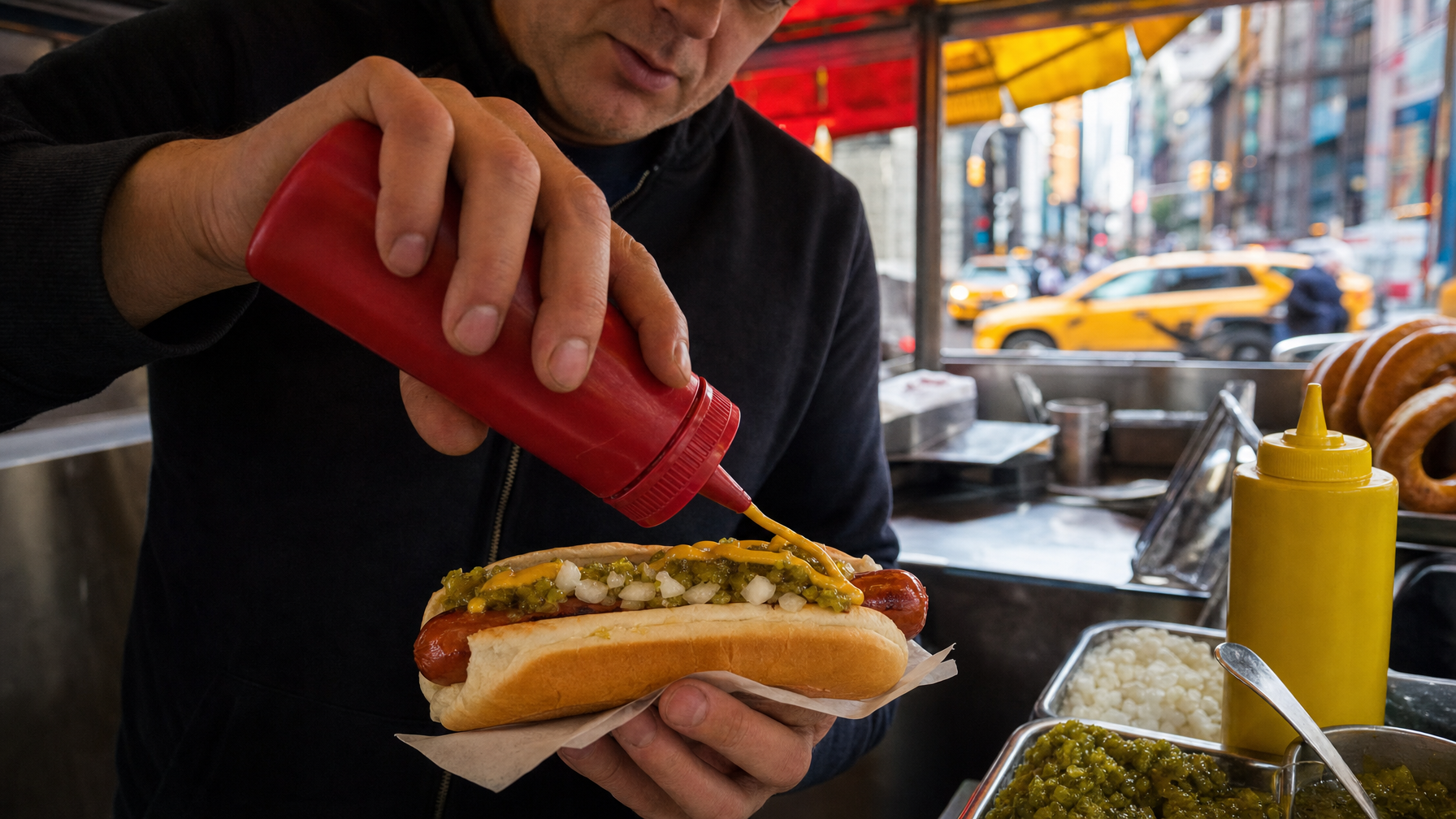
Make mustard the primary sauce. Its job is to bring acidity, a little heat or pungency, and moisture without covering the frank’s seasoning. A controlled stripe down the top is usually more useful than a thick yellow landslide.
No single mustard style gets to claim permanent ownership of this idea here. Use a mustard whose sharpness and texture you enjoy, then adjust its amount to the dog. A punchy mustard may need a lighter hand; a milder one may tolerate a slightly fuller stripe. The point is seasoning, not a hostile takeover.
Apply mustard after the dog goes into the bun, not directly onto the bread. That placement puts the sauce where the bite happens and helps limit premature bun sogginess.
5. Spend toppings like the money is actually yours
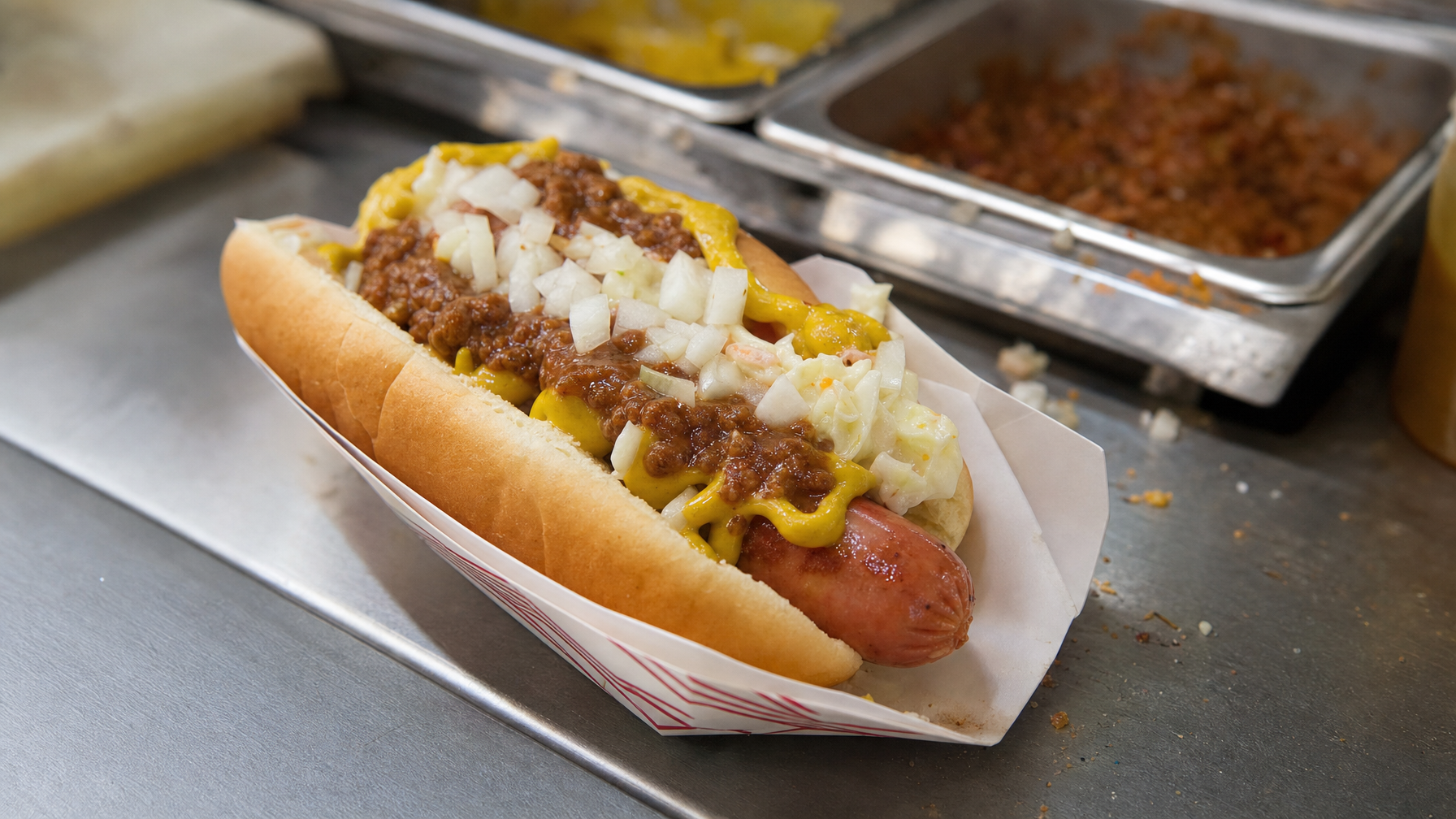
Choose one restrained accompaniment—or at most a very small, compatible group—and prepare it with intent. Finely chopped onions are a natural fit for this stripped-down direction: they bring sharpness, aroma, and a tiny bit of texture without requiring a civil-engineering permit.
If using onions, keep the pieces small enough that they settle along the dog rather than rolling out with the first bite. If they are cooked or sauced, drain them enough that the bun remains a bun for longer than thirty seconds. Loose, wet toppings belong in a shallow channel along the top of the frank, not in a mountain perched above it.
Ketchup is outside Jason’s stated no-ketchup stance. That is the house opinion, delivered with conviction and without pretending it settles every New York argument ever held beside a cart. Readers can make their own choices; Jason will be over here, maintaining ten years, 50 states, and zero ketchup.
6. Assemble it in an order that stops the topping rebellion
Build the dog in a sequence designed for actual eating, not for a dramatic overhead photo.
- Set the gently warmed bun open on a plate or wrapper.
- Place the hot, pan-seared dog neatly in the center.
- Run a controlled stripe of mustard along the dog.
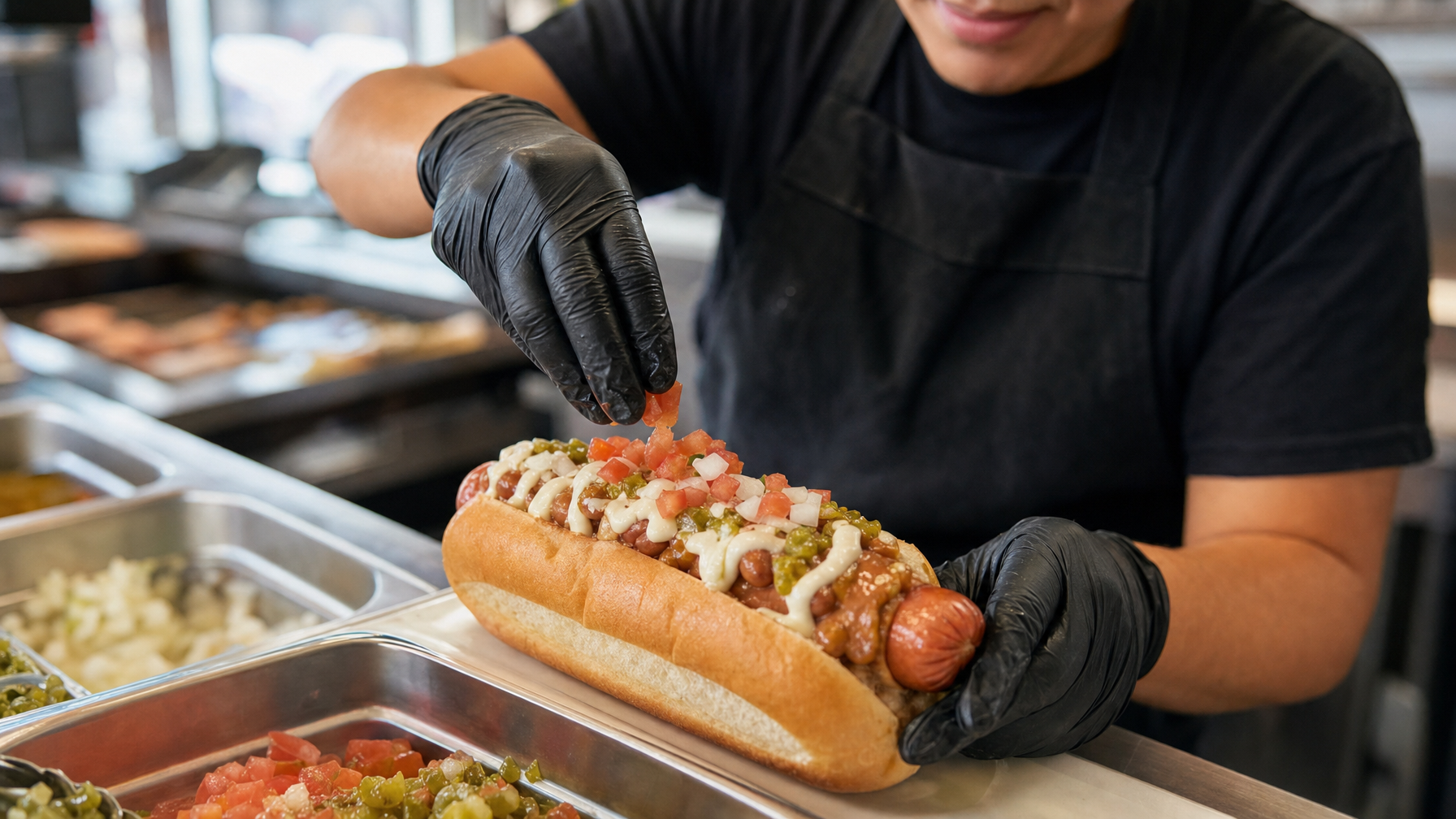
- Add the prepared topping in a narrow, modest line.
- Give the bun a light squeeze to settle the filling without crushing it.
Placement is flavor management. Mustard on the dog stays in the bite. Toppings nestled into the mustard are less likely to escape. A topping heap that extends beyond the bun is not generosity; it is a countdown to an onion rolling into somebody’s shoe.
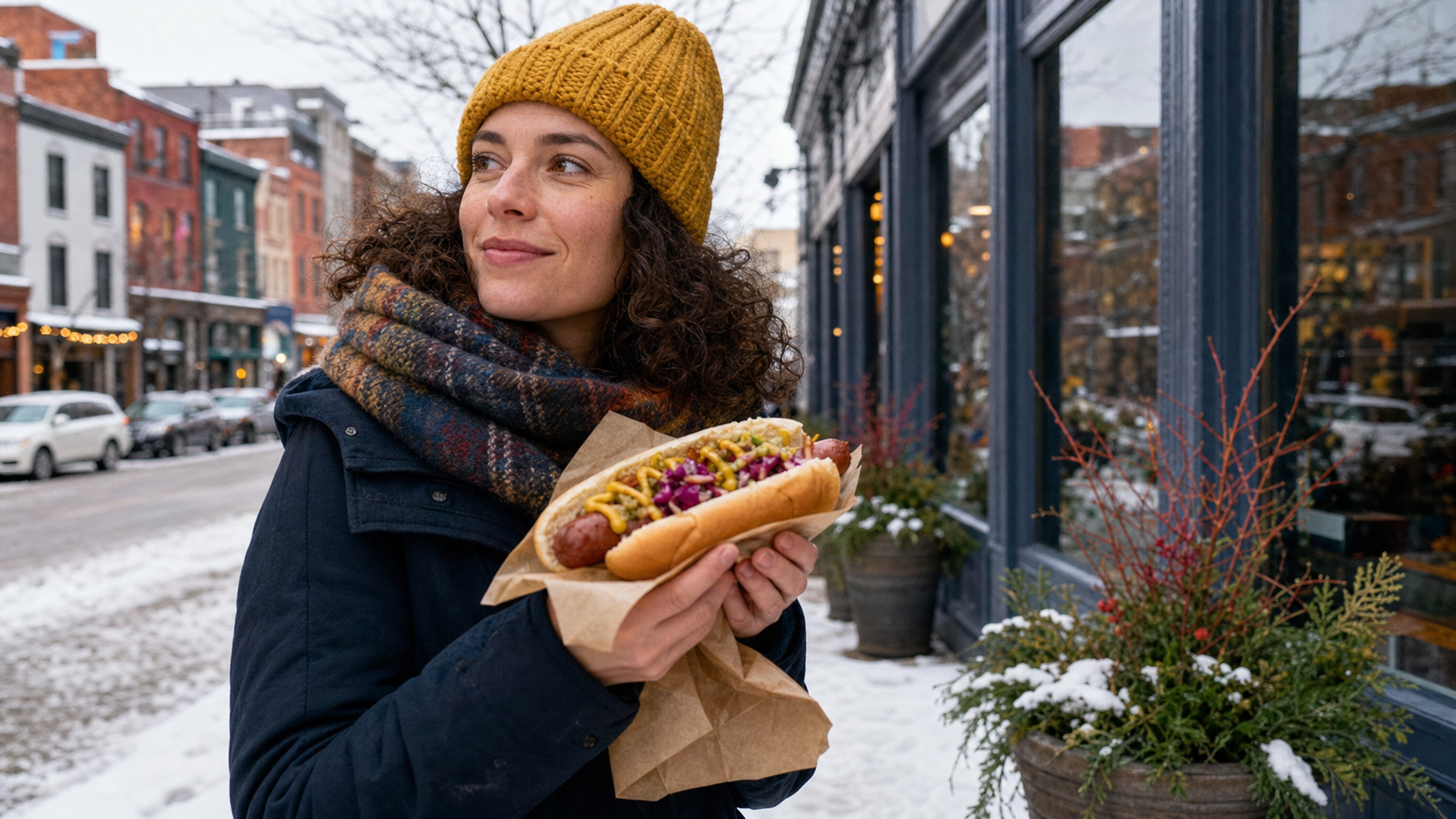
Use this visual checkpoint before taking a bite: the finished dog should look deliberate, portable, and easy to eat. You should be able to lift it with one hand, take a bite without rearranging the meal, and see the dog rather than a condiment explosion.
7. Taste it like an obsessive, not a food-show astronaut
Take a first bite from the middle, where bun, dog, mustard, and topping should meet. Then taste again near each end. A good build should not become an all-bread opening act followed by a mustard-heavy finale.
Use this short rubric. It is a tasting tool, not a courtroom:
- Snap: Does the dog have a satisfying bite, or is it soft and anonymous?
- Bun: Is it warm and tender without turning wet or splitting?
- Mustard: Does it brighten the dog, or does it bulldoze every other flavor?
- Toppings: Do they add a clear note, or merely add bulk?
- Balance: Is it too salty, too wet, too sweet, or too sharp?
- Portability: Does each bite hold together?
- Star power: Can you still taste the hot dog?
Calling a bite “New York-style” is a personal reading of a broad food tradition, not a laboratory result. The more useful description is concrete: crisp or soft, sharp or mild, tidy or unruly, dog-forward or topping-forward. Say what happened in your mouth. It is more interesting than issuing a fake passport.
8. Make the tiny ingredient list earn every inch
This is the paradox: fewer components leave fewer places for weak ingredients, sloppy cooking, stale bread, or confused flavor to hide. A loaded dog can occasionally survive chaos. A simple dog has nowhere to stash a bad decision.
Once you can build the restrained version cleanly, make one sensible change at a time. Try simmering instead of pan-searing for a softer character. Switch to a different mustard for a sharper or gentler edge. Change the onion treatment while keeping the amount modest. Preserve the structure: dog first, bun supporting, mustard brightening, topping assisting.
Jason’s tasting lens is openly personal: ten years, 50 states, zero ketchup. It is a point of view, not a mandatory oath. The useful lesson is not that every reader must copy the exact preference; it is that simplicity deserves enough attention to become specific.
9. Send your cleanest bite to @jasonsgrub
If you enjoy specific hot-dog builds, real places worth seeking out, purchasable finds, and the occasional food-culture argument with teeth, follow @jasonsgrub on Instagram. Bring a dog with snap, a bun that can do its job, and please do not make the onions file a zoning application.
Enjoyed this? There's more from Jason's Grub.
Follow on Instagram →