Why Does a Steamed Bun Sometimes Beat a Toasted Bun?
A steamed bun sometimes beats a toasted bun because warm, soft bread lets a snappy sausage and its toppings get on with the job instead of starting a crunchy bread-versus-meat bar fight. But there is no Bun Supreme Court: toast wins when contrast, sturdiness, or a bit of browned flavor improves the particular dog in front of you. This is for hot-dog obsessives and food-culture eaters who care about the actual bite, not a laminated list of toppings.
The bun is driving, even when it pretends to be the passenger
A hot-dog bun is not packaging. It determines whether a dog feels unified, messy, crisp, cushioned, dry, hefty, or like it needs a structural engineer.
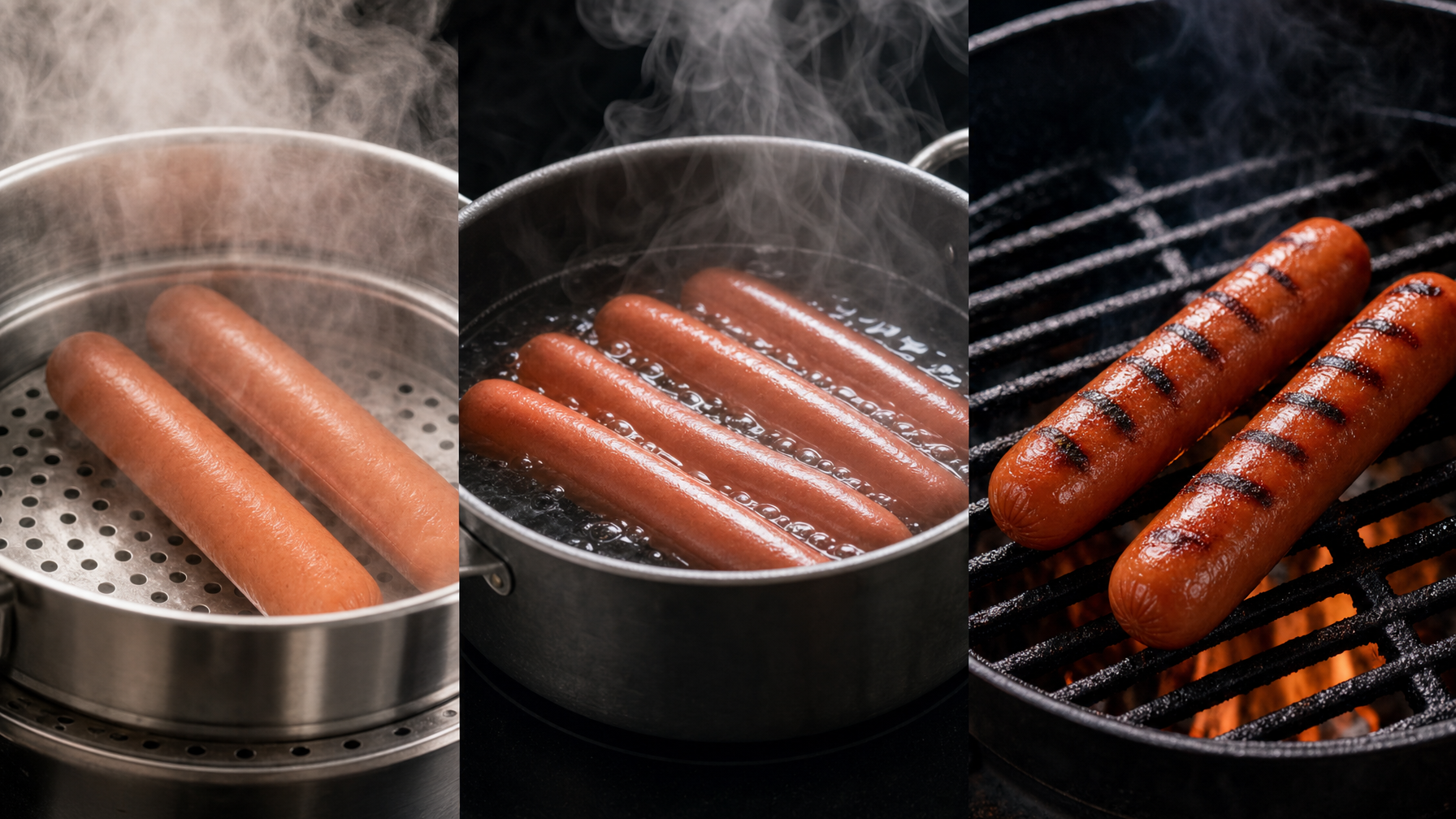
Steaming warms and softens the bread. The bun becomes pliable, gentle, and ready to hug the sausage rather than challenge it to a duel. Toasting firms and browns the bread’s surface; when butter or oil is involved, it can also bring richness and a deeper cooked flavor.
Neither method wins by default. The right call depends on the casing snap, the sausage’s juiciness, the volume and moisture of the toppings, and the texture you want at the finish. A bun is part of the recipe, not an afterthought that wandered in late wearing sesame seeds.
When a soft bun lets the dog do the shouting
A steamed bun is at its best when the sausage already has plenty to say. Put a crisp-cased, snappy dog inside a soft bun and you get a satisfying soft-crisp-soft sequence: pillowy bread, a clean pop from the casing, then tender meat. The dog gets the microphone.
Softness also has a practical virtue: flexibility. A bun that bends can wrap around a generous pile of mustard, relish, onions, or chili without cracking along the sides and firing toasted fragments into your lap. That is not elegance. That is lunch escaping custody.
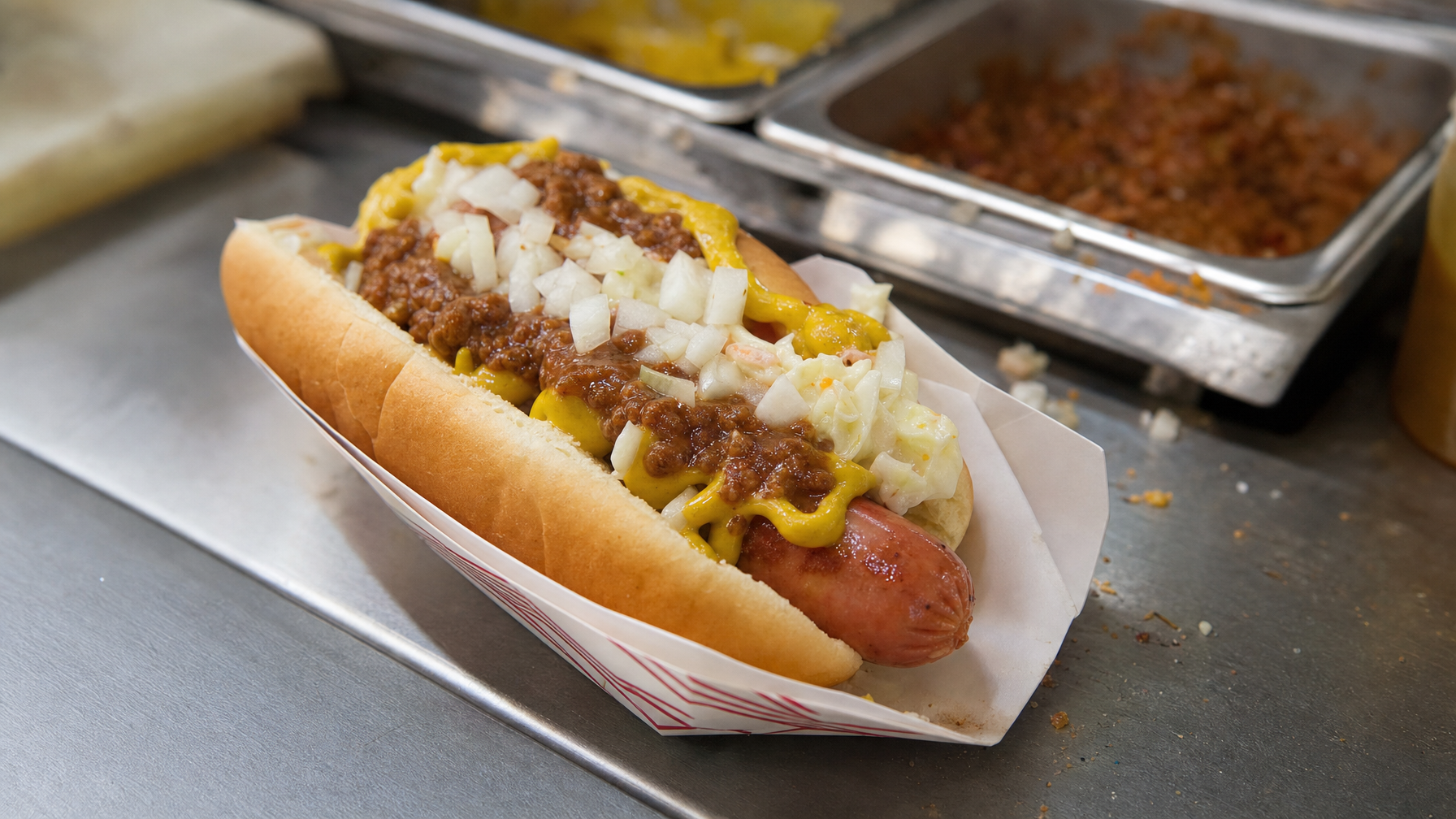
Consider a juicy dog with mustard, relish, and onions. In a steamed bun, those elements can feel integrated: the bread yields, catches a little of the seasoning, and makes each bite feel like one assembled thing. In a dry, rigid bun, the same build can become a sequence of competing textures.
That does not make steaming inherently superior. It makes it the better move when softness and cohesion are the point.
Toast brings crunch—and occasionally becomes unbearably chatty
Toasting creates contrast. A browned bun beside a tender, juicy sausage can make a simple dog feel livelier, especially if the sausage itself has a softer texture. It can also add useful support under substantial toppings, provided the bread is sturdy rather than brittle.
There is real pleasure in a lightly toasted bun: a little crispness at the edge, a little warmth, maybe a modest buttery note, then sausage. Properly handled, toast is a very good supporting actor.
Properly handled is doing some heavy lifting there. Aggressive browning can turn the bun tough. Too much butter or oil can make the bread greasy while burying the sausage under a loud, rich crust. And a hard toasted edge can force every bite into a wrestling match.
My ruling: toast should contribute texture and structure, not steal the hot dog’s lines.
Moisture decides the bun battle, because physics refuses to be ignored
Steaming makes bread supple, but it can go too far. A bun that absorbs steam, sausage juices, chili, and a watery topping all at once may lose its grip and become floppy. Warm and pliable is the assignment; damp and collapsing is not.
Toasting can provide resilience. A firmer surface may stand up better to a moist topping pile, and it can slow the sensation of the bun immediately turning to mush. But over-toasting creates the opposite problem: bread that resists the bite rather than supporting it.
As a general matchup, dry or lightly dressed dogs often welcome a touch of toast because they benefit from added contrast. Saucy builds may favor a softer bun when the bread still has enough strength to hold together. A sturdy steamed bun is not a contradiction; it is simply a bun that has been warmed without being steamed into surrender.
Judge the bun after the full build arrives. A naked bun is not the meal. The sausage, toppings, and their moisture are the evidence.
The snap test: match the bread to the sausage, not your ideology
For a dog with a pronounced casing snap, a steamed bun often makes that snap more noticeable. The soft bread gives the casing a clean contrast, so the first bite feels deliberate rather than noisy.
For a softer sausage or a more delicate-textured dog, toasting can provide needed lift. If the sausage and bun are both soft, the whole thing can feel shapeless. If the sausage has a firm casing and the bun is aggressively crisp, every component may be shouting at the same volume.
| What is happening in the dog? | Bun move worth trying | What it can accomplish |
|---|---|---|
| Pronounced casing snap | Steam | Lets the snap stand out against soft bread |
| Softer or more delicate sausage | Light toast or griddle | Adds contrast without overwhelming the filling |
| Many wet, heavy toppings | Sturdy toast or a substantial steamed bun | Helps control the build, depending on moisture |
| Simple, lightly dressed dog | Either, based on desired texture | Lets you choose comfort or crunch on purpose |
Jason’s tasting lens is not neutral, nor should it be: ten years, 50 states, zero ketchup. That is an opinionated way to eat through hot-dog country, not a claim that one preparation wins everywhere. The useful question is always: what helps this sausage become more itself?
Steamed, toasted, or split the difference? Pick by the dog
Choose a steamed bun when the sausage has a strong snap, the toppings are numerous, or you want a soft, cohesive, comforting bite. Choose toast when the dog needs a little crunch, when the bun must bear a serious topping load, or when browned bread flavor belongs in the picture.
There is also the sensible middle path: a lightly warmed or gently griddled bun. This can add surface character and a bit of structure without converting the bread into a cracker with ambition.
Run a two-bun taste test at home
- Use the same sausage, bun type, cooking method, and toppings for both versions.
- Steam one bun until warm and pliable.
- Lightly toast or griddle the other; do not char it into a personality disorder.
- Compare the first bite, topping control, sausage snap, and the final few bites, when moisture has had time to make its case.
- Pick the winner for that build, then refuse to turn it into a universal law.
The hot-dog verdict: better is a matchup, not a monarchy
Steaming wins when it protects the sausage’s texture and keeps a loaded dog unified. Toasting wins when contrast and structure make the bite more exciting or more manageable. Ranking bun preparation without naming the dog, the toppings, and the eating style is just bun astrology.
A good bun should carry the dog, not audition for the lead role.
For more hot-dog places, products, recipes, and culture coverage, follow @jasonsgrub on Instagram.
Five bun questions before the mustard hits
Is a steamed bun always softer than a toasted bun?
Usually, yes. But the final texture also depends on the bun’s density, how long it is steamed or toasted, and how much moisture the finished dog brings to the party.
Does steaming make a bun soggy?
It can. Over-steaming or pairing a delicate bun with a very wet build can cause trouble. The target is warm and pliable, not damp and collapsing.
Is toasting better for loaded hot dogs?
Often, because a firmer bun can help carry heavy toppings. Still, a sturdy steamed bun can work beautifully when topping moisture is under control and the goal is a more cohesive bite.
Which bun is better for a snappy hot dog?
A steamed bun often highlights the snap by placing it against softer bread. A toasted bun can also work, but it emphasizes crunch and browned flavor more strongly.
Can I use the same bun for both methods?
Absolutely. The results will depend on the bun’s size, density, and ability to hold toppings without tearing. That is precisely why the side-by-side test is worth doing.
Enjoyed this? There's more from Jason's Grub.
Follow on Instagram →