Chicago Has Rules, But Does the Relish Have to Run the Kitchen?
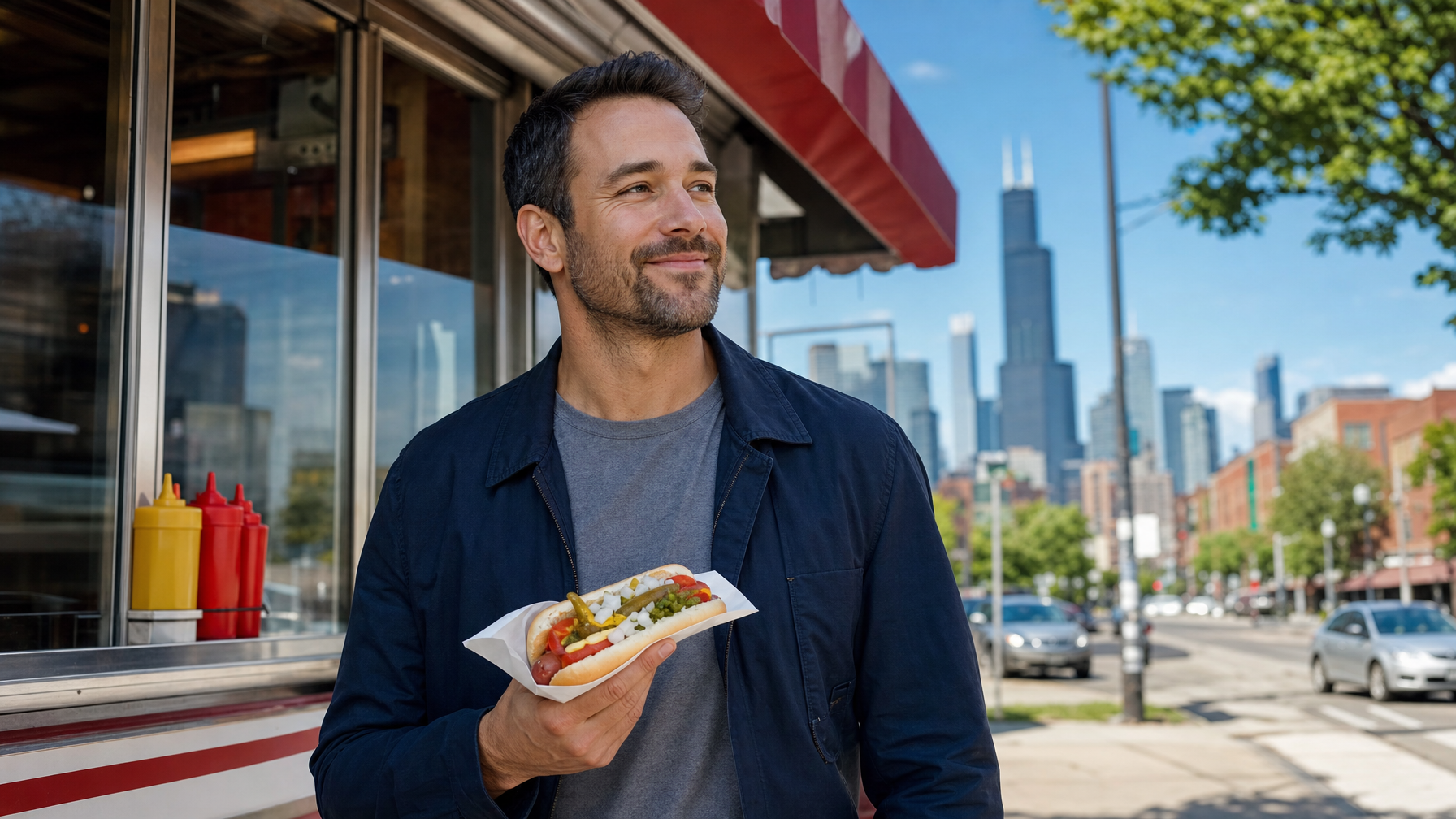
For Chicago-style hot-dog fans, classic relish is part of the tradition—not a law of nature. This is for curious hot-dog people who want to know what makes a Chicago dog recognizable while deciding whether that electric-green, pickle-bright relish deserves to boss every bite. My answer: taste the traditional build, respect the build, then make your own call. A hot dog is lunch, not a museum exhibit with a security guard.
Chicago Has Rules—But Who Elected the Relish?
Relish is a defining feature of the familiar Chicago-style hot dog, but personal taste—not condiment police—gets the final vote. Regional food traditions matter because they give a thing its identity. They tell you that this is not merely a sausage in a bun wearing whatever fell out of the refrigerator. It is a deliberate pile-up of contrasts.
But tradition and obedience are not the same meal. A Chicago dog should have a point of view; it should not demand your sworn allegiance to every teaspoon of every topping. If relish is too sweet for you, too soft for you, or simply too enthusiastic for the rest of the dog, that is useful information—not a character flaw.
My position comes from ten years of hot-dog research across 50 states and a resolute zero-ketchup stance. That is an informed, extremely snack-motivated opinion, not an official ruling from the city of Chicago. The relish gets a seat at the table. It does not get the gavel.
What Makes a Chicago Dog Feel Like a Chicago Dog?
A Chicago-style hot dog is a recognizable regional build: a sausage and bun assembled with a familiar family of toppings and presented as a high-contrast, maximalist bite. Its identity comes from the combination, not from one isolated condiment doing jazz hands in the foreground.
The familiar profile puts savory sausage beside sharp or tangy toppings, fresh crunch, and bright relish. Mustard brings bite. Onion brings its raw little spark. Pickle adds brine and snap. Other customary components contribute their own textures and flavors. Together, they turn a simple frank into something more opinionated.
That does not mean every restaurant prepares every version identically, or that every eater encounters the exact same ingredient list. Recipes, sourcing, portioning, and personal interpretations vary. The useful question is not whether a dog has passed a tiny courtroom inspection. It is whether the recognizable Chicago-style interplay is still there.
Relish contributes a distinct part of that interplay. A spoonful can bring sweetness, acidity, vivid color, and a small pop of texture against the snap of the frank. When it is in balance, it acts like a bright guitar line: noticeable, lively, and not somehow louder than the whole band.
Relish Is a Co-Star, Not a Tiny Green Dictator
A signature ingredient is not automatically an ingredient that must dominate every bite. That distinction saves many hot dogs from becoming condiment delivery systems with a sausage trapped underneath.
My opinion: relish should support the dog. It should lift the sausage, mustard, onion, pickle, and bun rather than flatten them into one sugary-green blur. If the frank disappears beneath a relish avalanche, the dog has stopped being a collaboration and started being a hostage situation.
Three questions worth asking before the next bite
- Is it sweet or sharp? A sweeter relish can soften the sharper toppings; a tangier one may lean more forcefully into the pickle side of the experience.
- Is it fine or chunky? Finely chopped relish can spread its flavor through the bite. A chunkier version can announce itself more clearly, for better or for louder.
- Does it brighten or bury? Brightening means the other ingredients remain distinct. Burying means you mostly remember green sweetness and regret.
Those are tasting judgments, not universal food law. One eater may want a flashy, sweet-heavy bite; another may want mustard and sausage to do the heavy lifting. Both are allowed to own a napkin.
Can You Order It Without Starting a Condiment Trial?
Yes. The practical options are beautifully un-dramatic: ask for less relish, request it on the side, or leave it off if the sweetness or texture is not your thing. The person taking your order has almost certainly seen more complicated requests before noon.
If you are visiting a Chicago-style stand or restaurant for the first time, try the traditional version first when you can. It gives you the intended flavor conversation before you begin editing the transcript. On a return visit, adjust with purpose: less relish if it runs sweet, side relish if you want control, no relish if it simply does not improve your lunch.
Changing a topping changes the experience. It does not make you a food criminal. Local styles deserve curiosity and respect; they do not require a legally binding oath signed in celery salt.
Small etiquette, large payoff
- Respect the local style enough to understand what it is trying to do.
- Enjoy the local style without treating your preferences as an insult to it.
- Ask clearly and pleasantly if you want an adjustment.
- Do not mistake tradition for a court summons.
The No-Ketchup Question Is a Different Beast
Relish and ketchup are not the same argument wearing different hats. Adjusting relish is often a question of intensity: how much sweetness, acidity, and chopped-pickle texture do you want in the mix? Ketchup is commonly treated by Chicago-style traditionalists as outside the classic flavor profile altogether.
My own position is simpler and louder: zero ketchup. That is Jason’s brand perspective, not a claim that every hot-dog eater must live under my condiment constitution. Still, ketchup can pull a Chicago-style dog in a noticeably different direction because its sweet tomato profile is not part of the familiar topping balance people expect.
Relish, by contrast, is already speaking the language of the build. You can turn its volume down without changing the conversation entirely. Add ketchup, and you have invited a new speaker to the microphone—one who tends not to whisper.
Try a Better Relish Test Before Declaring Victory
Instead of arguing about relish in the abstract, taste it like a person who would like to enjoy their lunch. Start with the frank: notice the snap, savoriness, and how the bun holds the bite together. Then notice what the relish adds—sweetness, acidity, moisture, texture, or all four wearing sequins.
- Take a full-build bite and identify the first flavor that takes over.
- Notice whether the mustard, onion, pickle, and sausage still taste distinct.
- If the option is available, compare it with a lighter-relish bite or a no-relish bite.
- Ask the only question that counts: does this relish make the next bite better?
If the answer is yes, excellent: the relish is doing its job. If the answer is no, reduce it, move it aside, or let the dog run without it. Relish belongs in the conversation, not in charge of the kitchen.
FAQ: The Questions People Ask Before They Pick Up the Napkin
Is relish required on a Chicago-style hot dog?
Relish is a familiar and recognizable part of the traditional build, but individual restaurants and diners may handle it differently. Treat it as tradition, not a universal commandment.
Can I order a Chicago-style hot dog without relish?
Usually, the sensible move is to ask for less, none, or relish on the side, depending on the restaurant. That changes the build, but it is still your lunch.
Is sweet relish the only acceptable choice?
No single texture or sweetness level settles the whole debate. Relish style and intensity can vary; the useful test is whether its flavor fits the sausage, mustard, onion, pickle, and rest of the build.
Why is ketchup such a sensitive subject with Chicago-style hot dogs?
Ketchup is commonly viewed by traditionalists as outside the classic Chicago-style flavor profile. Jason’s position is clearer still: zero ketchup. You may make your own choices, but do not expect the ketchup conversation to be quiet.
Where can I follow Jason’s hot-dog research?
Follow @jasonsgrub on Instagram for more specific places, products, recipes, and hot-dog culture coverage.
Enjoyed this? There's more from Jason's Grub.
Follow on Instagram →