Putting Pickles on a Hot Dog Finally Gave the Crunch a Number
For hot-dog enthusiasts and food-culture readers who want a repeatable build instead of vague topping folklore, pickles are not one topping with infinite shapes. Thin rounds, thick coins, rough chops, and spears bring different resistance, brine, and escape velocity to the same dog. This article sets up a controlled comparison of cut, draining, and placement. It does not invent a winner before the pickles hit the plate, because that would be less food writing and more pickle astrology.
Pickles Are Not Tiny Green Decorations
My opinion is firm: a pickle has a job. It should add a clean snap and a bright acidic jab, not turn a bun into a damp canoe before the second bite.
That job changes with shape. A thin slice can spread tartness across a wide area but may disappear under mustard. A spear can offer a serious crackle but may launch itself sideways at the first bite. A rough chop can season nearly every mouthful while surrendering some of the dramatic crunch that made us invite a pickle to dinner in the first place.
The editorial boundary is equally firm. No completed tasting session, measurements, or recorded observations were supplied for this article. So there is no fake ranking, no invented crunch score, and no fictional declaration that one cut conquered the others. What follows is the test plan and the observation format needed to make the eventual verdict useful.
Three Pickle Cuts Walk Into a Bun. None Gets a Trophy Yet.
To isolate shape, use one pickle variety from the same jar or package for every sample. Switching from a soft sandwich slice to a crisp whole dill halfway through is not a comparison. It is a culinary custody dispute.
The comparison set
- Thin rounds: Crosswise slices cut to a consistent, recorded thickness. These prioritize broad coverage and a smaller bite barrier.
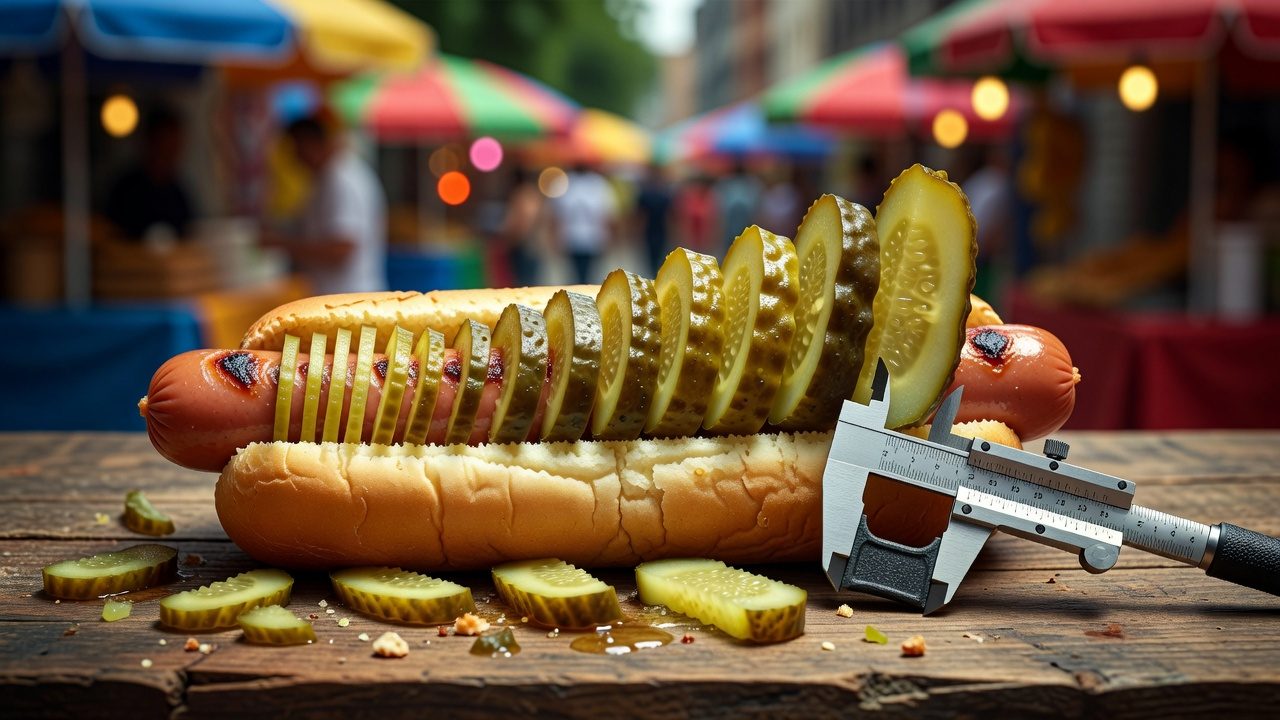
- Thick coins or batons: Larger pieces with enough body to resist collapsing under the bun. Record whether they are round coins or lengthwise batons, since those shapes behave differently.
- Spears: Lengthwise wedges that can create a concentrated crunch event, especially when placed parallel to the sausage.
Before assembling, record the approximate dimensions actually used. For rounds and coins, note thickness and diameter. For batons and spears, note length and width. “Small” and “large” are useless once the tasting starts, because one person’s modest pickle coin is another person’s green manhole cover.
What shape can change
- Surface area: More exposed pickle means more brine can meet the bun or sauce.
- Bite resistance: A thicker piece may provide a louder, firmer interruption to the sausage and bun.
- Juice release: Different cuts expose different amounts of moist interior.
- Stability: Flat rounds may cling under a condiment layer, while a spear can either stay obediently in place or make a break for it.
None of those possibilities makes a cut automatically superior. The point of the tasting is to find out what actually happens in a consistent build.
Drain the Pickles Before They Declare War on the Bun
Draining belongs in the test because pickle brine affects more than the pickle. It can soften the bun, dilute or move condiments, and change how sharp the topping tastes beside a hot sausage. A pickle can be crisp and still leave the bread looking emotionally exhausted.
Use one repeatable method
For a clean shape comparison, drain every sample the same way. Place each cut in a strainer or on a clean towel, use the same resting period for every sample, and record the actual time in the tasting notes. No draining time has been completed or supplied here, so this article should not pretend one exists.
If moisture itself is being tested, make that a separate variable. Compare visibly wet, lightly drained, and thoroughly drained samples of the same cut and placement. Do not change cut, drain level, placement, bun, and condiment all at once, then stare into the middle distance and blame the pickle.
Keep crispness and wetness in separate columns
A crunchy pickle is about texture. A soggy bun is about moisture migration. They often travel together, but they are not the same observation. Record both independently. A sample may deliver an excellent first snap and still damage the rest of the bite with excess brine.
Placement Is Structural Engineering With Brine
Pickles do not merely sit on a dog. They experience heat, pressure, sauce, gravity, and the impatient force of a human taking an oversized first bite. Where they sit determines whether their crunch reaches the eater or escapes onto the plate.
Three placements worth testing
- Directly on the sausage: This puts the pickle against heat and gives its crunch a direct route into the bite. It may also be more exposed to pressure from the bun.
- Between sausage and condiment: Sauce can help anchor a flat piece, but it may also cushion or cover the pickle's texture and encourage sliding.
- Along the bun wall: This can protect a spear or baton and distribute it along the length of the dog. It can also concentrate moisture against the bread, so the bun needs watching.
Observe the bite path, not just the prettiest overhead view. Pickles laid along the dog may give several bites a similar crackle. Pickles piled in the center may produce one big crunch followed by a stretch of plain sausage. Both are valid choices, but they are not the same eating experience.
Photograph every build from above and from the side before tasting. The top view documents distribution. The side view reveals whether the pickle is visibly integrated, completely hidden, or perched for an escape attempt.
One Lucky Bite Is Not a Scientific Breakthrough
Use the same hot dog, bun, cooking method, and base condiments for every comparison. Keep sausage doneness and bun treatment consistent. If mustard is included, use the same amount and placement each time. Ketchup does not need to be invited to this meeting.
A simple tasting protocol
- Prepare matching dogs with only one planned pickle variable changed at a time.
- Record the pickle variety, cut dimensions, drain method and actual drain time, placement, and base condiments.
- Take a first bite from the same end and note initial snap, chew resistance, juice release, salt and acidity, bun moisture, and topping stability.
- Continue through additional bites and note whether the pickle remains evenly present or vanishes after one dramatic opening act.
- Repeat builds where practical. One strategically lucky pickle is not a breakthrough in hot dog science.
If a numeric scale is used, define it before tasting. For example, a 1 to 5 scale can be used for first-bite crunch, moisture impact, and stability, provided the same definitions are applied to every sample. Report only scores actually recorded. A kitchen comparison is personal editorial judgment, not laboratory instrumentation in a tiny white coat.
Tasting sheet
| Cut | Recorded dimensions | Drain method and time | Placement | Initial snap | Chew resistance | Juice release | Bun moisture | Stability | Overall notes |
|---|---|---|---|---|---|---|---|---|---|
| Thin rounds | To be recorded | To be recorded | To be recorded | To be observed | To be observed | To be observed | To be observed | To be observed | To be recorded |
| Thick coins or batons | To be recorded | To be recorded | To be recorded | To be observed | To be observed | To be observed | To be observed | To be observed | To be recorded |
| Spears | To be recorded | To be recorded | To be recorded | To be observed | To be observed | To be observed | To be observed | To be observed | To be recorded |
No Winner Until the Notes Are on the Plate
The results section has one rule: observations first, preference second. If a spear slides out before the first bite is finished, record that fact. If thin rounds distribute acidity more evenly, record that fact. Then, and only then, Jason can say which build he prefers.
At present, there are no supplied observations from a completed test, so crowning a winning cut would be fiction wearing a chef's apron. Once the tasting is performed, the comparison table should be updated with the actual draining method, placement, sensory notes, and any scores that were genuinely recorded.
A losing build is still useful if it exposes a real failure mode: too much juice against the bun, weak anchoring under sauce, a pickle that hides its crunch, or a concentrated piece that turns one bite into a pickle traffic jam. Close results should remain close. Not every topping comparison needs a championship belt and entrance music.
A Pickle Needs a Job Description, Not Just a Seat
Until the test produces a documented winner, the most honest recommendation is a method rather than a verdict: choose one pickle variety, cut it consistently, drain it consistently, test one placement at a time, and decide whether your priority is maximum snap, even acidity, or stable bite-by-bite distribution.
- For maximum snap: Test thicker coins, batons, or spears, then compare how well they stay put.
- For acidity in nearly every bite: Test thin rounds or a controlled rough chop, keeping an eye on moisture.
- For a tidy dog: Test flat pieces under a modest condiment layer and compare them with bun-wall placement.
My broader stance does not need a laboratory coat: the best topping is not merely present. It changes the bite on purpose. A pickle that brings crispness, acid, and structural chaos in equal measure needs a stern little performance review.
FAQ: Four Questions Before You Put a Pickle on It
Should pickles be drained before going on a hot dog?
Usually, draining is worth doing because it helps control excess moisture. But crispness and wetness are different things. The useful answer comes from recording the actual drain time and noting both pickle texture and bun condition during the test.
Are pickle slices or spears better for crunch?
Neither wins automatically. Thickness, pickle texture, draining, and placement all affect what reaches the first bite. A spear may offer a more concentrated crunch, while slices may spread flavor more evenly. Test them under matching conditions before calling either superior.
Where should pickles sit on a hot dog?
Directly on the sausage, between sausage and condiment, and along the bun wall are all useful placements to compare. Each changes heat exposure, sauce contact, stability, and where crunch appears along the bite path.
Can chopped pickles work on a hot dog?
Yes. Chopped pickles can spread acidity throughout the dog, especially when a large spear would be too aggressive. Their tradeoff is that smaller pieces may lose some distinct snap under other toppings, and loose pieces may travel where they please.
What is the simplest way to repeat this test at home?
Use the same hot dog, bun, cooking method, and base condiments for each build. Change one pickle variable at a time, drain every sample consistently, take notes after more than one bite, and choose your favorite only after the evidence has stopped dripping on the bun.
Enjoyed this? There's more from Jason's Grub.
Follow on Instagram →