The Bun Is Part of the Recipe: Toasting, Steaming, and Filling a Hot Dog Bun Correctly
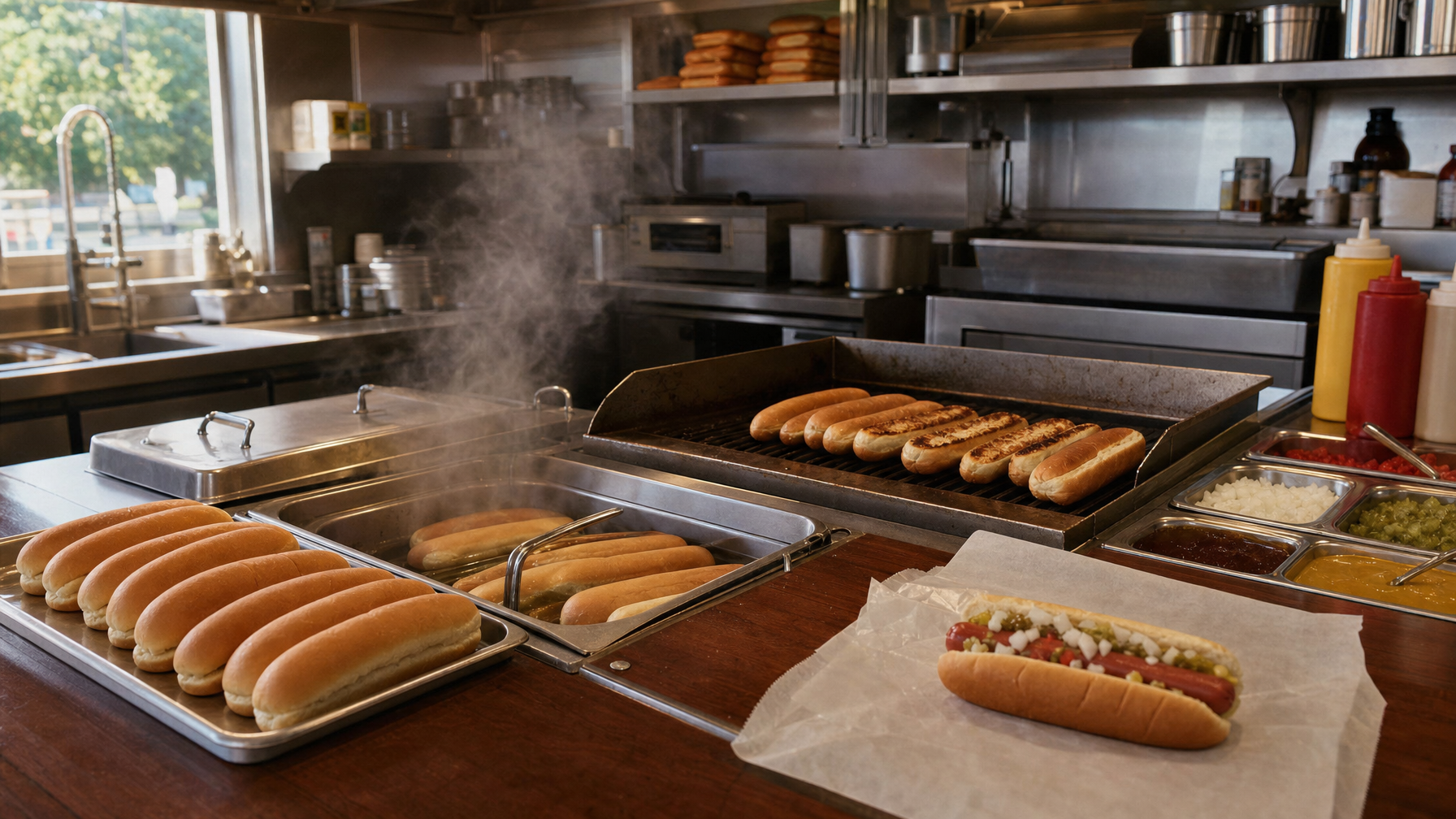
For hot dog enthusiasts and home cooks, the bun is not packaging—it is part of the build. A good hot dog depends on the relationship between the dog, bun, and toppings. My standard is direct: ketchup is not part of that relationship. The goal is a warm, intact bun with enough texture to hold the dog and toppings without turning dry, soggy, or split.
1. Choose a bun that matches the hot dog
Select the bun after you know the size and style of dog, plus the topping load. The basic test is simple: the bun should support the dog from end to end and remain sturdy enough for everything you plan to add.
- Use a soft bun for a simple build with a modest amount of toppings.
- Use a split-top or sturdier bun when the build carries more weight or needs to stand upright.
- Use a denser roll when a substantial dog or heavier toppings demand more support.
Reject buns that are stale, compressed, cracked, or so narrow that inserting the dog forces them apart. A bun that is already damaged will not improve once heat and moisture enter the picture.
2. Decide whether to toast or steam
Choose the bun-preparation method before you heat it. Toasting and steaming solve different problems, and neither is automatically right for every hot dog.
Toasting uses direct or indirect heat to create light browning and a firmer surface. It is useful when the build needs texture, a little extra structure, or resistance to moisture.
Steaming uses brief exposure to steam to warm and soften the bun. It is useful when tenderness and flexibility matter more than browning.
The trade-off is clear: toasting adds structure and flavor, while steaming preserves softness. Steam for too long, though, and softness becomes sogginess. Pick the method that suits the dog and toppings in front of you, not a supposed universal rule.
3. Toast the bun without drying it out
Open the bun carefully and warm the cut interior over moderate heat. The point is to build a little surface texture while keeping the outside flexible enough to close around the dog.
- Preheat a clean cooking surface over moderate heat.
- Open the bun without flattening it.
- Set the cut side against the heat.
- Toast briefly until the interior is warm and lightly colored.
- Remove the bun immediately and move to assembly when the dog is ready.
Do not chase dark color. High heat can burn the cut side before the bun warms through, and too much time makes the bread brittle. Avoid pressing the bun down aggressively; you need room for the dog and toppings, not a smashed bread shell.
4. Steam the bun for a soft, flexible build
Warm the bun with gentle steam, then stop before condensation saturates it. A properly steamed bun should be pliable and warm—not wet, limp, or shiny with trapped moisture.
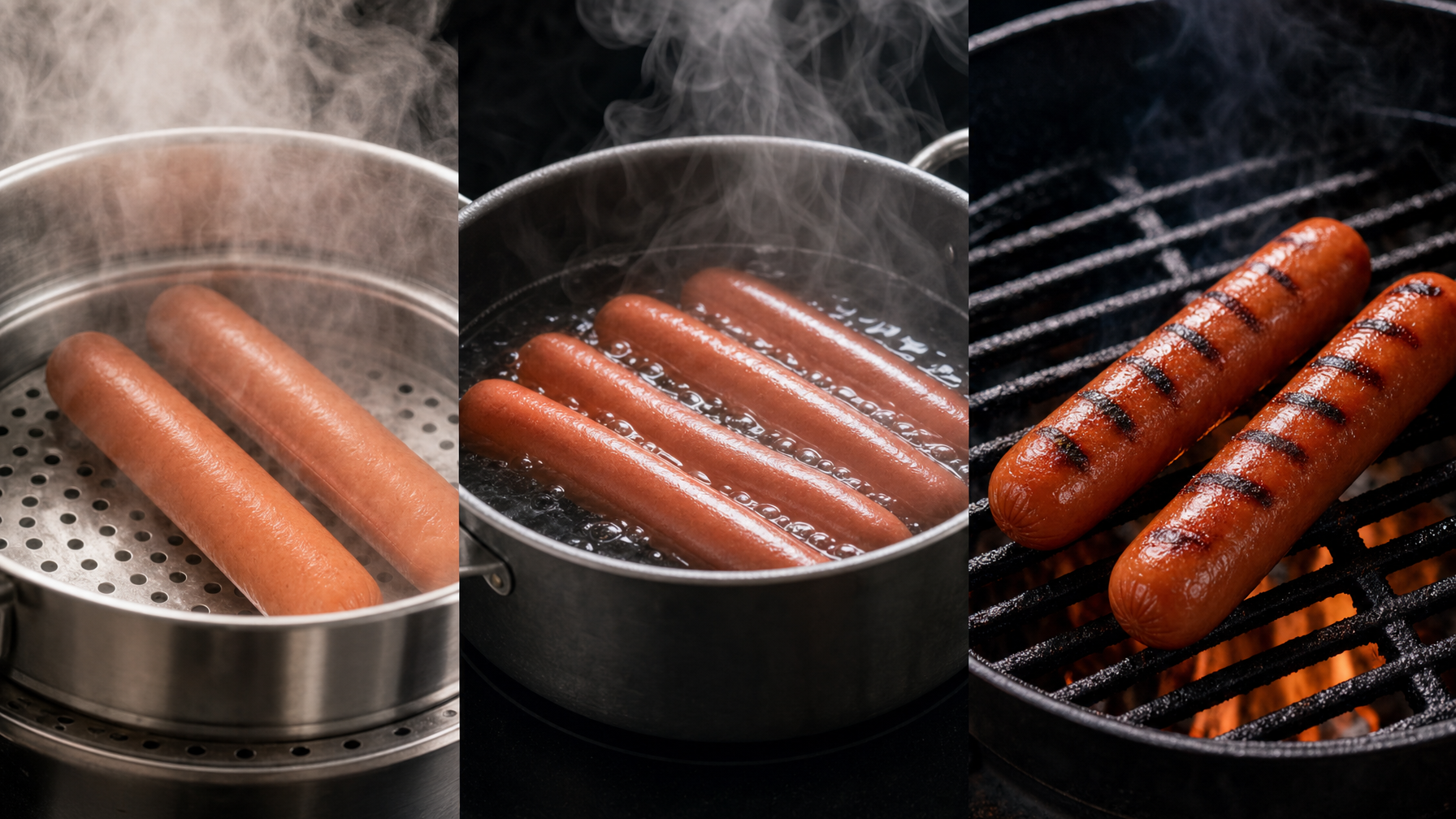
- Create a controlled steam environment with steam rising from hot water.
- Keep the bun above the water rather than letting it touch the water directly.
- Expose the bun briefly to the steam.
- Check for softness and flexibility.
- Transfer it immediately to the assembly area.
Long steaming sessions are the common failure. A saturated bun may feel soft at first, but it cannot hold a hot dog and toppings for long. Steam is a quick warm-up, not a soak.
5. Heat the hot dog to match the bun
Finish the dog before final assembly so the bun does not sit around cooling while the filling catches up. The dog and bun should reach the plate at nearly the same time.
Use the cooking method that fits your chosen recipe: grilling, steaming, or another established method. If you are making Jason’s Signature Charcoal Snap Dog, follow that recipe’s cooking method, then apply this bun workflow at the point of assembly rather than trying to replace the recipe with a generic shortcut.
Judge the finished combination by texture, balance, and flavor. A crisp-skinned dog in a wet bun is not balanced; a tender dog in a brittle bun is not balanced either. Not every hot dog opinion is equally useful when the build itself is working against the food.
6. Fill the bun in a stable order
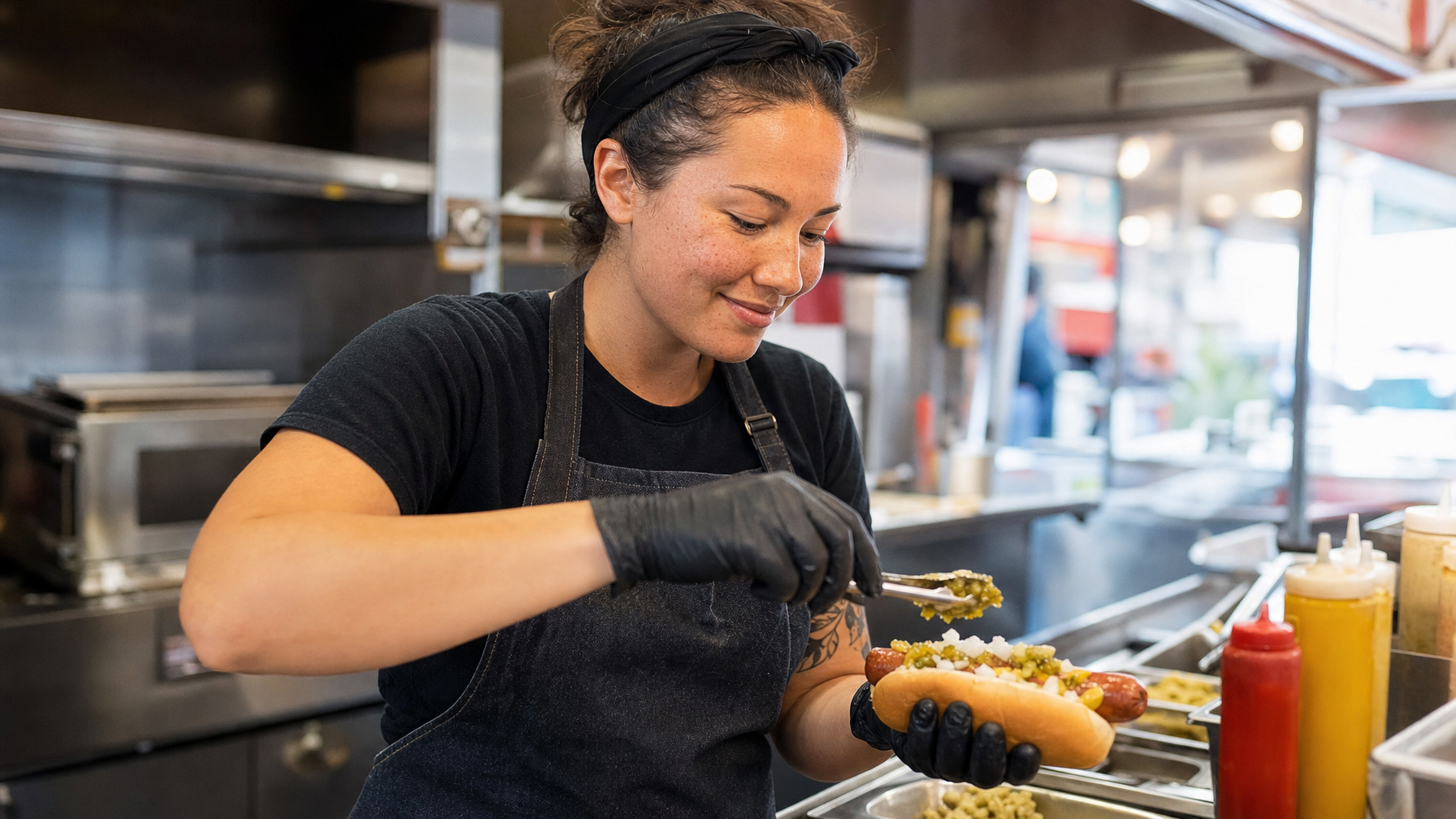
Assemble from the bottom up, with every ingredient doing a job. Put the hot dog into the warmed bun first and center it from end to end. This gives you a clear foundation before the toppings arrive.
- Place the cooked dog in the center of the bun.
- Add any stable ingredient that helps anchor the build or create a barrier between the bun and wetter toppings.
- Add moist or loose toppings in a controlled amount.
- Finish with ingredients that add contrast without burying the dog.
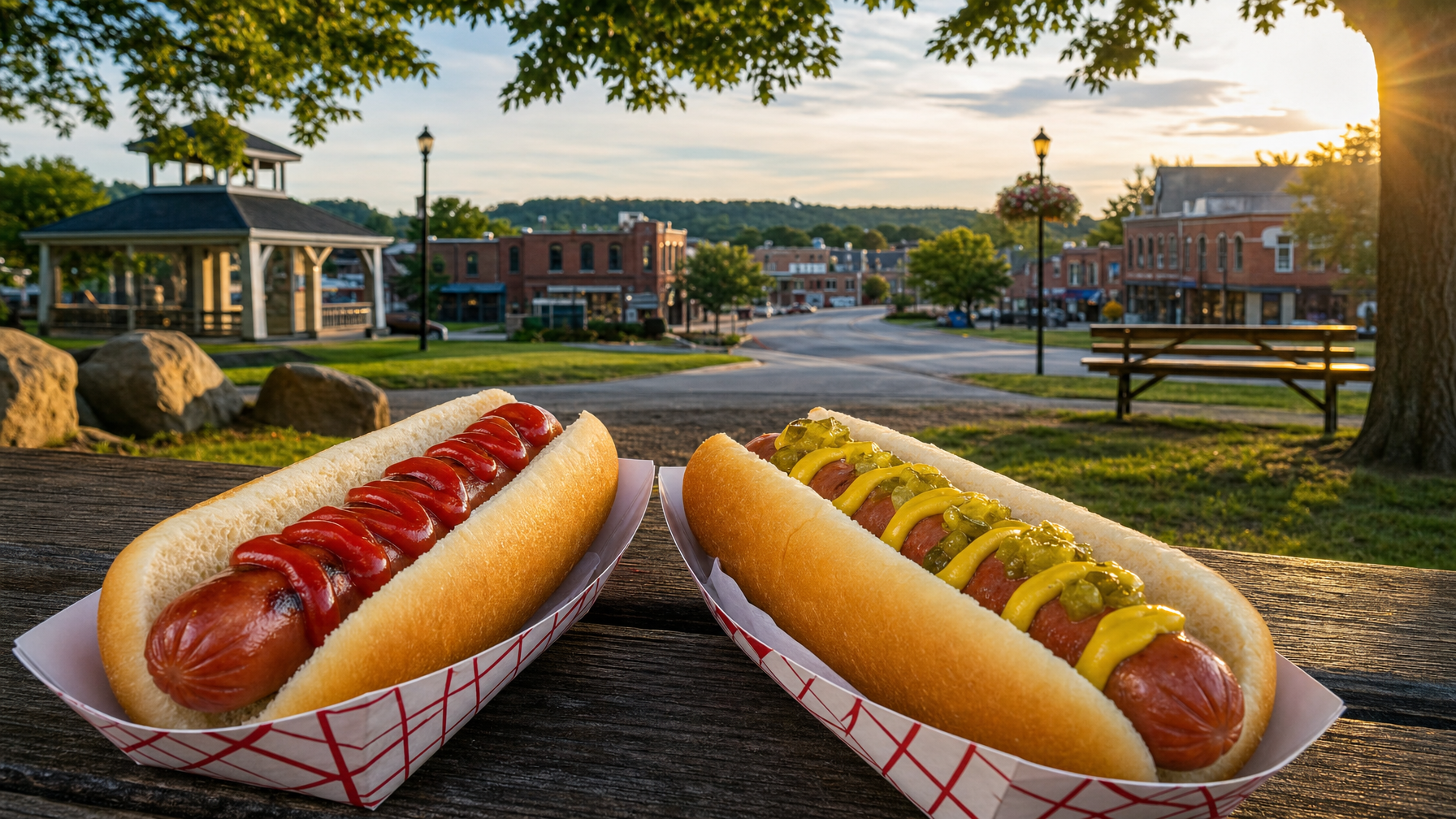
Do not pile on wet toppings simply because they are available. Use enough to flavor the bite without soaking through the bread or sending the filling over the sides. And to be plain about my standard: ketchup is not used in this build. Choose balancing elements only when they fit the specific recipe or regional style; the point is a composed hot dog, not a condiment traffic jam.
7. Check the finished build before serving
Inspect the assembled hot dog as one recipe, not as a loose collection of ingredients. Before serving, check four things:
- The dog is centered from end to end.
- The bun is intact and can still close around the filling.
- The toppings stay in place when the bun is lifted.
- The first bite can include bun, dog, and toppings together.
Correct the problem you actually see. If the bun splits, use less filling or choose a sturdier bun next time. If a toasted bun cracks, toast more lightly. If the interior feels wet, shorten the steaming time. The target is a warm bun, a clear bite, controlled moisture, and enough support to eat the dog without the whole build collapsing.
8. Record the method so it can be repeated
Write down the bun type, whether you toasted or steamed it, the approximate heating time, the dog style, the topping order, and the result. That turns a lucky meal into a repeatable method.
To learn what the bun is doing, make a useful comparison: prepare the same dog and toppings once with a toasted bun and once with a steamed bun. Keep the rest of the build consistent. Then you can judge the effect of the bun method rather than guessing.
My standard favors a deliberate, no-ketchup build, but personal preference is not a universal claim. Regional styles may call for different bun treatments. When using a specific regional reference, product, or vendor, confirm that it is real, current, and relevant before treating it as part of the recipe.
9. Follow the build, not a shortcut
Choose the right bun, decide whether it needs toast or steam, coordinate the timing with the dog, fill it in a stable order, and check the first bite before serving. That is the workflow.
The bun belongs in the recipe from the beginning. Treat it that way and the hot dog has a chance to arrive at the table as a complete build instead of a good filling trapped in bad bread.
For more destination profiles, recipes, purchasable hot dog finds, and hot dog culture coverage, follow @jasonsgrub on Instagram. You can also follow the Jason’s Grub Facebook Page.
Enjoyed this? There's more from Jason's Grub.
Follow on Instagram →