Butterflied, Griddled, and Slightly Showing Off: The Perfect Split Dog
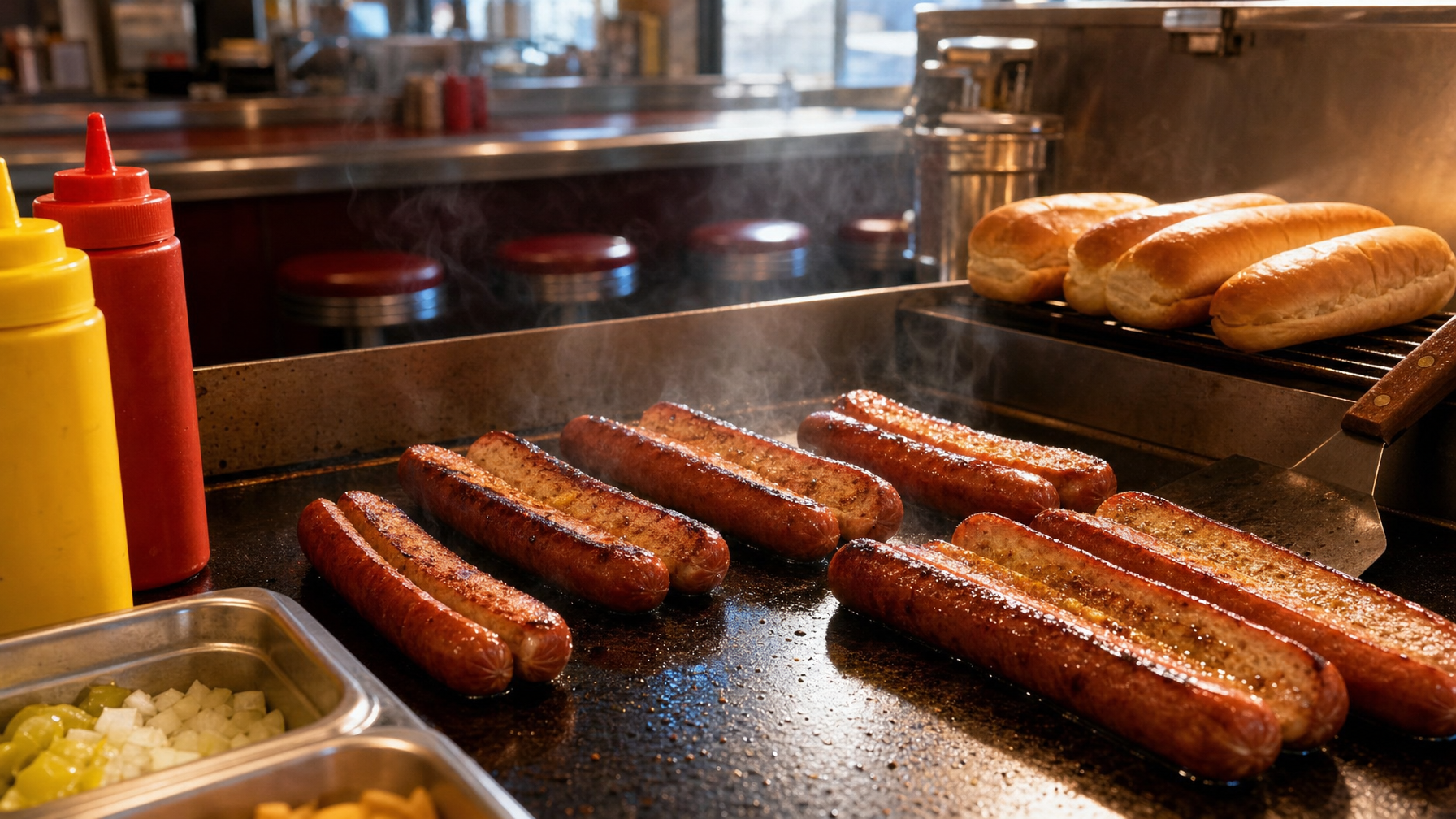
A split dog is a hot dog sliced lengthwise, opened like a book, and griddled cut-side down until the edges crisp and the center gets gloriously browned. It is for hot dog enthusiasts who want a better home-cooked dog, with enough technique to avoid turning the sausage into two sad little canoe halves. The payoff is simple: more browned surface, more texture, and a far better landing zone for toppings.
Why split a perfectly innocent dog?
Butterflying is the small act of kitchen mischief that gives a hot dog a serious upgrade. Instead of heating a smooth tube and calling it a day, you expose a broad interior surface to the pan. That surface browns. The edges get crisp. Mustard, onion, pickle, relish, or a modest swipe of sauce have somewhere useful to sit.
The method is not complicated: make a lengthwise cut without going all the way through, then open the dog flat on its hinge. Think book, not two separate planks.
Jason's stated ten years of hot dog research across all 50 states supports one firm house opinion: ketchup has no place on this build. That is Jason's position, delivered with the appropriate level of condiment conviction, not a law binding every kitchen in America. The real target here is a crisp-edged, juicy-centered dog in a lightly toasted bun, with toppings that contribute instead of staging a hostile takeover.
Hot dog surgery: one careful cut, no casualties
A true butterfly cut leaves one side attached. Cutting all the way through produces two halves, which is a different preparation with fewer structural advantages. Separate halves roll around, dry out more easily, and have a talent for escaping the bun at the exact moment your shirt is feeling optimistic.
Make the hinge earn its keep
Set the dog on a stable cutting board. With a sharp knife, make a shallow, controlled lengthwise cut along the side that will face upward in the bun. Leave the opposite side intact as the hinge. Open the cut gently until the dog lies mostly flat.
Chilled dogs are often easier to slice cleanly. The goal is a broad, mostly even cut surface, not a dramatic excavation. A jagged cut cooks unevenly, creates awkward thin spots, and makes the finished dog harder to handle.
- Use a sharp knife and a steady board.
- Cut lengthwise through most, but not all, of the dog.
- Keep the hinge intact from end to end.
- Aim for even depth so the exposed surface meets the pan consistently.
Your griddle should sound like breakfast, not a bonfire
A heavy skillet, flat griddle, or cast-iron pan is ideal because it gives the opened dog steady contact with the cooking surface. You are pursuing browning, not trying to launch the thing into orbit.
Start around medium to medium-high heat. If the cut side darkens before the center is properly hot, lower the heat. If nothing is happening beyond mild dampness, increase it a little. A light film of oil or fat can improve contact and help prevent sticking, but the dog should never be swimming in grease like it booked a resort package.
Read the dog, not a stopwatch
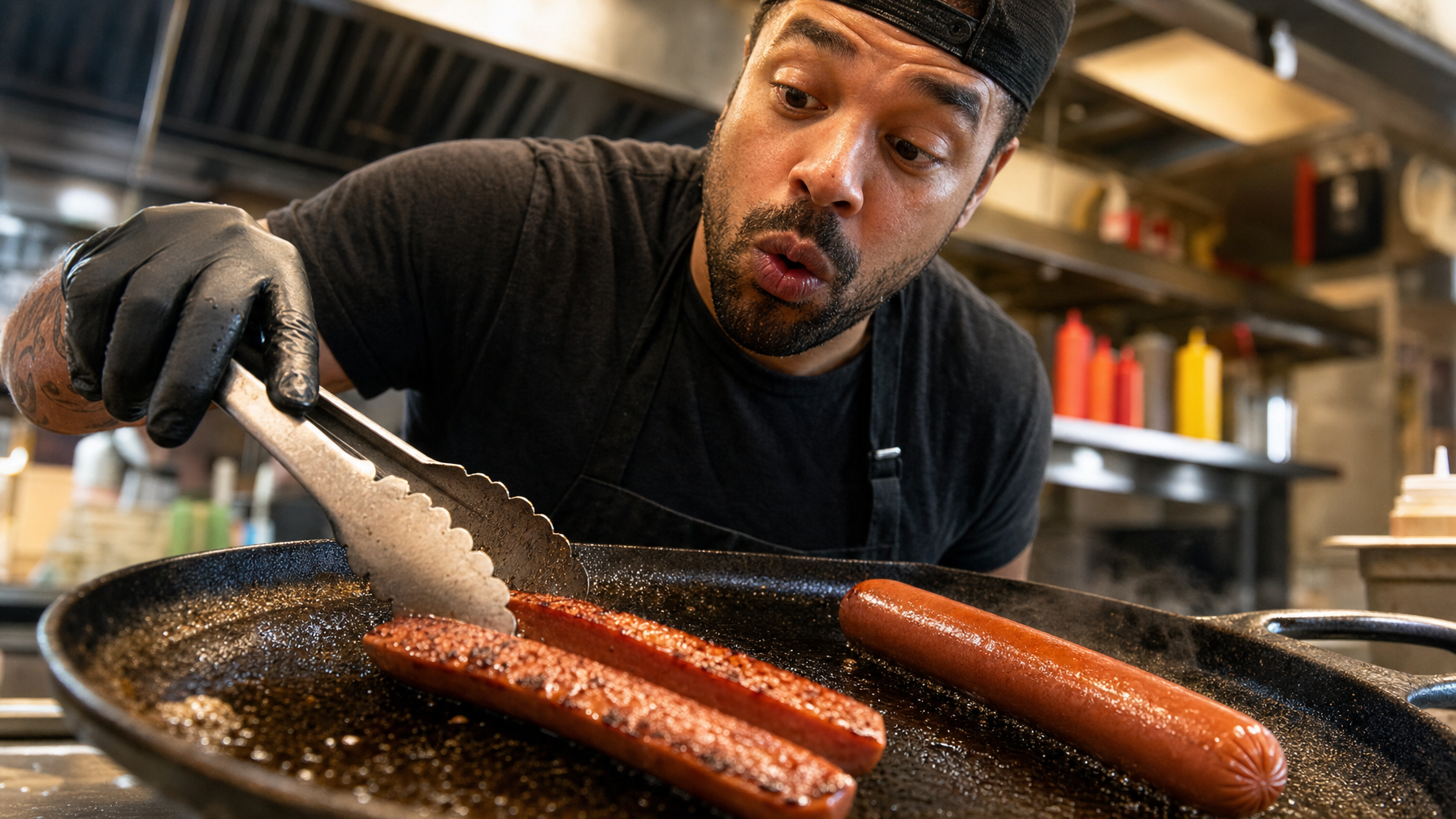
The best cue is visual and tactile: the cut side should be well browned, the thin edges should be crisp, and the center should be warmed through and still juicy. If the dog has split into dry fragments, the pan won the argument.
Cut side down, because the good part deserves the pan
Place the butterflied dog cut-side down first. That exposed interior is the whole point, so give it the main sear. Press gently with a spatula at the beginning to improve contact, then leave it alone long enough to form a crust. A dog cannot brown properly while being shuffled around every three seconds.
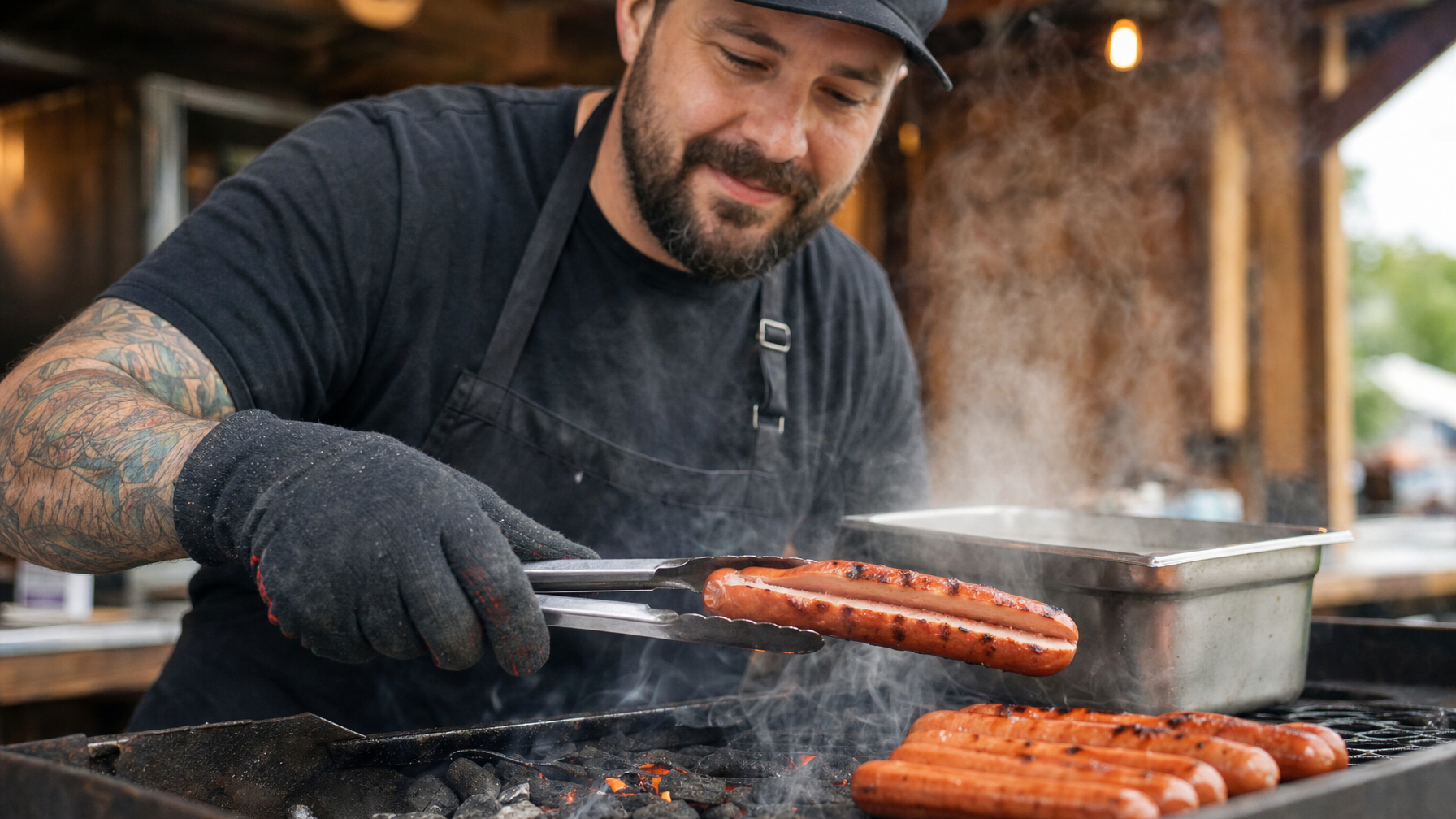
Once the cut side is browned, flip briefly if the outer side needs warming or a little color. Be especially careful with the thinner edges. Thick dogs can take more patient warming. Thin dogs can move from handsome and crisp to aggressively shriveled with surprising speed.
- Put the cut side down first.
- Use gentle pressure, not full-body spatula violence.
- Let the dog sit until it releases easily and looks browned.
- Turn only as needed to warm the outside.
The bun is not a decorative waiting room
Toast the bun in the same pan after the dog, or alongside it if there is room. The residual fat and browned bits add flavor, and the bun gets just enough crispness to remain useful under pressure.
Choose a bun that supports the dog's full length and expanded width without forcing it into an awkward fold. Warm it until pliable with lightly crisped surfaces. A brittle bun is not toasted. It is just planning a collapse.
Do not pile wet toppings into the bun before the dog arrives. Moisture and weight soften the bread quickly, especially when the split dog has created a wider platform for every slippery ingredient in the fridge. Build close to serving.
Toppings should respect the charred center
A split dog already brings extra browned flavor, so its toppings need contrast, not a parade permit. Pick one or two directions and keep them legible.
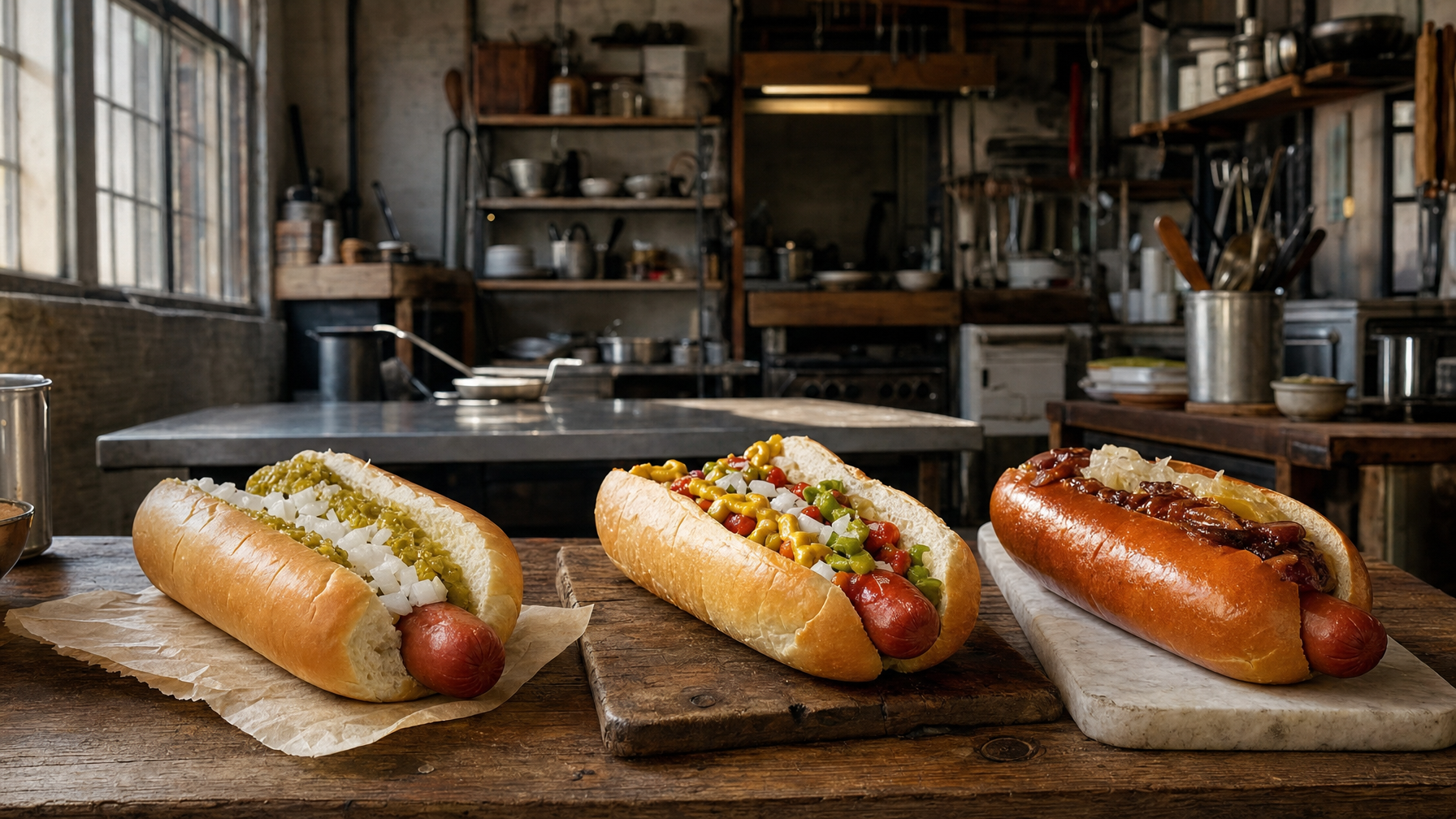
- Something sharp: mustard, chopped onion, or a tangy sauce.
- Something crunchy: a crisp pickle element or finely chopped fresh vegetables.
- Something fresh: bright relish or a small amount of herbs.
- Something creamy: a restrained swipe of sauce, not a flood.
Three sensible combinations
- Mustard and chopped onion for bite and crunch.
- A crisp pickle element with a tangy sauce for snap and acidity.
- Bright relish with restrained heat for sweetness, tang, and a little trouble.
Jason's version skips ketchup, emphatically. Your kitchen remains a free country, but the house opinion has been entered into evidence.
Three ways to turn a split dog into a flat little tragedy
1. Cutting all the way through
Two loose halves lose the butterfly's hinge, roll in the pan, dry out faster, and make a messier bun situation. Keep the connection intact.
2. Using excessive heat
Very high heat can scorch the exposed side before the center is warmed. Start at medium to medium-high, then adjust based on the color developing in the pan.
3. Adding toppings too early
Wet, heavy toppings soften the crisp surface and can make the bun surrender. Brown the dog, toast the bun, then assemble immediately before eating.
If the dog curls
Use gentle pressure with a spatula, reduce the heat if it is tightening rapidly, and check whether the cut is deep and even enough. If needed, make the cut slightly deeper while preserving the hinge. Do not flatten it by force. Juiciness is still invited to dinner.
A repeatable Jason's Grub build, minus the kitchen drama
- Chill the dog if needed for cleaner slicing, then butterfly it lengthwise while leaving one side connected.
- Heat a heavy skillet, griddle, or cast-iron pan over medium to medium-high heat. Add only a light film of oil or fat if needed.
- Set the dog cut-side down. Press gently once for contact, then let the surface brown without constant movement.
- Flip briefly only if the outside needs warming or a touch of color. Watch the thin edges closely.
- Toast the bun in the pan until warm, pliable, and lightly crisped.
- Place the dog in the bun. Add restrained toppings that bring sharpness, crunch, freshness, or a little creaminess.
- Serve immediately, while the cut side is browned, the edges are crisp, the center is warm, and the bun still has enough self-respect to hold it all together.
This is not a formal regional style and it does not need to become one. It is simply a very good way to make a hot dog look more dramatic, taste more browned, and earn its place on the plate.
Follow @jasonsgrub on Instagram for more hot dog finds, recipes, and field research.
FAQ: five questions before you put a knife near dinner
Do I have to butterfly the hot dog all the way through?
No. Leave a hinge intact. It makes the dog easier to griddle, load into a bun, and eat. Cutting through is a different preparation, not a better version of this one.
Can I make a split dog on a grill?
Yes. Use a cooler zone or a grill surface that keeps the cut side from dropping through the grates. Watch the thinner edges closely because they can char quickly.
Should I boil the hot dog first?
It is not necessary for this method. The griddle does the warming and browning, and starting with a dry dog gives the exposed side room to develop color.
What if my dog curls up in the pan?
Press it gently with a spatula, lower the heat, and check whether the cut is deep and even enough. Do not flatten it with force or chase browning at the expense of juiciness.
Is ketchup allowed?
In Jason's version, absolutely not. That is the house position, delivered with conviction. Readers remain free to make their own choices, as the law and the condiment aisle intended.
Enjoyed this? There's more from Jason's Grub.
Follow on Instagram →