A Hot Dog in a Luxury Restaurant: Joke, Statement, or Just Dinner?
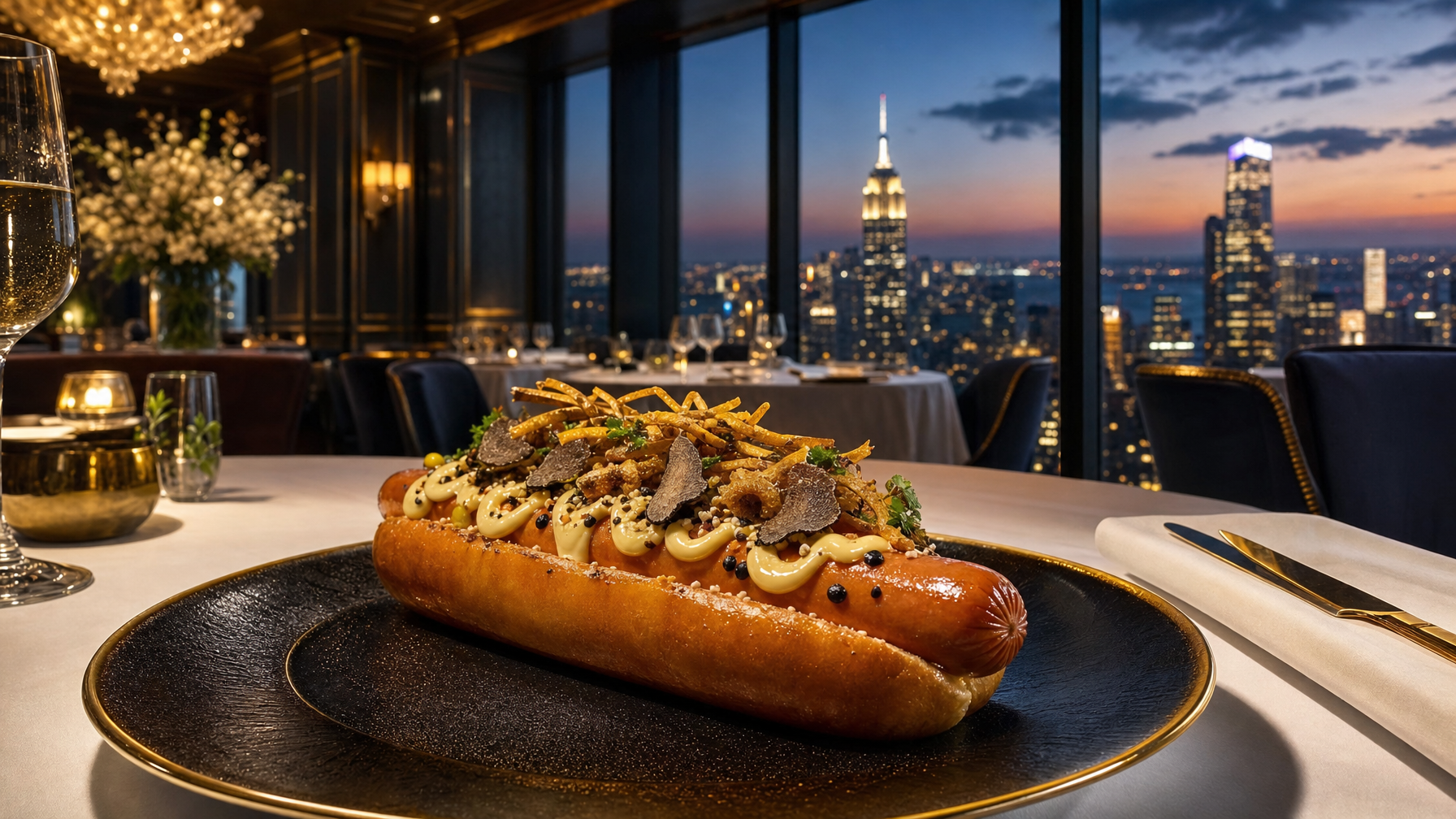
For hot-dog enthusiasts and food-culture readers, a hot dog in a luxury restaurant can be a joke, a statement, or simply dinner—but the price, setting, ingredients, and attitude decide which one it is. The real question is not whether a frankfurter belongs near fine china; it is whether the dish has something to say beyond “look, a hot dog.”
When the Tuxedo Meets the Bun: What Makes a Dog Feel Fancy?
The tension is deliciously obvious: one of America’s most casual foods walks into a room built for hushed voices, polished glassware, and chairs that discourage slouching. A hot dog arrives with decades of ballpark, backyard, street-corner, and late-night baggage. Fine dining arrives with ceremony. Put them together and somebody had better mean it.
Luxury is not the same thing as quality. A higher price alone does not turn a frankfurter into a dignitary. It may reflect a restaurant’s setting, service, labor, sourcing, or overhead; it may also reflect a chef having access to a very optimistic pencil. What makes the dish feel elevated is a combination of careful technique, great ingredients, thoughtful construction, distinctive service, and a setting that adds something to the meal.
This is for people who want a real food experience, not merely a novelty photo and a menu description wearing a monocle. The working test is brutally simple: does the hot dog taste deliberate, or is it merely wearing a tiny tuxedo?
Is It a Joke, or Is the Restaurant Laughing With You?
A luxury-room hot dog can be very funny. It lands through contrast: diners expect miniature courses with mysterious foams, then receive a bun and sausage treated with ceremonial gravity. Done well, that collision can puncture fine-dining stiffness and celebrate the hot dog’s unkillable charm.
Imagine a dog served with an intentionally nostalgic side, presented as though it were a precious tasting-menu course. Or a classic build crowned with an absurdly formal garnish. Or a menu description that gives a humble sausage the solemn biography normally reserved for a rare bird. That can be playful, and playful is welcome at the table.
But comedy has a target. Is the joke aimed at fine dining’s pomp? At the hot dog’s supposedly low status? Or at the diner who paid to participate? Those are three wildly different meals.
A restaurant is laughing with the diner when the humor makes the food more enjoyable and the underlying dog is good. It is laughing at the diner when the food becomes a prop and the bill is the punchline.
A Frankfurter With Something to Prove
Hot dogs carry cultural freight. They can evoke childhood, stadiums, roadside stands, immigration stories, city loyalties, working lunches, summer cookouts, and the ongoing national argument over condiments. Putting one in a serious dining room can challenge the idea that refinement belongs only to expensive-looking ingredients and difficult-to-pronounce sauces.
That does not mean every upscale dog is automatically profound. A chef can use a familiar food to make a real point about nostalgia, class, American eating, or the hierarchy of “worthy” dishes. But the dish should reveal something about the restaurant’s cooking and point of view—not simply borrow the hot dog’s instant recognizability because everybody knows what one looks like.
Trend-chasing says, “People will talk about this.” A point of view says, “This is what we cook, and this is why a hot dog belongs here.” One has a pulse; the other has a marketing meeting.
Jason’s lens is usefully unforgiving: ten years, 50 states, zero ketchup. That stated research habit is not a universal law of condiments, but it does demand respect for the dog underneath the theatrics. A fancy garnish cannot rescue a bland sausage. A fancy room cannot give a soggy bun a character arc.
Or Maybe It’s Just Dinner—Pass the Mustard
Not every casual food in a formal room is satire, social commentary, or a cry for attention. Sometimes somebody wanted a hot dog on the menu because hot dogs are good. This is the healthiest possible reason.
Diners do not need to decode every bite. If the sausage is well seasoned and properly cooked, the bun survives its job, the toppings make sense together, and the price feels fair for the experience, dinner has succeeded. No graduate thesis required. Mustard is allowed to be mustard. A snap is allowed to be a snap.
Prestige is an unreliable seasoning. Eating pleasure is the point. A hot dog that tastes excellent does not need permission from white tablecloths, and it does not need a long defense from the person serving it.
The Four-Part Taste Test: Bun, Dog, Toppings, Nerve
These are editorial criteria, not commandments carved onto a grill lid. Still, they are a sturdy way to judge whether an elevated dog has actual game.
Bun: The Load-Bearing Hero
The bun should be fresh, appropriately soft or toasted, and strong enough to contain the experience. It must support the sausage and toppings without turning into a wet paper towel full of expensive crumbs. A great bun adds texture; a bad one turns the meal into a napkin-management exercise.
Dog: Let the Sausage Do Some Talking
Look for snap, seasoning, smoke, char, juiciness, and proper cooking. The sausage should remain the star even when the restaurant has access to a pantry capable of causing a small diplomatic incident. If the dog disappears under its accessories, the build has lost the plot.
Toppings: Every Passenger Needs a Ticket
Luxury ingredients need to contribute flavor, texture, acidity, richness, heat, or contrast. Their price is not a flavor. A rich topping may need sharpness; smoke may need something bright; crunch should not arrive merely because crunch photographs well. The best toppings have a job.
Nerve: Commit or Get Off the Bun
Does the restaurant stand behind the dish, or apologize for it with a paragraph of explanation, decorative clutter, and ironic distance? Confidence is attractive. Excessive throat-clearing is not. A restaurant does not need to pretend a hot dog is a truffle; it needs to make a hot dog worth eating.
When Does Dinner Become Theater?
People react more intensely to an expensive hot dog than to an expensive steak because the comparison is immediate. Most diners have eaten a hot dog in a casual setting. They know its ordinary price range in their own lives, so a luxury version can feel like a prank before it reaches the table.
A restaurant’s price can reflect more than the sausage: the room, staff, service, preparation, sourcing, and the broader meal all cost money. None of that automatically makes any particular price defensible. Context explains a charge; it does not grant immunity from judgment.
Try this test: would you still want this hot dog if the menu description were shorter and the room were less dramatic? If the answer is yes, the dish likely has flavor and construction on its side. If the answer is no, the theater may be doing most of the chewing.
Value is personal and contextual. A memorable meal may be worth more to one diner than a cheap lunch, and that is fine. Novelty, however, is not the same thing as quality. Glitter is not seasoning.
Fine Dining’s Most Dangerous Topping: Self-Awareness
Fine dining can bring confidence, precision, and a wonderfully weird sense of play to a hot dog. It can also over-explain the thing until nobody is allowed to enjoy lunch without taking notes. The best elevated dogs let the food do the convincing.
Warning signs include too many precious ingredients, toppings that flatten the sausage, presentation that makes a handheld food awkward to eat, and humor that converts the diner into the punchline. If the hot dog requires surgical tools, a staff briefing, and a strategy session, somebody may have mistaken friction for refinement.
Restraint can feel more luxurious than excess. A focused build with a beautifully cooked sausage, an excellent bun, one creamy component, one sharp component, and proper balance can show more skill than a skyscraper of status ingredients.
Jason’s no-ketchup stance is intentionally strong: zero ketchup. Readers are free to conduct their own condiment diplomacy, but the larger principle holds. Every choice should earn its place. A squeeze bottle is not a personality.
Judge It Without Becoming a Food Snob in a Blazer
Keep three judgments separate: Was it fun? Was it delicious? Was it worth the price? They do not have to agree. A dog can be funny and underwhelming. It can be expensive and satisfying. It can be clever once and not worth ordering twice.
For a compact review, assess five things:
- Setting: Did the room and service add pleasure, or just cost?
- Construction: Could you eat it comfortably, and did the bun hold together?
- Flavor: Was the sausage memorable, with toppings that supported it?
- Price: Did the overall experience feel proportionate to the bill?
- Repeat order: Would you choose it again without the novelty factor?
Curiosity beats automatic approval and automatic dismissal. A luxury-restaurant hot dog can be silly and successful, expensive and satisfying, or clever and forgettable. The category is not the problem. Lazy thinking is.
A Hot Dog Does Not Need Permission to Be Dinner
A hot dog can be a joke, a statement, and dinner at the same time. Execution decides the verdict. If it is interesting only because of the room, it is a stunt. If the room reveals new strengths in the hot dog—better technique, sharper balance, more pleasure, more confidence—it earns its place near the fine china.
The dog does not need to be humbled by luxury, and luxury does not need to be humbled by the dog. They just need to make each other better. Otherwise, save the ceremony and hand over something with snap.
For more places, products, recipes, and hot-dog culture through Jason’s ten-years, 50-states, zero-ketchup lens, follow @jasonsgrub on Instagram.
FAQ: Five Questions Before You Order the Fancy Frank
Is a hot dog in a luxury restaurant automatically a gimmick?
No. The formal setting creates novelty, but the dog can still deliver real flavor, sound technique, and a clear purpose. It becomes a gimmick when the spectacle is doing more work than the food.
What makes an upscale hot dog worth ordering?
A strong sausage, a bun that does its job, toppings with a reason to exist, and an experience that feels more satisfying than merely surprising. The best version makes you want another bite, not just another photograph.
Does a high price make a hot dog luxurious?
No. Price may reflect the dining environment, service, and labor, but luxury is better judged by execution, intention, and the complete experience at the table.
Should an elevated hot dog use ketchup?
That depends on the build and the diner. Jason’s stated position is zero ketchup. The broader rule is less controversial: every condiment should earn its place instead of arriving by habit.
How should I review one?
Ask whether it was funny, thoughtful, delicious, and worth repeating. Then keep those answers separate. A fancy room should not get credit for flavor it did not provide.
Enjoyed this? There's more from Jason's Grub.
Follow on Instagram →