When the Bun Is the Main Character: A Split Top, Side Load, and Brioche Taste Off
If the bun is soft enough to collapse, sturdy enough to carry the toppings, and flavorful enough to deserve attention, it can make or break the hot dog. For hot-dog obsessives choosing among a New England split-top, a classic side-load, and a richer brioche bun, there is no universal champion—only the bun that best suits the dog, toppings, cooking method, and bite you want. My house rule remains zero ketchup, obviously, but this is a test of bread behavior, not condiment theology.
Three buns walk into a cookout—and only one gets the best bite
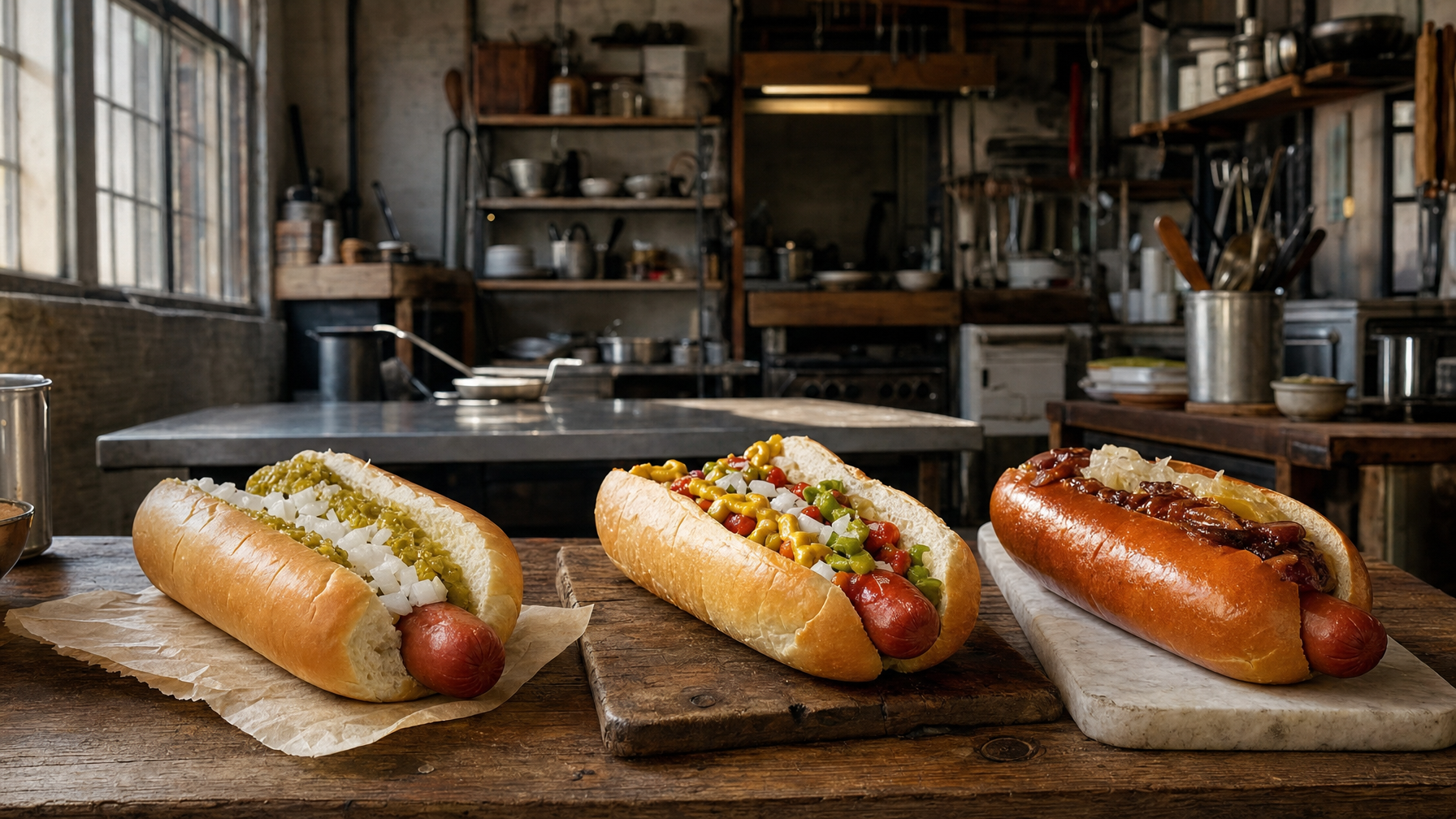
First, the contenders. A split-top bun opens from the top and usually has flat sides. A side-load bun has the familiar lengthwise side opening that cradles the sausage. A brioche bun is a richer, softer bread style, commonly made with butter and eggs, with a more pronounced flavor and often a touch of sweetness.
None of these is automatically “better.” That word causes more cookout arguments than it deserves. A bun should be judged by what it does in the actual hot dog: does it hold its shape, stay tender, toast well, control toppings, taste good, and let the sausage remain the loudest instrument in the band?
- Structure: Does it resist splitting, flattening, and the dreaded soggy seam?
- Softness: Is the crumb tender without becoming wet packing foam?
- Flavor: Does the bread add character without turning the dog into a pastry project?
- Toast response: Can it develop a crisp edge while keeping a soft interior?
- Topping control: Do onions and condiments stay where they were invited?
- Dog-to-bun balance: Does the bun support the sausage rather than mug it for attention?
Jason’s no-ketchup stance is firm, theatrical, and completely irrelevant to whether a bun can bear the weight of a wet topping. Put ketchup on yours if you must; the bun will not call the police.
The split-top bun brings New England swagger and suspiciously good posture
A split-top bun holds the dog upright in a top-loading channel. That geometry is its party trick. The sausage sits high, toppings are easy to layer, and the whole thing often looks more composed than a side-load dog that has spent five minutes negotiating with gravity.
Where it shines
Those flat sides are built for toasting. A dry pan, a lightly buttered pan, or a gentle grill can give the outside a golden edge while leaving the center soft. The top opening also makes restrained toppings look deliberate: mustard, finely chopped onion, relish, or a modest swipe of butter all have somewhere sensible to go.
For a straightforward dog, the split-top bun can make every component feel cleanly placed. The first bite tends to include sausage, bread, and topping in a tidy vertical stack rather than a sidewise avalanche.
Where it gets cocky and falls over
The channel can be narrow. Add a heap of loose, wet, or chunky toppings and the neat upright posture starts feeling like a very small stage hosting a very large opera. A delicate split-top bun can also compress or tear if the sausage is oversized or the load gets too ambitious.
Put it through this test
- Do the toasted sides add useful flavor, or merely visual swagger?
- Does the bun stay upright through the first several bites?
- Does the top opening improve the bite, or does it only make the dog photogenic?
Best match: a simply dressed dog where toasted edges and precise topping placement get room to show off.
The side-load bun is the old reliable—until it gets asked to carry a parade
The side-load bun is the classic familiar cradle: sausage tucked into a lengthwise opening, bread wrapping around it from both sides. Its broad opening is forgiving, flexible, and suited to most ordinary hot-dog situations—which is a much bigger compliment than it sounds.
Where it earns its keep
It is easy to fill, easy to eat, and adaptable across different sausage sizes. The shape allows a balanced dog to feel natural in the hand, particularly when you have one or two assertive toppings rather than a monument to condiment excess. A side-load bun does not need to be flashy; it needs to get you to the last bite without a shirt incident.
Where it starts leaking confidence
A very soft side-load bun can split at the seam, flatten beneath a heavy sausage, or allow toppings to escape out either end. Under-toasting makes those problems more likely, especially when moisture enters the chat. This is not a moral flaw. It is bread responding to physics, the least fun guest at any cookout.
Put it through this test
- Can the bun keep the dog centered instead of rolling it toward one wall?
- Does it offer enough chew to feel present?
- Does it disappear pleasantly into the bite—or disappear completely under the sausage?
Best match: a balanced build with a good sausage and one or two toppings that know when to stop talking.
Brioche enters wearing dessert shoes and demands a ruling
Brioche is tender, rich bread, typically associated with butter and eggs. Compared with a basic white bun, it often has a softer crumb, deeper flavor, and a sweeter edge. On its own, that can be glorious. On a hot dog, it can also be a tiny coup attempt.
Pleasure is not the same thing as compatibility
A buttery bun may taste more luxurious than a plain one, but a hot dog is not automatically improved by more luxury. If the sausage is mild and the toppings lean sweet, brioche can dominate the whole bite. Suddenly the dog is wearing a mustard hat in a pastry shop.
Give brioche a strongly seasoned or smoky dog, however, and the richness may make sense. The sausage has enough force to push back, while restrained savory toppings keep the sweetness from getting silly.
Its softness has limits
Brioche’s tender crumb can be satisfying, but wet toppings and a heavy dog can compress it quickly. Toasting can add helpful surface strength, though too much heat can turn a delicate bun dry or brittle. No one came to a hot-dog cookout for an edible canoe.
Put it through this test
- Does the richer bread amplify the sausage or compete with it?
- Does the bun retain its shape after the first bite?
- Does the finish taste savory and balanced, or noticeably sweet?
Best match: a smoky or boldly seasoned dog with a restrained topping plan.
Crunch, squish, and structural integrity under pressure
For a fair home taste-off, use the same sausage, cooking method, bun temperature, toast level, and topping set for all three buns. Otherwise, you are not comparing buns. You are conducting three unrelated sandwiches with a clipboard.
| Category | Split-top | Side-load | Brioche |
|---|---|---|---|
| Bun flavor | Usually mild; toasted sides can add character | Typically neutral and supportive | Richer, buttery, and sometimes sweeter |
| Softness | Soft center with potential crisp sides | Flexible, familiar softness | Very tender, sometimes plush to a fault |
| Toast response | Excellent candidate because of flat sides | Useful for reinforcing the seam and adding chew | Helpful in moderation; can dry out if pushed too far |
| Load-bearing ability | Good for tidy, vertically layered toppings | Good for balanced builds; less happy with a towering load | Variable; richness does not guarantee strength |
| Topping compatibility | Best with precise, contained toppings | Broadly adaptable with moderate portions | Best with savory, restrained toppings |
| Dog-to-bun balance | Lets a straightforward dog look and eat sharp | Often the most familiar, even-handed relationship | Can be excellent with a bold dog; can overwhelm a mild one |
Use words that describe what actually happened: crisp edge, springy crumb, soggy seam, sweet finish, clean bite, structural collapse. Also, do not issue permanent rulings based on one package. Bun size, freshness, formulation, and storage can change the result within any style.
Same dog, different bun: where the toppings get nasty
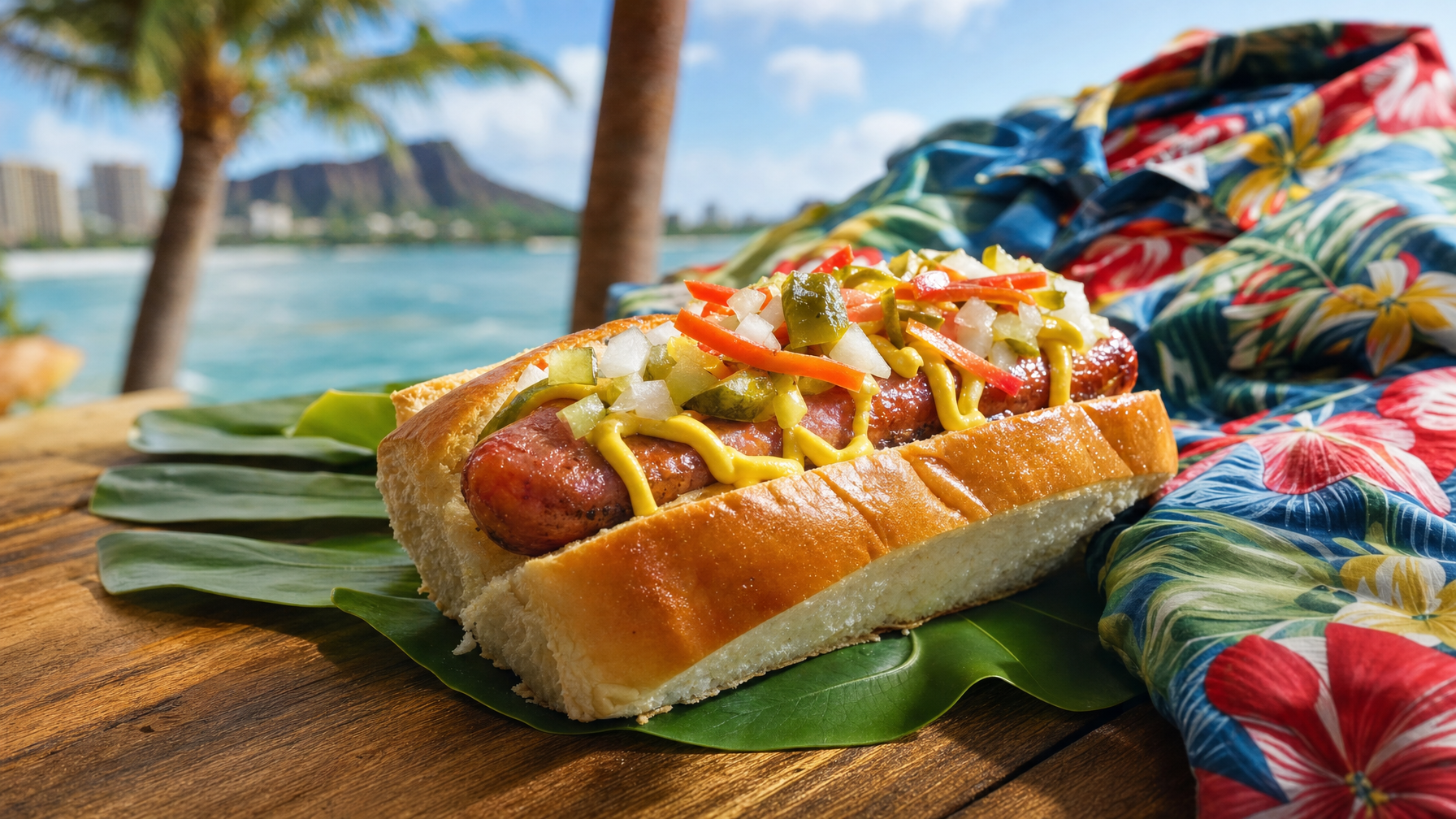
Start restrained. A mustard-and-onion dog is a useful baseline because it lets the bread speak without burying it under a compost heap of extras. Split-top buns often reward neat layers; side-load buns can make this simple build feel comfortably classic; brioche reveals whether its richer flavor works with the sausage or pulls the bite toward sweetness.
Then make the bun earn its salary
For a second round, add a wetter or heavier topping combination. The exact ingredients are your call, but use the same amount on every dog. Watch the seam. Watch whether toppings stay centered. Watch whether the bun becomes a damp napkin halfway through. This is where handsome bread gets exposed.
Give brioche a dog with some smoke on it
A smoky or charred dog is a smart match for brioche because the sausage brings enough savory force to meet the bread’s richness. Keep the toppings controlled. If every element is loud, the result is not “complex.” It is a committee meeting in your mouth.
Jason’s tasting version remains ketchup-free. Your version is your business, though the mustard is right there waiting to make better decisions.
Toast the bun or leave it soft? The answer is annoyingly personal
Toasting changes more than texture. It can add browned flavor, create a slightly protective surface against moisture, and give a soft bun enough support to hold a hot sausage and its entourage. But toast is not a universal fix. Too much turns the bun brittle, dry, and weirdly hostile to the roof of your mouth.
- Dry pan: useful when you want a modest crisp surface without adding richness.
- Buttered pan: adds flavor and browning, especially appealing on split-top flat sides.
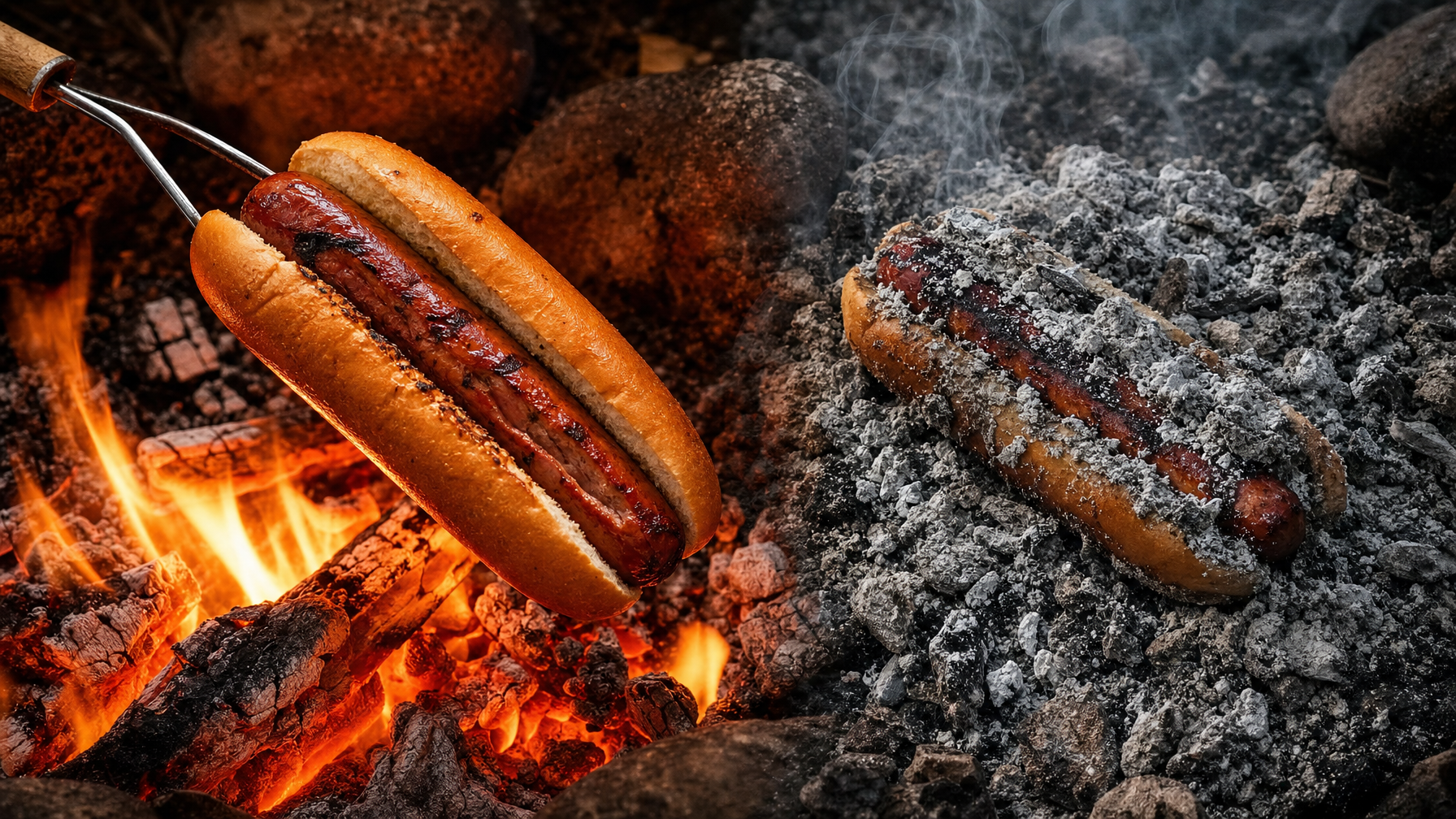
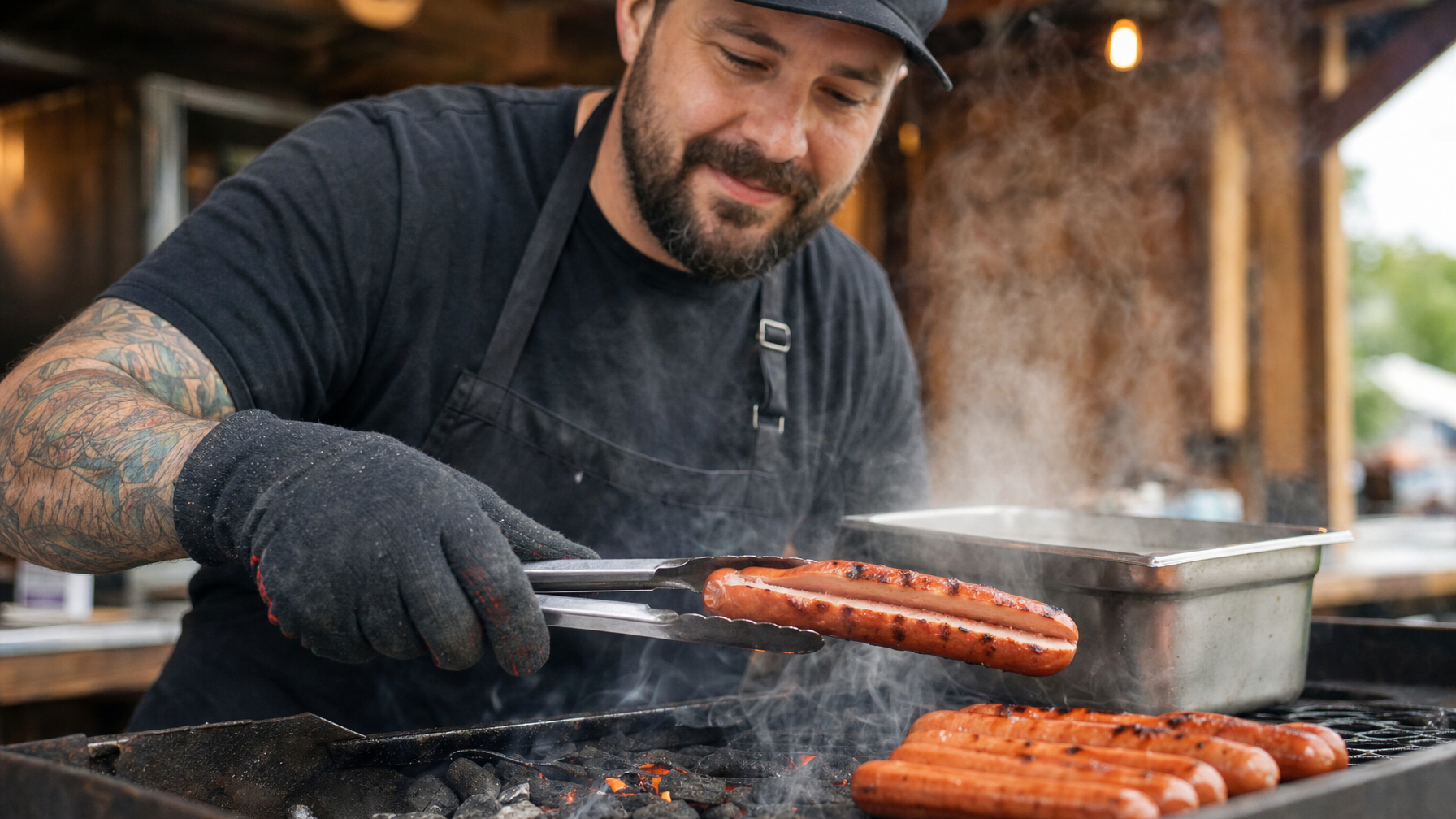
- Grill: can bring smoky character, but needs attention so the bun does not scorch.
- Gentle warming: preserves softness when the bread is already sturdy and fresh.
Pull the bun when the edges have a little crispness and the crumb still yields. The bun’s job is support, not armor plating.
Pick your bun based on the dog’s personality, not bread-snob theater
Choose a split-top when you want tidy presentation, toasted flat sides, and cleanly layered toppings. Choose a side-load when you want versatility and the familiar, balanced bun-to-dog relationship that handles most sensible builds. Choose brioche when the sausage is bold enough to stand against richer bread and you are willing to keep the topping situation on a short leash.
No bun wins every matchup. Sausage intensity, topping weight, sweetness tolerance, freshness, and toast level all change the ruling. Ten years, 50 states, zero ketchup: that is the perspective behind this verdict, not a demand that every person eat precisely like Jason.
For more hot-dog finds, places, recipes, and strongly held bun opinions, follow @jasonsgrub on Instagram.
FAQ: five bun questions before somebody orders brioche for everything
Is a split-top bun the same as a side-load bun?
No. A split-top bun opens from the top and usually has flat sides. A side-load bun opens along the side and cradles the dog differently.
Which bun is best for heavy toppings?
Choose the freshest, sturdiest bun available and toast it carefully if that suits the build. Bun style alone does not guarantee that it can carry a mountain of wet toppings without splitting.
Is brioche too sweet for a hot dog?
It can be, particularly with sweet toppings or a mild sausage. It can also work well with a savory, smoky, or strongly seasoned dog when the condiments are restrained.
Should every hot-dog bun be toasted?
Not necessarily. Toasting can improve flavor and structure, but the right amount depends on the bun and the build. A fresh, sturdy bun may only need gentle warming; a softer bun may benefit from a crisp edge.
What is the fairest way to compare buns at home?
Use the same dog, cooking method, bun temperature, toast level, and toppings for each sample. Taste them while fresh, then judge the bread on flavor, texture, topping control, and whether it still holds together when the last bite arrives.
Enjoyed this? There's more from Jason's Grub.
Follow on Instagram →