Should You Split the Dog Before It Hits the Pan? The Butterflied-Dog Trial
Yes: split the dog before it hits the pan when you want more browned edges, a flatter sear, and extra acreage for toppings to grab onto. Keep it whole when the classic snap and juicy, rounded center are the whole point. This is for hot-dog people and curious home cooks willing to test a technique instead of obeying grill folklore like it was handed down on a stone tablet.
Who Is Willing to Trade a Little Snap for a Lot of Sizzle?
This is a pan experiment for anyone who looks at a hot dog and sees a small but consequential engineering problem: should it stay proudly tubular, or should it open up and meet the skillet face-first?
Jason’s position, after ten years, 50 states, and zero ketchup: a good crust is worth chasing, but not every dog needs to be flattened into submission. Butterflying is a tool, not a personality test. It belongs beside, not on top of, the approach behind Jason’s Signature Charcoal Snap Dog. That charcoal-focused build is about preserving snap; this one asks what happens when pan contact gets to run the show.
No ketchup appears in Jason’s ruling, naturally. Your lunch remains your jurisdiction.
What Does “Butterflied” Mean? One Cut, No Coin Collection
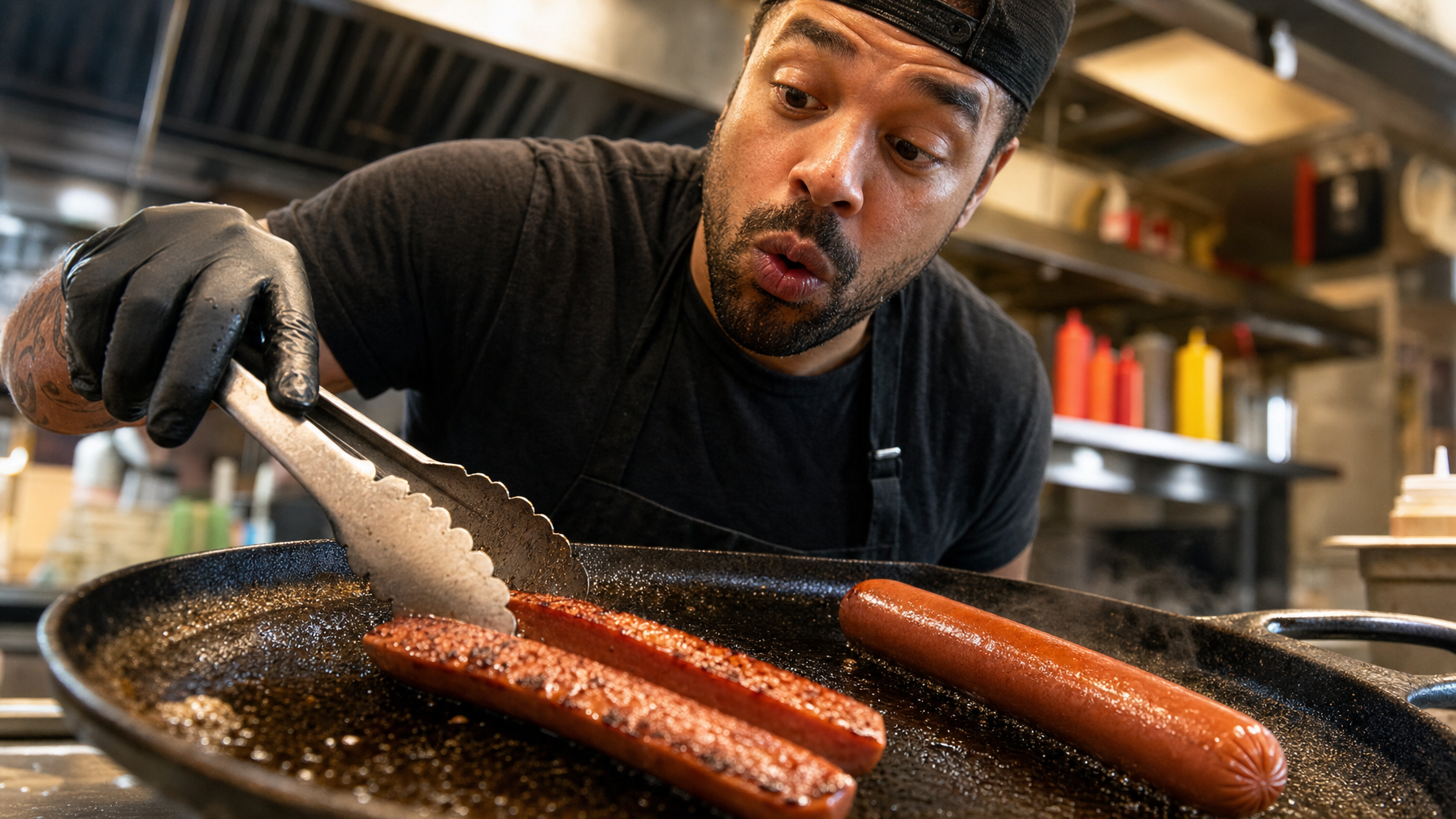
To butterfly a hot dog, make one long cut down its length without cutting all the way through. Leave the two sides attached, then open the dog like a book so the cut face can lie against the pan.
It should look like this:
whole dog:          butterflied dog:
   =======             ==\  /==
                        \====/
                 attached along one edge
The goal is one lengthwise hinge. Do not chop it into coins. Do not split it into two separate strips. Those are different lunches with different paperwork.
The tradeoff is refreshingly blunt. More exposed surface gives the pan more opportunity to brown the dog. But the casing is no longer enclosing the entire bite in the same way, so the classic plump, resistant snap becomes less dominant.
Crust Enthusiasts, Snap Loyalists: Choose Your Fighter
Butterfly the dog when you want a broad browned face, crispier edges, quick pan contact, or a topping-heavy build that needs a stable landing pad. A flatter dog is particularly useful when chopped onions, relish, cheese, or sauce might otherwise spend the meal escaping down the bun’s sidewalls.
Leave it whole when you want a rounder bite, a more concentrated juicy center, and that unmistakable casing resistance before the dog gives way. The whole dog has drama. It arrives in the bun with its posture intact.
Neither method is morally superior. Saying every hot dog becomes “better” after flattening it is how a weekday lunch turns into a courtroom proceeding. Choose the texture you actually want.
| Choose this shape | When you want | What you trade |
|---|---|---|
| Butterflied | More browned surface, crisp edges, and topping grip | Some of the intact, rounded snap |
| Whole | A plump profile, juicier center, and stronger casing bite | Less broad pan crust and less topping real estate |
Put Two Dogs in One Pan and Let Them Plead Their Cases
The fairest way to settle this at home is a side-by-side trial. Use two comparable hot dogs, one pan, the same cooking fat, and similar heat. Keep one dog whole. Butterfly the other with a single lengthwise cut, then open it flat.
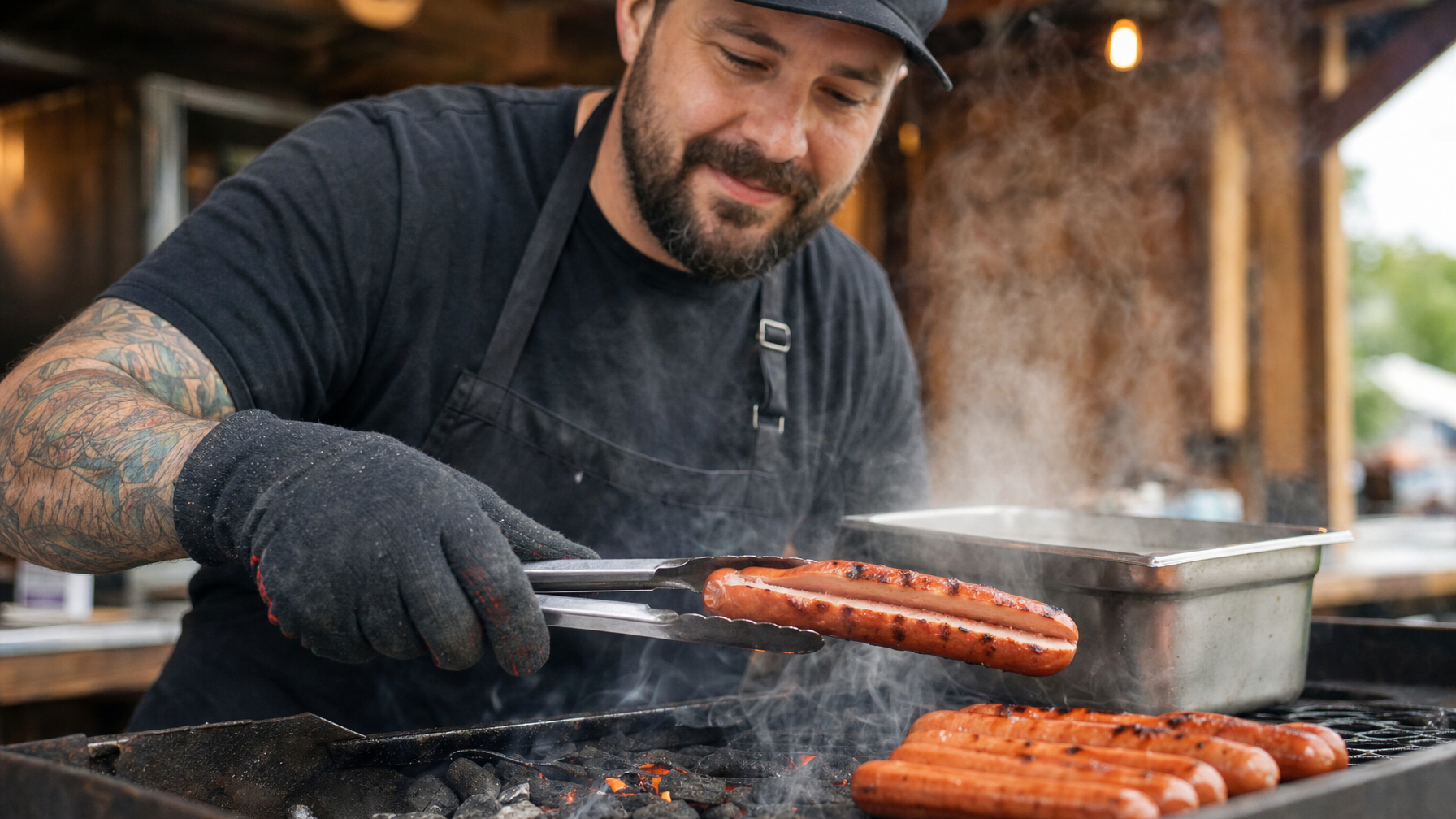
Place the butterflied dog cut-side down and give that face enough uninterrupted contact to brown. The whole dog can be turned as needed so several sides meet the pan. Do not treat either dog like a steak auditioning for a medal; the point is browning and heating, not heroic overcooking.
Exact timing depends on the particular dog, pan, heat level, and starting temperature. Rather than pretending there is one sacred minute count, watch the food. That is what the trial is for.
Judge Four Things Before You Declare a Winner
- Browned surface: Which one developed the crust you actually wanted?
- Casing texture: Did the whole dog deliver the snap you were chasing? Did the opened dog still have enough texture to satisfy?
- Juiciness: Which bite felt more succulent to you, not to an imaginary panel of judges?
- Bun and topping behavior: Did the flatter dog hold its cargo better? Did the whole dog make for a cleaner, more balanced bite?
Use the same bun and comparable toppings if you want a clean comparison. Or make both naked first, taste them, then dress them. Science can wear mustard.
The Pan Is Not a Hot Tub: Contact Is the Whole Game
A butterflied dog has one great advantage: a large cut face can meet the pan. It also has one obnoxious habit: it may curl or lift at the edges, which steals contact from the very surface you wanted to brown.
During your trial, watch whether the cut face stays flat, whether the browning develops evenly, and whether the edges seem to dry before the center is hot. A gentle press can help establish contact when needed, but avoid crushing the dog into a thin, sad plank. You are cooking lunch, not laminating flooring.
Keep the experiment pan-focused. A grill introduces different variables—grate marks, flare-ups, rolling, and open heat—that answer a different question. This test is about what a broad metal surface can do to a deliberately opened hot dog.
Toppings Change the Verdict: Crown or Tuxedo?
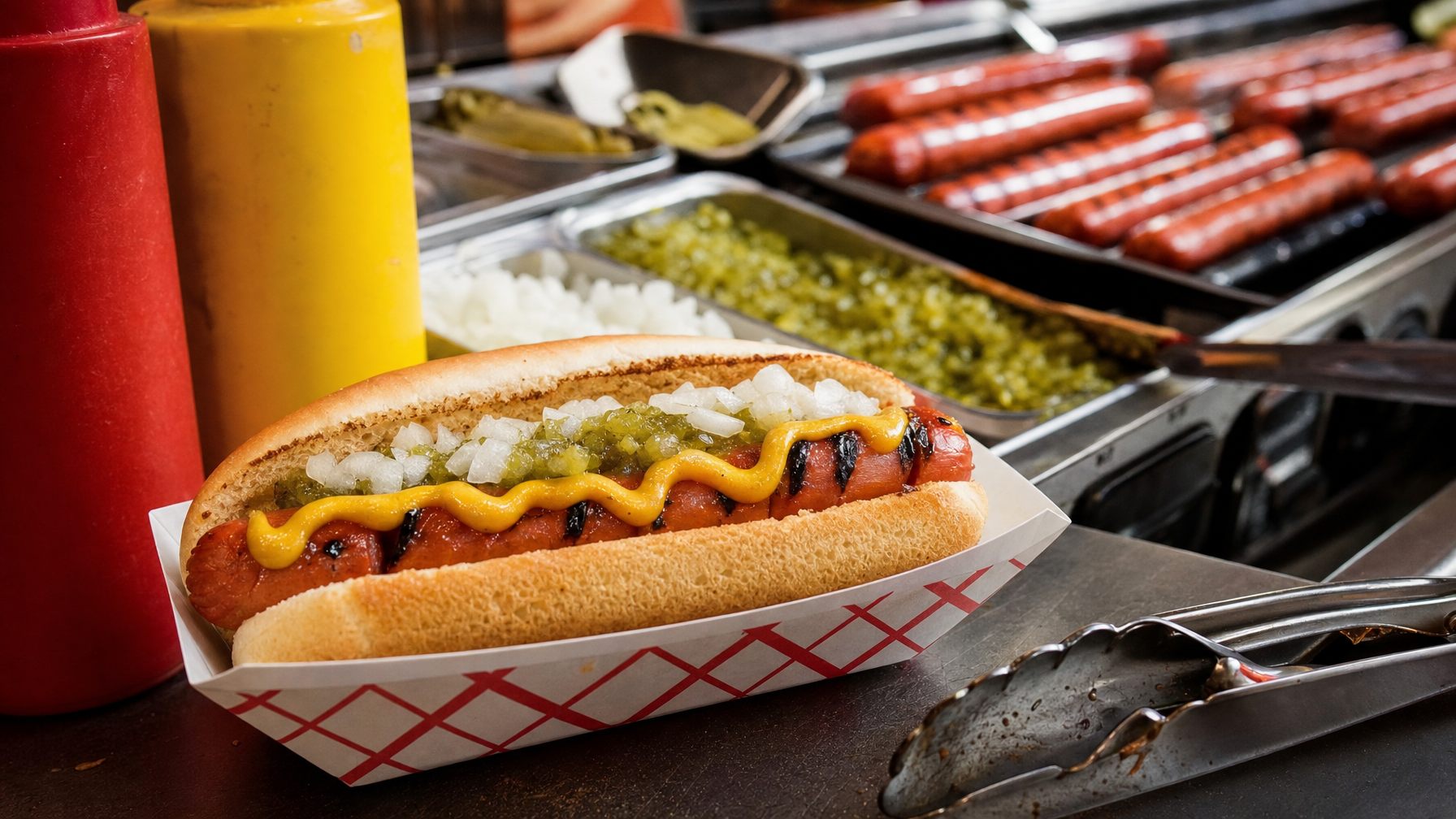
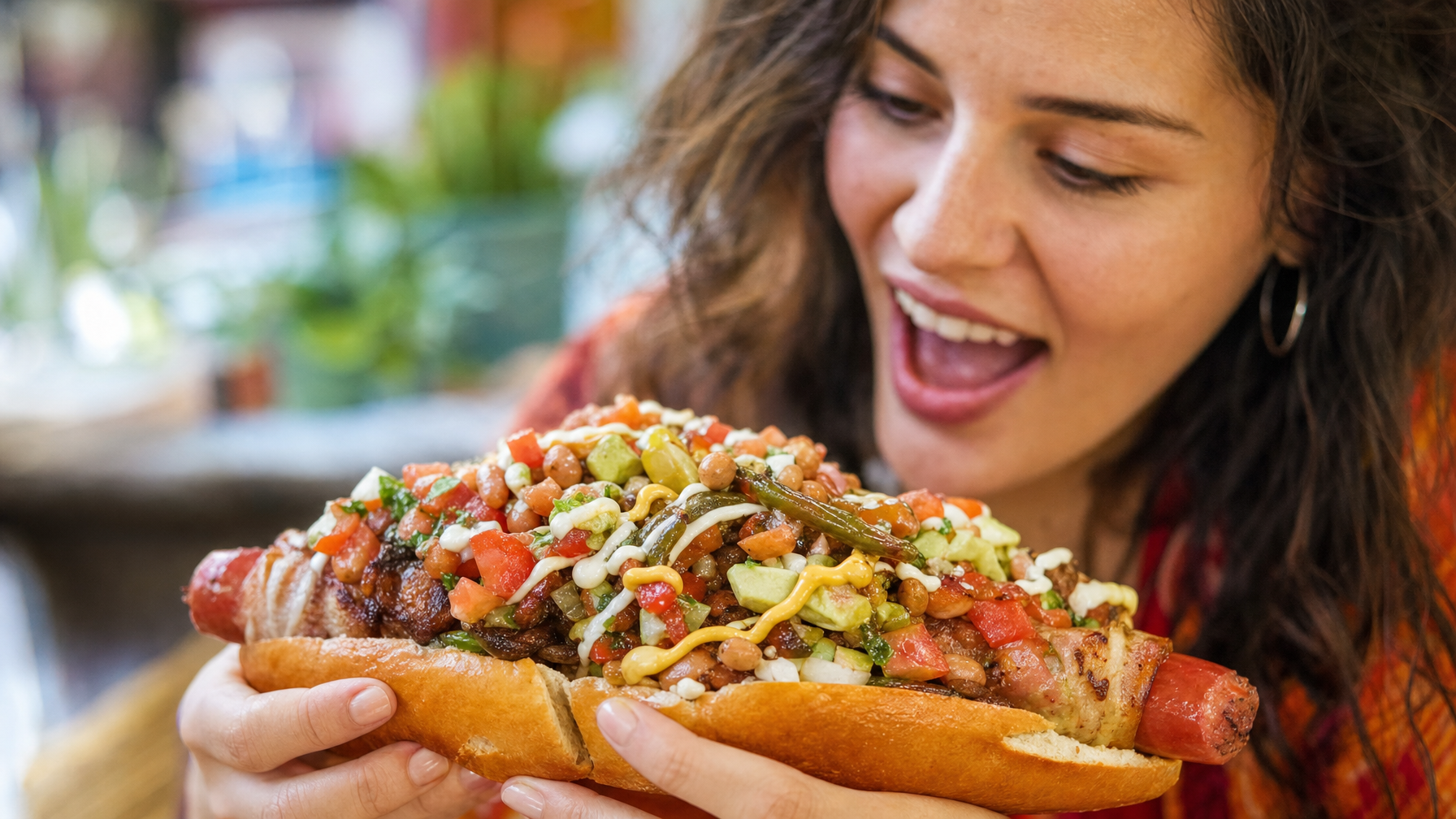
A butterflied dog is built for a crowd on top. Its flat face gives chopped onions, relish, cheese, and sauces more places to settle. Think of it as the dog wearing a crown: louder, broader, and ready to carry an unreasonable amount of good stuff.
A whole dog makes a different argument. It preserves a cleaner sausage-to-bun ratio, with toppings acting as supporting cast rather than a parade float. That is the tuxedo version: tidy, direct, and less likely to dump half its onions in your lap.
Jason is firmly in the no-ketchup camp; that is a brand opinion, not a legal prohibition. Mustard, onions, relish, cheese, peppers, and your own questionable-but-sincere choices can all help determine which shape makes sense. A loaded build generally rewards a flatter base. A minimalist build gives the whole dog’s texture more room to speak.
Final Ruling: Butterfly for Brown, Keep It Whole for the Snap
Choose a butterflied dog for maximum pan browning, crispier edges, and generous topping coverage. Choose a whole dog for a rounder bite, more intact casing character, and a stronger snap.
Run the side-by-side trial once. Then cook the shape that fits the dog and the toppings you actually want—not the shape that looks most dramatic on a cutting board photo. The pan will tell you plenty, provided you stop asking it to settle internet arguments.
Follow @jasonsgrub on Instagram for more hot-dog experiments and field-tested opinions.
FAQ: Four Questions Before You Take a Knife to Lunch
Does butterflying make a hot dog cook faster?
It can increase pan contact and expose more surface, but the actual timing depends on the dog, pan, heat, and starting temperature. Treat it as a technique to test, not a guaranteed stopwatch shortcut.
Will a butterflied hot dog still have a snap?
It may retain some casing texture, but opening the dog changes the bite and reduces the intact, rounded snap experience. If snap is your priority, cook it whole.
Should I cut all the way through?
Not for a true butterfly. Cut lengthwise while leaving the two halves attached, then open the dog flat.
Is butterflying better for every kind of hot dog?
No. The better choice depends on the dog’s texture, the pan cook, the toppings, and whether you value browning or snap more.
Can I test both methods in one meal?
Absolutely. That side-by-side comparison is the point, and it is far more useful than beginning a 47-comment argument about the “right” way to cook one.
Enjoyed this? There's more from Jason's Grub.
Follow on Instagram →