A Campfire Dog Should Taste Smoky, Not Like It Lost a Fight With Ash
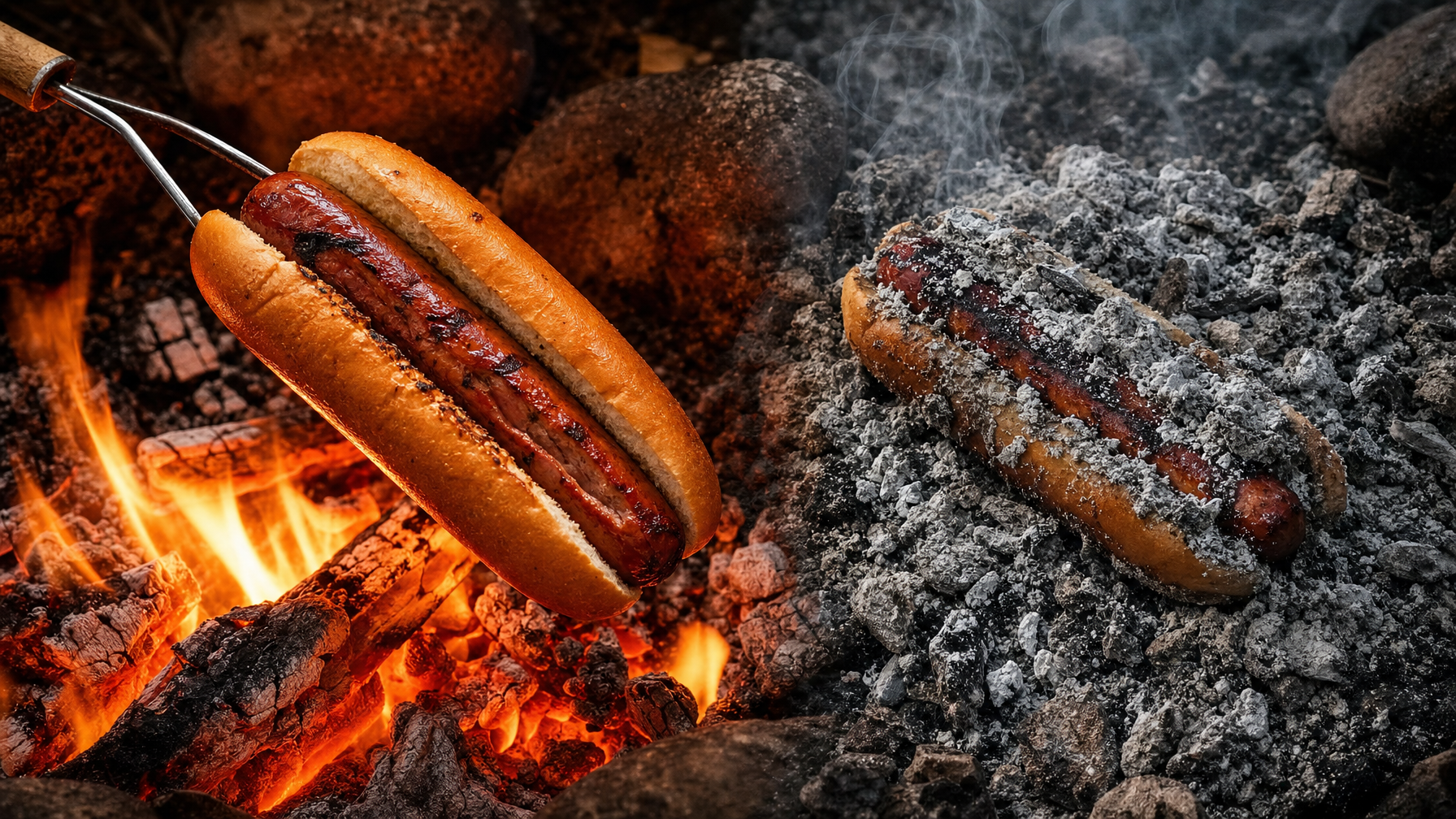
A great campfire hot dog gets its flavor from clean smoke and steady heat—not from being buried in a gray avalanche of ash. If you are a hot-dog obsessive, a camper, or someone who has watched dinner go from charred to carbonized in one distracted minute, cook the dog above glowing coals, turn it often, and keep loose ash off it like it owes you money. After ten years, 50 states, and zero ketchup, Jason’s position is firm: campfire flavor should taste like smoke, not like somebody swept a chimney onto your dinner.
A Campfire Dog Should Taste Like Smoke, Not a Fireplace Accident
This is a technique-first campfire recipe for getting a properly browned, smoky dog without duplicating Jason’s Signature Charcoal Snap Dog. Charcoal and a campfire are cousins, not twins: a wood fire has shifting heat, rogue gusts, flare-ups, and the occasional log that behaves like it has a personal agenda.
The central fact is gloriously simple: smoke comes from clean-burning wood and controlled exposure to heat; ash comes from letting your food get too close to the debris. You want the first. You do not want the second. Ash is not seasoning. It is the culinary equivalent of dropping your sandwich in a planter and announcing that it has “earthy notes.”
The Fire Is the Ingredient, So Stop Cooking Over the Wrong Part
An open fire has three very different neighborhoods, and only one is where your hot dog wants to live.
- Active flames: dramatic, hot, and wildly inconsistent. Flames can scorch one side before the inside has heated through.
- Glowing coals: the sensible cooking zone. They provide steadier radiant heat and a more manageable path to browning.
- Loose ash: spent material that can blow, cling, and turn a good dinner into a dusty little tragedy.
Let a newly built fire settle until it has a stable bed of glowing coals. Then hold or position the dog above those coals rather than in the tallest flames. You are aiming for controlled browning, not reenacting the final scene of a disaster movie.
Fuel matters, too. Clean, dry firewood generally burns more pleasantly than damp wood, which can produce harsh, acrid smoke. Never cook food around treated, painted, stained, or unknown wood. If you do not know what was put on that lumber, it does not belong in a fire that is cooking dinner. Full stop.
Why Ash Clings Like It Has a Personal Grudge
Ash-covered dogs usually happen because the cook gets too close to the fire, sets food directly on coals, pokes the fire with unnecessary enthusiasm, or ignores a gust of wind that suddenly turns the cooking zone into an ash cannon.
Smoke and ash are not interchangeable expressions of rugged outdoor character. Good smoke adds aroma and depth. Ash tastes dusty, bitter, and unmistakably like a bad decision made with confidence.
Keep the dog suspended above the coals with enough clearance that it is not constantly catching flare-ups. Watch the fire itself, not an imaginary fixed schedule. Wind can move heat and ash in seconds; the spot that behaved beautifully a moment ago can become a blast furnace with a dandruff problem.
Give Every Side Its Little Campfire Moment
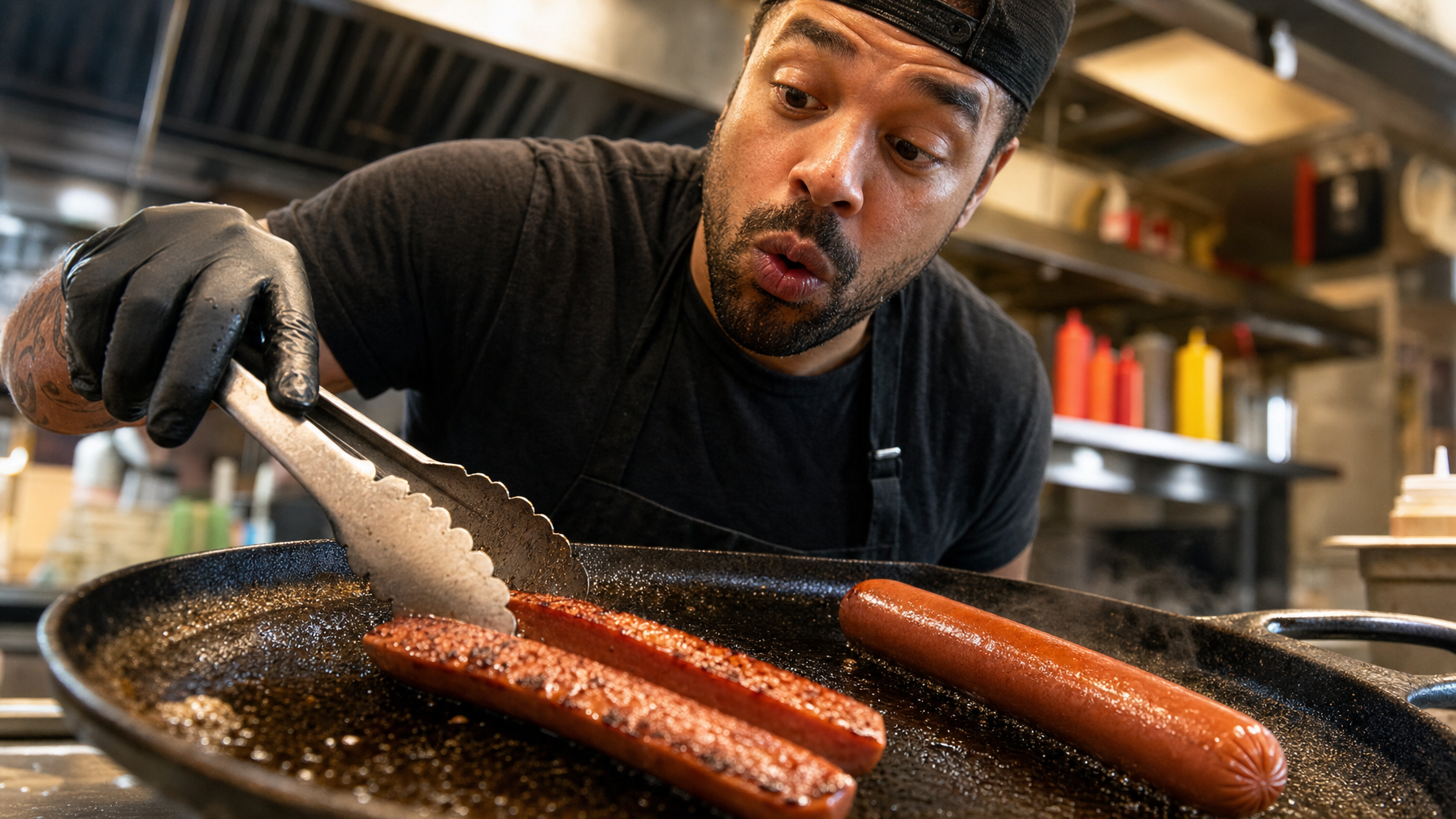
Use long tongs or a suitable roasting stick and rotate the dog frequently. Small turns let the casing brown gradually instead of blackening on one side while the other side remains pale and confused.
The target is an evenly heated center with a lightly blistered, browned exterior. A little char can be delicious. A casing split wide open and dripping its juices into the fire is your cue that the heat got bossy.
- Start above settled, glowing coals rather than in tall flames.
- Hold the dog at a comfortable distance from the heat.
- Turn it steadily, giving each side a brief moment near the heat.
- If flames flare up, move the dog farther away rather than attempting to out-stare fire.
- Look for even browning, gentle sizzling, and a properly hot center.
Follow the product’s cooking instructions and make sure the center is properly hot before serving. Campfires do not provide a neat dial, a timer beep, or any sympathy for wishful thinking.
The Stick, the Tongs, and the Forbidden Ash Bath
A long roasting stick delivers the full campfire tableau: sit by fire, hold stick, become briefly convinced you are a frontier chef. Long tongs are less cinematic but offer better control, easier turning, and fewer opportunities for your dog to make a surprise landing in the coals.
Whichever tool you choose, use stable equipment intended for open-flame cooking. Keep hands, loose sleeves, and unnecessary bravado away from the hottest part of the fire.
Dropping a hot dog into the coals is not a secret technique. It is a short-term cremation plan with a terrible plating strategy. If ash lands on the dog, do not declare the crunch “rustic.” Remove the contaminated outer surface if practical, or replace the dog. Dinner should not require a grit tolerance test.
A Bun Should Catch the Dog, Not Collapse Under Its Own Ambition
Warm the bun near the fire only after the dog is nearly ready, using a cooler edge of the coal bed. Bread burns with astonishing speed and zero remorse. You want it warm and a little toasted, not reduced to black evidence.
Once the dog is evenly cooked, settle it into the bun and keep the toppings restrained enough that the smoke still gets a speaking role. A campfire dog does not need a wet landslide of ingredients obscuring the work you just did.
Three sensible finishing directions
- Sharp and simple: mustard with chopped onion or sliced pickles.
- Campfire crunch: mustard, onion, and a spoonful of crisp, dry slaw if you brought it cold and ready to serve.
- Heat with manners: mustard and a little hot pepper relish or pickled peppers.
Jason’s no-ketchup stance is a fiercely held brand opinion, not a federal campfire ordinance. You can make your own choices. Just know that, in this particular corner of the hot-dog universe, ketchup is not receiving a chair by the fire.
Campfire Crimes and Their Sentences
| Crime | What goes wrong | Sentence: the fix |
|---|---|---|
| Cooking over tall flames | The outside scorches before the dog heats evenly. | Wait for glowing coals and move farther from sudden flare-ups. |
| Using wet or questionable wood | Smoke can become harsh, unpleasant, or simply not food-friendly. | Use clean, dry, known firewood only. |
| Walking away | The fire does not politely hold your order while you wander off. | Stay beside the cooking area and keep turning the dog. |
| Turning too rarely | One side blackens while another side barely warms up. | Rotate steadily for even browning. |
| Toasting the bun too soon | The bun burns while the dog is still cold in the middle. | Warm the bun at a cooler edge near the end. |
| Giving the dog an ash bath | Bitter, powdery grit takes over the flavor. | Keep it above the coals and avoid stirring loose ash. |
The Final Campfire Test: Smoke, Snap, and Zero Fireplace Dust
Before you serve, run the quick reality check:
- The casing is evenly browned or lightly blistered, not obliterated.
- The center is properly hot, following the product’s instructions.
- No loose ash is coating the surface.
- The aroma is smoky and inviting, not bitter or aggressively sooty.
- The bun is warm enough to cooperate, still structurally capable of being a bun.
A little char is welcome. Bitterness and a powdery surface mean the fire has taken over the recipe, and frankly, fire has enough hobbies already.
For more real hot-dog places, purchasable finds, recipes, and arguments that may become opinions, follow @jasonsgrub on Instagram for more hot-dog finds and opinions.
FAQ: Four Questions From People Who Have Seen a Hot Dog Burn in Real Time
Should a hot dog cook directly in the flames?
Usually, no. Let the flames settle and cook over glowing coals for steadier heat. If a flare-up gets aggressive, move the dog away; there is no prize for standing your ground against fire.
How do I get smoky flavor without covering the dog in ash?
Use clean, dry fuel; wait for a settled coal bed; cook above the coals; avoid stirring loose ash; and turn the dog regularly. Smoke should perfume the dog, not powder it.
Is a split casing a problem?
It is not automatically unsafe, but it often means the dog faced excessive heat or cooked too long. Splits let juices escape into the fire, which makes the finished dog less juicy and the flames more smug.
Can I cook the bun over the same fire?
Yes. Use a cooler edge of the fire and watch it closely. Bread goes from pleasantly warm to charcoal evidence with shocking efficiency.
What toppings work best on a campfire dog?
Choose toppings that complement smoke rather than bury it: mustard, onion, pickles, pepper relish, or a modest amount of crisp slaw all make sense. Jason votes no ketchup, emphatically; your campfire remains a free country.
Enjoyed this? There's more from Jason's Grub.
Follow on Instagram →