When a Stadium Hot Dog Becomes the Internet’s Main Character
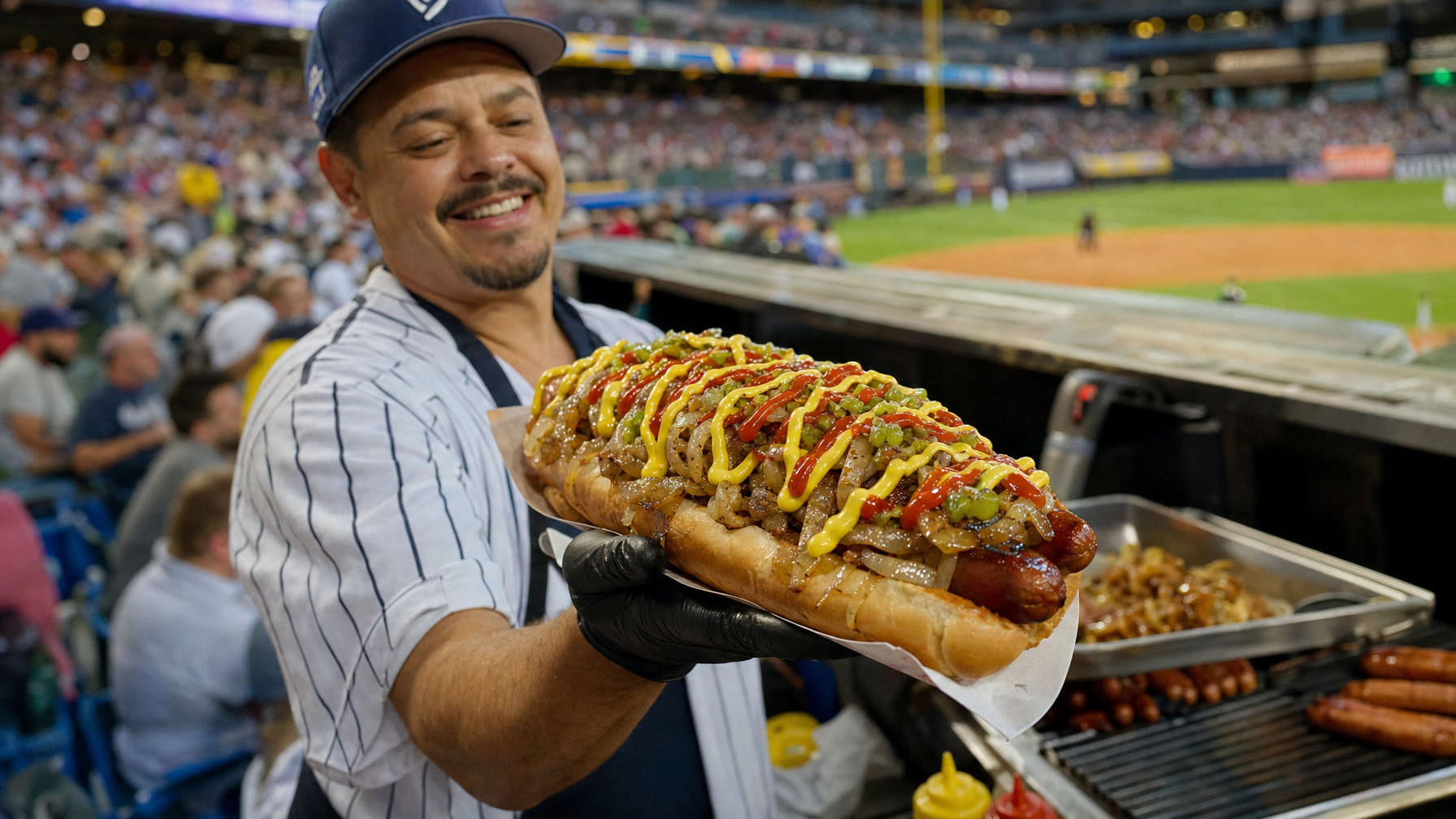
A stadium hot dog becomes the internet’s main character when it stops being concession fuel and turns into a story: a spectacular topping pileup, a wildly judged price, a hometown ritual, or a photograph too strange to scroll past. For hot-dog fans and food-culture readers, the useful question is not whether the dog got attention; it is whether there is an actual bite underneath the commotion. After ten years and 50 states of hot-dog research, Jason’s position is simple: spectacle deserves scrutiny, and ketchup still does not get a free pass.
The Hot Dog Walks Onstage, and Nobody Asked for a Supporting Cast
Calling a food item the internet’s “main character” means it attracts wildly disproportionate attention: comments, jokes, arguments, reposts, screenshots, fan pride, and the occasional person declaring civilization has collapsed because somebody put too much cheese on a bun.
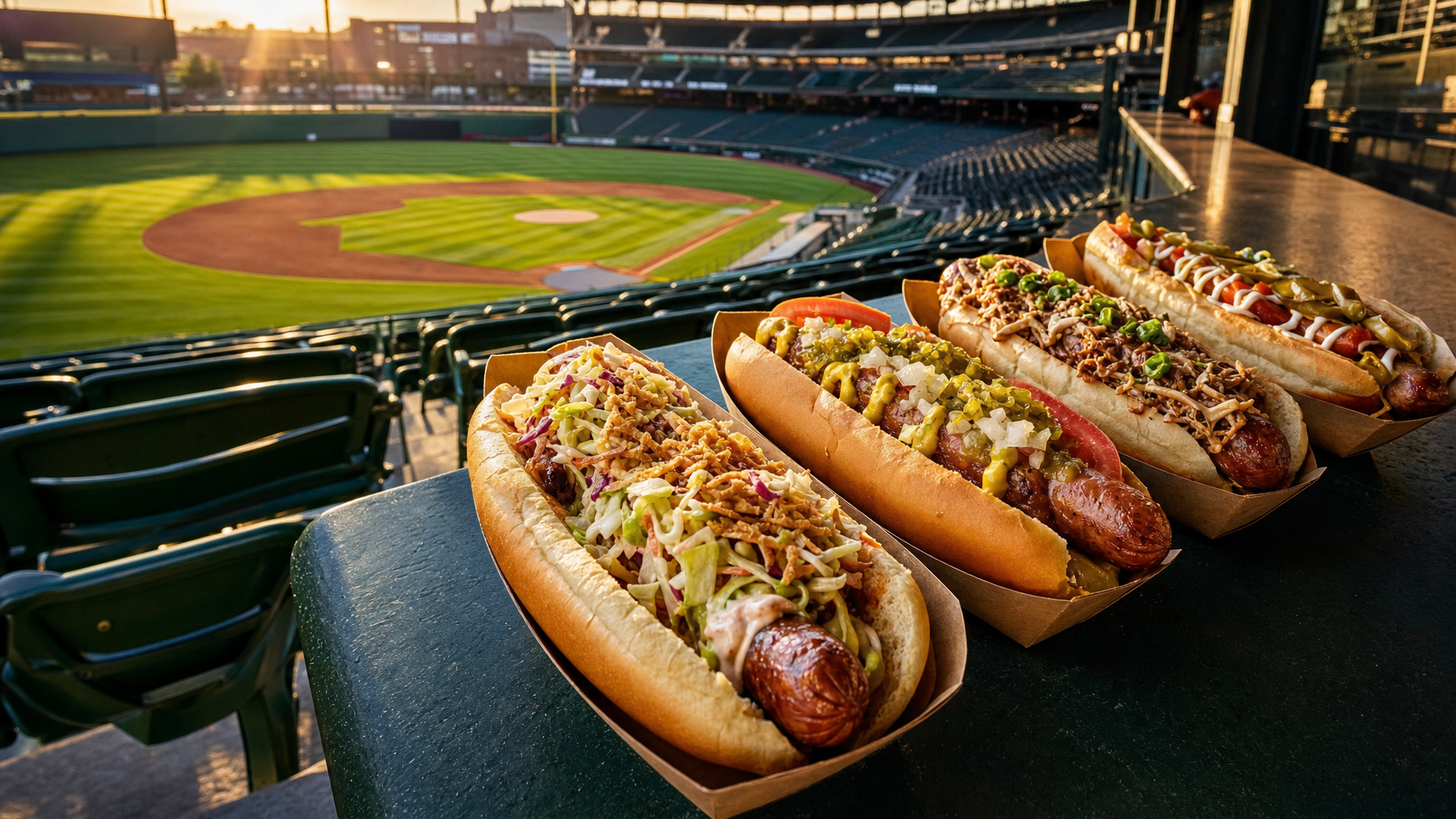
At a ballpark, a dog can make that leap fast. It is no longer lunch between innings. It becomes the event people discuss between innings, after the game, and from several time zones away. That shift happens because stadium food arrives with built-in theater: crowds, team identity, limited menus, nostalgia, big prices, and a captive audience holding a phone in one hand and a napkin losing the war in the other.
This is for people who care about hot dogs as food and as cultural evidence. Maybe you want to chase a memorable stadium bite. Maybe you merely want to understand why a hulking frankfurter wearing enough toppings to qualify as architecture has seized the group chat. Both are valid hobbies.
What Makes a Ballpark Dog Impossible to Ignore?
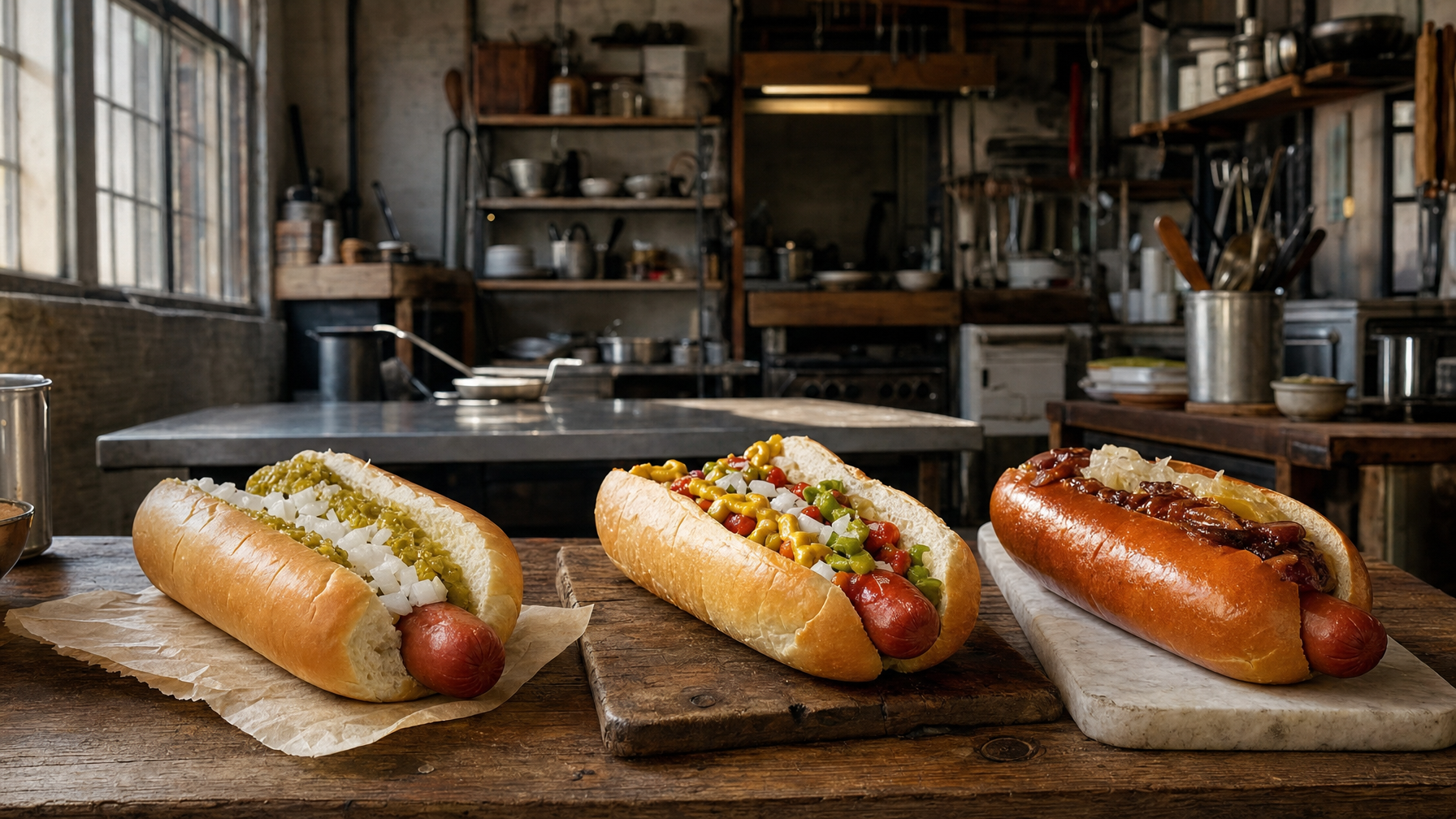
Attention usually starts with a visual or conceptual interruption. A normal hot dog is easy to enjoy and easy to ignore. A hot dog that looks like it needs zoning approval is another matter.
- Unusual size: A comically long, wide, or overloaded dog announces itself before anyone takes a bite.
- Towering toppings: Chili, slaw, fried ingredients, cheese, pickled things, or a heap of something crunchy can create instant visual drama.
- Unexpected ingredients: A local flavor or an odd pairing can invite genuine curiosity—or immediate side-eye.
- Presentation: Bright colors, a messy cross-section, steam, sauce, and an aggressively stuffed bun all photograph well.
- Price: Once a listed price enters the frame, the comments may decide the hot dog is now an economics seminar.
Stadium dogs are built for photographs. They are handheld, colorful, messy, and understandable in roughly half a second. Nobody needs a glossary to recognize a bun straining around a sausage and a pile of toppings.
But novelty is not the same thing as a flattering camera angle. A standard concession dog photographed at sunset can look like it descended from Mount Mustard. A genuinely unusual dog should have a clear distinction beyond good lighting: a specific ingredient, a recognizable local tradition, a purposeful build, or a serving style that changes the eating experience.
The Price Tag Enters the Chat Wearing Cleats
A price can turn a hot dog from lunch into discourse, especially at a stadium, where people are already primed to debate value. But the conversation gets smarter when it begins with facts instead of theatrical indignation.
A listed price is factual only when it has been verified as current. Whether that price is “worth it” is a judgment. One fan may see a shareable meal with substantial ingredients; another may see a bun being held hostage by the venue. Neither reaction becomes objective merely because it is typed in all caps.
Before declaring a dog absurdly priced—or a bargain worthy of a plaque—ask:
- What exactly comes with it?
- Is the portion realistically shareable?
- Is the price current, including any required add-ons or restrictions?
- Is it sold for the full season, only at selected games, or only during a promotion?
- Is it a full meal, a novelty item, or a standard dog with a fancy name tag?
Price transparency matters because a photograph does not show portion weight, menu terms, or whether the item disappeared last season. The internet loves a number with a dollar sign. It is less thrilled by context. Bring the context anyway.
Toppings, Team Colors, and the Fine Line Between Fun and Food Costume
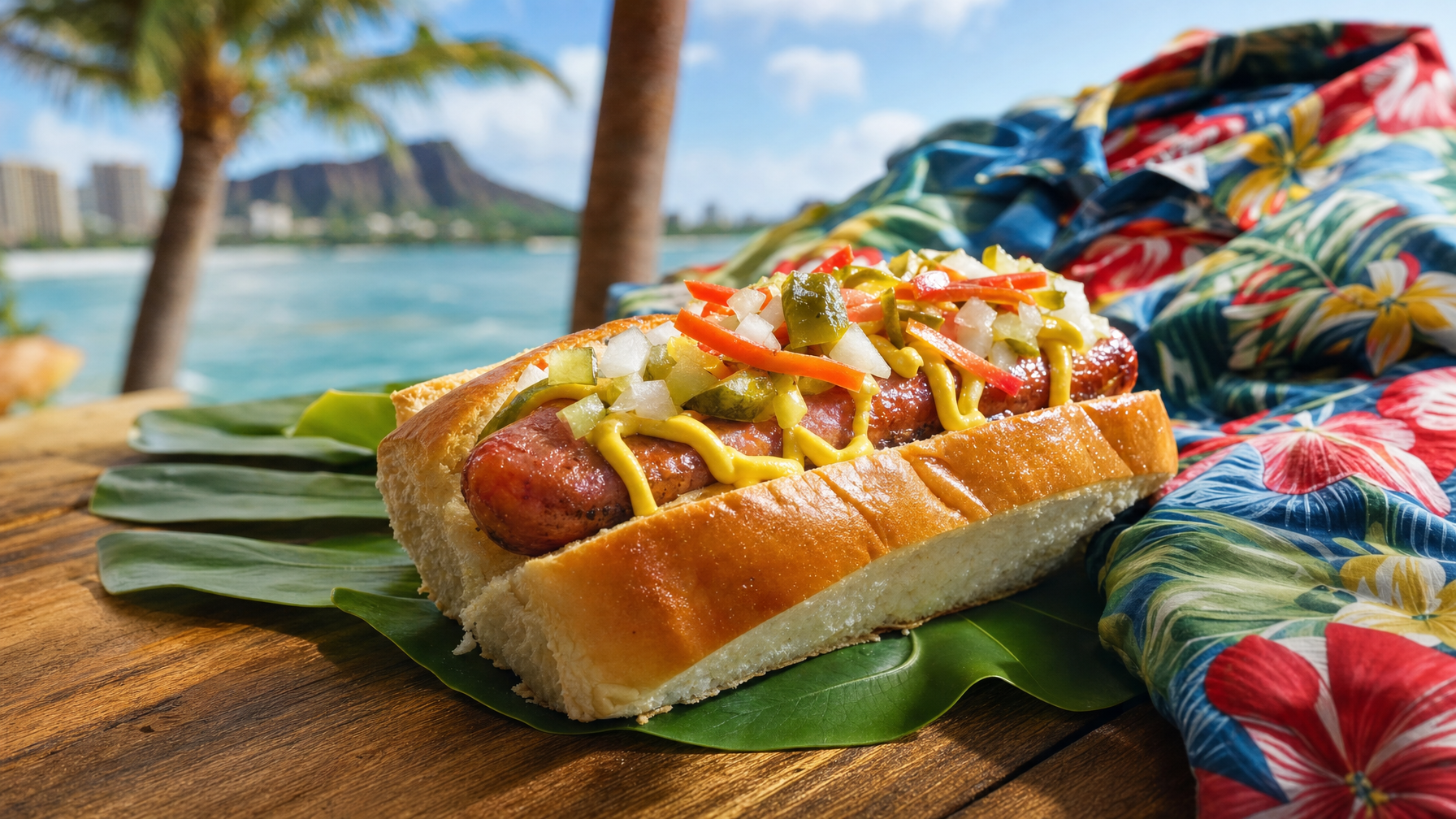
A stadium dog can carry actual cultural meaning. Local flavors may show up in the condiments. A team’s colors can inspire a promotion. A familiar regional hot-dog style may give a visitor a better read on the place than another tray of generic fries ever could.
That is the good stuff: a dog that belongs where it is sold. The less convincing version is a topping avalanche assembled mainly to make the sausage disappear under a small landslide of edible props.
Here is a simple test: can you identify the sausage, bun, and intended flavor logic beneath the decoration? If the answer is yes, the build may be exuberant but coherent. If the answer is no, you may be looking at a hot dog wearing a novelty hat.
Excess is not automatically bad. A messy chili-and-onion dog can be magnificent. A crunchy, tangy topping can rescue a rich sausage. A seasonal ingredient can make a game-day meal feel like a specific occasion. The issue is whether each addition has a job beyond posing for the camera.
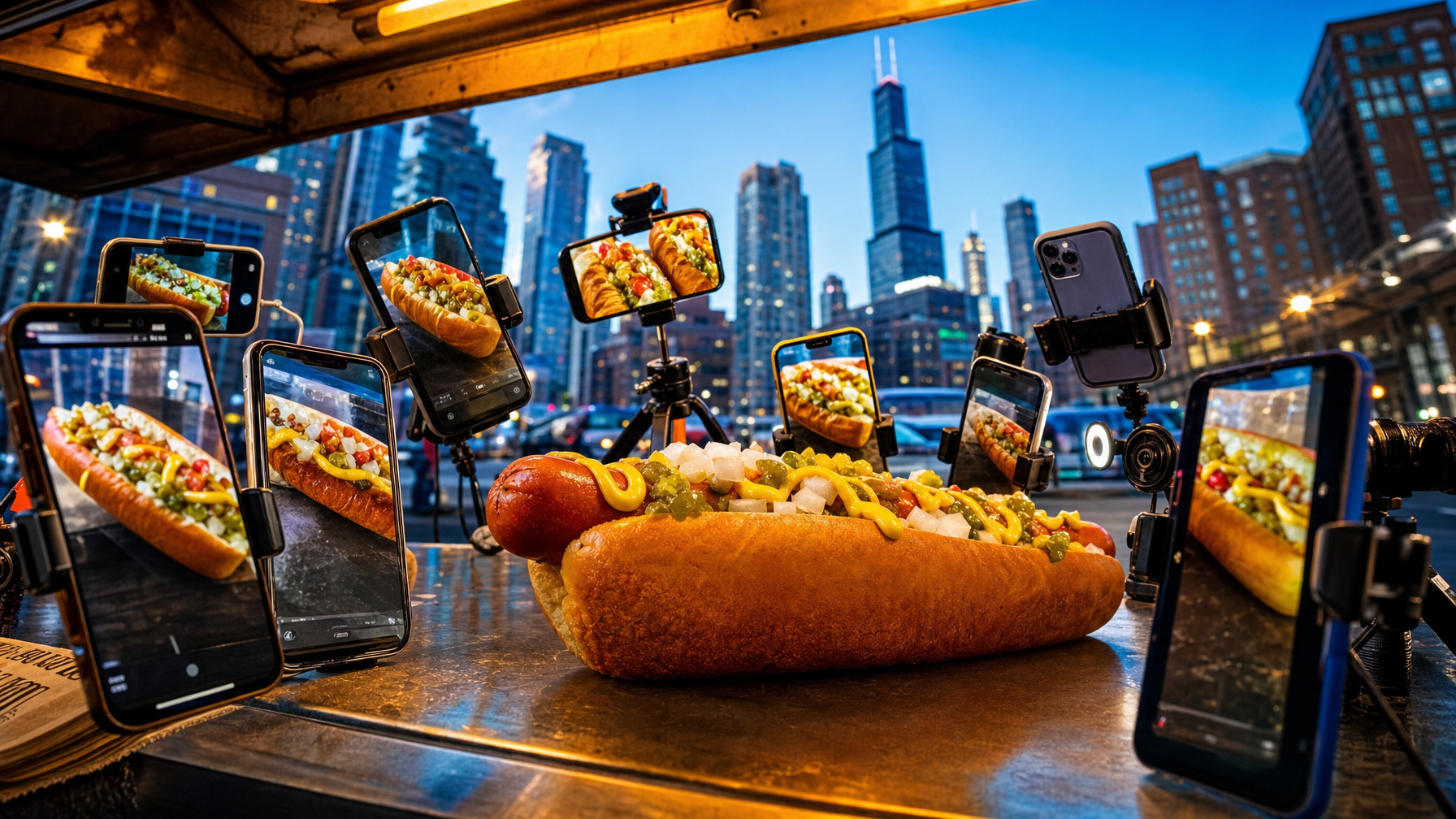
The Photograph Is Part of the Recipe Now
For an online audience, the photo is part of the dish. Height, framing, visible texture, steam, a cheese pull, sauce drips, and a clean cross-section can make a dog memorable before anyone knows whether the bun is stale or the sausage has snap.
That is not a complaint. Food should be allowed to look ridiculous in a joyful way. But an image proves only that the pictured food existed at the moment it was photographed. It does not prove that it tasted good, remains on the menu, is available at every stand, or deserves its own fan club.
Useful stadium-dog reporting pairs the glamour shot with the details a hungry person actually needs:
- Venue and specific concession location, when known
- Date the menu information was checked
- Availability, including seasonal or event-only limits
- Ingredients and meaningful substitutions
- Serving size or whether sharing is practical
- Relevant ordering restrictions or accessibility notes
An old social post can be a terrific lead. It is not proof of a current menu item. Treat it like a clue, not a summons to drive three hours with your appetite in the passenger seat.
Viral Is Not a Flavor Profile
Attention is not taste. A widely shared stadium dog may be funny, outrageous, nostalgic, controversial, photogenic, or all five at once without being the best thing anyone can eat.
“Viral,” “trending,” and “the internet’s favorite” are claims that need a specific, checkable event behind them. Without that evidence, call the dog eye-catching, heavily discussed, or simply unforgettable-looking. Those descriptions do not need a marching band of invented certainty.
Online reaction is a messy cocktail of curiosity, sports tribalism, performance, hometown pride, and genuine food interest. One person sees glorious excess. Another sees a sausage being punished for its success. Neither camp should get to skip the actual eating test.
Judge the dog on the practical stuff:
- Bun integrity: Does it hold the build without dissolving into a wet napkin?
- Sausage texture: Is there proper snap, juiciness, and seasoning?
- Topping balance: Do the toppings support the frank, or erase it?
- Temperature: Is hot food hot and cold garnish still crisp where it should be?
- Portability: Can it survive more than three bites without becoming a lap event?
- Aftertaste: Does the last bite make you want another, or merely a hose?
When the Crowd Becomes Part of the Condiment
A stadium dog becomes a cultural object when the crowd starts adding meaning to it. Comments, memes, fan arguments, hometown loyalty, and rival-team mockery can turn a concession item into a shared joke—or a small civic monument.
Disagreement is part of the pleasure. One person sees a glorious, overbuilt reward for surviving a doubleheader. Another sees a hot dog wearing a novelty hat and asks where the hot dog went. Both responses are more interesting than polite indifference.
Some foods are worth remembering because they create a story, even when they are not elegant. A dramatic stadium dog may be too messy, too expensive for one person’s taste, or completely impractical to eat in a narrow seat while someone is carrying a tray past your knees. It can still be the right order for that game, that city, that rivalry, that weird Tuesday night.
Jason’s Stadium Dog Scorecard: Drama First, Then the Actual Bite
Spectacle earns a look. It does not earn a passing grade. A useful review should examine the dog after the camera stops worshipping it.
| Category | What to look for |
|---|---|
| Appearance | Does the visual drama reveal the food, or conceal it? |
| Bun | Freshness, size, grip, and survival under moisture and weight. |
| Sausage | Snap, seasoning, juiciness, and whether it remains the center of the build. |
| Toppings | Flavor, texture, proportion, and a reason for being there. |
| Balance | Salt, acid, heat, richness, sweetness, crunch, and restraint where restraint is needed. |
| Mess factor | Delightful mess is fine. Structural collapse is a different sport. |
| Portability | Can it be eaten in a stadium seat without requiring a field crew? |
| Price transparency | Is the current price and portion clear enough for an informed decision? |
| Memorability | Would you seek it again for the taste, the occasion, or both? |
Jason’s no-ketchup rule is a personal position, not a federal statute. Put ketchup on your own dog if you must; just do not expect it to receive applause from this corner of the bleachers. More importantly, no condiment—approved or otherwise—can repair a weak bun, a bland sausage, or toppings piled on without a plan.
This scorecard belongs beside destination coverage and recipe work, not in place of them. A great place tells part of the story. A smart build tells another. The dog itself must still show up and perform.
Should You Chase the Main Character, or Just Order the Classic?
Chase the theatrical dog when it offers a limited-time experience, a real local tradition, or a flavor combination you cannot get from the ordinary menu. Skip it when the only pitch is “very large” or “contains many unrelated objects.” Size is a measurement, not a personality.
Before planning a trip, check the venue’s current official menu or contact the venue directly. Promotions end. Menus change. A heroic photograph can outlive its hot dog by years.
And never underestimate the classic. A simpler dog with a well-cooked sausage, a sturdy fresh bun, and a few well-chosen toppings can beat a photogenic stunt by a full inning. The show-off dog is allowed to show off, but it still needs to know its lines.
For future hot-dog finds and food-culture coverage, follow @jasonsgrub on Instagram.
FAQ: Five Questions Before You Hand Your Phone to the Bun
What does “the internet’s main character” mean for a stadium hot dog?
It means the dog has become the center of online attention and conversation because of its appearance, story, price, novelty, or cultural meaning—not necessarily because it is the best-tasting dog.
Does a famous stadium hot dog have to be good?
No. Attention and quality are separate questions. Judge the sausage, bun, toppings, balance, temperature, and whether the eating experience matches the spectacle.
How can I tell whether a stadium hot dog is still available?
Check the venue’s current official menu or contact the venue directly. Social posts and older articles can outlive seasonal promotions, special-event items, and menu changes.
Are overloaded toppings automatically a bad idea?
Not automatically. Excess can be fun, and a generous build can be delicious. The toppings should add flavor and texture rather than bury the bun and sausage under edible construction debris.
What should I look for when reviewing a stadium hot dog?
Start with the bun, sausage, topping balance, temperature, portability, price transparency, current availability, and whether the dog is still enjoyable after the camera stops rolling.
Enjoyed this? There's more from Jason's Grub.
Follow on Instagram →