When a Hot Dog Becomes a Meme, Who Gets the Last Bite?
When a hot dog becomes a meme, the last bite belongs to whoever can turn the joke into something real: the vendor, the customer, the creator—or, occasionally, the internet’s hungry little chaos goblin. For hot-dog obsessives and food-culture readers, the important distinction is simple: a meme can make you look, but only a genuinely good dog makes you come back.
A Meme Can Sell the Sizzle—But It Cannot Season the Dog
A hot-dog meme is any image, joke, video, phrase, or repeatable online bit that gives a particular dog, topping, vendor, or eating ritual a burst of attention. It might be an absurd mountain of toppings. It might be a slow-motion collapse on a paper tray. It might be the eternal ketchup argument, because apparently civilization remains fragile.
My position: memeability creates curiosity; the food has to earn loyalty. A ridiculous topping can win the scroll. A dog with real snap, a bun that has not surrendered to moisture, and condiments applied with some adult supervision can win a return visit.
That does not mean every funny dog is bad, or every plain dog is noble. It means the visual premise and the eating experience are separate tests. One asks, “Would I send this to a group chat?” The other asks, “Would I eat this again without a camera?” The second question has teeth.
No particular viral incident or vendor is being claimed here. This is about the broader pattern: hot dogs keep becoming internet characters, and characters do not always make good lunch.
First Bite: Who Actually Benefits When the Internet Points at the Bun?
When a dog catches online fire, several people may benefit—and their interests are not automatically aligned.
- The vendor may receive new attention, new customers, or simply a louder spotlight on work they were already doing.
- The customer or creator may get engagement for spotting, filming, or framing the moment.
- The platform gets another reason for people to keep scrolling through sauce-coated rectangles.
- The audience gets a fresh snack-sized cultural object: part meal, part joke, part argument bait.
Attention is not ownership. The person who posts the joke may not have invented the topping, cooked the dog, paid for the grill, stocked the onions, or kept a lunch rush moving. Likewise, a vendor may create something memorable without controlling the story that gets attached to it online.
A meme that clearly names a real place can give curious eaters a useful lead. A generic visual gag—say, a hot dog dressed like it lost a bet with a condiment aisle—may travel farther, but it can detach the joke from the people and place behind the food.
That is where the fairness question gets interesting. When a community’s food culture becomes content, does the post point people toward the people doing the work? Or does it flatten a local habit, a family recipe, or a neighborhood institution into “look at this weird thing”? Those are not the same meal.
The Internet Loves a Messy Dog—Until the Mess Becomes the Whole Meal
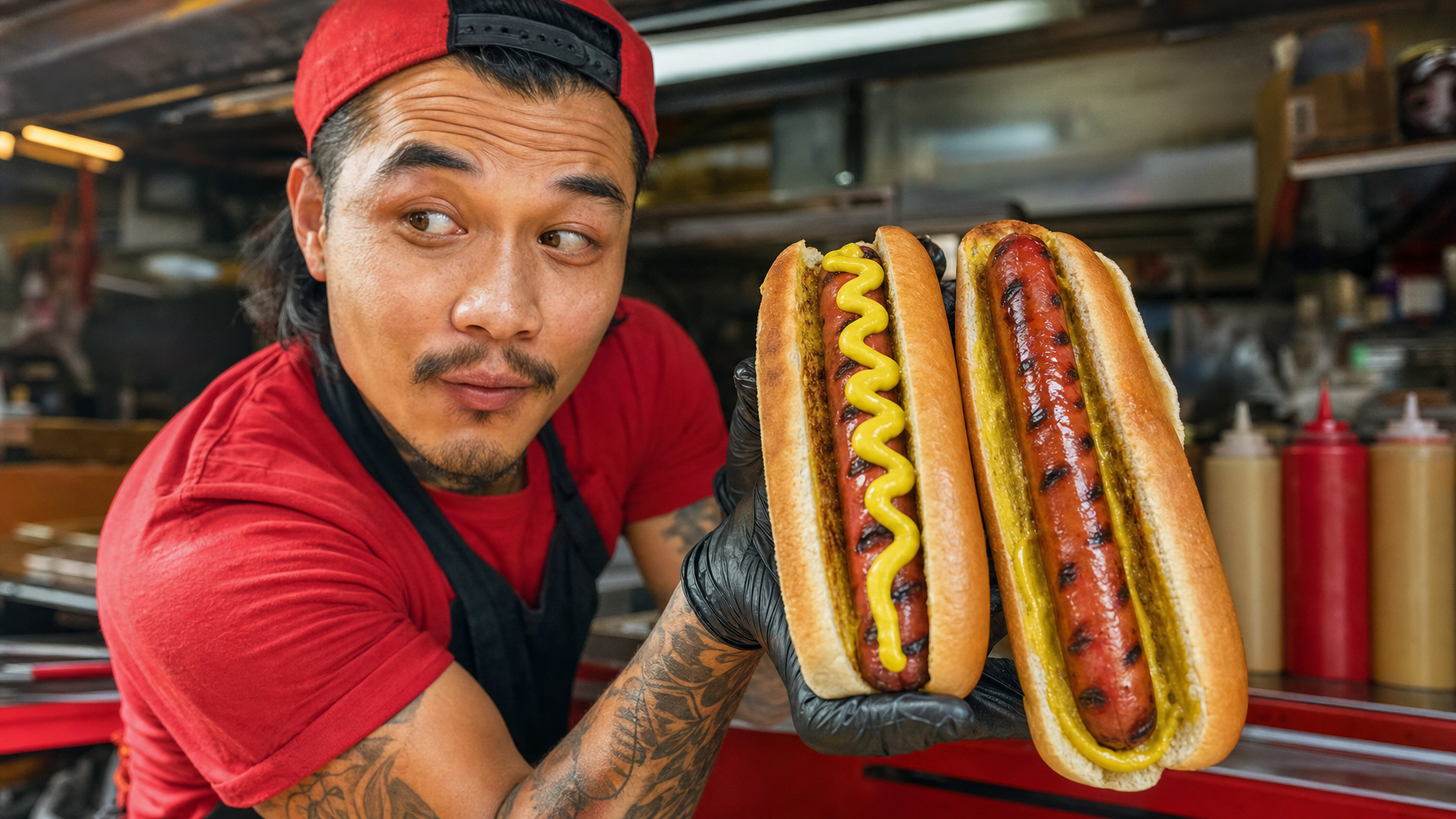
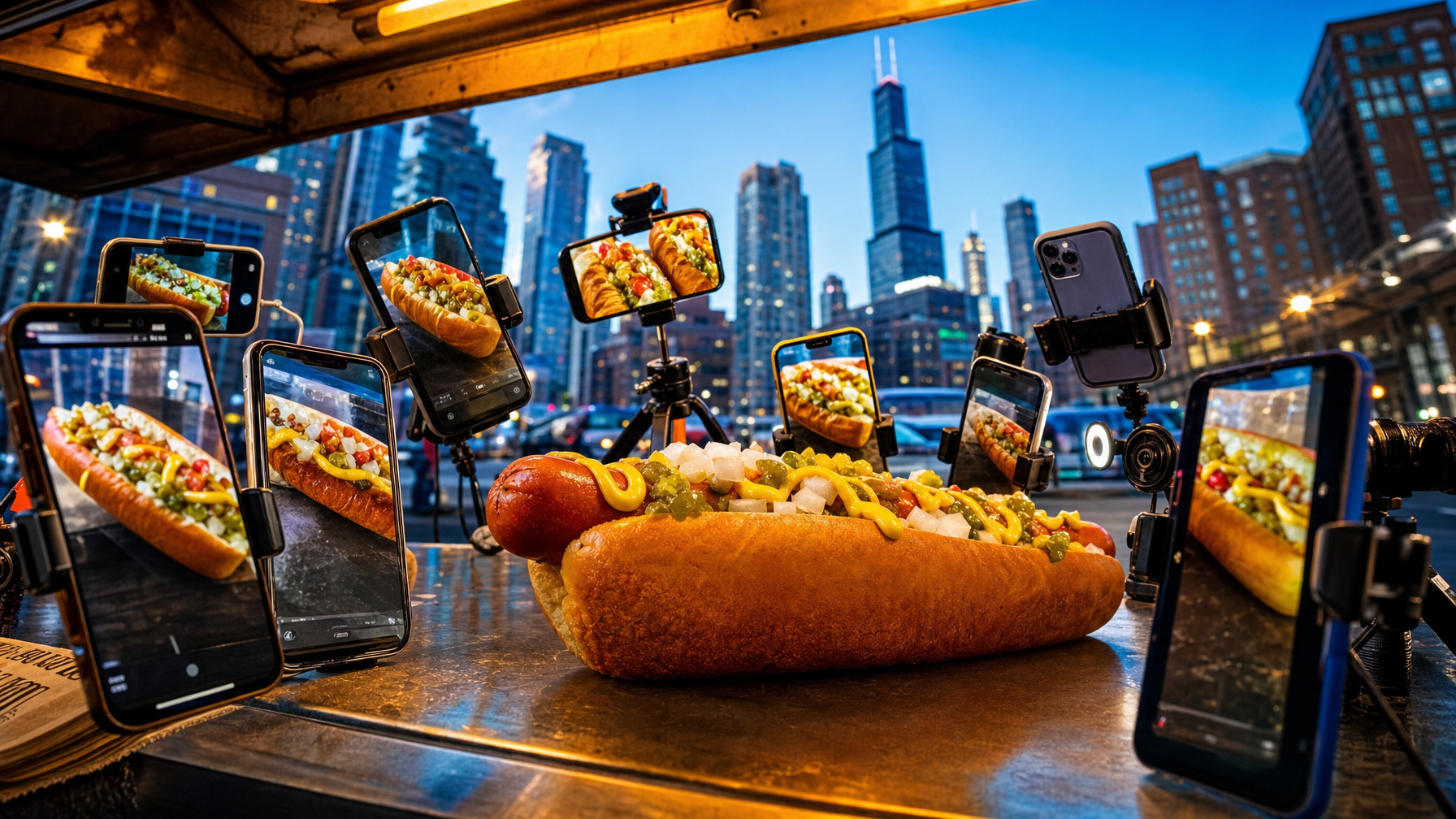
Hot dogs are built for the internet. Their silhouette is instantly recognizable. They are handheld, fast, mildly chaotic, and surrounded by regional convictions strong enough to start a small war near the pickle relish. A towering topping stack reads in half a second. So does a bun split at the exact wrong moment.
Imagine an overloaded dog collapsing on camera before its first bite. That is excellent video. Imagine a comment section detonating over ketchup. That is excellent engagement. Imagine a theatrical combination involving an unreasonable amount of cheese, crunchy toppings, and something that should perhaps have stayed in a dessert bowl. Also excellent video.
None of those things answers the only question that matters after the phone goes down: does it taste good?
Visual spectacle can actively work against lunch. Food designed to be filmed may be too tall to bite, too wet to hold, too cold by the time it is photographed, or so topping-heavy that the actual dog becomes a supporting actor in its own bun. Spectacle has a place. It just should not evict flavor.
And yes, Jason’s position is clear: zero ketchup. That is an editorial opinion, a hard-earned personal line in the mustard-colored sand—not an objective rule that every eater must obey. Put ketchup on your own dog if you must. Just do not expect applause from this corner of the grill.
From Punchline to Pilgrimage: Can a Viral Dog Survive a Real Visit?
Before traveling for a meme-famous hot dog, treat the post as a lead, not a summons from the Lunch Gods. Online attention can outlive a menu item, a pop-up, a special event, or the business itself. A glorious clip does not tell you whether the place is currently open on the day you arrive hungry.
Questions worth asking before you go
- Is the place real, identifiable, and currently operating?
- Is the featured item still on the menu or otherwise available?
- Was the post showing a normal serving, a limited special, or a one-off stunt?
- Does the post accurately identify the location and the food?
- Would you still want to eat it if nobody saw you do it?
Current verification matters whenever destination coverage or purchasable-food coverage is involved. A great food find should be findable. That sounds painfully obvious, but the internet is full of photos that keep circulating long after the relevant menu board has moved on with its life.
Once you arrive, judge the whole experience: the bun, the dog, the toppings, the temperature, the pace of service, the setting, the price, and the basic pleasure of holding the thing. A spectacular dog that tastes great but requires three napkins is a triumph. A spectacular dog that tastes like its own photo shoot is a prop.
That is the food-crawl mindset: seek out actual places, ask better questions, and let being there count for something. The internet can point toward lunch. It cannot take the bite for you.
The Creator Gets the Laugh; the Vendor Gets the Lunch Rush
Behind every eye-catching dog is labor that rarely fits inside a caption: recipe decisions, prep, sourcing, grill work, service, cleanup, and the deeply unglamorous job of making the same item taste right again tomorrow. A creator may capture the moment, but the vendor is usually carrying the operational weight when attention arrives at the door.
Responsible meme-making is not joyless. It is just decent:
- Name the business accurately when you know it.
- Do not use editing or captions to imply something the vendor did not serve.
- Say when a stunt is staged or a serving is unusual.
- Do not imply an item is available without checking.
- Credit the original creator when you are sharing someone else’s work.
Online engagement can be valuable. It can introduce a place to people who might otherwise never hear of it. But it does not automatically guarantee sales, long-term fame, or a sustainable rush of customers. Likes are not a lunch rush; a lunch rush is not a business plan.
My standard is blunt: if a post makes a dog famous, it should make that dog easier to find—not merely easier to laugh at.
When the Joke Turns Sour, Who Has to Clean the Condiment Bottle?
Meme attention has a messier side. A joke can be misread. Mockery can overwhelm curiosity. A sudden crowd can put pressure on a small operation. And some viewers arrive only for the gag, with no interest in the food, the staff, or the place they have temporarily turned into a backdrop.
A vendor cannot control every remix, repost, or hostile comment once a meme escapes into the wild. Creators still have a responsibility not to invent facts, misrepresent a business, or treat real workers as disposable punchlines.
Strong food opinions are welcome here. I have them. You probably have them. But criticism of a hot dog is not a license to harass the person serving it. Say the toppings are unhinged. Say the bun looks outmatched. Say ketchup is a personal betrayal of the sausage. Leave the human beings out of the food fight.
This is editorial judgment, not a claim that every meme causes chaos. Plenty of jokes remain harmless jokes. Still, anybody posting food should understand that a business is not just a background texture for content. It is someone’s daily work.
The Last Bite Belongs to the Dog That Still Tastes Good Offline
Meme status is an invitation to investigate, not proof of quality. The internet is very good at spotting a moment. It is less reliable at telling you whether that moment deserves a second bite.
The four-question hot-dog meme test
- What is funny about it? Identify the gag: the topping, the presentation, the argument, the ritual.
- What is delicious about it? Look for an actual case for flavor, texture, balance, and execution.
- Where can you get it? Confirm the place, product, and current availability.
- Would it hold up offline? Ask whether the experience remains worthwhile after the original post stops being novel.
After ten years, 50 states, and zero ketchup, Jason’s stated personal research claim is not that every dog must fit one sacred formula. The point is curiosity with standards. Chase the strange dog. Respect the local move. Take the photo if it earns one. Then eat the thing while it is hot and decide for yourself.
Follow @jasonsgrub on Instagram for future hot-dog finds, recipes, place profiles, and culture coverage.
FAQ: Four Questions After the Meme Has Gone Cold
Can a meme make a hot dog genuinely famous?
It can introduce a hot dog or vendor to a much larger audience. A lasting reputation, though, depends on the real-world food and the experience of getting it—not the joke alone.
Should I visit a hot-dog place just because I saw it online?
Yes, if you verify that the place is real, currently operating, and serving the item you want. Treat the post as a promising lead, not a guarantee stamped by the universe.
Does a viral topping make a hot dog good?
Not automatically. A topping can be entertaining and still overwhelm the dog, soak the bun, or bulldoze the balance of the whole bite.
Who owns a hot-dog meme?
Ownership can depend on the original creative work, the food’s creator, and how content is reused. In practice, accurately crediting both the vendor and the original creator is the responsible place to start.
Enjoyed this? There's more from Jason's Grub.
Follow on Instagram →