The Sauerkraut Question: Drain It, Fry It, or Let It Flood the Bun?
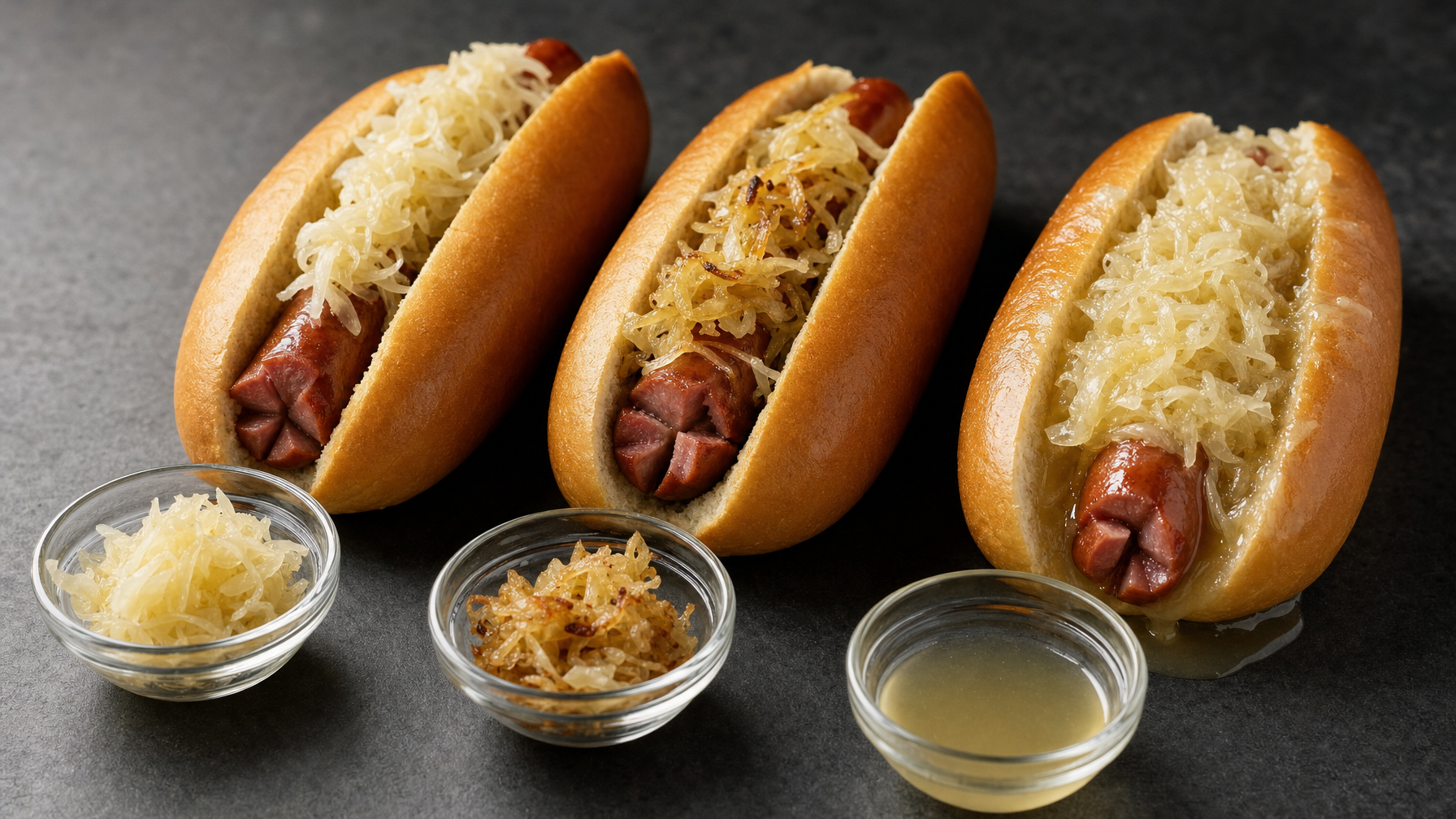
For most hot dogs, drain sauerkraut first, then warm or lightly fry it before it meets the bun. A little brine brings welcome tang; a full cabbage flood turns the bun into a collapsing napkin. This is for hot-dog enthusiasts who want to match kraut texture and moisture to the dog in front of them—not dump a jar on lunch and pray for structural integrity.
Sauerkraut Is a Topping, Not a Weather Event
There are three ways sauerkraut tends to arrive at a hot dog: drained, fried, or sloshing directly from the jar like it has diplomatic immunity. They are not interchangeable.
- Drained kraut gives you control: bright sourness, manageable moisture, and a bun that survives the first bite.
- Lightly fried kraut brings warmth, tenderness, and a rounder, deeper flavor while keeping some tang.
- Undrained kraut delivers maximum acidity and moisture, plus a very real chance of wearing lunch.
My baseline is simple: drain by default, fry when the dog can handle extra richness, and flood only when chaos is specifically on the menu. The right choice depends on three things: how forceful the dog tastes, how sturdy the bun is, and how much sour punch you actually want.
Sauerkraut should make a hot dog more alive. It should not turn it into a cabbage-and-brine soup with a sausage hiding at the bottom.
Drain It: The Quiet Hero of Bun Engineering
Draining removes excess liquid without stripping away sauerkraut's defining sour bite. Tip it into a strainer, let the loose brine run off, and give it a gentle press if it still looks like it could hydrate a small village. The goal is moist, not dripping.
This is the right move for soft buns, lightly seasoned dogs, and any build already carrying wet toppings such as mustard or relish. Those toppings may be wonderful, but they do not need a briny accomplice staging a coup underneath them.
A classic example that keeps its shoes dry
Put mustard and drained kraut on a classic hot dog and you get contrast: savory meat, mustard bite, cabbage tang, and bread that still behaves like bread. Use undrained kraut in the same build and the bun can become a briny sandwich sponge before you have reached the halfway mark.
Do not squeeze the kraut into submission. Aggressive squeezing can leave it dry, limp, and oddly lifeless. Sauerkraut is supposed to have a little juicy snap; it just should not drip down your wrist like a culinary warning label.
Fry It: Give the Kraut a Little Personality
Frying sauerkraut is not a solemn ritual requiring a stopwatch, a secret handshake, and three generations of inherited skillet lore. It is simply a way to warm it, soften its sharper raw edge, and concentrate its flavor.
Use a pan over moderate heat. Start with drained kraut, stir it now and then, and pay attention. You are looking for kraut that is hot, tender, lightly browned in places, and still recognizably tangy. If the pan looks dry before the kraut has warmed through, ease up on the heat rather than scorching the poor stuff into submission.
Which dogs deserve the skillet treatment?
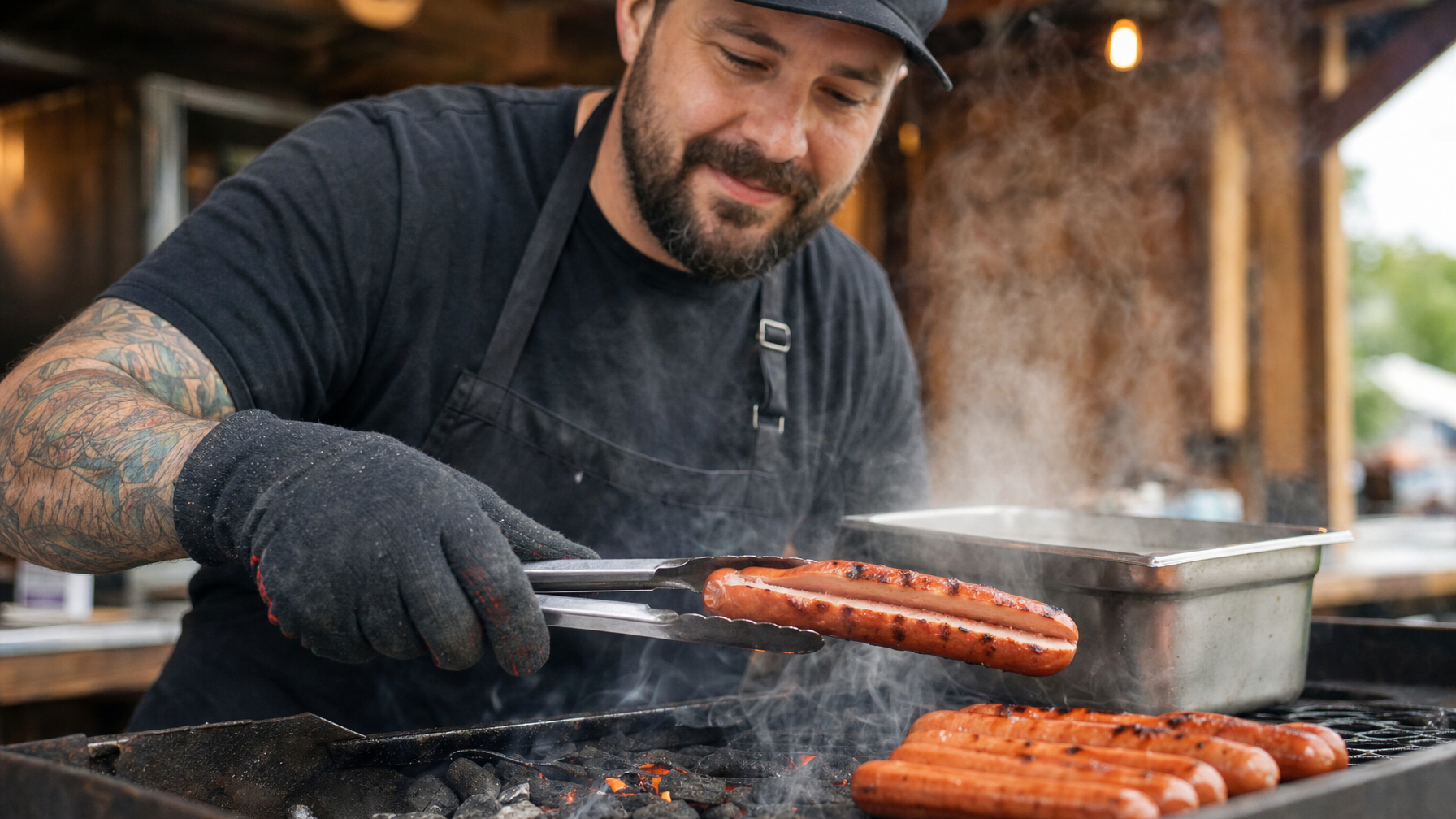
Fried kraut earns its keep beside smoky, grilled, or richly seasoned dogs. Those builds have enough bass notes to welcome the warmer, more developed cabbage flavor. A charred grilled dog with lightly fried kraut has a proper conversation happening: smoke, salt, acid, toast, repeat.
The danger zone is overcooking. Push too hard and the kraut loses the lively acidity that made it useful in the first place. Then you have a heavy, muted pile of cabbage doing an impression of a side dish. Respectfully: nobody invited that guy.
Let It Flood the Bun: Chaos With a Passport
Undrained sauerkraut is not automatically wrong. It is an intentional style choice, like ordering extra hot peppers or wearing white near chili. It works when you want the brine to be part of the build rather than an accidental structural failure.
A full flood has its best chance with a sturdy toasted bun, a highly seasoned dog, and a plate-or-napkin strategy that acknowledges reality. If rich toppings are involved and you actively want their weight cut by sharp, salty brine, a little extra liquid can make sense.
But name the tradeoff honestly: more liquid means more acidity and more mess, while giving you less control over texture and bun stability. A soggy bun is not a regional tradition just because somebody served it to you that way. Sometimes it is simply a soggy bun.
Make the flood deliberate
If you want that wetter, brinier experience, start with mostly drained kraut and add a small spoonful of brine only after tasting. That gives you the sharpness without immediately converting the bun into compostable wallpaper.
Match the Kraut to the Dog, Not Your Personal Religion
People get oddly doctrinal about hot-dog toppings. But sauerkraut has one job: make this particular dog taste better. Let the dog call the play.
| Dog style | Best kraut move | What it solves |
|---|---|---|
| Mild or lightly seasoned | Drain well | Keeps cabbage from dominating the meat. |
| Smoky or grilled | Lightly fry after draining | Adds warm depth that can stand next to char and smoke. |
| Spicy | Drain for clean contrast; add a little brine for extra sharpness | Lets you choose whether the kraut cools the build with tang or turns up its edge. |
| Heavily seasoned | Drain, then taste before warming | Prevents a loud topping from becoming another loud ingredient in a traffic jam. |
| Already wet with condiments | Drain thoroughly | Protects the bun and keeps flavors from becoming muddy. |
A mild dog usually needs drained kraut because its clean sourness is enough; extra brine can shove the meat into the background. A smoky grilled dog can welcome fried kraut. A spicy dog gives you a choice: drained kraut creates a crisp acid contrast, while a modest bit of brine makes the whole thing sharper and more aggressive.
Three Checks Before the Bun Gets Involved
- Taste the kraut on its own. Is it already bright and balanced? Drain it and proceed. Does it feel harsh, cold, or disconnected from a hot grilled dog? Warming may be the better move. If it tastes overwhelmingly intense for this build, rinsing is an option—but not the default.
- Inspect the bun without lying to yourself. A soft bun calls for restraint. A toasted or sturdier bun can tolerate more moisture. No bun becomes invincible because you believe in it hard enough.
- Start small, then adjust. Add enough kraut to support the dog without burying it under a cabbage avalanche. Take a bite and diagnose the actual issue: too acidic, too cold, too soft, too dry, or too wet. Each problem has its own fix.
If the bite is too acidic, use less kraut or rinse a portion. If it feels cold against a hot dog, warm it. If the bun is failing, drain more thoroughly and reduce other wet toppings. If the dog tastes flat, a little more tang may be exactly the rescue operation required.
Jason's Verdict: Drain First, Fry When the Dog Earns It
Drain first. It is the safest, smartest starting point, and it preserves the essential sauerkraut experience without sacrificing the bun. Fry when the dog earns it—especially when smoke, char, or a richer seasoning profile wants a warmer partner. Flooding is a stunt, not a universal virtue.
And yes, this is a no-ketchup house. Not because every dog must become a courtroom argument, but because a good dog, a good bun, and properly handled kraut already have enough to say. Keep the flavors distinct. Let the tang do its job. Do not let lunch turn into a wet cardboard seminar.
For more hot-dog builds, place discoveries, recipes, and strong opinions from Jason's ten years and 50-state hot-dog research, follow @jasonsgrub on Instagram.
FAQ: Four Ways to Avoid a Sauerkraut Crime Scene
Should sauerkraut be rinsed before putting it on a hot dog?
Usually, no. Drain it first. Rinse only when the kraut tastes too intense for the particular dog or topping combination. Rinsing reduces some of the briny sharpness, which can be useful, but it can also remove the character you bought sauerkraut for.
Is fried sauerkraut better than raw sauerkraut?
Neither wins universally. Fried kraut is warmer, softer, and more developed in flavor. Drained, unfried kraut stays fresher, sharper, and more direct. Match the choice to the dog rather than crowning a permanent cabbage champion.
How much sauerkraut belongs on one hot dog?
Start with enough to cover the dog without hiding it. After the first bite, add more if the balance calls for it. A hot dog should not require archaeological excavation to locate the sausage.
How do I stop sauerkraut from making the bun soggy?
Drain excess brine, avoid piling other wet toppings underneath it, and use a toasted or sturdier bun for a wetter build. Add kraut just before eating rather than letting the assembled dog sit around absorbing its own consequences.
Can sauerkraut be added cold?
Yes. Cold kraut gives crisp temperature contrast and sharper acidity. Warm it when the rest of the hot dog is hot and you want the topping to feel more integrated with the build.
Enjoyed this? There's more from Jason's Grub.
Follow on Instagram →