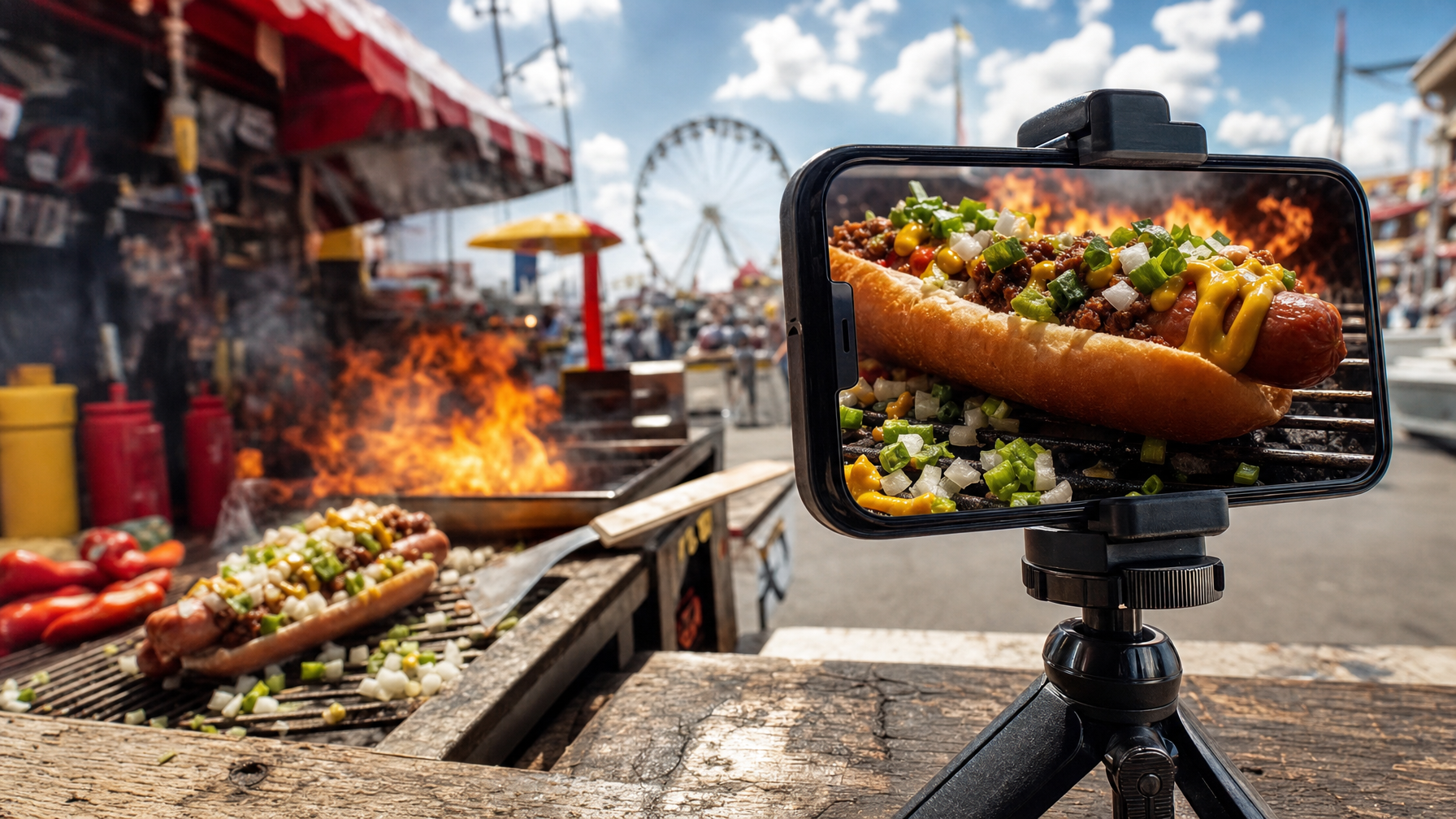
The Griddle Scar That Makes a Hot Dog Look Like It Has a Résumé
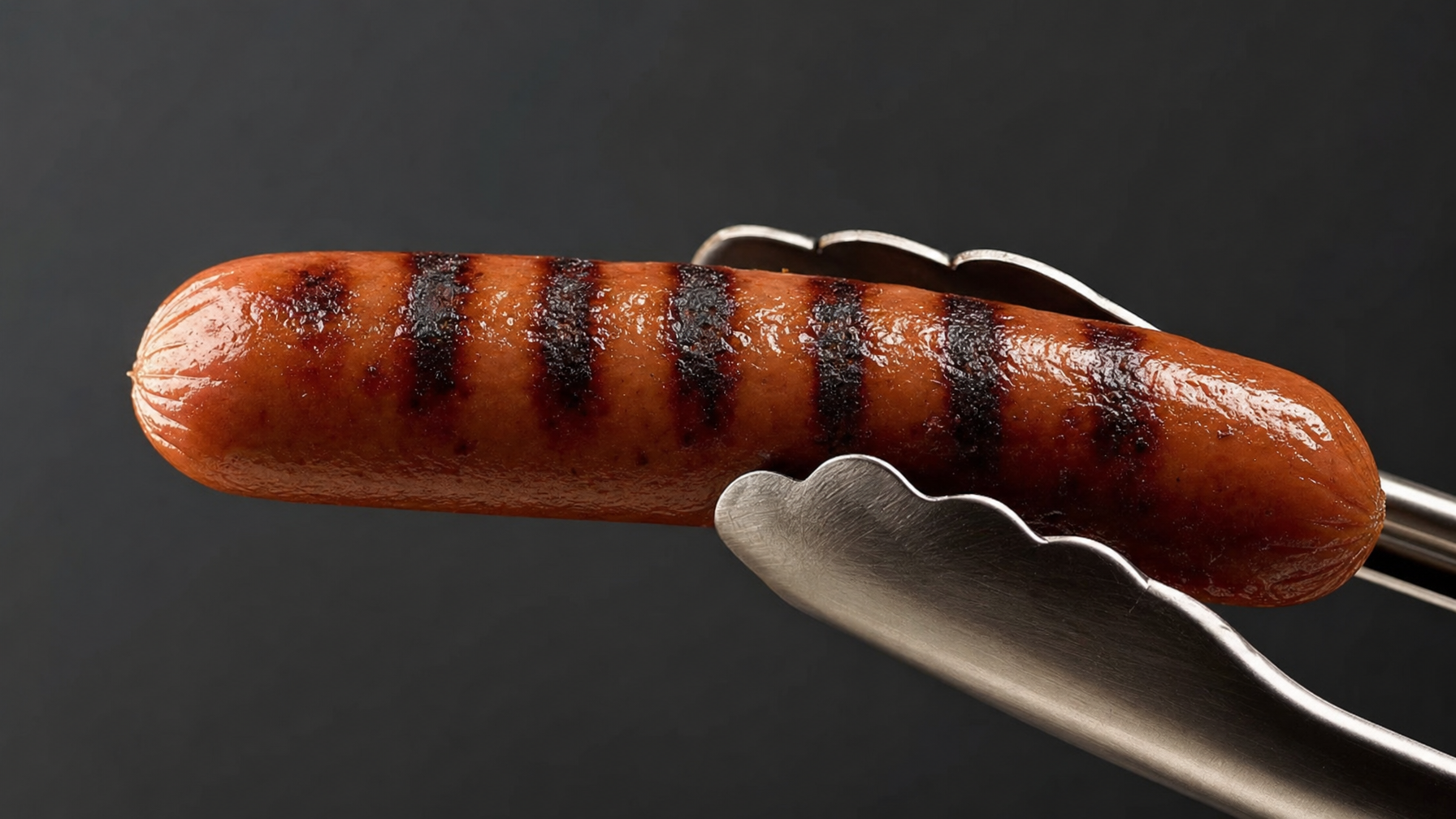
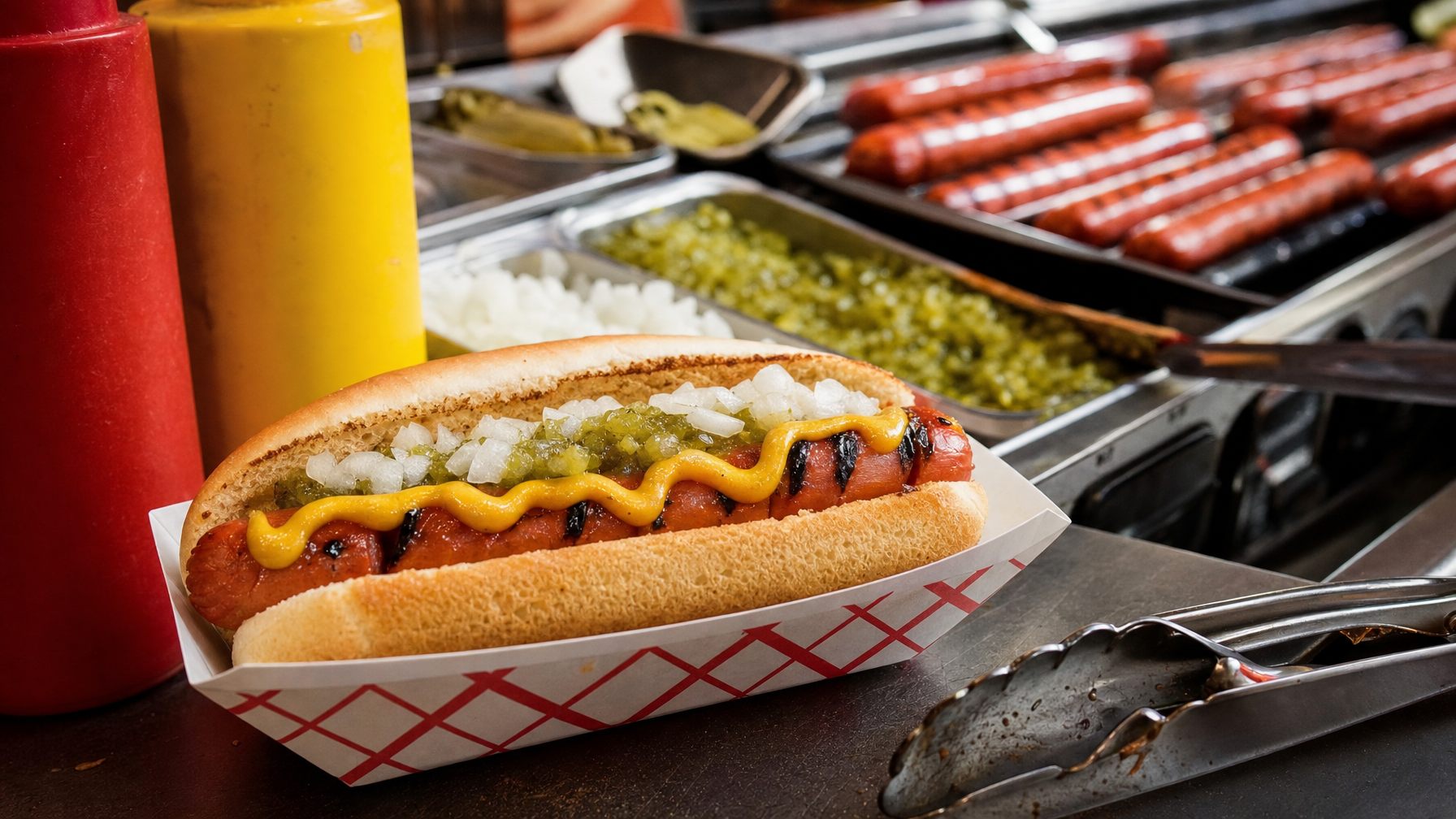
A griddle scar is the browned, crisp line—or little cluster of lines—left when a hot dog hits a properly heated flat surface. It brings texture, roasted aroma, and visual proof that the dog did more than take a lukewarm bath. For anyone who can tell “heated” from “actually cooked,” it is a tiny résumé printed in caramelized protein.
That Dark Stripe Is Not Decoration—It Is Evidence
A griddle scar is a browned contact mark created where a hot dog’s casing, or its cut side, touches a hot griddle, skillet, or flat-top. It is not garnish. It is not a tattoo. It is evidence of direct heat doing useful work.
That contact encourages browning, which brings deeper roasted notes and a firmer exterior than gentle steaming alone. The point is not to punish the dog until it resembles a burnt marker. A good scar is brown to deep golden-brown, aromatic, and a little crisp. A bad one is black, bitter, and accompanied by a casing that has split open like it has lawyered up.
My position is uncomplicated: a hot dog should show some sign that it met heat with purpose. Steamed dogs have their place, and nobody needs to start a condiment war before lunch. But a dog that has only endured a tepid simmer is missing a persuasive piece of surface evidence.
Why Flat-Top Heat Leaves a Better Paper Trail Than a Sad Little Simmer
Boiling and steaming primarily warm a hot dog through moist heat. They can produce a juicy, tender result, but they do not usually leave the same browned mark because there is no hot, dry surface pressing against the casing.
A griddle or skillet creates direct contact. Where the dog presses against the metal, browning develops. Where it barely touches, it stays lighter. That is why scars can be irregular: one side may carry a handsome stripe while another gets a few freckles. This is character, not necessarily a crime.
The look depends on several variables:
- Casing: Natural and skinless casings can brown differently.
- Surface moisture: A wet exterior must shed moisture before it browns well.
- Fat content: Different dogs render and color differently.
- Griddle temperature: Too cool means pale; too hot means smoke, scorching, and regret.
- Contact time: Browning needs a moment of stillness.
Not every dog will emerge with a dramatic, camera-ready racing stripe. Do not chase a heroic scar so aggressively that you overcook the center. The dinner is the point; the photo is just evidence afterward.
The Skillet, the Flat-Top, and the Sacred Question of Pressure
Start with a properly preheated skillet, griddle, or flat-top. Add a light slick of cooking fat if the surface and the dog need it, then set the hot dog down and let it make contact. Turn it deliberately so more than one side can pick up color.
Gentle pressure can improve that contact, particularly if the dog is curved or the cooking surface has seen better decades. But do not smash it flat until its juices flee the scene. A hot dog is not a burger patty and should not be treated like one during a personal crisis.
Constant rolling is the usual enemy of a strong scar. Movement distributes heat around the dog, which may be useful for even warming, but it interrupts the uninterrupted contact that creates a defined browned mark. Give one side time. Turn. Give the next side time. This is not an emergency evacuation drill.
Use enough fat to support browning and discourage sticking, not enough to turn the pan into a grease lagoon. If the dog is swimming, the scar is unlikely to write a compelling résumé.
A Scar Is Not a Personality—But It Tells You Something
A mark can offer clues, as long as we do not pretend it is a scientific quality score.
- A defined golden-brown line: Usually a sign of solid contact and controlled heat.
- Patchy color: May mean uneven pressure, a curved dog, a crowded surface, or simply an imperfect patch of contact.
- Very pale casing: May point to insufficient heat, moisture on the dog, or too much turning.
- Scorched black patches: Usually mean excessive heat or too much time in one spot.
Still, a dramatic scar does not automatically make a hot dog delicious, and a subtle mark does not convict one of mediocrity. The full case file includes snap, juiciness, temperature, seasoning, bun texture, and whether the toppings know when to stop talking.
After ten years and 50 states of hot-dog research—zero ketchup—Jason’s position is that surface evidence matters. It just does not get to be the entire trial.
The Bun Has a Résumé Too, So Stop Letting It Sit There Unemployed
The same griddle that scars a dog can wake up a bun. Put the cut side down briefly and let it become warm with lightly crisp edges. You want a soft interior and some toastiness, not a bread plank capable of filing paperwork.
Watch it closely. Bread travels from pleasantly golden to aggressively crunchy with the confidence of a thing that has no consequences. A lightly toasted bun gives the finished dog contrast: crisp edge, soft center, juicy filling, and a little structural dignity.
This is not a maximal-browning competition. A hot dog is lunch, not a charcoal sample. If the bun shatters when you pick it up, it has been promoted beyond its qualifications.
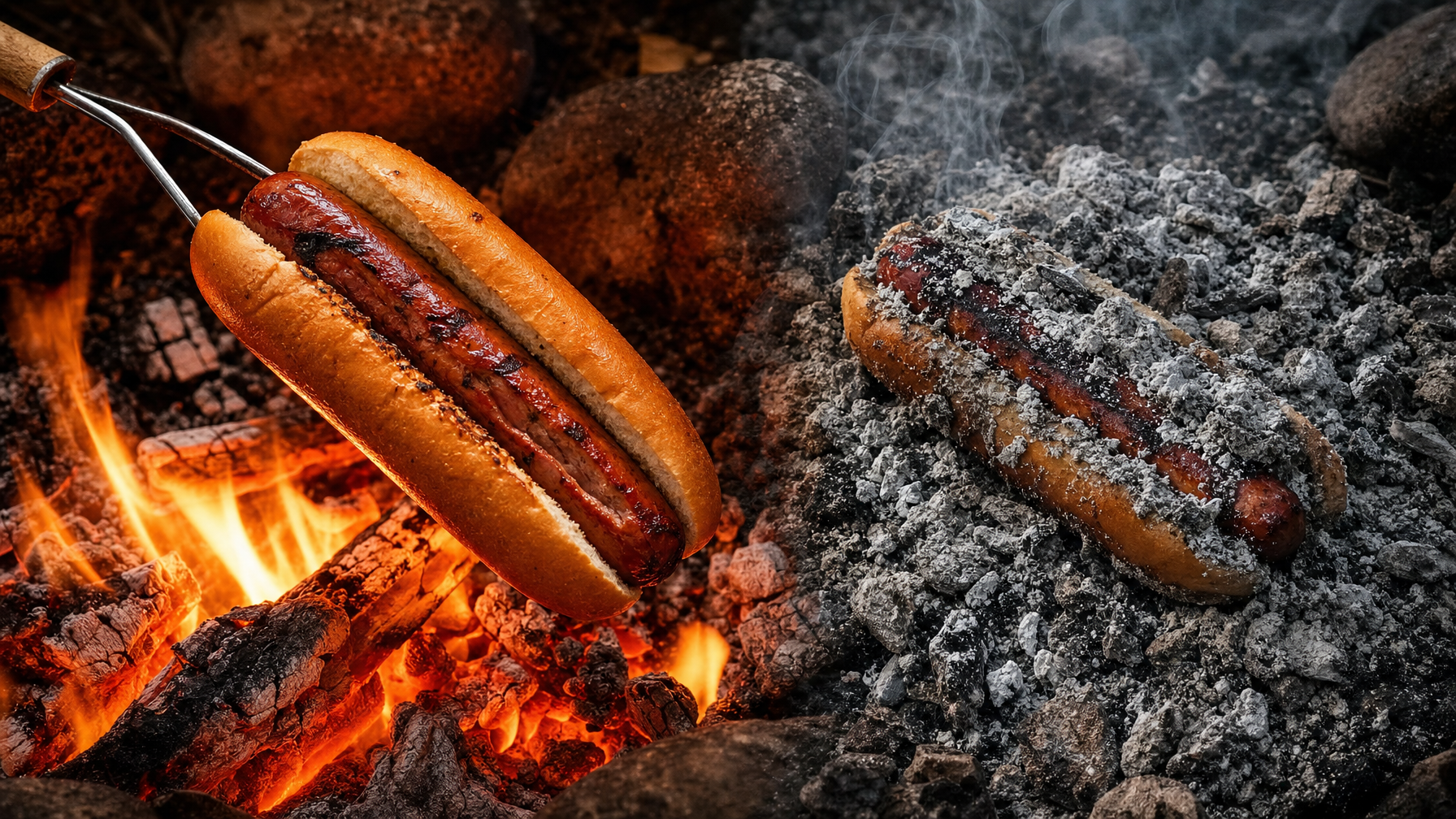
When the Scar Goes Wrong and the Dog Starts Writing Its Memoir in Smoke
Most griddle failures are not mysterious. They are just heat and timing behaving exactly as heat and timing always do.
Common troublemakers
- Surface too hot: The exterior scorches before the dog warms through.
- Dog left in one position too long: One dark patch takes over the whole story.
- Overcrowded pan: Dogs steam one another, lose useful contact, and brown poorly.
- Damaged casing before cooking: Splits can widen, allowing juices to escape and the exterior to dry out.
Fix the next batch, not the past
- For scorching, lower the heat and shorten each contact interval.
- For pale dogs, dry the surface if needed, preheat longer, and improve contact.
- For crowding, cook fewer dogs at once and leave space around them.
- For weak scars, stop turning constantly; let each side sit before rotating.
A split dog can still be edible, but its texture changes once juices escape. Treat it kindly, eat it promptly, and learn from its smoky memoir.
Use clean utensils and clean cooking surfaces when handling hot dogs and toppings, and cook the product according to its package instructions. Griddle swagger is not a substitute for basic food safety.
Give the Dog a Record Worth Showing Off
A griddle scar is a small but meaningful sign of intentional cooking: browned exterior, better texture, roasted aroma, and a little visual swagger. It is not mandatory for every excellent hot dog, and it is definitely not an excuse to chase the darkest mark possible.
The target is a balanced dog with a flavorful exterior and a juicy center—plus a bun that contributes more than payroll. Get that right and the scar looks less like decoration than proof that somebody cared.
For specific hot-dog places, products, recipes, and culture coverage, follow @jasonsgrub on Instagram.
FAQ: Five Questions From People Staring at Their Skillet
What is a griddle scar on a hot dog?
It is a browned contact mark created when a hot dog sits against a hot griddle, skillet, or flat-top. The mark forms where direct surface heat browns the casing or cut surface.
Does a griddle scar make a hot dog taste better?
It can add browned flavor and a firmer surface texture. But the final result also depends on the dog itself, the heat level, cooking time, bun, and toppings.
Should I cut a hot dog before griddling it?
It is optional. A lengthwise cut increases the available contact surface and can create more browning, but it also changes the texture and can allow juices to escape. A whole griddled dog is not somehow less serious.
Why is my hot dog pale instead of scarred?
The cooking surface may not be hot enough, the dog may be wet or making inconsistent contact, or it may be moved too often. An overcrowded pan can also hold in moisture and limit browning.
Is a black mark a good griddle scar?
Usually not. Deep black scorching can taste bitter and often signals excessive heat or time. Aim for browned and aromatic, not burned and dramatic for all the wrong reasons.
Enjoyed this? There's more from Jason's Grub.
Follow on Instagram →