Before You Share That Giant Hot Dog: Is It Real, Edited, or AI?
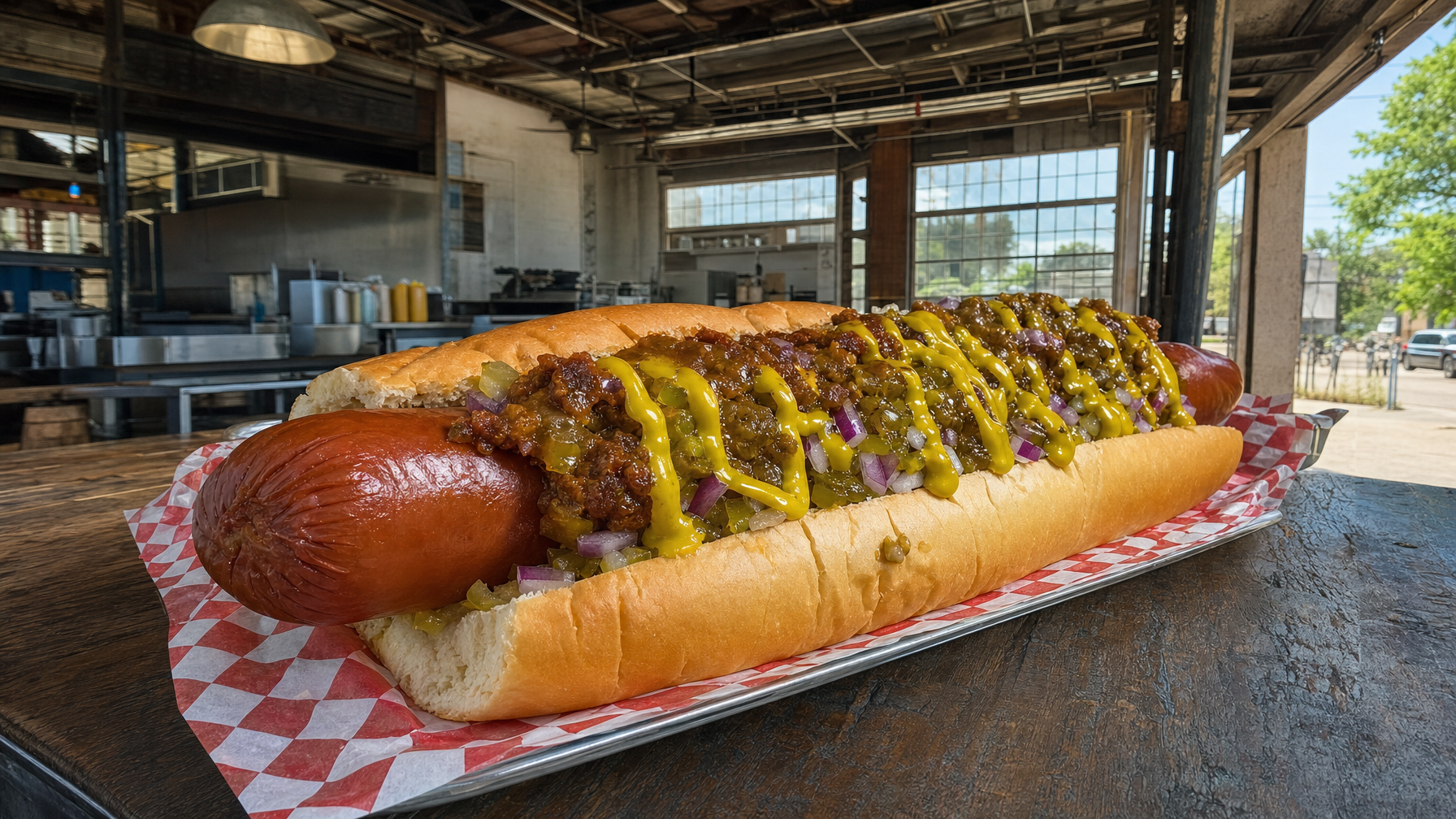
That giant hot dog might be real, heavily edited, or entirely AI-generated—and one dramatic photo rarely proves which. For hot-dog fans and food-culture readers who want to share astonishing food without accidentally boosting visual sausage fiction, start with the source, compare the details, watch for generation clues, and treat missing context as a warning—not a dare for your imagination.
Before the Bun Explodes: What You’re Actually Looking At
A spectacular hot-dog image usually falls into one of three buckets:
- A genuinely oversized hot dog: A real item, photographed in the real world. It may be a novelty, a challenge, a catering piece, or simply an aggressively generous lunch.
- A real photo that has been altered: The original dog existed, but editing changed its size, toppings, setting, or apparent drama.
- An AI-generated image: A picture assembled by software rather than captured at a real stand, restaurant, event, or backyard grill.
There is also a fourth troublemaker: the technically real photo paired with a wildly dishonest caption. Cropping can hide the normal-sized plate. Forced perspective can turn a footlong into a submarine. Props, compositing, and a caption like “new menu item in town” can make a visual gag feel like a restaurant fact.
My position is simple: spectacular is not the same as verified. A hot dog does not receive diplomatic immunity from basic scrutiny just because it is wearing mustard.
Start With the Receipt: Find the First Source, Not the Loudest Repost
The loudest repost is usually the least useful witness. Screenshots breed screenshots, accounts copy captions, and somewhere along the way “look at this weird art” becomes “you have to try this place.”
Work backward as far as you can. Look through reposts, quoted posts, image credits, watermarks, captions, and account histories until you find the earliest identifiable source available. Then ask whether that source gives you anything concrete:
- A restaurant, vendor, event, city, or neighborhood
- A date or occasion
- The creator or photographer
- A product name or menu description
- Additional photos or video from the same scene
“INSANE HOT DOG!!!” is not context. It is a person ringing a cowbell near a bun.
Specific information does not automatically make an image authentic, but it gives you something to check. Compare the post with the account’s other material and, when available, with official pages or independent coverage. Do not announce that a business sells an item unless current information confirms it. Menus change; pop-ups vanish; captions lie with the confidence of a condiment pump.
An unattributed image is not automatically fake. It is simply unverified, which is a perfectly respectable reason to slow down.
Measure the Drama: When Perspective Turns a Snack Into a Submarine
Forced perspective is the old magician’s move of placing something close to the camera so it appears gigantic next to objects farther away. It works wonderfully on food because people already expect hot dogs to be excessive. Put a regular dog near the lens, send a friend several feet behind it, and suddenly lunch looks capable of blocking traffic.
Look for scale anchors:
- Hands and fingers
- Plates, trays, wrappers, and tables
- Utensils, cans, cups, and napkins
- The bun’s thickness and proportion to the sausage
- Nearby chairs, tiles, signs, or serving containers
None of these is a magic ruler. A wide-angle lens, a tight crop, or an oddly placed object can still distort your sense of size. But they can reveal a photo whose story is wobblier than its cheese.
Watch for mismatched details. If the dog looks enormous but the toppings are normal-sized, the grill marks are strangely tiny, the shadow belongs to a smaller object, or the serving container looks built for an ordinary lunch, pause. A close-up dog that fills the frame may absolutely be large. The photograph alone, however, cannot establish its actual length.
Look for the Glitches: AI Leaves Breadcrumbs in the Condiments
AI image tools can make food look increasingly convincing. That means skepticism should be observant, not smug. One weird onion does not convict an image. A pile of visual nonsense, combined with no credible source, is a different story.
Inspect the image at full resolution when possible. Look for clues such as:
- Misspelled, scrambled, or warped signage
- Utensils that melt into plates, hands, or food
- Inconsistent fingers, knuckles, or grips
- Impossible teeth, mouths, buns, or bite marks
- Repeated toppings that look copied and pasted
- Condiments flowing in physically baffling directions
- Shadows and reflections that disagree with one another
- Background objects that change shape for no sensible reason
Compare multiple views if they exist. A real restaurant post may include a wider shot, preparation video, diner photos, or other angles that make the scene legible. An isolated image with no surrounding evidence deserves a raised eyebrow—not a courtroom sentence.
AI-detection tools may be useful as supporting evidence, but they are not final authorities. They can be wrong, especially with compressed, reposted, filtered, or edited images. Use them like mustard: helpful in the right amount, disastrous when poured over the whole argument.
Edited, Enhanced, or Fabricated? Those Are Three Different Sausages
“Edited” is not a synonym for “fake.” Cropping, brightness adjustment, color correction, sharpening, and contrast changes are ordinary presentation choices. They may make a hot dog look tastier than it did under fluorescent lighting, but they do not necessarily change what was served.
More consequential alterations change what viewers are meant to believe:
- Enlarging the dog or bun
- Adding or removing toppings
- Replacing the background or inserting a crowd
- Combining several photos into one scene
- Changing text on a sign, package, or menu
- Presenting a concept image as an available product
A real photograph can be manipulated without being wholly fabricated. That middle ground is exactly where people get fooled. Rather than asking only, “Is it real or fake?” ask, “What changed, and does the post disclose it?”
A dramatic image may be a joke, an advertisement, artwork, or a visual concept. Nothing wrong with any of that—provided the context does not ask viewers to mistake it for a factual claim about a real product, event, or business.
Receipts Beat Vibes: A Quick Verification Checklist
- Identify the source. Who posted the image first, as far as you can tell?
- Read the caption. Does it name a creator, location, date, restaurant, event, or product?
- Look for corroboration. Search for other angles, posts, reporting, or official context—not merely more copies of the same picture.
- Inspect the visual details. Check scale, text, hands, utensils, shadows, toppings, and background objects.
- Pause before reposting. A few extra minutes is cheaper than becoming the internet’s unpaid distributor of an imaginary frankfurter.
Here is the share-safe rule: if an image is astonishing but the source, date, location, and creator are unclear, call it unverified. Do not present it as proof that a restaurant made it, a product is for sale, or an event happened.
When you do share, preserve the original caption and credit rather than stripping away the context that may identify satire, art, editing, or AI generation. This applies on Instagram and elsewhere. Platform features can offer clues, but none guarantees authenticity.
Why Hot-Dog Photos Are Especially Good at Fooling the Eye
Hot dogs are visual chaos agents. Glossy condiments catch the light. Buns split and sag. Cheese melts into a yellow weather system. Steam softens edges. Relish, onions, peppers, chili, and fries make it hard to tell where one object ends and another begins. A tight close-up turns that delicious mess into a perfect hiding place for odd details.
We also want to believe. A dog with more toppings, more cheese, more length, more absurdity, more lunch? That fits a familiar food fantasy. The image does not need to persuade from scratch; it only needs to give our appetite a small shove downhill.
Jason has spent ten years chasing hot dogs across 50 states with zero ketchup. That earns a strong opinion about what looks plausible, what looks glorious, and what looks like a bun-based hallucination. But strong sausage instincts are not proof that any particular image is authentic. Source-checking still gets the final bite.
Share the Wonder Without Sharing a Sausage Myth
You do not have to become the fun police. You can enjoy a ridiculous food image and still be honest about what you know. Try language like:
- “This image is making the rounds, but I haven’t found a verified source yet.”
- “Possibly edited or AI-generated—does anyone have the original?”
- “Fantastic if real; I’m still looking for the restaurant, date, and source.”
Sometimes the right move is not sharing at all: particularly when an image falsely identifies a real business, claims a product is available, makes an accusation, or tries to sell something using fabricated visuals. A joke about a colossal chili dog is one thing. Misleading people about a real place or purchase is another.
Curiosity is welcome. It is half the fun of food culture. But accuracy should get the first bite.
If you enjoy real hot-dog finds, places, recipes, and culture, follow @jasonsgrub on Instagram.
FAQ: Five Questions Before You Feed the Algorithm
How can I tell whether a giant hot dog photo is AI-generated?
Look for distorted text, inconsistent hands and utensils, repeated toppings, impossible shadows, and strange object shapes. Then verify the source. No single visual clue proves an image is AI-generated.
Can a real hot dog photo still be misleading?
Yes. Cropping, forced perspective, compositing, color changes, and selective captions can make a real scene appear larger or different than it was.
Does reverse image searching prove an image is real?
No. It can help locate earlier versions, related posts, or the original creator, but a search result alone does not authenticate the event or image.
Should I share an image if I cannot verify it?
If you share it, label it clearly as unverified and preserve the original context. Do not present an uncertain image as proof of a real restaurant, product, event, or claim.
What is the quickest rule for avoiding fake food imagery?
Pause when the image is spectacular but the source is vague. Check who posted it, where and when it was supposedly taken, and whether independent context supports the story before passing it along.
Enjoyed this? There's more from Jason's Grub.
Follow on Instagram →