Before You Share That Hot Dog Video, Find Out What the Camera Left Out
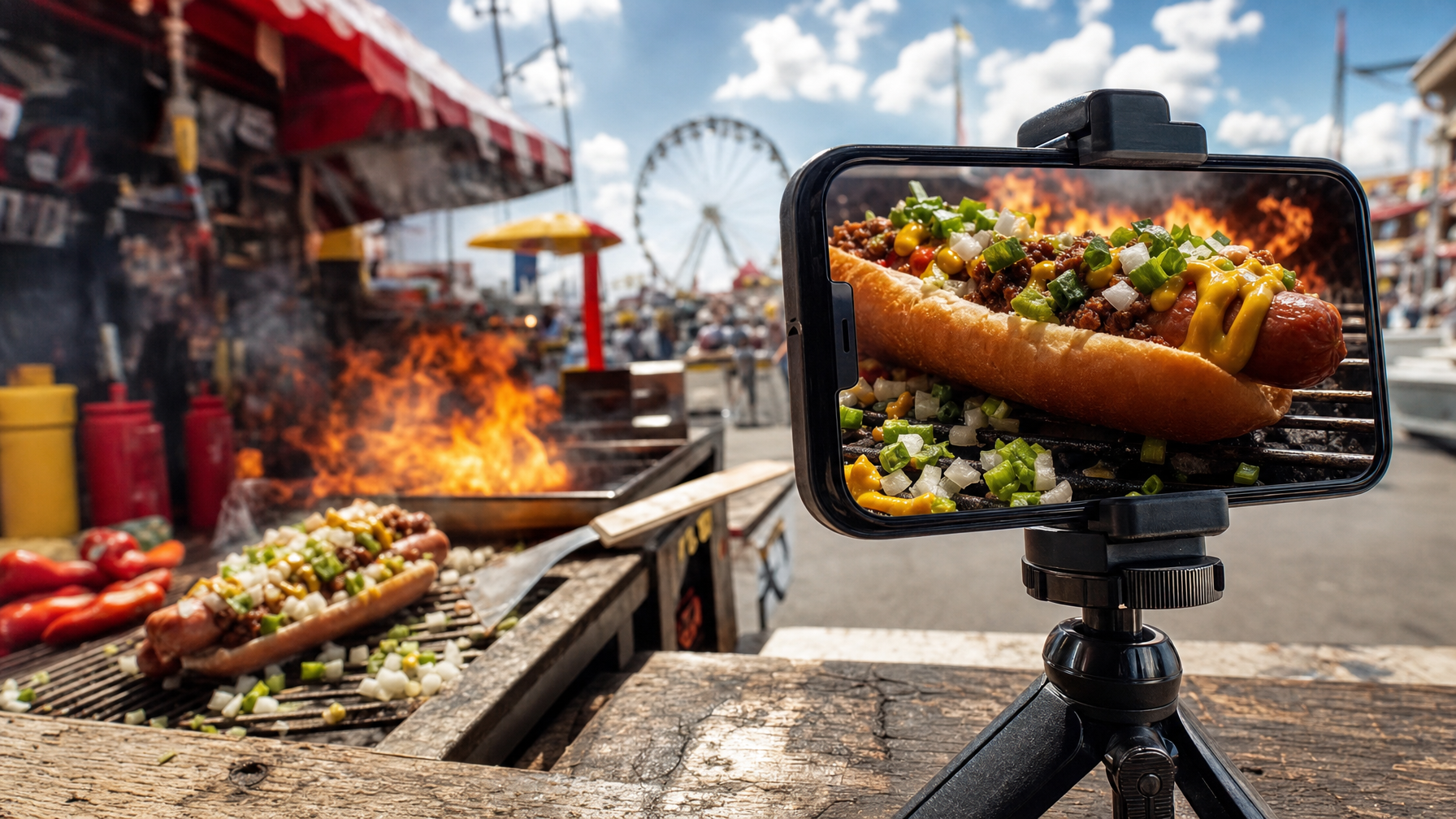
A hot-dog video can make a bite look glorious, disgusting, revolutionary—or all three before lunch. Before sharing it, check what the frame hides: the location, date, full ingredient list, editing, context, and whether the claim is actually verifiable. This is for hot-dog fans and food-culture readers who want the spectacle without accidentally spreading snack-shaped nonsense.
What did the camera politely shove off-screen?
A short food video records a moment. It does not automatically record the whole story. You may be able to see a hot dog, a ladle of chili, a ridiculous cheese pull, or a cook applying onions with the confidence of a stage magician. Those are observations. The rest may be caption poetry.
A dramatic cheese pull can show that cheese stretches. It cannot, by itself, identify the vendor, confirm the price, establish the portion size, reveal the full preparation, or tell you when the video was filmed. Nor can it prove that the dog is famous, new, sold out, beloved by everyone within a five-mile radius, or worth driving three states for.
The useful distinction is simple: what the video shows versus what the post asks you to believe. Curiosity first; outrage later—preferably never over a hot dog. This is not an effort to drain the joy out of food videos. It is an effort to keep a magnificent bun from being drafted into service as bad information.
Freeze-frame the dog before you crown it king
Start with the boringly powerful question: what does this footage actually establish?
- A hot dog is visible.
- A topping appears to be added.
- A preparation step takes place.
- Someone takes a bite, possibly with the theatrical commitment of a person auditioning for lunch.
Now separate observation from interpretation. “The sausage split on the grill” is an observation. “This is the best hot dog in the country” is an opinion. “This is the only place that does this” is a claim that needs evidence well beyond one vertical video and a bass drop.
Give extra scrutiny to superlatives and exclusivity language: only, first, world’s biggest, secret recipe, invented, and everyone is eating this. Some could be true. None become true because a close camera angle makes the sausage look like it needs its own zip code.
Angles can exaggerate size. Tight edits can make a messy bite seem like a planned stunt. Slow motion can turn ordinary sauce into a lava flow of destiny. Enjoy the cinema; do not confuse it with documentation.
Find the place before you find your appetite
If a clip makes you want to travel, spend money, or tell your friends they must go immediately, identify the place first. Look for a named restaurant, stand, cart, city, or neighborhood—not merely “somewhere in America,” which is less a location than a shrug wearing sneakers.
Before treating a location as real and open, look for current confirmation from a reliable source, such as an official business account, current menu, address, or recent post. If the clip does not name the business, try not to fill in the blank with detective work disguised as certainty.
Location is not trivia. A dog’s toppings, price, serving style, and availability may differ by neighborhood, event, season, or even day of the week. A cart can move. A special can vanish. A menu can change while the video keeps collecting views like it pays rent.
Do not recommend a vendor—or announce that a particular item is available—unless the place and its current details can be verified. A gorgeous mystery dog can remain a gorgeous mystery dog.
The date is hiding in the bun
Check when the video was posted, then ask whether that is also when it was filmed. Those dates are not automatically the same. A newly uploaded clip may show last summer’s festival special, a one-night stunt, or an item that disappeared from the menu long ago.
That matters most when a post mentions a seasonal offering, event-only creation, temporary promotion, or supposedly current price. A hot dog does not need to be fake to be unavailable.
Before encouraging a trip, look for recent menus, recent business posts, or direct confirmation. If you cannot establish that the item is still around, say so plainly. “This video appears to show a past special” is far more useful than sending someone on a hungry pilgrimage to a menu ghost.
Read the caption like it owes you mustard
The caption often contains the claims that the footage cannot carry on its own. Read it with a little healthy suspicion. What happened before the clip starts? What happened after the camera stops? Was the dish staged, edited, recreated, or presented as part of a promotion?
Be especially careful with claims about ingredients, origin stories, prices, records, and public reaction. A video can show a big hot dog. It cannot prove it is a record-holder. A cook can call something a secret recipe. The footage cannot independently confirm the secret, the recipe, or whether the word secret is doing the usual marketing gymnastics.
If a post discloses that it is sponsored, gifted, affiliate-based, or promotional, include that context when it is relevant to your share. That disclosure does not make the food bad or the creator dishonest. It simply tells viewers that there may be a relationship behind the camera.
Views, likes, and dramatic music are not evidence. They are evidence that the internet enjoys a show, which is not exactly breaking news.
A split-second bite is not an ingredient list
A visually excellent dog can be practically vague. Before recreating or buying one, try to verify the full build:
- the bun style and size;
- the sausage type and casing, if known;
- the cooking method;
- each topping and sauce;
- the approximate portion or serving format.
Pixels are unreliable witnesses. A dark topping might be charred onion, relish, sauce, mushrooms, or an unidentified glossy situation. A creamy stripe might be cheese sauce, mayonnaise, crema, or something that deserves a conversation with the menu.
For allergy, dietary, or ingredient questions, check the vendor’s current ingredient information or ask the business directly. Do not guess from a 12-second clip. Visual appeal is a wonderful reason to watch; it is not enough information to decide whether a food works for your needs.
Reverse-search the hype without becoming a detective in a paper hat
You do not need a corkboard, red string, or a tiny magnifying glass to do a sensible check. Try a few practical moves:
- Search the exact caption or distinctive wording.
- Inspect the original uploader rather than relying on a repost account.
- Compare reposts and look for an earlier, longer, or less-edited version.
- Look for primary sources when business details are involved: the business itself, an event organizer, or the original creator.
- Check whether the claims add evidence as they spread—or merely repeat one another.
Ten accounts repeating “world’s biggest” do not make it confirmed if all ten are recycling the same source-free clip. Repetition is not verification; it is often just the internet playing telephone with melted cheese.
If you cannot establish the source, describe the clip as unverified. That is not a buzzkill. It is a clean, honest label that leaves room for the video to be fascinating without pretending it has passed a courtroom cross-examination.
When the video is real, let it be gloriously weird
Hot-dog culture should have room for strange toppings, local habits, giant builds, street-food theater, and the occasional creation that looks like it was designed by a hungry raccoon with access to a deep fryer. Weird is not suspicious. Weird is often the whole point.
Share with precise language. “This clip shows a hot dog topped with…” is safer than “This place invented…” or “Everyone is eating this now.” If the location or filming date remains unclear, say that too. Uncertainty belongs in a good caption when uncertainty is what you have.
Jason’s stated point of view comes from ten years, 50 states, and zero ketchup. That is a personal research claim and a firmly held stance, not a universal rule requiring every eater to renounce ketchup at the condiment altar. Taste is allowed to be personal. Facts about where, when, and what someone is selling should be treated more carefully.
Five questions before the repost button gets slippery
Run the clip through this quick share-or-skip test:
- What exactly does the footage prove?
- Who posted the original, and can the source be identified?
- Where and when was it filmed?
- Are claims about the food, price, availability, or culture actually verified?
- Would your caption still feel fair if the vendor or creator read it?
That last one does serious work. A fair caption can be excited, opinionated, and full of mustard-level enthusiasm without inventing details. If the exciting part is unverified, share the curiosity—not the certainty.
FAQ: the comment section’s hungriest skeptics
Does a viral hot-dog video have to be fake?
No. Popularity is not proof of fakery, but it is also not proof of every claim in a caption. Verify the details that matter, especially the location, date, availability, and any big factual claim.
What should I do if I cannot find the original source?
Say the source is unclear, avoid repeating unverified claims, and do not present the location, date, or availability as settled fact. You can still share what is visibly in the clip.
Can I share a video if I only want to share the visual?
Yes. Describe what the video visibly shows and avoid unsupported claims about the vendor, recipe, price, origin, or trend. A precise caption is more interesting than a made-up backstory.
Why check whether the food is still available?
Menus and specials change. A video may show a temporary, seasonal, event-only, or discontinued item, so current information matters before anyone makes a trip.
Where can I find more of Jason’s hot-dog opinions and finds?
Follow @jasonsgrub on Instagram for Jason’s ongoing hot-dog-focused content.
Enjoyed this? There's more from Jason's Grub.
Follow on Instagram →