The Chicago Dog’s Sacred Topping Order—and the One Ingredient That Starts Arguments
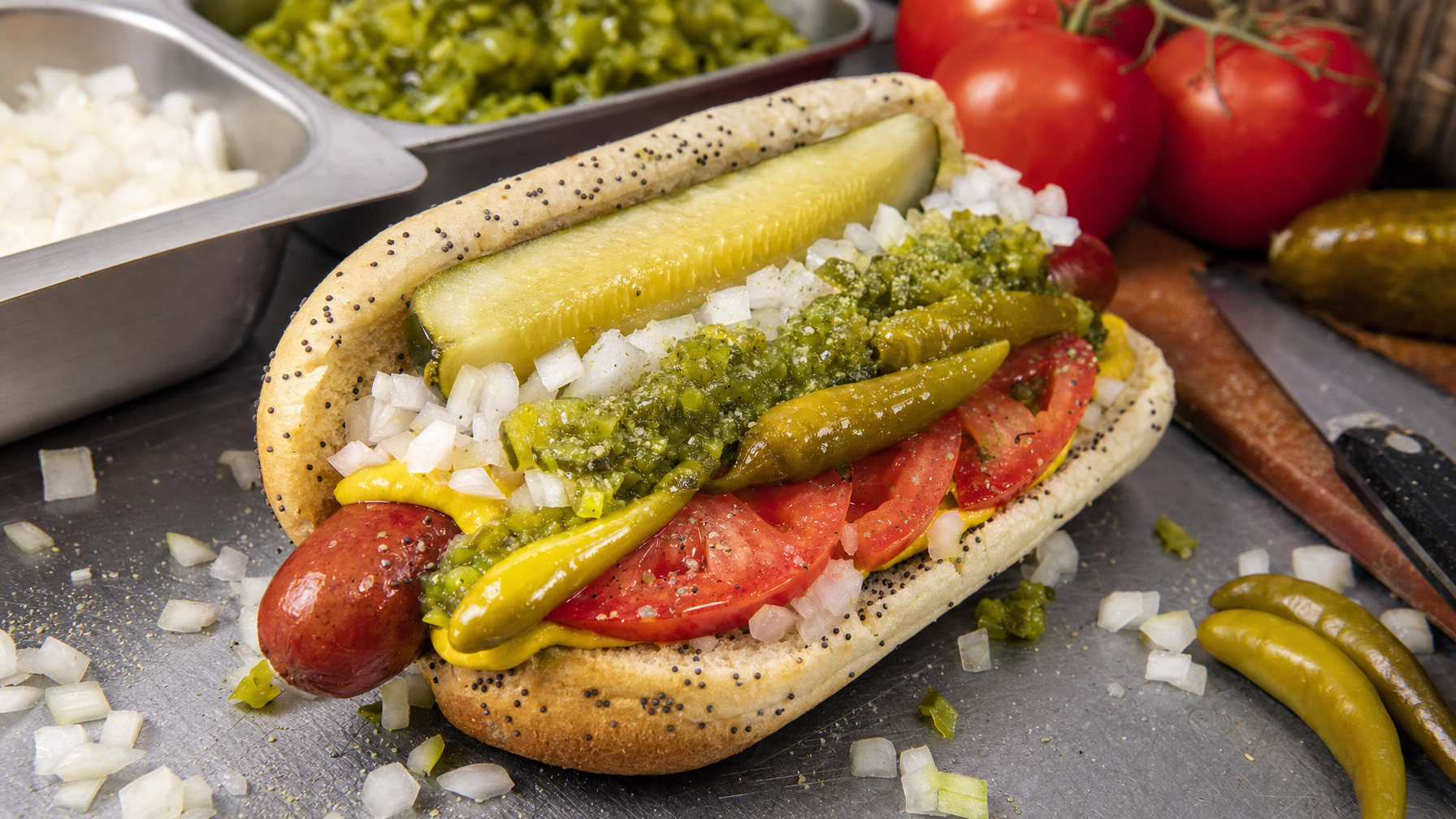
For hot-dog enthusiasts wondering what makes a Chicago-style dog “Chicago,” the short answer is the order and the attitude: a steamed poppy-seed bun, mustard, neon-green relish, chopped onion, tomato, sport peppers, a pickle spear, and celery salt, traditionally assembled in that familiar garden-dragged sequence. The ingredient that reliably starts the argument is ketchup—especially on a Chicago dog, where its sweetness is treated as a culinary intrusion by purists, including Jason, who has spent ten years and 50 states saying no to it.
Why Chicago’s Hot Dog Comes Dressed Like It Has Somewhere to Be
A Chicago-style hot dog is not merely a hot dog purchased in Chicago. It is a specific build: an all-beef frankfurter in a poppy-seed bun, loaded with a recognizable cast of crisp, pickled, bright, spicy, and salty toppings. Remove enough of that cast and you may still have a fine lunch. You no longer have the same character on the bun.
The nickname dragged through the garden captures the whole glorious overcommitment. This is a dog that refuses to choose between fresh tomato, sharp onion, tangy mustard, sweet relish, briny pickle, and hot peppers. It takes them all, then dusts the scene with celery salt like it has a tiny seasoning cape.
That does not mean every counter presents it with museum-grade uniformity. Tomato wedges and the pickle spear may sit differently from one stand to the next; quantities, cuts, and bun treatment can shift. Think of the topping list as a deeply established tradition, not a constitution enforced by condiment police. This is for people chasing food culture and a memorable order, not people who need a beige checklist with no opinions.
The Sacred Topping Order, One Layer at a Time
The familiar Chicago-style sequence is usually presented like this:
- Steamed poppy-seed bun
- Yellow mustard
- Neon-green relish
- Chopped onion
- Tomato wedges
- Sport peppers
- Pickle spear
- Celery salt
Each piece has a job. Mustard brings clean tang. The famously bright green relish contributes sweetness and its own unmistakable visual mischief. Chopped onion supplies a sharp little crunch. Tomato makes the whole thing juicier and fresher. Sport peppers provide heat. The pickle spear brings cold brine and snap. Celery salt is the final savory-herbal nudge that makes the pile feel intentional rather than like somebody dropped a salad on a frankfurter.
Placement is not always identical in the wild. A tomato wedge may lean along one side; a pickle may be tucked elsewhere; peppers can wander because peppers have never respected borders. What signals a Chicago dog is the recognizable combination and the contrast it creates.
A cross-section worth drawing before you take the first bite
If this article ever gets an illustration, make it a labeled cross-section: bun at the base, frank in the middle, mustard and relish underneath the fresh toppings, tomato and pickle standing tall, sport peppers perched where they can cause trouble, celery salt over the finish. Not because hot dogs require engineering diagrams, but because this one is a deliciously organized mess.
Mustard First, Ketchup Never? Chicago’s Red-Line Condiment
Yes: ketchup is the ingredient most likely to provoke objections on a traditional Chicago-style dog. The argument is mostly flavor, with a side of ritual. Ketchup’s sweetness can flatten the sharper, brighter notes from mustard, onion, pickle, sport peppers, tomato, and celery salt. A Chicago dog already has sweetness from relish; adding ketchup can make the composition feel less balanced to people who care about the classic build.
Still, personal preference is personal preference. You can order ketchup if that is what makes lunch better for you. Nobody’s bun should be seized by the state. But a purist may see it as changing the identity of the style, not merely adding another condiment.
Jason’s position is straightforward: no ketchup. That is his hot-dog opinion, delivered after ten years and 50 states of eating the evidence—not a universal law of civilization.
Not every Chicagoan will react the same way, and no city contains one single palate. The ketchup dispute lasts because it is an easy, vivid food-culture fault line: sweetness versus snap, customization versus tradition, peace at lunch versus a very entertaining argument at lunch.
What “Dragged Through the Garden” Actually Promises
Dragged through the garden is a playful way to describe the abundance of vegetables and pickled toppings on the dog. It promises a build with movement: rich sausage against cool tomato, sweet relish against mustard, raw onion against pickle brine, and sport-pepper heat against the soft bun.
The result is not a dressed-up frank for decoration’s sake. It is a complete flavor design. The sausage supplies richness. Mustard and pickle provide acid. Tomato adds freshness and moisture. Onion and pickle bring crunch. Relish gives sweetness. Sport peppers wake everybody up. Celery salt gathers the loose ends and says, “Right, now we are a hot dog.”
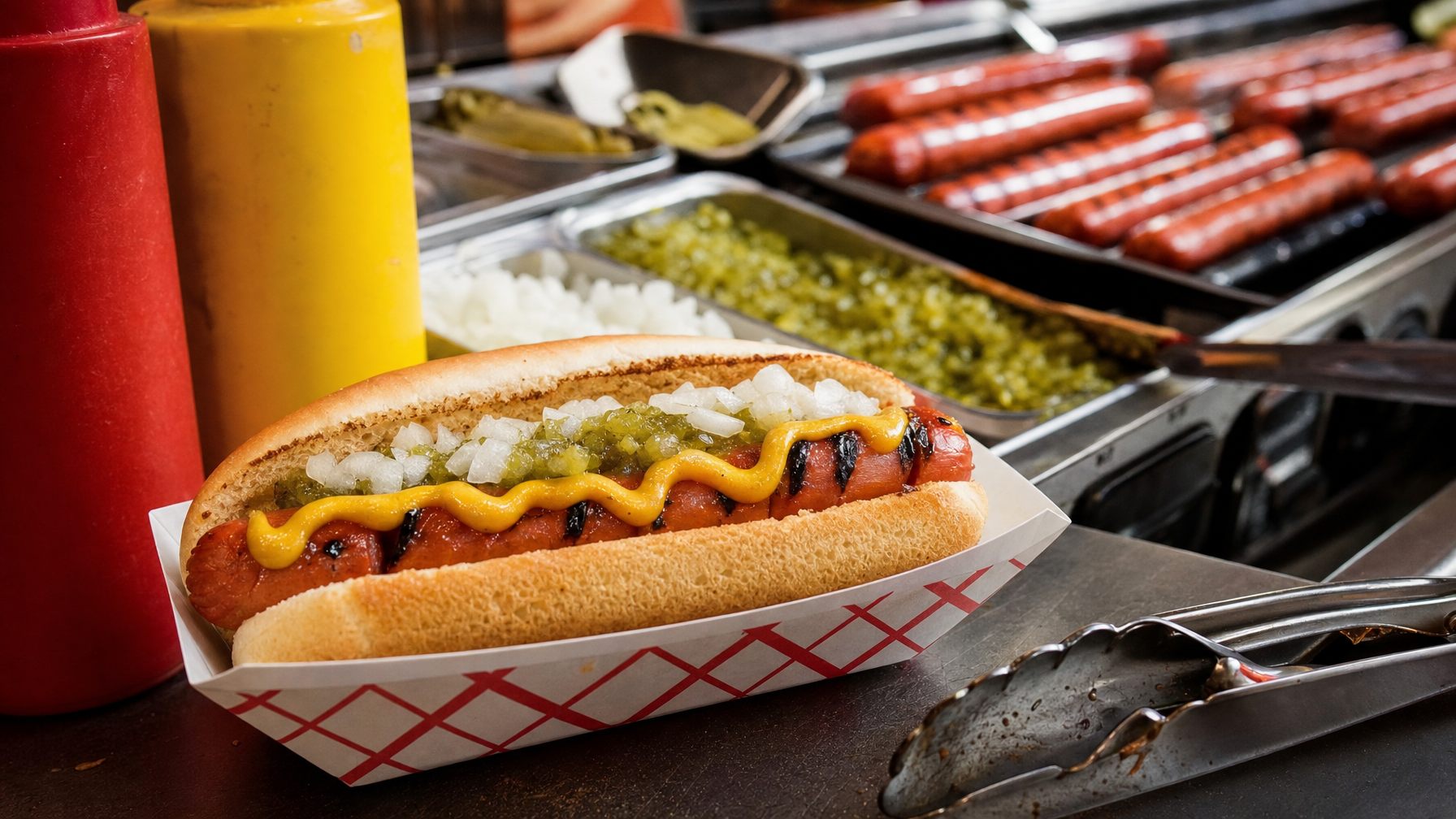
A mustard-only dog can be elegant, direct, and completely satisfying. It is a different kind of pleasure: frank, bun, tang, no committee meeting. The Chicago build chooses maximal contrast instead. Neither approach needs to defeat the other. There is room in the world for a minimal dog and for a dog wearing a vegetable parade.
Ordering One Without Starting a Condiment Trial
At a place serving the style, a simple order is enough: “I’ll have a Chicago-style dog with the traditional toppings, please.” If you have a real preference or dietary need, say it plainly: no sport peppers for less heat, no onion, no pickle, or whatever the situation requires.
Menus and ingredient availability vary, so check the current menu or ask the vendor what comes on their version. Not every place uses every topping in precisely the same form, and it is better to ask than to discover your spice tolerance during a dramatic first bite.
If you want ketchup, request it. You may receive it. You may also receive a theatrical sigh from somebody nearby who considers tomato ketchup on this particular dog a matter for the appellate court. Both are survivable.
Eat the dog soon after it is assembled. That is not an ancient commandment carved into a poppy seed; it is practical advice. The bun stays softer, the toppings stay lively, and the whole stack has a better chance of arriving in your mouth as a composed bite rather than an edible landslide.
Where Jason Draws the Line—and Why the Argument Is Part of the Meal
Jason has spent ten years and 50 states pursuing hot dogs, and his no-ketchup stance is part of the editorial point of view here. It is a firm opinion, not a fake declaration that every eater must agree. The best food traditions invite both respect and a little well-aimed dissent.
Chicago-style dogs are about flavor, certainly. They are also about place, memory, counter rituals, preferred orders, and the peculiar joy of debating something low-stakes while holding something high-risk over your shirt. A hot dog can be dinner. It can also be a tiny edible argument about what a city sounds like when it gets hungry.
For more specific hot-dog finds, recipes, destinations, and culture coverage, follow @jasonsgrub on Instagram.
FAQ: Five Questions Before You Put Ketchup on the Evidence
What goes on a traditional Chicago-style hot dog?
Typically: a poppy-seed bun, mustard, neon-green relish, chopped onion, tomato, sport peppers, a pickle spear, and celery salt. Exact assembly can vary.
Why is ketchup controversial on a Chicago dog?
Purists argue that its sweetness overwhelms the sharper, fresher, pickled, and spicy flavors that define the traditional build. It is a cultural preference, not a universal law.
Does a Chicago dog always include sport peppers?
Sport peppers are a standard part of the classic topping lineup, though availability and heat level can vary by vendor. Ask before ordering if spice is a concern.
What does “dragged through the garden” mean?
It refers to loading the hot dog with a garden-like mix of vegetables, peppers, pickled elements, relish, and celery salt.
Can I order ketchup anyway?
Yes. You can request what you like, but on a traditional Chicago-style dog, ketchup is the fastest route into the argument—and that is precisely why it remains famous.
Enjoyed this? There's more from Jason's Grub.
Follow on Instagram →