The Cheese Melt Problem: Why Does It Slide Off the Dog Like It Paid Rent?
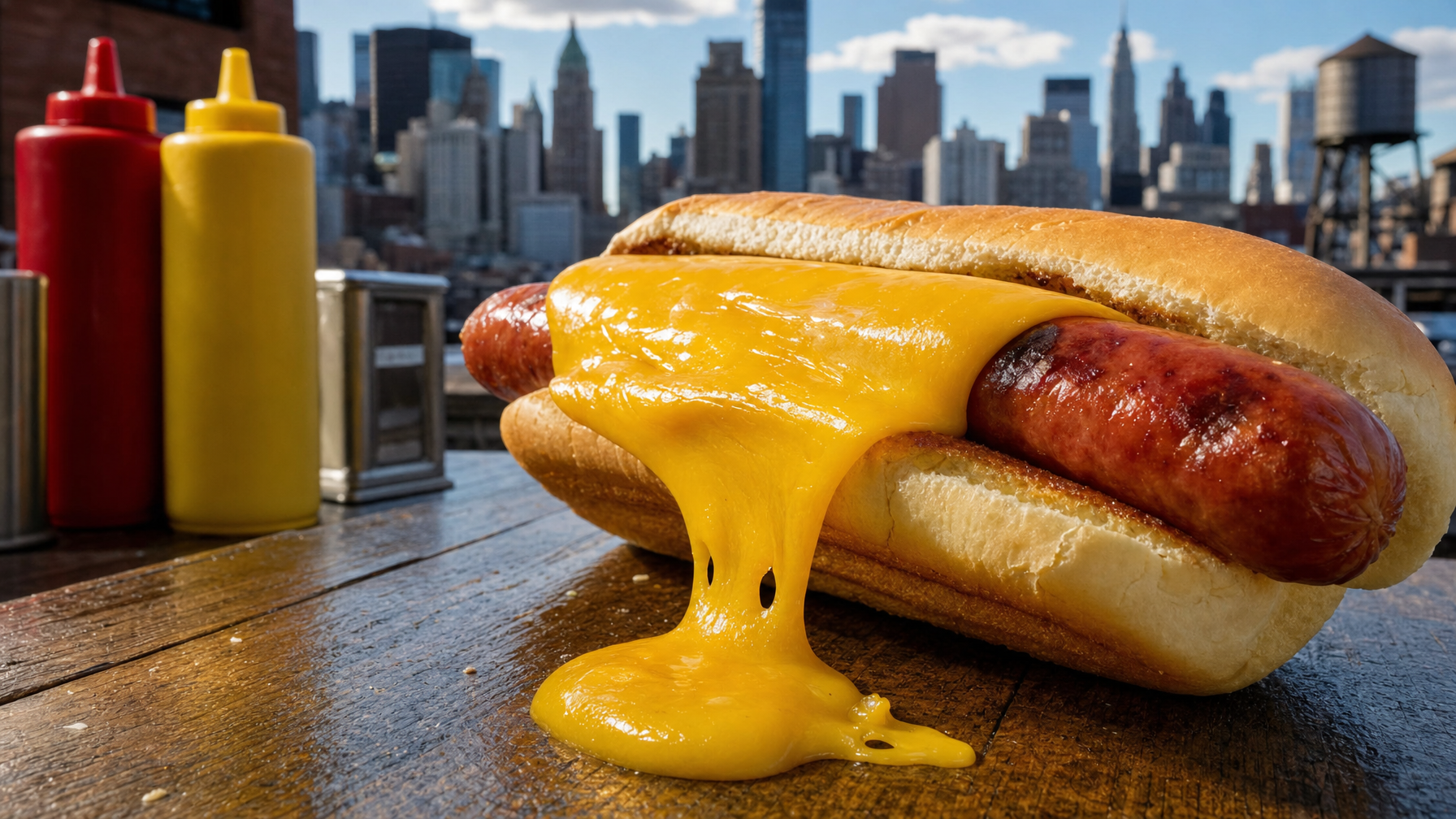
Cheese slides off a hot dog because the dog is rounded, oily, and often too wet for melted cheese to grip—basically a tiny edible waterslide. This is for hot-dog obsessives who want a proper melt instead of a bun full of dairy fugitives. After ten years, 50 states, and zero ketchup, Jason’s position is simple: there is no sacred cheese law, but cheese choice, heat, moisture, bun support, and topping order decide whether the melt stays put.
Your Hot Dog Is Not a Plate. It Is a Greased Little Cylinder.
Nachos have flat chips. Toast has a broad, dependable runway. A burger patty has at least the decency to sit there. A hot dog is a curved tube with a shiny surface, placed inside a narrow bread canyon. Gravity sees this situation and gets ideas.
A rounded dog gives melted cheese very little stable surface area. Once the cheese softens, it naturally drifts toward the lowest point—usually the gap between dog and bun, or worse, the outside of the bun and your lap. If the dog is sitting loosely, there is even more space for the cheese to make its exit.
Surface oil adds a second problem. Many cooked hot dogs have a slick exterior from their own fat and cooking juices. That layer can keep cheese from grabbing the dog, especially when the cheese is laid in one long, uninterrupted strip over the very top.
Try a more cooperative build: smaller pieces tucked into the bun alongside the dog have support on both sides. One enormous strip balanced across a curved, oily dog is not a cheese strategy. It is a dare.
The Three Villains: Fat, Water, and Excessive Confidence
Fat can turn a melt into a slip-and-slide
As cheese heats, its structure loosens. Some cheeses can release visible fat when heated aggressively or for too long, making the surface feel oily rather than creamy. That oil can become a lubricant between the cheese, dog, and bun.
This does not mean fat is bad; fat is part of why melted cheese tastes glorious. The problem is excess heat and an unsupported placement. Deliciousness needs guardrails.
Water ruins the grip
Steam from a freshly cooked dog, condensation in a covered pan, a wet bun, and juicy toppings can all introduce moisture where you want contact. A damp surface makes it harder for melted cheese to settle and cling.
Be especially suspicious of wet toppings piled on top before the cheese has set. Pickled, saucy, or freshly rinsed ingredients can be excellent on a dog, but they should not be invited to the cheese party with soaking-wet shoes.
Too much heat creates a fast, messy escape
High heat can melt cheese quickly, but speed is not always your friend. The cheese may loosen and run before it has a chance to settle into the bun and around the dog. Moderate, watchful heat gives it a better shot at becoming a layer rather than a puddle with ambitions.
Cheeses behave differently. Firmer cheeses may melt differently from softer, higher-moisture cheeses. Pre-shredded cheese can also melt less smoothly than cheese shredded at home because it is often coated to keep the pieces separate. None of this appoints a universal winner; it just means the cheese deserves to be treated like an ingredient, not a decorative weather event.
Cheese Choice Is a Structural Decision, Not a Personality Test
Pick cheese for the job you want it to do. Flavor counts, obviously, but the build has a physical reality. A hot dog does not care about your cheese’s emotional backstory.
- Slices are useful when you want broad coverage and a relatively tidy cap. Fold or tear them to fit the bun instead of draping a full slice across the summit.
- Shredded cheese is useful for filling gaps around the dog and melting into a supported layer. Apply it in a controlled amount, not as a blizzard.
- Cheese sauce offers even distribution and can fill the awkward spaces where a solid slice wants to bail out. It is especially handy when the build has lots of texture.
Choose based on the finish you want: a neat cap, a stretchy pull, a browned edge, or a creamy layer. Blends can be useful, too—one cheese may bring flavor while another contributes a smoother melt. There is no universal champion, only cheese that makes sense for the dog in front of you.
If the cheese requires a fork, a napkin, and a small emergency plan, it may not be the right cheese for this dog.
The Bun Is the Cheese’s Legal Guardian
The bun is not merely transportation. It is the retaining wall. A snug bun gives melted cheese somewhere to settle and reduces the distance it can travel down the sides of the dog.
Open the bun enough to place the cheese deliberately, then let its sides do their containment work. Put cheese where the bun can support it—beside the dog, slightly beneath it, or folded into the pocket—instead of balancing every molecule on the dog’s highest point.
A toasted or relatively dry bun is often a more stable landing zone than one already saturated with wet toppings. That does not mean every bun must be dry as office toast. It means moisture needs a plan. If the bun is already soggy, adding a slick melted layer on top is asking a lot from wheat.
Give the Melt Fewer Escape Routes
A reliable approach is boring only in the way a seatbelt is boring: it keeps the whole operation from becoming stupid.
- Warm the dog first. A hot dog that is already hot helps cheese begin melting without prolonged blasting.
- Add the cheese while the dog is hot. Place it in or against the bun, not just on the exposed crown of the dog.
- Finish with moderate heat. Use a brief, closely watched melt under a broiler, in a covered pan, or inside the bun. Each setup can work; the point is contained heat and attention, not abandoning it to the gods.
- Use smaller pieces or a controlled layer. Several supported bits generally behave better than one oversized cheese blanket.
- Add wet condiments after the cheese settles. Or, when the flavor combination makes sense, place them beneath the cheese so they are not creating a slippery layer on top.
- Serve promptly. Melted cheese does not improve its manners while waiting around.
If you want browning, keep the layer modest and watch it closely. The goal is a melted, settled finish—not a cheese oil spill with a toasted résumé.
When the Cheese Has Already Fled the Scene
First: do not panic. This is a hot dog, not a moon landing.
- Nestle the dog deeper into the bun, creating a tighter pocket for the cheese.
- Add a second, small amount of cheese in the gaps rather than trying to re-drape a runaway slab.
- Use cheese sauce to fill awkward spaces when a solid slice clearly refuses to cooperate.
- Eat it immediately once the cheese is melted. Time gives gravity, heat, and oil more opportunities to form a union.
And know when to quit fixing. If the cheese has pooled in the bun, call it a feature, pick up the evidence, and eat it. A good dog can survive a little structural chaos. It cannot survive being photographed for ten minutes while it dies on the plate.
No Ketchup, More Conversation: Let Cheese and Crunch Do Their Jobs
Jason’s no-ketchup stance is a preference with a decade and 50 states behind it, not a demand that every other eater surrender their bottle. For a cheese-forward dog, though, skipping a sweet, wet red layer can make it easier to keep the top structurally sane and let the dog’s savory character speak up.
Rich cheese benefits from contrast. Add a crisp element, a savory element, something spicy, or something tangy—but keep the wettest components under control. Think about where each topping lands. A crunchy topping can sit on a settled cheese layer; a juicy topping may belong lower in the bun or added last in a smaller amount.
For more real places worth seeking out, recipe experiments, product finds, and food-crawl material, explore Jason’s broader coverage. Follow @jasonsgrub on Instagram for more hot-dog places, products, recipes, and culture.
FAQ: Five Questions From People Tired of Eating Cheese With a Fork
What cheese stays on a hot dog best?
There is no single guaranteed winner. A cheese that melts smoothly and is used in a supported layer—rather than perched on top of the dog—will usually behave better. The bun, the heat, and the moisture level matter as much as the cheese itself.
Should cheese go under or over the hot dog?
Either can work. Under the dog, cheese is sheltered by the bun and can melt into the pocket. Over the dog, it needs careful placement, enough heat to settle, and restraint with wet toppings.
Why does my cheese turn oily instead of creamy?
The heat may be too intense, the cheese may be releasing fat as it overheats, or that cheese may not suit the melt you are chasing. Try lower, more controlled heat and a smaller layer.
Does shredded cheese melt better than sliced cheese?
Not automatically. Shredded cheese can cover gaps evenly, while slices can create a clean layer. The outcome depends on the cheese, moisture, heat, placement, and whether the bun is actually doing its job.
How do I keep toppings from making the cheese slide?
Limit moisture on top, let the cheese set before adding wet toppings when possible, and use the bun’s sides to contain the build. If a topping is especially juicy or saucy, use a smaller amount or place it lower in the bun.
Enjoyed this? There's more from Jason's Grub.
Follow on Instagram →