Sonoran-Style Heat Without Building a Backyard Telenovela
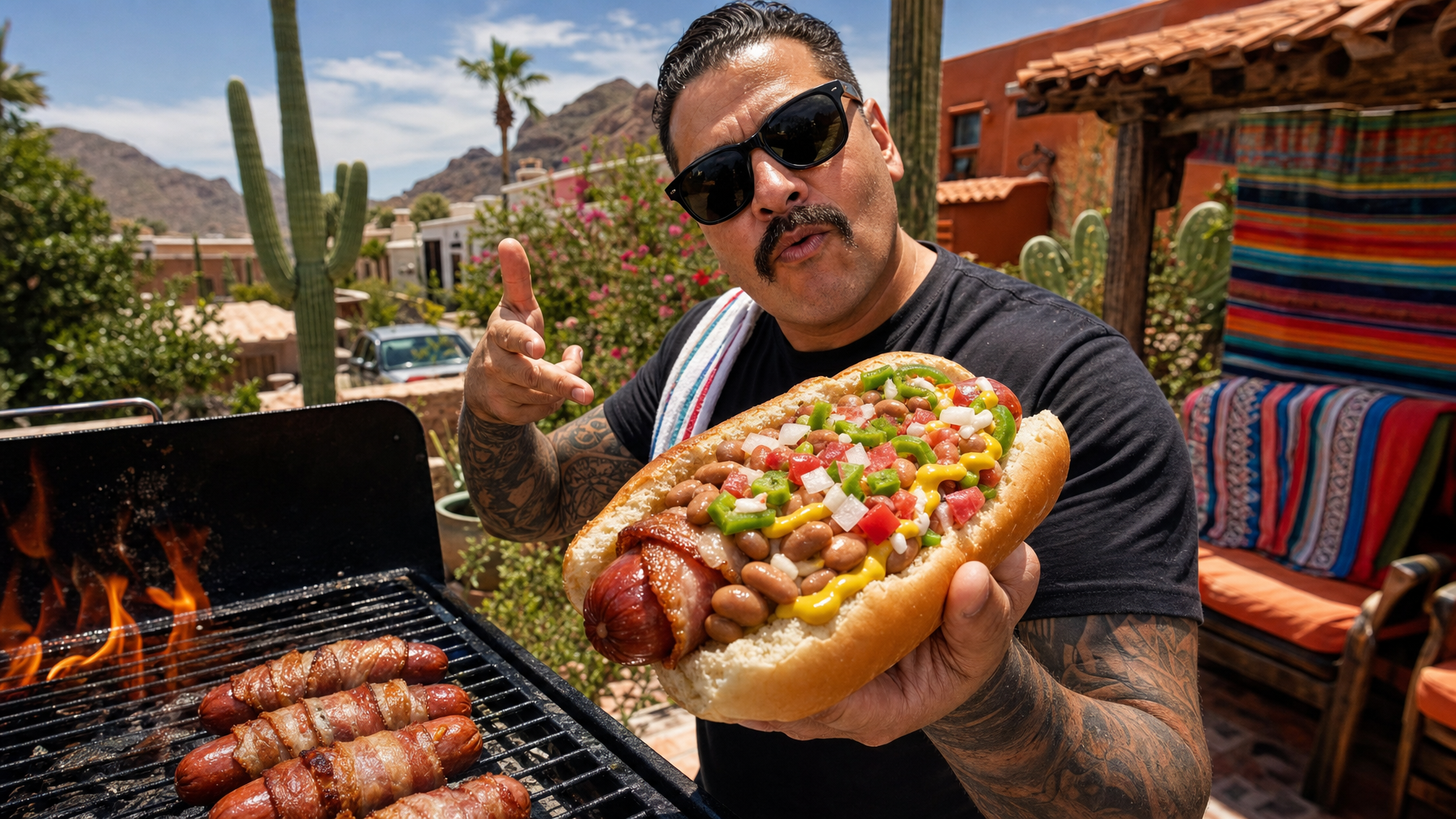
For hot-dog fans who want Sonoran-style drama without turning the backyard into a full production, keep the build focused: a bacon-wrapped dog, a soft bun, creamy beans, bright toppings, and enough heat to make each bite interesting—not a condiment hostage situation. The point is contrast, not chaos. Jason’s opinion, stated plainly before someone reaches for the red squeeze bottle: ketchup is not invited to this cookout.
What Makes a Sonoran Dog Feel Like a Sonoran Dog—and Not a Random Loaded Weiner?
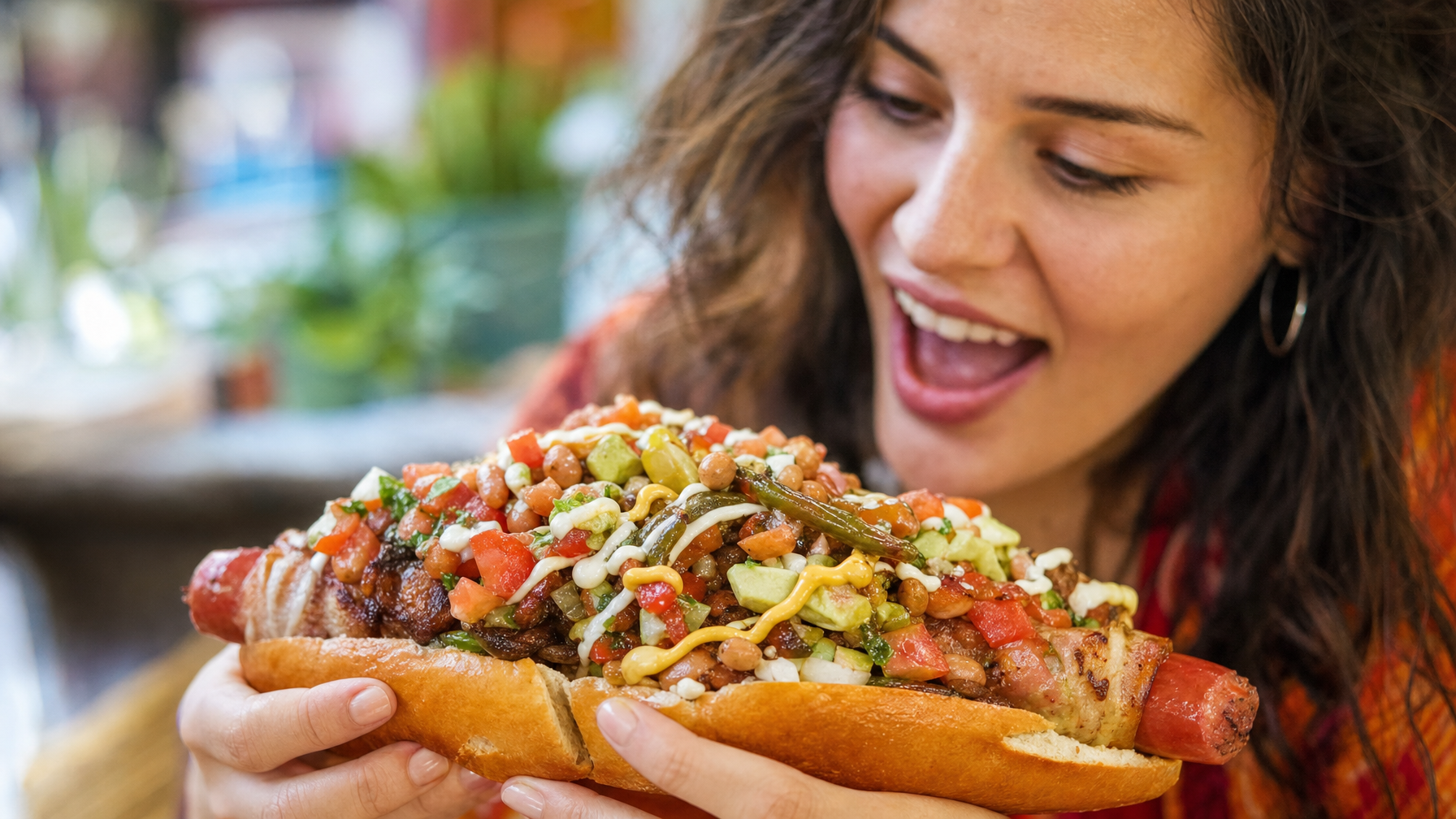
A Sonoran-style hot dog starts with a bacon-wrapped hot dog in a soft bun, then brings rich, creamy, fresh, crunchy, and spicy elements into the same bite. That combination is the personality. It is not just a plain dog wearing every leftover topping in the refrigerator like a regrettable Halloween costume.
The pleasure comes from opposing forces getting along unusually well: smoky bacon against creamy beans; a cool crema or mayonnaise-based sauce against chile heat; fresh chopped toppings against a yielding bun. A good build feels lavish, but each ingredient has an actual job.
Specific recipes and local builds vary, as they should. There is no single topping list that gets to patrol every backyard grill. What matters is preserving the architecture: savory dog and bacon, soft bread, beans, a creamy element, fresh contrast, and chile-based heat.
Jason’s no-ketchup position is an opinion, not a law of the land. But it is a strong opinion. This is already a hot dog with beans, bacon, sauce, and chiles. It does not need ketchup barging in with its sugary little briefcase.
The Cast List: Dog, Bacon, Bun, Beans, Heat
Every part of this build needs to earn its spot. Toppings are not confetti.
- Hot dog: Choose one sturdy enough to survive wrapping, searing, and a serious topping load. A very delicate dog can split before the bacon has properly browned.
- Bacon: This provides smoke, fat, salt, and the crisp-edged contrast that makes the whole operation feel gloriously excessive.
- Soft bun: The bun should be pliable and substantial enough to hold the dog and toppings without immediately surrendering. The bun is infrastructure, not a napkin with ambitions.
- Beans: Warm, creamy beans add body and richness. Their exact preparation can vary; the important thing is that they are thick enough to spread rather than pour.
- Fresh toppings: Chopped onion, tomato, herbs, or other crisp, bright additions can bring lift and texture. Keep them small enough to stay on the dog.
- Creamy sauce: Crema, mayonnaise, or a similar tangy creamy element softens the chiles and connects the ingredients.
- Chile-based heat: Fresh, pickled, roasted, or sauce-based chiles provide the spark. They should sharpen the flavors, not erase them.
Think in flavor roles rather than sacred shopping lists. You need savory and smoky, creamy and rich, fresh and crisp, plus heat with some personality. That is the cast. No one needs a seventeen-person ensemble.
Bacon-Wrapping Without Summoning the Smoke Alarm
Wrap each hot dog snugly with bacon, spiraling it from one end to the other. If the bacon refuses to cooperate, secure the ends with toothpicks and remove them before serving. The goal is contact: loose bacon cooks unevenly and has a habit of peeling away at the exact moment you feel smug.
Cook over controlled heat until the bacon is browned and the hot dog is heated through, following the hot-dog package directions. The key tradeoff is simple: bacon needs enough time to brown, while the dog should not be cooked into a rubbery tube of regret. Moderate heat and frequent turning usually give you more control than blasting everything over a furious flame.
No Desert Patio Required
A grill is nice, not mandatory. A skillet works well: cook the wrapped dogs over medium or medium-low heat, turning often so the bacon renders and browns. An oven can also handle the job; place the wrapped dogs on a rack set over a sheet pan, cook until the bacon is browned and the dogs are heated through, and turn or finish briefly under a broiler if needed. Stay nearby. Bacon has a theatrical relationship with rendered fat.
Four Ways the Dog Goes Sideways
- Loose bacon: Wrap tightly and secure if necessary.
- Excessive heat: Burnt bacon and an underheated center are not a magic trick.
- A soggy bun: Warm the bun and keep watery toppings drained.
- Premature topping avalanche: Do not pile on toppings until the bacon-wrapped dog is cooked. Assembly is the finale, not the warm-up act.
Handle raw bacon carefully, clean surfaces and utensils that touched it, and cook the hot dogs thoroughly according to their package directions.
The Heat Ladder: From Pleasant Glow to Backyard Telenovela
Heat is adjustable, which is good news for households where one person wants a gentle tingle and another person believes taste buds are a personal insult.
| Heat mood | Good paths | What it brings |
|---|---|---|
| Pleasant glow | Mild roasted chiles, a mild chile sauce, or a modest amount of pickled chile | Flavor and warmth without an emergency beverage plan |
| Confident sizzle | Fresh chiles, punchier pickled chiles, or a hotter sauce used sparingly | A clear chile presence alongside the bacon and beans |
| Backyard telenovela | A hot chile sauce or especially fiery fresh chile, applied with restraint | Drama, tears, and potentially a monologue near the grill |
Fresh, pickled, roasted, and sauce-based chiles are interchangeable routes, depending on what you can find and what you enjoy. Pickled toppings can add acidity as well as heat. Fresh toppings can make the dog taste brighter. Roasted chiles offer deeper, softer flavor. Sauce is the easiest way to let each eater control the situation.
Use one or two intentional heat sources. Stacking fiery chiles, hot sauce, spicy mayo, and aggressive salsa until the dog loses its plot is not bold cooking; it is volume without editing. Heat should make the bacon, dog, beans, and fresh toppings taste more alive.
Assembly Order Is Not Fussy; It Is Structural Engineering
Build in this order:
- Warm the bun until soft and flexible.
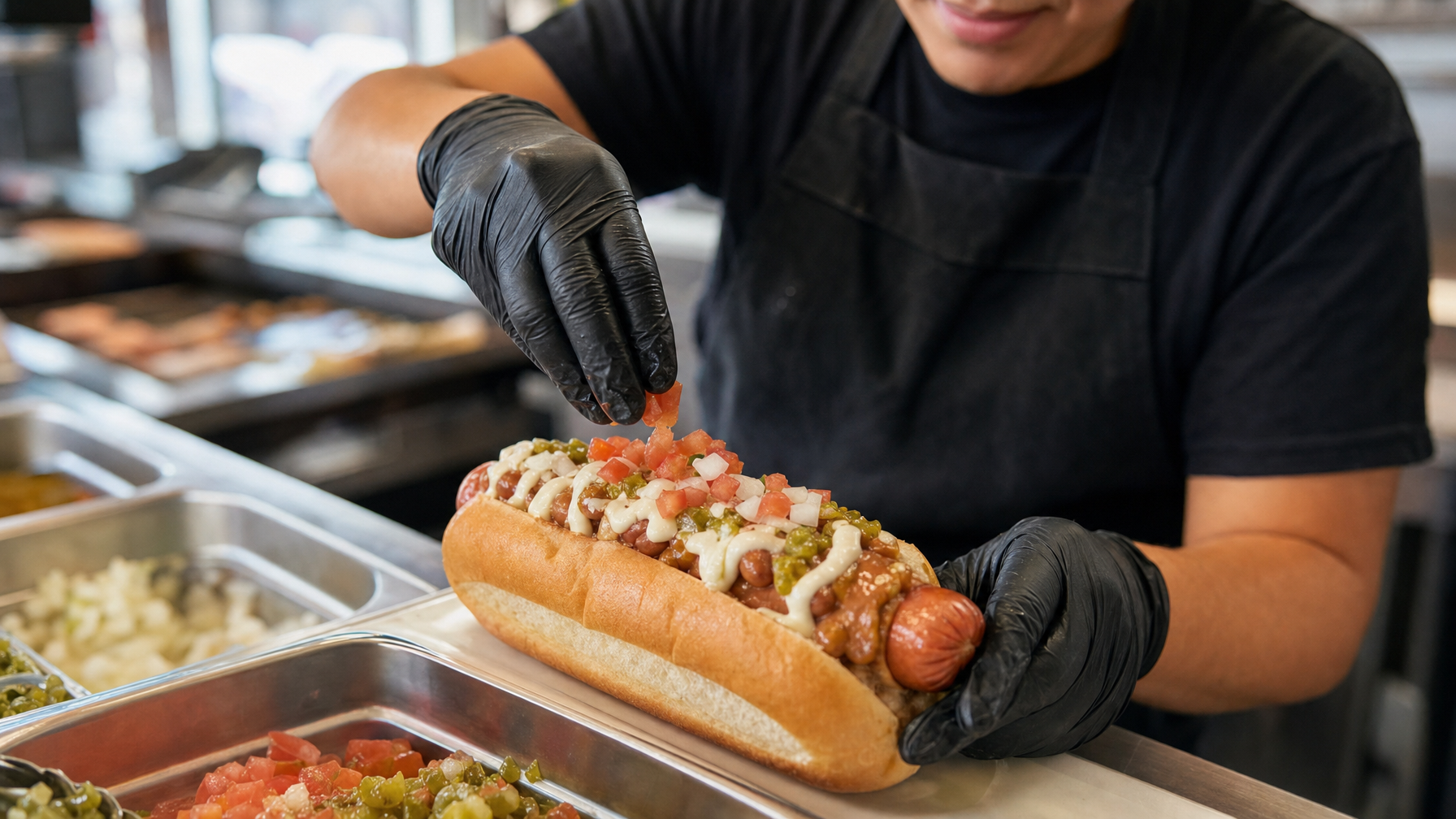
- Spread in warm, thick beans.
- Set in the bacon-wrapped dog.
- Add the creamy element.
- Add drained, finely cut fresh toppings.
- Add chile heat.
- Finish with any small accents you have chosen.
Beans belong low in the bun because they provide a soft, grippy base. The dog goes next because it is the main event, not buried treasure. Creamy sauce over the dog can reach multiple bites without flooding the bun. Fresh toppings and chiles belong near the top, where their texture and aroma do not get smothered.
Drain wet toppings before assembly. Dice or slice them small enough that they can cling to the build instead of immediately leaping onto the plate. A Sonoran-style dog should be messy in the joyous, edible sense—not messy because it has collapsed into a bean-soaked landslide.
Do one visual check before serving: can every bite reasonably reach smoky bacon, creamy beans or sauce, freshness, and chile? If yes, congratulations. You have built a hot dog instead of a tiny buffet on unstable bread.
What to Skip When the Topping Table Starts Getting Ideas
Restraint is not boring. It is the reason the good stuff remains identifiable.
- Too many sauces: Pick one creamy lane and one chile lane. More is not automatically more.
- Watery salsa: Great flavor can still be disastrous if it turns the bun into a damp sponge.
- Oversized toppings: Big chunks are not rustic; they are escape artists.
- Cheese in casserole quantities: If the dog disappears beneath a molten blanket, you have wandered into another genre.
Keep the core roles intact—bacon-wrapped dog, soft bun, beans, creamy richness, freshness, and chile heat—then treat personal additions as personal additions. That respects the style without pretending there is only one legitimate backyard interpretation.
Taste the beans, creamy sauce, and chile component before building. Salt, acidity, and heat can pile up fast when several bold ingredients arrive in the same bun. Jason’s no-ketchup policy remains firm, but it is still a brand opinion rather than a universal commandment.
A Manageable Home Build for People With Jobs, Neighbors, and One Grill
For a low-drama home version, do the chopping and bean work first. Warm and season the beans until creamy and spreadable. Prepare the creamy sauce. Chop and drain fresh toppings. Set out chiles or chile sauce. Then cook the bacon-wrapped dogs and warm the buns near the end, when assembly can move quickly.
Keep the Roles, Swap the Ingredients
- For creamy richness: Use crema, mayonnaise, or another creamy sauce you enjoy.
- For fresh contrast: Use finely chopped crisp vegetables, herbs, or a bright topping that is not dripping wet.
- For spice: Use a fresh chile, a pickled chile, a roasted chile, or a chile sauce.
- For smoky savory heft: Let the bacon-wrapped dog do its job. Do not make it compete with six unrelated proteins.
- For beans: Use canned beans if that is what your schedule allows; heat and season them, then keep their texture thick enough for the bun.
For a group, keep wet fresh toppings and sauces separate until serving, and put heat on the table for people to choose. This protects the buns and prevents the mild-heat crowd from staring at one very spicy dog like it has betrayed them personally.
The quality test is beautifully simple: the bun survives, the bacon stays attached, and the heat has a point.
The Jason’s Grub Verdict: Big Flavor, Small Fire Department Presence
The best manageable Sonoran-style home dog is controlled excess: enough toppings to make it exciting, not enough to require architectural permits. Bacon, beans, softness, freshness, creaminess, and chile heat all belong—but they need to cooperate.
Sonoran-style heat is not a contest to locate the hottest chile available. It is balance and contrast: fire checked by creaminess, richness lifted by acidity, smoky bacon met with fresh crunch. That is where the drama earns its screen time.
For more specific hot-dog builds and food-culture discoveries, follow @jasonsgrub on Instagram.
FAQ: Five Questions Before the Bacon Starts Talking Back
Do I have to grill a Sonoran-style hot dog?
No. A skillet or oven can work well. The goal is a browned bacon-wrapped dog and a warm, stable bun, not proof that you own a desert patio.
What makes the style spicy?
The heat usually comes from chile-based toppings or sauces, and you can adjust the level to taste. Freshness and acidity can keep the heat lively rather than flat, so more chile is not the only way to make a dog feel spicy.
Can I use canned beans?
Yes. Heat and season them to suit the build, and keep them thick enough to add creamy richness without flooding the bun.
Is ketchup allowed?
It is your hot dog, but Jason’s position is a firm no-ketchup policy. This build already has plenty of routes to sweetness, richness, acidity, and heat without adding ketchup to the committee.
How do I stop the bun from falling apart?
Use a sturdy soft bun, drain wet toppings, warm the bun without drying it out, and assemble immediately before serving. Also: spread the beans instead of pouring them. Your shirt will appreciate the distinction.
Enjoyed this? There's more from Jason's Grub.
Follow on Instagram →