Can a Hot Dog Wear Southern Barbecue Sauce Without Losing Its Identity?
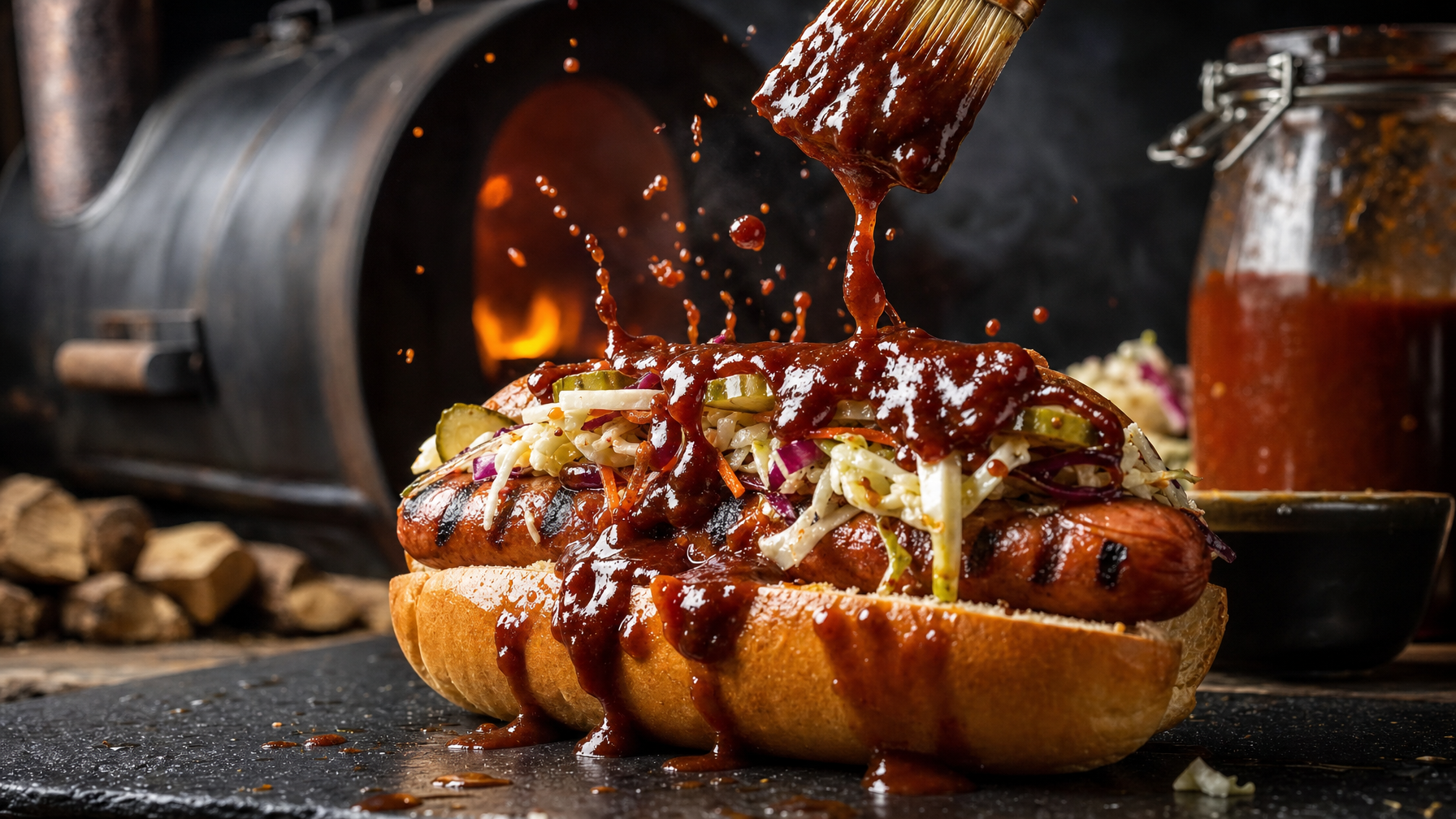
Yes—provided the barbecue sauce supports the hot dog instead of burying it under a sticky brown blanket. This is for hot-dog people who want smoke, tang, sweetness, and a little heat without turning a frank into a barbecue sandwich wearing a suspiciously tiny bun. Use Southern barbecue sauce as an accent: enough to wake up the sausage, never enough to silence its snap, smoke, seasoning, and salty good sense.
What Is “Hot Dog Identity” Once Sauce Enters the Chat?
A hot dog’s identity is not a philosophical crisis. It is the set of things that make it unmistakably a hot dog: the casing snap, savory cured meat, salt, spice, smoke, and the bun that keeps the whole operation from becoming a napkin emergency.
Barbecue sauce arrives carrying sweetness, acidity, smoke, and spice. None of those are enemies of a frank. The trouble begins when the sauce duplicates every big flavor already present, then adds enough sugar to make the sausage taste like an afterthought.
My opinion: a topping should create contrast, not turn the dog into a delivery vehicle for itself. A hot dog should still taste like a hot dog after its wardrobe change. If all you can identify is glossy brown sauce, congratulations: you have made a tiny, disappointing sandwich.
Southern Barbecue Sauce Has More Than One Personality, Bless Its Messy Heart
“Southern barbecue sauce” is not one single flavor, and treating it that way is a fine way to start an argument at a cookout. Barbecue traditions vary across states, towns, families, and restaurants. The useful question is not whether a sauce is Southern; it is what that particular sauce actually does in the bite.
- Vinegar-forward sauces tend to be sharp and bright. They can cut through a rich, smoky frank without adding much weight.
- Tomato-based sauces are often richer and sweeter, sometimes with a deeper cooked character. They can work beautifully, but they demand portion control.
- Mustard-forward sauces bring tang and punch. They can be particularly lively with a plainer frank that needs a little swagger.
The style matters more than the word barbecue on the bottle. A thin, peppery sauce changes a dog differently from a thick, sweet one. One brightens; the other can dominate. Choose accordingly, unless your culinary objective is “sticky confusion.”
How Much Sauce Before the Brown Flood Wins?
Start with a light drizzle or a narrow stripe. Not a ladle. Not a lacquer job. A stripe gives you a test bite and leaves you room to add more, which is much easier than reverse-engineering a sauced-up mess.
Your first bite should reveal the sausage before the sauce takes over. You should notice the casing, meat, and cooking character, then get the barbecue sauce as a supporting hit of tang, smoke, sweetness, or heat.
- Thick, sweet sauces: use less. Their sugar and body hang around like an unwanted encore.
- Thin, vinegar-forward sauces: use a little more freely, though still with adult supervision. They behave more like a bright condiment than a blanket.
- Mustard-forward sauces: begin modestly and taste. Their tang can be fantastic, but it does not need to shout.
A good rule: sauce should season the bite, not replace it.
Build Contrast, Not a Topping Jenga Tower
Barbecue sauce likes a friend with a different job. Add one crunchy, fresh, or acidic element rather than piling on every condiment within arm’s reach.
- Crisp onion adds bite and texture.
- Slaw can bring cool crunch, especially against a smoky or richer sauce.
- Pickled elements add acidity that keeps sweet sauce from turning the whole thing syrupy.
Keep the build restrained. Sauce plus slaw plus onions can be terrific. Sauce plus slaw plus onions plus three wet relishes plus a mystery cheese sauce is a structural-engineering problem with no clear winner.
The bun is part of the equation, too. A soft bun can absorb a little sauce and make the bite feel cohesive. Too much liquid, however, turns it into a damp surrender flag. Use enough sauce to flavor the bun, not enough to dissolve its constitutional rights.
Which Dogs Can Take the Barbecue Treatment Without Filing a Complaint?
Match the sauce intensity to the frank. A smoky or heavily seasoned dog often benefits from a brighter vinegar-forward sauce because it adds lift instead of stacking smoke on smoke. A milder dog can tolerate, and sometimes welcome, a richer tomato-based sauce.
A grilled or charred surface can also play nicely with barbecue sauce. Those browned, smoky edges can make the pairing feel intentional rather than merely sticky. But charcoal is not a magic spell, and grilling is not mandatory. A properly cooked dog with a good snap deserves consideration no matter how it got there.
Before adding anything, taste the hot dog plain. Seriously. Know what you are protecting. If it is already salty, smoky, spicy, and aggressively seasoned, it may need acid more than extra sweetness. If it tastes mild, then a fuller sauce has more room to operate.
A No-Ketchup, Pro-Identity Test for the Finished Dog
I have spent ten years across all 50 states with zero ketchup in the mission statement, so I am obviously not going to advise covering a frank in red sugar paste. That does not mean barbecue sauce automatically wins every condiment contest. It means the dog still has to make sense.
Run this quick test before declaring victory:
- Can you still identify the sausage? If not, the sauce has staged a coup.
- Does the sauce add contrast? Look for brightness, gentle heat, smoke, or controlled sweetness—not just more of what is already there.
- Is the bun holding together? A delicious dog should not require flood-response equipment.
- Does the bite offer more than sweetness? Salt, acid, texture, and savoriness should all get a turn.
If the build misses, do not panic. Use less sauce. Add a pickled topping. Bring in crisp onion. Switch from a thick tomato-based sauce to a thinner, sharper one. A bad first draft is not a moral failing; it is just lunch asking for edits.
Sauce It, But Don’t Mummify It
Southern barbecue sauce absolutely belongs on a hot dog when it acts like a supporting flavor instead of the main event. The winning formula is simple: a properly cooked frank, restrained sauce, one crisp or acidic counterpoint, and a bun sturdy enough to survive the adventure.
Let the dog remain a dog. Give it barbecue character, not a full sauce burial with a bun-shaped headstone.
For more hot-dog places, products, recipes, and culture coverage, follow @jasonsgrub on Instagram.
FAQ: Four Questions Before You Drizzle
Is barbecue sauce better than ketchup on a hot dog?
That is a matter of taste, though barbecue sauce often brings more smoke, tang, spice, and complexity than standard ketchup. The important test is whether it complements the sausage instead of hiding it. My own position on ketchup remains wildly unsurprising: no thanks.
Should barbecue sauce go under or over the toppings?
Either can work. A thin layer under crunchy toppings can help them cling to the dog. A final drizzle makes the sauce more noticeable and easier to control. If your sauce is thick or sweet, a restrained final drizzle is usually the safer move.
What toppings pair well with barbecue sauce on a hot dog?
Favor contrast: crunch, acidity, or freshness. Slaw, onion, and pickled toppings are strong directions. Keep the build disciplined so the sausage remains recognizable and no one ingredient turns the bun into a traffic jam.
Can I use a very sweet barbecue sauce?
Yes, but use less of it and add something sharp or crunchy to keep the bite from becoming one-note. Pickled toppings, onion, or a tangy slaw can provide the correction.
How do I know if the barbecue sauce has gone too far?
If the first thing you taste is sauce and the sausage disappears, the hot dog has lost the argument. Start with less next time, or choose a brighter, thinner sauce that lets the frank keep talking.
Enjoyed this? There's more from Jason's Grub.
Follow on Instagram →