New York Street-Cart Water Without the Mystery Meat Theater
For hot-dog hunters who want New York street-cart flavor without turning lunch into a guessing game, the smart move is simple: identify the cart, inspect the setup, ask what is being served, then judge the dog by its snap, heat, toppings, and freshness—not spooky folklore about “mystery meat.” This is for enthusiasts and food-culture nosers who want to eat with both curiosity and standards. Jason’s Grub brings a zero-ketchup, 50-states-in-10-years point of view, but no cart gets fictional backstory just because it has steam and swagger.
Which New York Street Cart Deserves Your Appetite—and Which One Deserves Suspicion?
A New York street-cart dog can be fast, distinctive, deeply satisfying, and absolutely worth seeking out. It can also be merely fine. That is not a betrayal of the city; it is lunch. The useful habit is observation, not romanticized mystery.
“Mystery meat theater” is the performance of secrecy, bravado, and urban legend around a hot dog’s identity, preparation, or quality. It is not proof that the food is unsafe, inferior, or made from something that requires a trench coat and an alibi. A cart does not become great because somebody calls it “sketchy” with a loving grin.
Jason’s position is uncomplicated: curiosity first, ketchup never. But curiosity has rules. If a detail about a particular cart has not been directly observed or currently verified, do not invent it. New York has enough actual drama. Your frankfurter does not need a screenplay.
Start With the Cart, Not the Legend
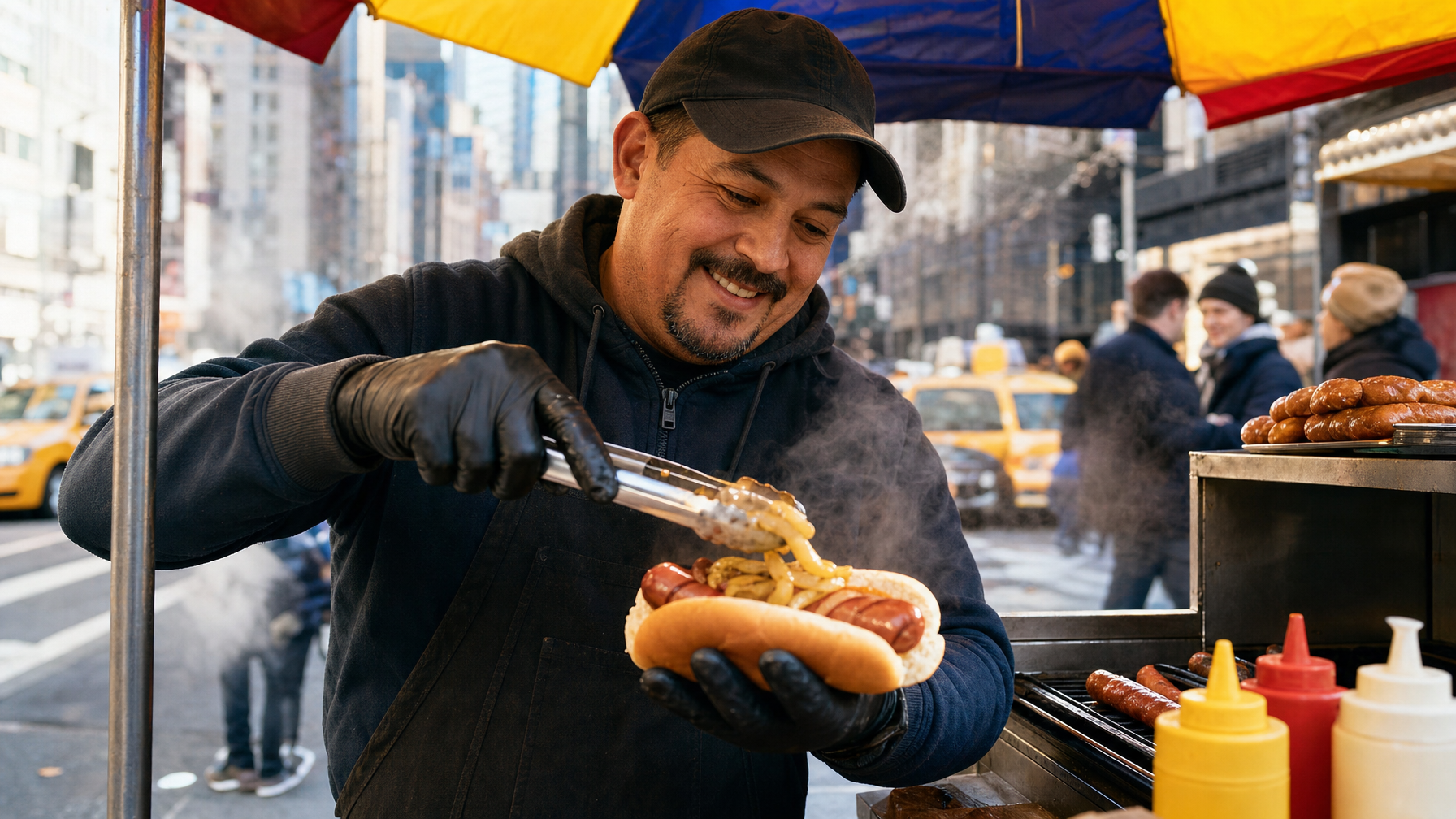
Before ordering, take a brief look at the operation. You are not conducting a raid; you are deciding where to spend lunch money. A few visible details can tell you more than a dozen breathless social posts.
- Does the cart look clean and reasonably organized?
- Are buns, condiments, and toppings covered or otherwise protected when they are not being served?
- Does the operator handle food in a steady, orderly way?
- Can the operator answer basic questions about the item being sold?
- Does the food appear to be kept hot and the toppings in usable condition?
These are signals, not courtroom evidence. A busy cart may suggest demand and quicker turnover, but it does not guarantee an excellent dog. A quiet cart is not automatically a bad cart, either. Maybe it is early. Maybe it is raining. Maybe the crowd has made the baffling decision to eat a salad.
If you are making a special trip, check the cart’s current location, hours, menu, and availability first. Street-cart schedules and placements can change, sometimes with the kind of speed normally reserved for pigeons near a dropped pretzel. Do not rely on an old post as though it were a notarized lunch contract.
Ask One Question Before the Bun Hits the Counter
A clear, polite question is usually the fastest route past the fog machine. Ask what kind of hot dog it is, how it is heated, or which toppings are available that day. Pick the detail that actually affects your order.
- “What kind of dog is this?”
- “Is it heated in the water or on a grill?”
- “What toppings do you have today?”
- “Do you know which brand you use?”
A straightforward answer is more useful than theatrical secrecy. At the same time, keep the request proportionate. You need enough information to order intelligently, not a full supply-chain autobiography delivered under oath. Some operators may have limited product details available, may not know a brand name, or may choose not to disclose every sourcing detail.
Do not infer ingredients, certifications, dietary suitability, or sourcing claims that the seller has not stated. If a specific detail matters for your diet or health, ask directly and make your own decision from the answer.
The Water Is Part of the Story—Not a Magical Ingredient
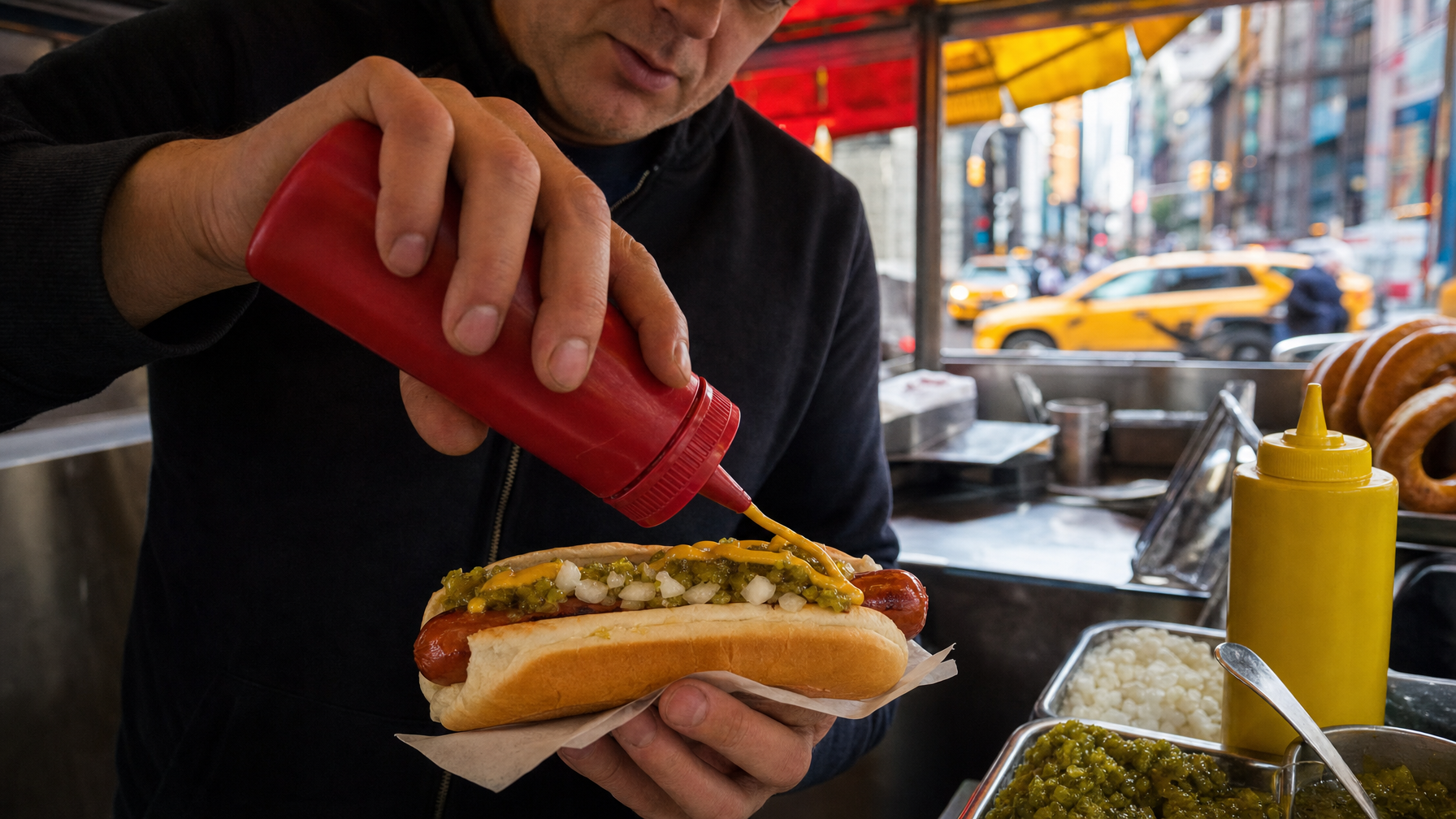
Water-heated hot dogs are a recognizable part of the street-cart experience. The steaming pot has visual authority: it announces that a hot dog is happening. But the water is a preparation method, not a mystical broth whose secrets must be decoded by a guy on the subway platform.
Better questions focus on what you can observe and taste: Is the food being kept hot? Is service orderly? Does the dog arrive properly heated? Is there enough turnover that the finished bite feels fresh? The pot itself is not automatic proof of quality, and it is not automatic evidence of a problem.
Without direct observation or a current statement from a particular vendor, no general article can certify that cart’s water, ingredients, or food-safety practices. That line matters. The dog should taste like a hot dog, not like an urban legend with mustard.
Judge the Bite: Snap, Heat, Bun, and Toppings
Once the dog is in hand, the real review begins. “Street-cart style” is not one universal flavor profile. Preparation, the frank itself, bun condition, condiment choices, and your own taste all get a vote.
Use a tasting checklist that does not hide behind the word “authentic”
- Snap or texture: If there is a casing, does it offer a pleasing bite? If there is no snap, is the texture still juicy and satisfying rather than mushy?
- Heat: Is the dog heated through evenly? A lukewarm center is not charmingly old-school.
- Flavor: Does it taste savory and balanced? Can you identify smoke, salt, spice, or beefiness without turning every bite into a poetry workshop?
- Bun: Is it soft enough to eat but sturdy enough to survive the walk to the curb?
- Toppings: Do onions, sauerkraut, mustard, or other additions taste fresh and suit the dog?
- Structural integrity: Does the build hold together, or does it collapse into a napkin-based archaeology project?
Mustard, onions, sauerkraut, and other toppings can all make sense depending on the cart and the build. Jason’s no-ketchup stance is an opinion—an extremely correct opinion, obviously—not universal law. Describe what you actually tasted. “Bright mustard, soft bun, salty dog, onions doing useful work” says more than simply declaring something authentic and walking away in a cloud of adjective dust.
What “Mystery Meat” Gets Wrong About New York Dogs
The lazy stereotype says every inexpensive street dog is unknowable, interchangeable, and one bite away from a tabloid headline. That is not criticism; it is borrowed folklore wearing a cheap hat.
You can have standards without making things up. Discuss the dog’s texture, seasoning, casing, toppings, temperature, bun, service, and preparation. Say, “This dog was bland,” if it was bland. Say, “The bun gave up halfway through,” if it did. Those are personal judgments tied to an actual bite.
Do not turn a disappointing lunch into an unsupported allegation about ingredients, sourcing, or safety. A personal verdict is fair game. An invented scandal is not. Wonder is welcome; fake certainty is a lousy condiment.
A No-Drama Street-Cart Order for First-Timers
For a first street-cart dog, keep the process gloriously unceremonious:
- Observe the cart. Look for a clean, organized setup and sensible food handling.
- Confirm the offering. Ask what the dog is, how it is prepared, and what toppings are available.
- Choose toppings with intention. Mustard, onions, and sauerkraut are sensible starting points. Ketchup remains a personal choice that Jason declines with great enthusiasm.
- Eat promptly. A hot dog is not a museum piece. The bun and heat are usually at their best right away.
- Record the details. Note the exact neighborhood or intersection, date, time, order, preparation style, and the flavors that stood out.
That last step is especially useful if you want to retrace the meal—or write about it without accidentally relocating a cart three avenues and four years into the past. Before publishing a destination recommendation or planning a return visit, verify current details through current listings or the vendor’s own updates.
For more specific hot-dog finds and food-culture observations, follow @jasonsgrub on Instagram.
FAQ: Five Questions Before You Trust the Cart
Is a water-heated street-cart hot dog automatically unsafe?
No. The heating style alone does not support an automatic conclusion. Assess visible handling, food temperature, cleanliness, and current information where available, and avoid claims you cannot verify about a particular cart.
Should I ask what brand of hot dog a cart uses?
Yes, if that information matters to you. Ask plainly. Some operators may not know the brand or may not disclose it, and that does not require a cross-examination beside the mustard bottles.
Does a busy New York cart guarantee a great dog?
No. A crowd can be a useful clue about demand or turnover, but the bite still decides the matter. Plenty of people have formed a line for reasons nobody can explain.
What toppings fit this style?
It depends on the cart and your taste. Mustard, onions, and sauerkraut are natural starting points. Jason’s stated position is zero ketchup, but your lunch remains your lunch.
How can I find a specific cart again?
Record the exact location, time, date, menu details, and your order. Then check current listings or the vendor’s own updates before returning, because temporary carts and menus can move or change.
Enjoyed this? There's more from Jason's Grub.
Follow on Instagram →