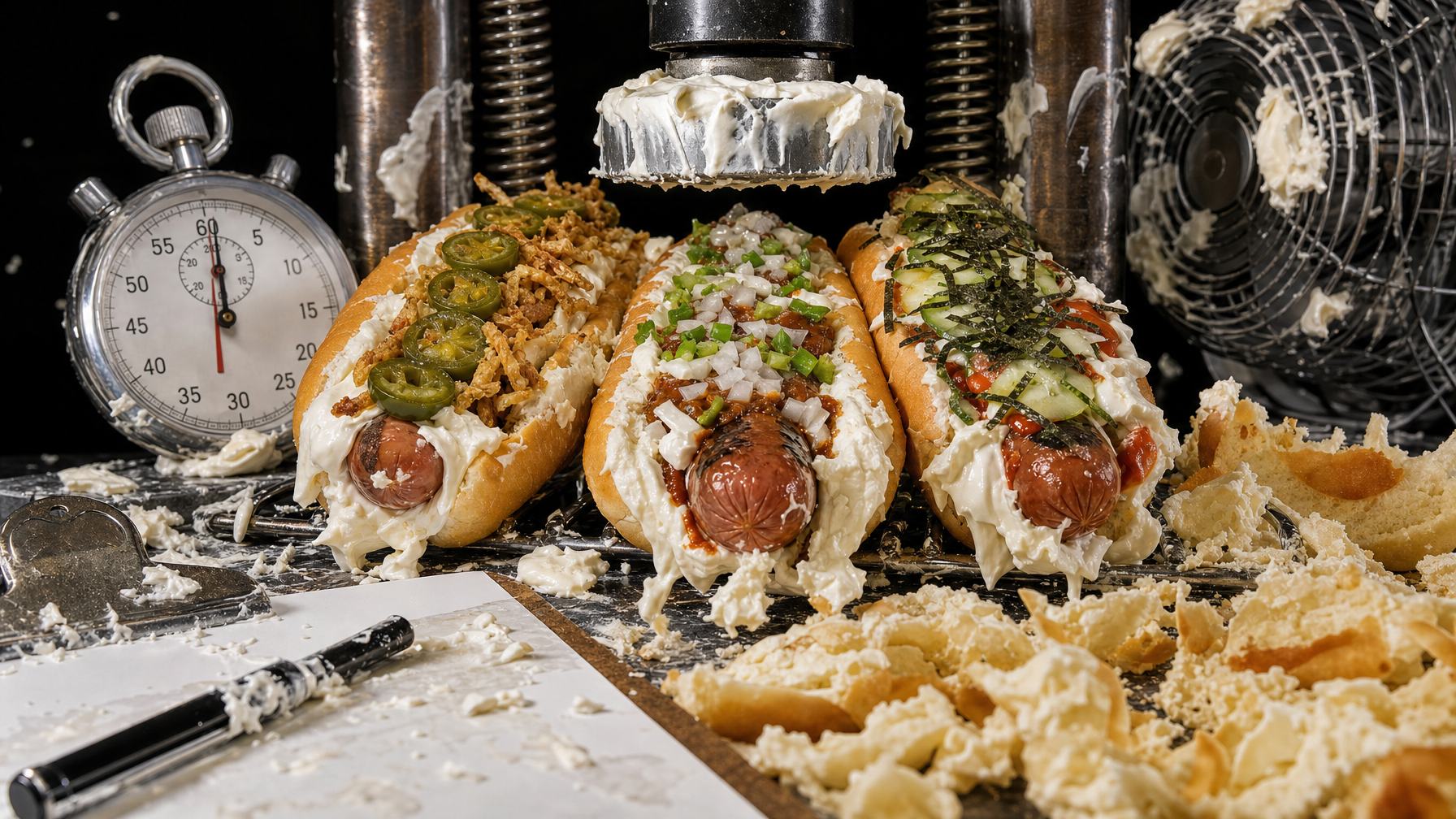
I Watched the Nathan’s Hot Dog Contest With a Stopwatch and Lost Faith in Human Chewing
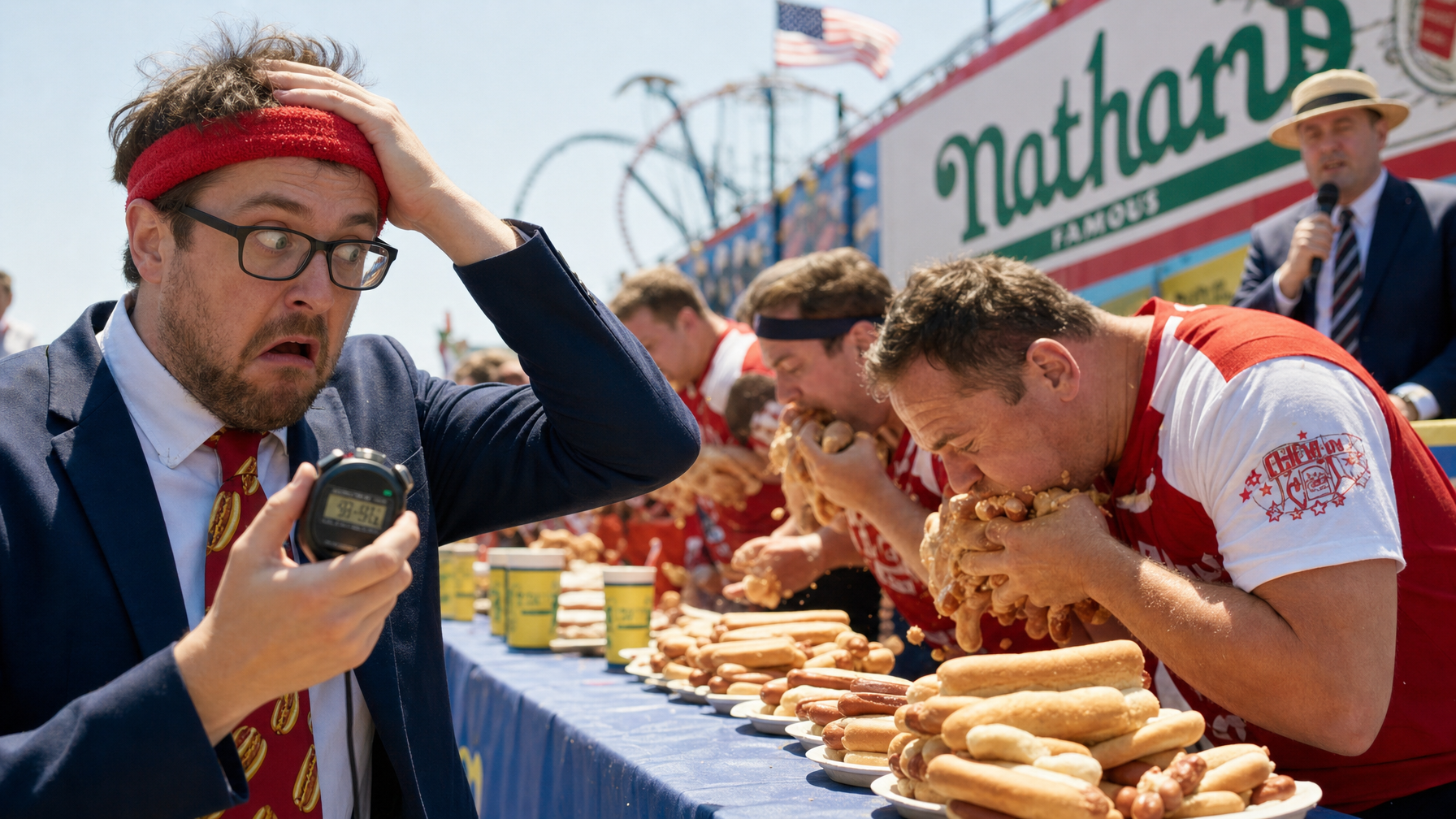
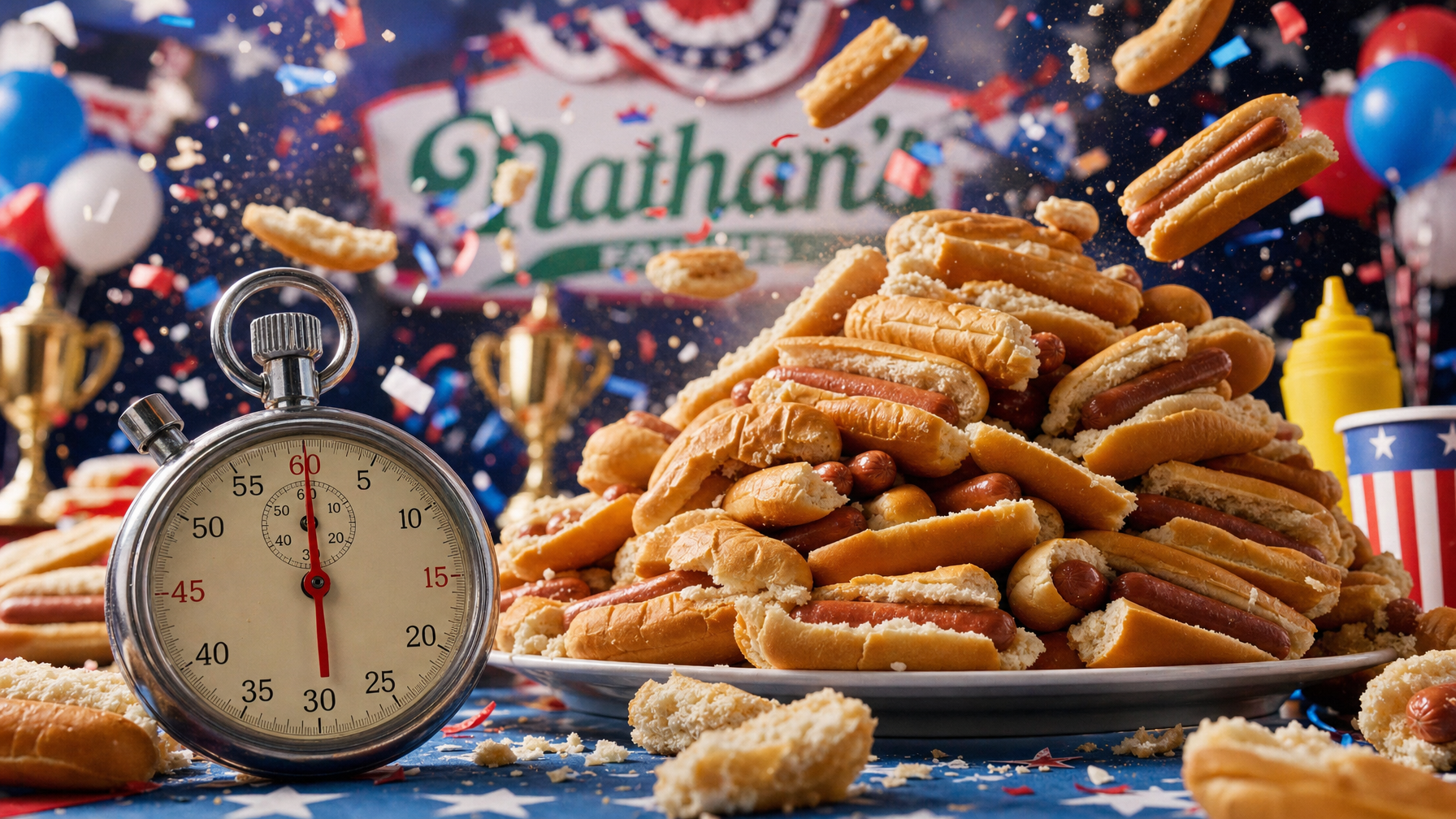
I watched the Nathan’s Hot Dog Eating Contest with a stopwatch, and it made the whole thing gloriously weirder. What looks, from a safe distance, like a loud summer party built around America’s most portable lunch becomes a tightly timed endurance spectacle once you start watching the gaps between bites, the bun dunks, the grip resets, and the tiny pauses that suddenly feel enormous. This is for hot-dog fans and food-culture gawkers who want a strong opinion about the viewing experience, not a recap of official results, records, or contestant rankings. After ten years, 50 states, and zero ketchup, I can say this confidently: competitive eating is not a recommended way to enjoy a hot dog. It is its own very strange sport.
I Started the Stopwatch and Immediately Regretted Having Eyes
The stopwatch did not clarify the Nathan’s contest. It turned every movement into a tiny emergency.
Without timing it, you can let the spectacle wash over you. There is crowd noise, branded ceremony, announcer excitement, flags, foam fingers, and the reassuring fact that everyone involved appears to understand the assignment better than you do. Add a stopwatch, though, and the event stops resembling lunch almost immediately. It starts looking like a high-speed biological experiment performed under a party tent.
I was not trying to produce official splits or declare anybody faster than anybody else. A couch-side stopwatch is not formal judging. It is a magnifying glass with terrible bedside manners. I used it to notice the rhythm: the space between bites, the repeated reach for liquid, the second spent resetting a hand, and the moments when a contestant seemed to gather themselves before resuming the stampede.
That is the central horror, and also the fascination. The clock makes every bite feel more intense, more mechanical, and faintly alarming. A hot dog, normally an object of pleasure and personal opinion, becomes a unit of progress. Nobody is lingering over the snap. Nobody is pondering the bun-to-frank ratio. Nobody is asking whether ketchup belongs there, because the contest has already taken the hot dog somewhere far beyond condiment law.
This is a reaction to footage watched as a viewer, not a claim about a particular year’s field, broadcast date, official rules, or current records. Those details should be confirmed directly against the relevant event information before publication if they are added. The stopwatch can observe. It cannot officiate.
The First Minute Was Still Technically Hot-Dog Shaped
At the opening, the food still has the basic manners of a hot dog. There is a frank. There is a bun. There is, at least briefly, a recognizable relationship between them. You can squint and imagine a ballpark, a cookout, or a roadside stand where somebody hands you one wrapped in paper and expects you to enjoy your afternoon.
Then speed changes the visual logic.
With the stopwatch running, I found myself noticing what normal eating politely conceals: the recurring sequence of grasp, separate or compress, soften, chew, swallow, reset. The exact length of any interval is beside the point here, because I was not creating an official timing sheet. The point is that once you look for the pauses, they become characters in the broadcast.
- A hand reaches for a bun and suddenly the clock feels loud.
- A drink cup rises and you wonder whether this is a planned move or simply the least dramatic option available.
- A contestant resets their grip and the pause appears huge, even when it may be brief.
- The next bite lands and the whole machine lurches forward again.
A regular hot dog contains pauses. You talk. You inspect the toppings. You take a bite that is too ambitious and spend a moment reconsidering your geometry. You enjoy the texture. You retain a small amount of dignity.
Contest eating appears to negotiate with all three: pause, texture, dignity. The food remains familiar in name, but the act of eating it becomes almost abstract. It is no longer a meal so much as a rapidly managed series of decisions.
If you are watching a particular broadcast, verify whether the footage is live or archival and confirm who appears on screen before attaching names or event details to any observation. The rhythm is visible. The surrounding facts still deserve checking.
Dunking, Chewing, and the Strange Mathematics of a Wet Bun
The contest mechanics visible to a viewer are straightforward enough to describe and bizarre enough to make you question bread’s role in society. Contestants handle franks and buns rapidly. Liquid is used to soften the bread. Chewing and swallowing repeat with startling urgency. The usual hot-dog architecture is reduced to a problem of moving edible material efficiently from plate to person.
That is not a criticism of the competitors. It is the event. The competitors are performing inside a set of rules and expectations, with a level of concentration that is difficult to fake. But it does explain why the bun becomes the story once the stopwatch is involved.
A bun is normally a soft, pleasant support beam. In this setting, it becomes a scheduling problem. It has volume. It has resistance. It has a stubborn tendency to remain bread when someone would apparently prefer it to become less bread immediately.
Dunking makes the transformation visible. The moment is fast, but it reads as consequential because timing turns every small delay into possible drama. Was that pause tactical? Was it necessary? Was it simply a human being taking half a second to operate hands, food, liquid, and gravity at once? From the couch, you cannot know. The honest answer is that the stopwatch makes you feel like you know more while proving you know less.
It would be reckless to claim that any visible technique is universally faster, safer, or better without reliable evidence. What can be said from watching is simpler: these competitors have a practiced rhythm, and that rhythm makes ordinary eating look like a quaint hobby performed by people with weekends.
What the Stopwatch Revealed While the Party Kept Yelling
Broadcasts naturally lean toward spectacle. That is fair. A public eating contest with cheering spectators is not asking to be covered like a quiet chamber recital. But timing selected moments shifts your attention away from the big total and toward the restless machinery that creates it.
Setup: the calm before bread gets complicated
Before the opening rush, there is arrangement. Hands find their places. Containers and food sit within reach. Bodies look composed, even as the setting is doing its best impression of a carnival that discovered a scoreboard. The stopwatch reveals this as the last moment where the scene feels remotely domestic.
Opening rush: familiar food exits the building
The early stretch has momentum and recognizable purpose. Contestants establish rhythm. The viewer is still adjusting to the fact that a hot dog can be treated with the urgency usually reserved for catching a departing subway train. Timing does not make this phase easier to understand. It makes it impossible to dismiss as random chaos.
Middle stretch: small hesitations get very loud
This is where a stopwatch earns its tiny plastic salary. A brief reset, a changed hand position, a beat before the next movement: all of it becomes visible. The crowd may remain loud and the commentary may keep its focus on the larger drama, but the timed viewer starts seeing rhythm instead of just accumulation.
None of those pauses tells you exactly what a competitor is thinking or feeling. They are not proof of fatigue, strategy, discomfort, or triumph. They are simply pauses, and in an event built around relentless pace, pauses become weirdly compelling.
Final push: the clock becomes a co-star
Near the finish, time is no longer background scenery. It is the thing everybody is visibly negotiating with. The party atmosphere and the competitors’ focus collide in a particularly American tableau: loud celebration outside, extreme concentration at the table, and a hot dog quietly wondering how it became involved in all this.
Afterward: recovery is part of the picture
The post-contest moment matters because it restores the human scale that speed tries to erase. The competitors have just performed an intense feat under public attention. The crowd moves on to reaction and ceremony. The stopwatch, finally deprived of drama, can go sit in a drawer and think about what it has done.
If I were to publish exact split times from a particular viewing, I would label them clearly as my own informal observations, identify the specific footage, and describe where I started and stopped the timer. They would not be official statistics. No one needs a fake laboratory coat in the hot-dog aisle.
The Hot Dog Is the Prop, but the Ritual Is the Real Show
Nathan’s contest is compelling because it takes an ordinary American food and places it inside a very public ritual. There are rules, spectators, ceremony, branding, timing, and a shared willingness to watch the familiar become extreme. The hot dog is the prop, but the ritual is the show.
Put a hot dog in someone’s hand at a cookout and it means something easygoing. It can be messy, but it is friendly messy. It is built for walking around, arguing about toppings, and pretending you only took one bag of chips. Put that same hot dog on a contest table and it becomes a countable object. A unit. An item on a scoreboard.
That shift changes the meaning of the food without erasing its identity. You still recognize the bun and frank. You just cannot encounter them at normal human scale anymore.
And yes, my zero-ketchup position remains intact. This is not the time for a condiment trial. The contest is already asking enough of the hot dog. Let us not drag a sweet red puddle into this administrative nightmare.
I am not making a claim about every competitive eater or every person in the crowd. I am describing what this viewing experiment made visible: an event that turns a familiar meal into a public test of rhythm, focus, and willingness to make the rest of us stare at bread differently.
I Still Respect the Hot Dog, Which Is More Than I Can Say for My Stopwatch
There is real discipline in the concentration required to compete in this kind of event. It is fair to admire the performers’ focus while also admitting that the method is very far from the pleasures of a carefully built hot dog.
I want my hot dogs with texture, pace, and room for bad decisions that remain enjoyable. Give me a proper snap, a bun that is still committed to being a bun, and toppings that have not been converted into a logistical obstacle. Give me time to eat, not a clock that turns lunch into a courtroom cross-examination.
Watching with a stopwatch did not create a neat scientific answer about competitive eating. It created a sharper sense of the spectacle. The pauses got louder. The movements got stranger. The hot dog became both less recognizable and somehow more important, because its familiar shape is what makes the whole thing so magnificently absurd.
For more specific hot-dog places, products, recipes, and culture coverage, follow @jasonsgrub on Instagram.
Questions People Ask After Watching a Bun Disappear
What is the Nathan’s Hot Dog Eating Contest?
It is a public competitive eating event centered on eating as many hot dogs and buns as possible within the official time limit. Confirm the event year, current rules, official time limit, participants, and results before publishing those details.
Why use a stopwatch while watching it?
Timing a broadcast makes the pace, pauses, hand movements, and changing rhythm easier to notice. It is a viewing experiment, not an official measurement of the contest.
Does a personal stopwatch prove who ate fastest?
No. A viewer can time selected moments, but official totals and results come from the event’s formal judging and records. Informal timing can show rhythm. It cannot replace an official result.
Is competitive hot-dog eating the same as enjoying a hot dog?
Not remotely. One is a timed endurance spectacle. The other leaves room for texture, toppings, conversation, and the radical idea of taking a bite because it tastes good.
Where can I find more hot-dog opinions from Jason?
Follow @jasonsgrub on Instagram.
Enjoyed this? There's more from Jason's Grub.
Follow on Instagram →