I Put Three Seattle Dogs Through a Cream Cheese Stress Test and Lost the Buns
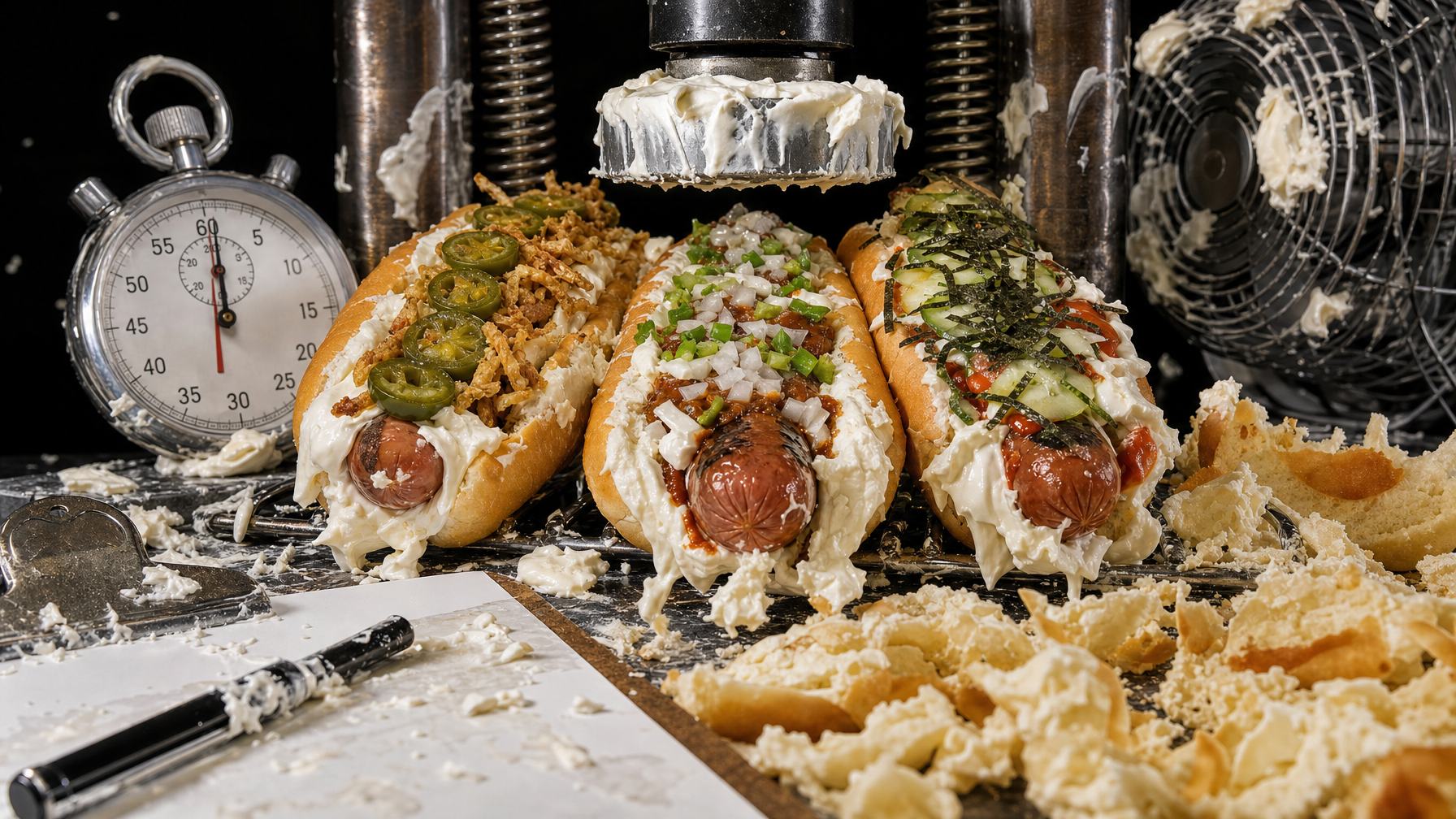
For hot-dog obsessives and food-culture readers willing to chase a specific bite, the question is simple: which Seattle-style cream cheese dog can carry its sausage, toppings, and dignity without the bun giving up halfway through? This is a reporting workflow, not a premature victory lap. Until three real, current Seattle-area dogs are verified and tasted, there is no vendor list, no ranking, no price, and no crowned champion. The drama belongs in the cream cheese. The evidence belongs in the notes.
1. Find three Seattle dogs that can actually appear in court
Start by identifying three currently verifiable Seattle-area hot dogs from real restaurants, stands, carts, or purchasable products. Each selection needs to be genuinely connected to a Seattle-style cream cheese preparation. Adding cream cheese to some unrelated dog and declaring it local tradition is the culinary equivalent of putting a rain jacket on a pigeon and calling it Seattle wildlife.
For every candidate, record the facts before a bite happens:
- Exact business or product name
- Street location or purchase location, where applicable
- Date the menu item or product was checked
- Whether it was available on that date
- Listed ingredients and stated preparation, if provided
- Whether cream cheese is part of the offered build rather than a reader-created modification
Choose contrast only when the evidence supports it. One dog may use a different sausage, bun, onion treatment, topping arrangement, or serving format from another. Those differences are useful because they give the cream cheese something real to argue with. Do not use the vague label “Seattle dog” as a substitute for naming the actual place or product.
2. Write down what counts as a bun betrayal before tasting
Build a judging sheet before the first order. Otherwise, the review becomes a fog of adjectives, onion breath, and selective memory. The central pressure point is cream cheese, but it is not being judged in a vacuum. A good Seattle-style build has to work as a whole handheld object.
Use the same criteria for all three dogs:
| Criterion | What to record |
|---|---|
| Bun integrity | Whether the bun stays intact, compresses, tears, becomes soggy, or splits at a seam. |
| Cream cheese distribution | Whether the cream cheese is evenly placed, concentrated in one bite, cold against the sausage, or pushed out by the toppings. |
| Sausage texture | Snap, firmness, juiciness, and whether the sausage holds its place in the bun. |
| Topping balance | Whether onions and other documented toppings support the sausage and cream cheese or smother them. |
| Portability | Whether it can be eaten standing up with ordinary napkins, without rebuilding it after every bite. |
| Overall flavor | How the sausage, bun, cream cheese, and toppings taste together. |
Define “lost the buns” only after observing what happened. It might mean a torn bun, a saturated crumb, a topping spill, or a dog that requires two hands and a rescue operation. It does not mean whatever sounds funniest after the fact. Record the condition in plain language first, then earn the joke.
Also record the test conditions. Was each dog eaten immediately? Was one carried across town? Was one reheated? Those details can change a bun’s behavior dramatically, and the bun deserves competent legal representation.
3. Arrive before the onions stage their coup
Visit or acquire all three dogs under comparable conditions whenever possible. Order them as served. Do not rearrange toppings, scrape off cream cheese, or perform a laboratory intervention that no ordinary customer would attempt.
Before the first bite, capture the practical facts readers actually need:
- How the dog is ordered and served
- Its apparent serving temperature
- The bun’s condition at handoff
- Where the cream cheese sits
- How the onions and any other verified toppings are arranged
- Whether the dog looks realistically edible without tools, architectural training, or a second shirt
If original photographs are available, take them before tasting. If they are not available, do not pretend the visual details were documented. Verify every place-specific detail again before publication. A menu item can change, a stand can move, and a once-glorious dog can disappear into the night like a sensible cream cheese smear on a hot bun.
4. Give every sausage the same three-bite interrogation
Taste each dog in the same sequence. The first bite establishes the intended build. The middle tells the truth about structure. The final bite reveals whether the dog has been quietly plotting to become a napkin problem.
- Initial bite: Eat bun, sausage, cream cheese, and toppings together without rearranging anything. Note the immediate flavor balance and whether the bite holds together.
- Mid-meal check: Pause around the midpoint. Record bun compression, seam splits, topping movement, cream cheese migration, and sausage position.
- Final-bite survival test: Finish the dog as served. Record whether the final bites remain coherent or devolve into loose toppings, damp bread, or a sausage escape attempt.
Separate observation from opinion. “The bun split along the side after the middle bite” is an observation. “This bun has the survival instincts of a damp paper envelope” is an opinion. Both can appear in a good piece, but they are not the same kind of claim.
Do not manufacture a score merely because numbers look official. A scorecard can organize notes, but the final judgment should come from documented differences, not decorative arithmetic.
5. Treat Seattle cream cheese like a local argument, not a courtroom verdict
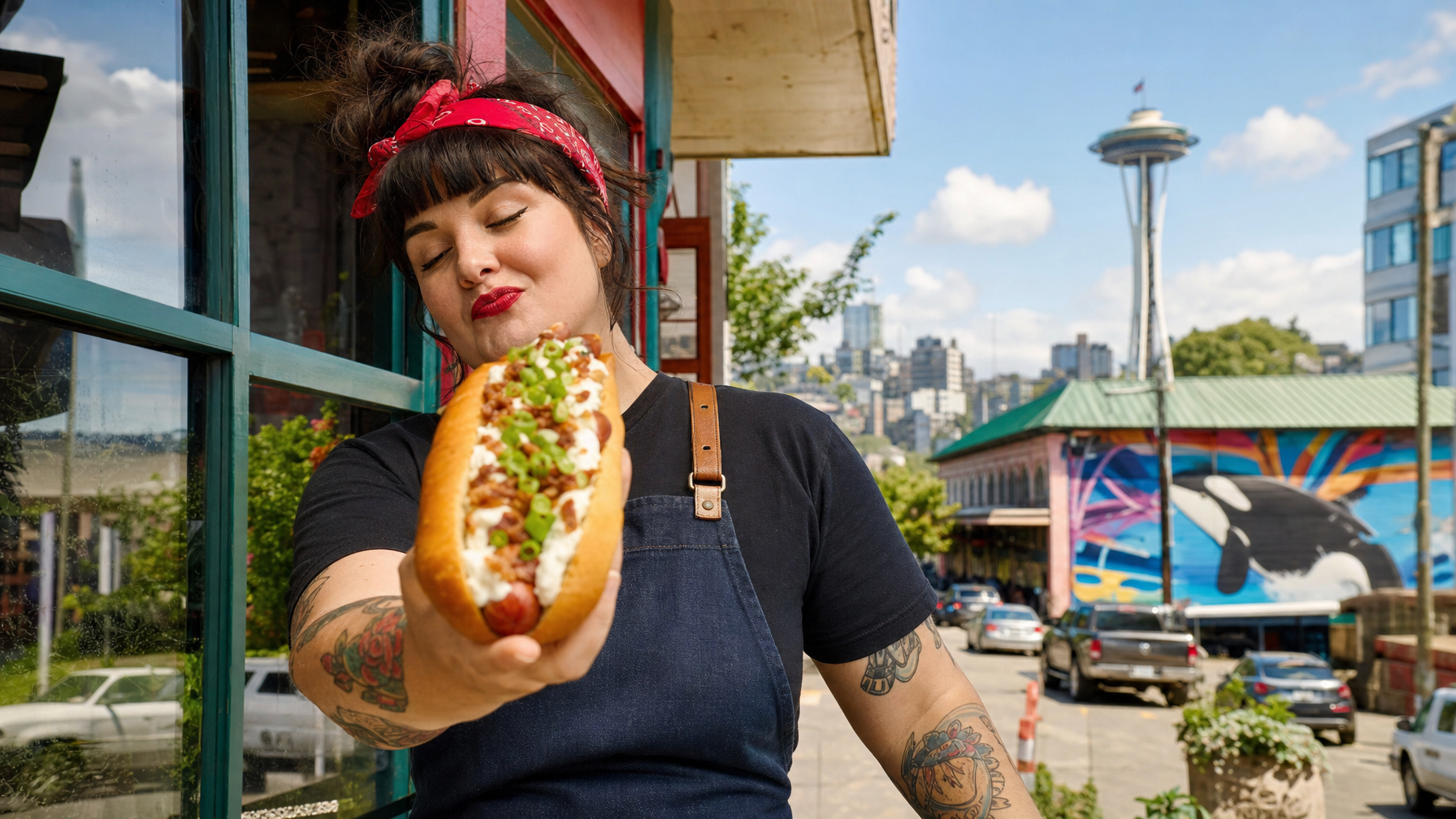
Seattle-style hot dogs are commonly associated with cream cheese and grilled onions, but individual builds can vary. That variation is the point of the test. Describe the three dogs that were actually ordered instead of announcing one universal recipe for an entire city.
Jason’s stated position is clear: ten years, 50 states, zero ketchup. That is a point of view, not a scientific law, and it should be presented as one. In this tasting, the useful question is not whether every person must agree with the no-ketchup stance. It is whether cream cheese helps the tested dog become richer, steadier, and more interesting, or whether it turns the bun into a dairy-powered transit crisis.
One tasting cannot settle Seattle’s hot-dog identity. It can settle what happened to three specific dogs on one documented day, under stated conditions. That is plenty. Cities are large. Buns are fragile. Humility is cheaper than a fake universal claim.
6. Rank the wreckage only if the notes earn a champion
Compare the three dogs directly against the criteria chosen before tasting. A single winner is justified only when the evidence shows a meaningful advantage, such as a bun that stayed intact, a better balance of cream cheese and sausage, or toppings that remained useful rather than mutinous.
If each dog succeeds differently, use category conclusions instead of forcing a gold medal onto a confused bun. For example:
- Strongest bun performance
- Best cream cheese balance
- Most satisfying sausage texture
- Most portable order
- Most memorable flavor combination
Keep caveats attached to the verdict. Note timing, serving temperature, transport, menu availability, and personal taste whenever they plausibly affected the outcome. Do not claim that one dog is universally best, and do not borrow imaginary customer reactions to make the conclusion sound bigger than the tasting actually was.
7. Name the napkin-test survivor, then stop before the bun files an appeal
Close with a concise answer to the opening question. If the reporting supports a recommendation, name the specific build that best handled the cream cheese treatment and state why, using the notes from the three-bite test. If the evidence supports category winners instead, say that plainly. A forced champion is just a listicle wearing a tiny judge’s wig.
End on the biggest documented surprise. Maybe one bun held longer than expected. Maybe an onion arrangement changed the balance. Maybe the cream cheese proved supportive rather than overwhelming. Whatever the surprise is, it must come from the tasting record, not the writer’s need for a dramatic final sentence.
For more ongoing hot-dog coverage, follow Jason’s Grub on Instagram.
Enjoyed this? There's more from Jason's Grub.
Follow on Instagram →