I Watched Nathan’s July 4 Contest With a Stopwatch and Lost Track of the Buns
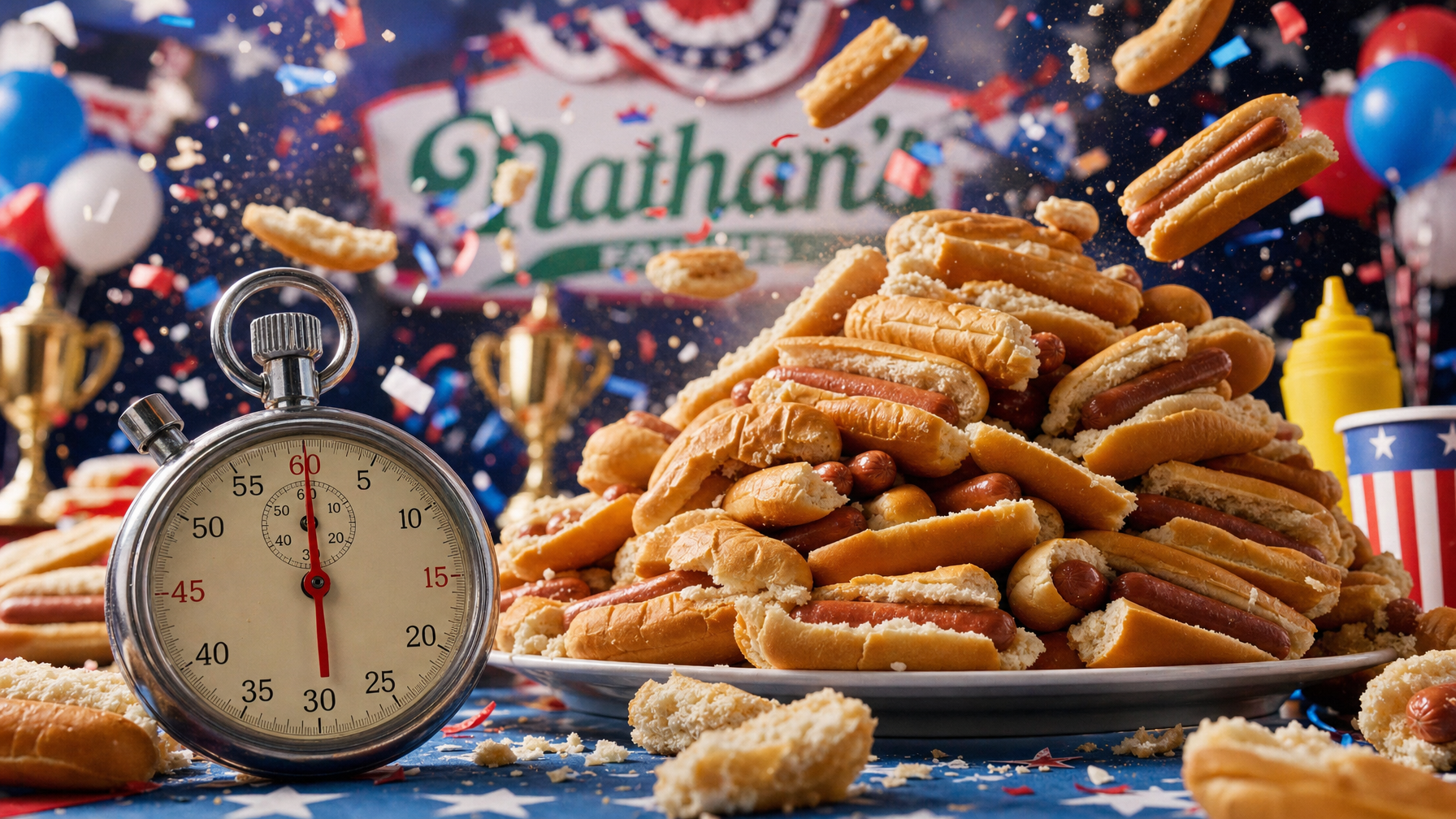
I brought a stopwatch to Nathan’s July 4 hot-dog-eating contest because I thought numbers would impose order. Cute idea. Within minutes, the screen became a blur of buns, hands, chewing, water, and increasingly suspicious attempts at mental arithmetic. The appeal is not merely counting hot dogs. It is watching speed, technique, pressure, and public spectacle crash into one another in real time. For hot-dog obsessives and food-culture gawkers, that collision is bizarrely hard to look away from. This is my personal read, shaped by ten years chasing hot dogs across 50 states with zero ketchup, not an official account of any particular contest.
Why Does Watching People Eat Hot Dogs at Speed Become Appointment Television?
Because the food is familiar enough to make the challenge instantly legible. Everybody knows what a hot dog is supposed to be: a frank in a bun, ideally with some snap, enough structural integrity to reach your mouth, and toppings that do not turn lunch into a civil engineering project.
Then the contest takes that ordinary cookout object and turns it into a timed athletic problem. The objective appears laughably simple: eat as much as possible before time expires. The execution is not simple. Pace matters. Swallowing matters. Hydration matters. Consistency matters. A tiny pause can feel enormous when the whole event runs on visible urgency.
A great cookout dog asks you to slow down long enough to notice the casing, the bun, the heat, and the topping balance. Competitive eating wants relentless efficiency. It is less about elegance than controlled chaos, which is precisely the reason people keep watching. A clean little sport would be forgettable. This is a very public argument between discipline and a hot dog bun.
My Stopwatch Had One Job. The Contest Had Other Plans
The stopwatch was never meant to produce official data. It was an editorial prop, a way to pay closer attention to rhythm instead of staring slack-jawed at the broadest possible human interpretation of lunch.
I used it to notice apparent changes in pace, pauses, hand movements, and visible shifts in approach. It could support impressions such as, “I noticed a brief reset in the middle,” or, “My stopwatch showed a late burst of activity from the camera angle I was watching.” It cannot establish an official count, prove a record, or overrule the people actually responsible for judging the contest. A kitchen timer is not a credential, no matter how sternly you squint at it.
The Viewing Beats Worth Watching
- Opening pace: The first stretch is where the event announces its speed. Everyone looks composed for about five seconds, which is a lie the contest tells before the chaos arrives.
- Mid-contest adjustment: This is where a viewer may notice changes in rhythm, handling, or hydration. Any description should stay tied to what is clearly visible in the footage.
- Late push: The clock becomes a character. Movements can look more urgent, pauses more consequential, and the whole thing less like eating than an endurance test conducted in front of a giant hot-dog-shaped mirror.
- Final scramble: The last moments are terrible for neat note-taking and excellent for television. This is usually when the stopwatch loses its dignity.
Before publishing any numbered observation, I would check it against available official footage or credible reporting for the specific year. If that verification is unavailable, it belongs in the category of personal impression, not hard fact.
The Bun Is Not a Side Character, No Matter What the Crowd Thinks
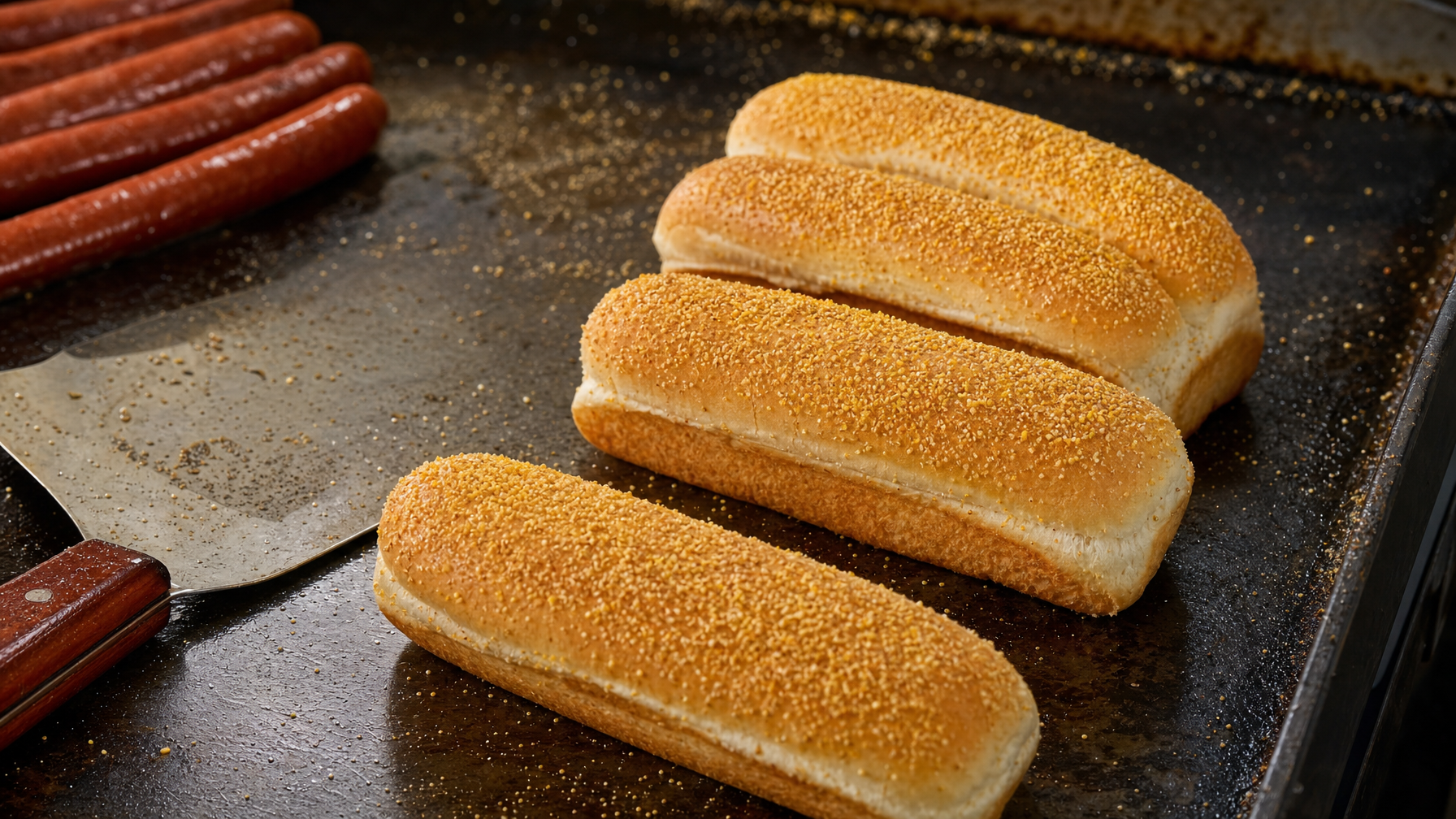
The bun is part of the challenge. Full stop. Treating it as disposable packaging is the kind of thinking that creates dry, sad hot dogs and bad opinions.
In a contest setting, the bun changes texture, pacing, and the mechanics of each bite. Viewers may see competitors handle buns differently, including approaches that appear designed to change moisture or manage volume. Those methods should be described only as broadly as the footage allows. The camera can show action. It cannot always explain intent.
For someone who cares about hot-dog construction, this is the fascinating and slightly horrifying part. At a normal meal, a bun should support the frank without collapsing, powdering your shirt, or forcing a topping landslide. Under competitive pressure, the same bun becomes a major obstacle. Anyone who has bitten into a dry bun and immediately needed a beverage understands the stakes. The contest just puts those stakes under a clock and lets them get weird.
What the Contest Reveals About America’s Favorite Frankfurter Ritual
My reading of Nathan’s July 4 contest is that it turns a familiar American food ritual into public theater. July 4 cookouts often make the hot dog feel casual, communal, and proudly unpretentious. The contest takes that same food and makes it loud, timed, ceremonial, and almost absurdly consequential.
That does not make it a scientific measure of what Americans think about hot dogs, nor am I pretending it does. It is a cultural spectacle, not audience research. But it does put a strange question on the table: does the event celebrate the hot dog, overwhelm it, or somehow pull off both?
My answer is both. The hot dog becomes less recognizable as lunch, yet more recognizable as an icon. Nobody watches this event for careful tasting notes. They watch because a humble cookout staple has been promoted to a full-blown performance, complete with pressure, ritual, and the eternal question of what exactly happens to the buns.
The No-Ketchup Observer Has Questions About the Whole Arrangement
I have spent ten years eating hot dogs across 50 states with zero ketchup. That is my stance, not a demand that you surrender your condiment bottle at the border. Still, the contest creates a deliciously irritating tension for a person who cares about the details.
Hot-dog people debate snap, casing, bun texture, spice, char, onion placement, mustard personality, heat level, and whether a topping belongs there at all. Competitive eating strips much of that away. It makes the dog a unit of speed rather than a carefully built meal.
That is not an insult to the competitors. It is simply a different discipline. A contest performance is not a flavor review, and a beautiful hot dog is not obligated to be a fast one. Craftsmanship and consumption are having two different arguments at the same table. I can admire the athletic focus while still insisting that a frank with a proper snap deserves a quieter moment.
What I Could Actually Time, and What I Absolutely Could Not
A viewer’s stopwatch has limits, even before it starts acting dramatic. Camera cuts can hide action. Angles can obscure hands or plates. Delayed coverage can make the apparent start point unreliable. And personal timing has nothing to do with official scoring.
Here is the boring-but-important line: official contest facts require verification from the event’s own materials, reliable reporting, or clearly documented footage for the particular year being discussed.
Facts That Need Verification Before They Become Claims
- The contest date and format
- Official rules and scoring procedures
- The competitor field
- Final totals and placements
- Any record claim
- Venue details
- Organizer statements
- Claims about the event’s historical significance
The useful language is plain: “I noticed,” “from my viewing angle,” and “my stopwatch showed.” Save “officially,” “record,” and “won” for information that has actually been verified. Accuracy does not kill the fun. It prevents the stopwatch from trying to run the whole circus.
I Came for the Count and Stayed for the Chaos
The stopwatch failed in the most entertaining possible way. It could mark moments, but it could not tame the spectacle. That is the thesis hiding under all those buns.
Nathan’s July 4 contest is not a normal hot-dog tasting. It is an intense, strange, highly visible test built around one of America’s most familiar foods. You can admire the focus, question the premise, recoil at the bun logistics, or watch in stunned silence. Whatever your reaction, the event gives hot-dog culture something impossible to ignore: a cookout classic pushed so far past ordinary lunch that it becomes theater.
For more hot-dog observations, follow @jasonsgrub on Instagram.
The Questions Everyone Asks After the Buns Disappear
What is Nathan’s July 4 contest?
It is a timed hot-dog-eating competition associated with Nathan’s Famous and connected to July 4 hot-dog culture. Specific details, including the date, rules, field, location, and results, should be verified for the year being discussed.
Can a personal stopwatch determine the official result?
No. A stopwatch can capture a viewer’s own timing and observations, but official results come from the event’s rules, judges, and verified reporting.
Why are the buns such a big deal?
Buns affect texture, pacing, swallowing, and the physical challenge. The contest is not simply about consuming sausages quickly. The bread is very much in the argument.
Is this about hot-dog flavor or competitive eating?
Primarily competitive eating and food spectacle, viewed through the eyes of a hot-dog obsessive. Contest performance is not the same thing as judging a hot dog as a meal.
Where can I follow Jason’s hot-dog work?
You can find Jason on Instagram at @jasonsgrub.
Enjoyed this? There's more from Jason's Grub.
Follow on Instagram →