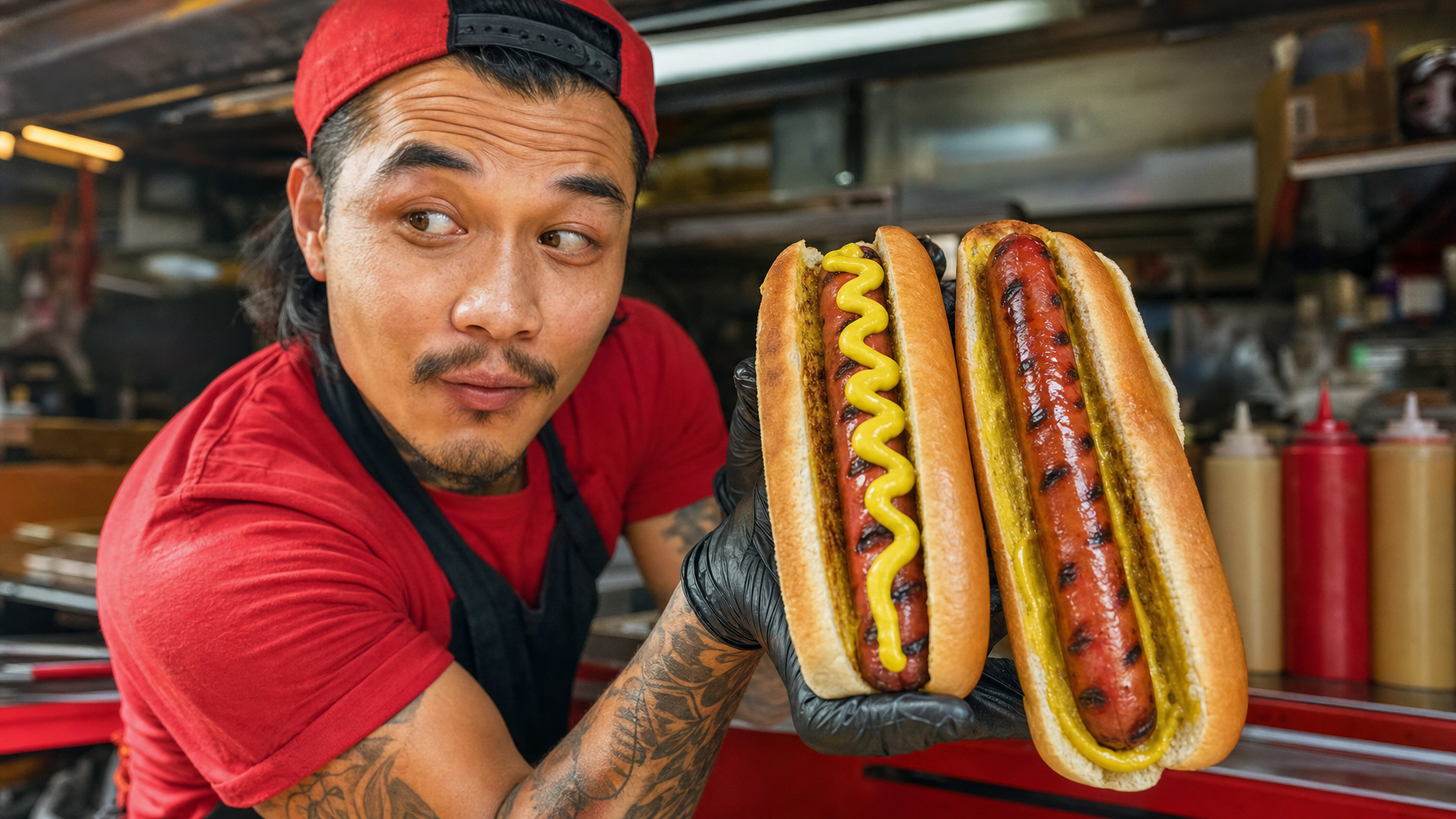
Mustard Under the Dog Accidentally Improved the Entire Lunch
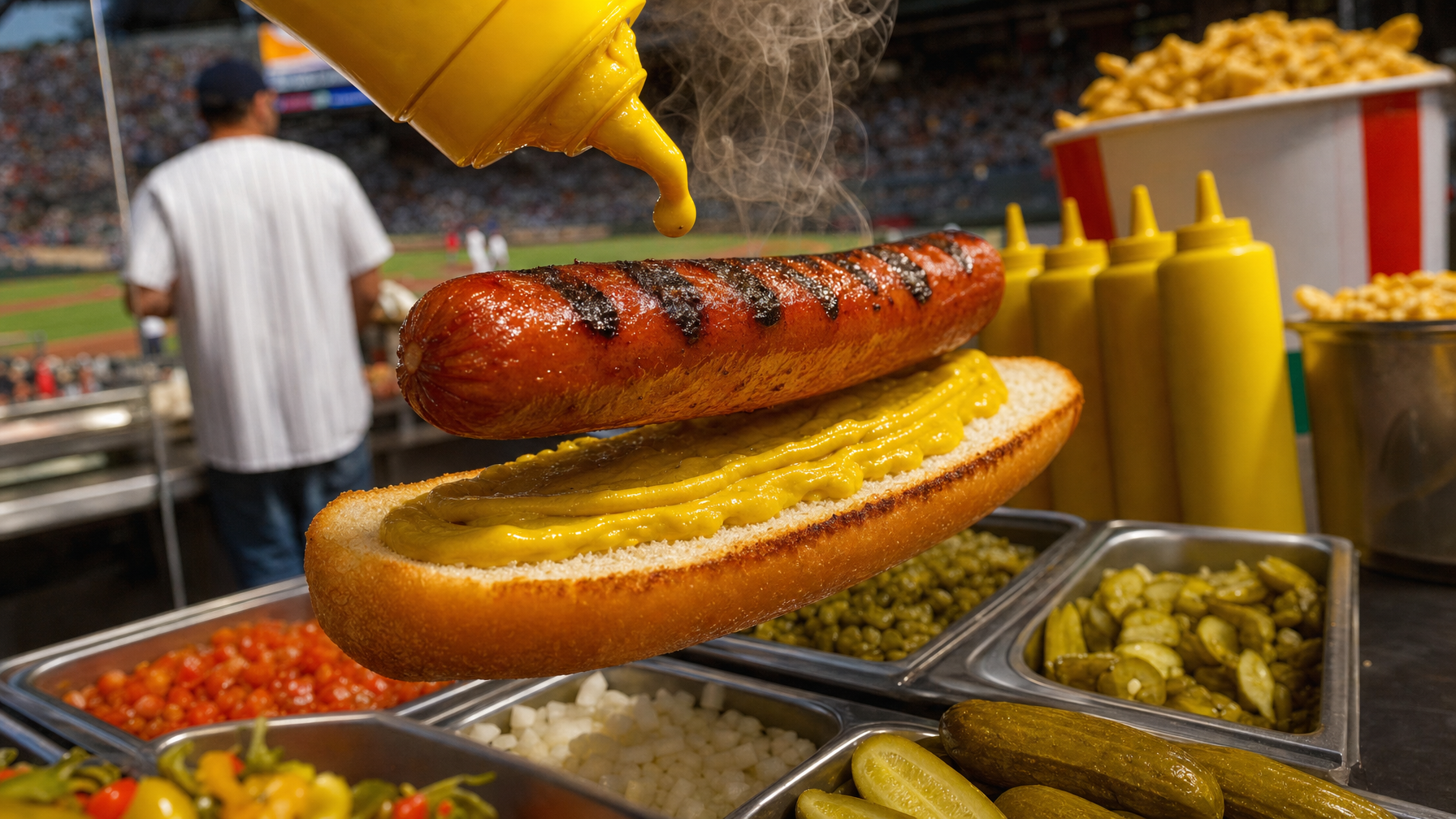
Putting mustard under the hot dog is not a topping stunt. It is a flavor and texture experiment: the mustard meets the bun first, spreads through each bite, and can change how moisture, heat, salt, and snap arrive at the same time. This is for hot dog obsessives who want to understand the build, not merely pile on condiments and hope lunch behaves.
Mustard Under the Dog: A Small Move With Big Lunch Energy
My central claim is simple: put mustard beneath the dog when you want even flavor distribution, not a decorative yellow zigzag sitting on top like it has a publicist.
After ten years and 50 states, I remain zero ketchup. That is my editorial preference, not a universal law of hot dog physics. Eat what you like. I will simply be over here arguing that mustard brings a sharper, more useful kind of chaos to this particular build.
This is a focused assembly experiment. We are looking at layering, moisture, temperature, and bite distribution. No invented taste-test scorecards. No grand declaration that one stripe of mustard has solved lunch forever. Just a small change in placement that is worth paying attention to.
The Bun Is Not a Neutral Waiting Room
A bun is not packaging. It is an ingredient with a job, and that job gets much harder when every wet thing in the house is dropped on it at once.
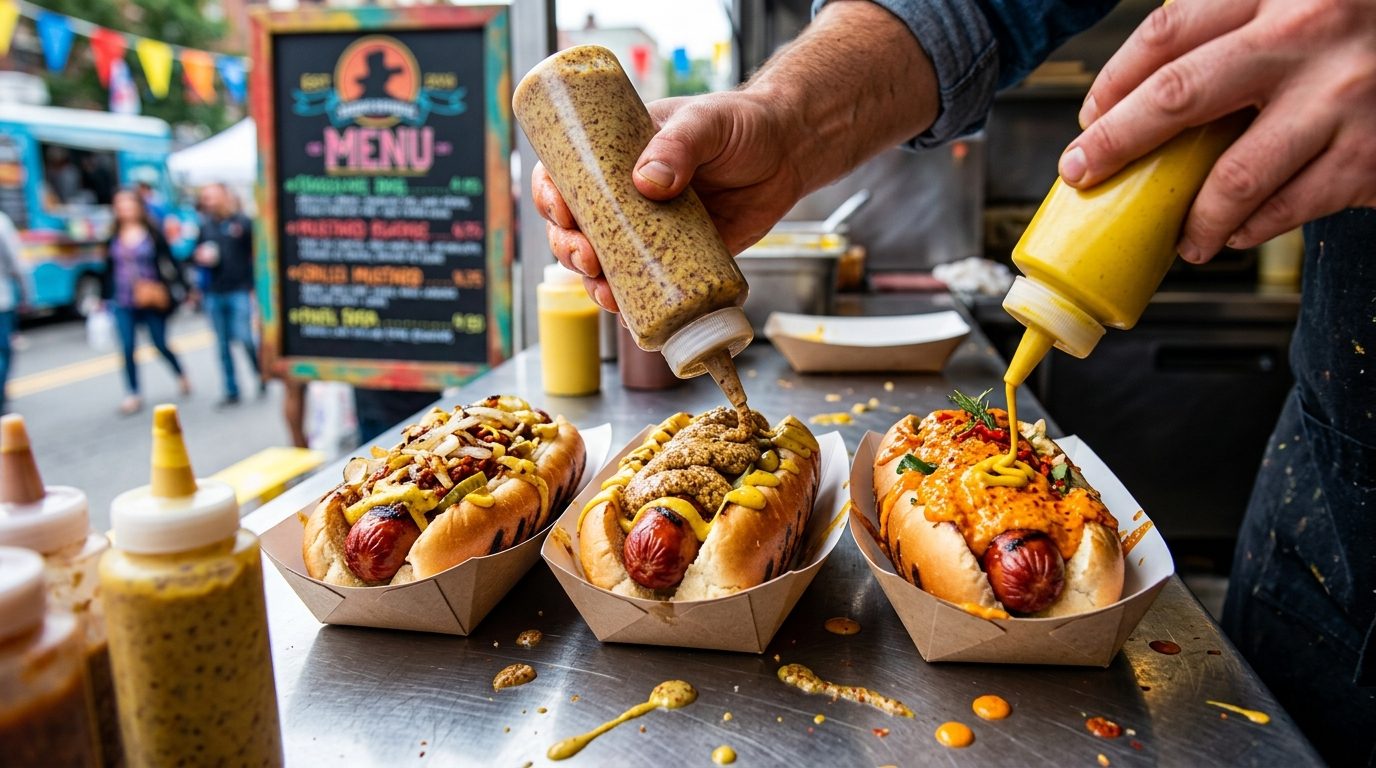
Spread a measured layer of mustard directly onto the inside of a warm bun and you create a more consistent condiment layer from first bite to last. The dog presses against it. The bun holds it in place. Instead of chasing a top stripe that may squirt sideways, you get mustard distributed across the actual eating surface.
Mustard on top can still be great. It can also remain concentrated in one lane, stick to the first couple of bites, or slide off when the dog gets compressed by normal human eating behavior. Under the dog, mustard has fewer escape routes.
Bite distribution, minus the lab coat
Bite distribution means every bite contains a deliberate balance of bun, dog, mustard, and whatever else has earned a place on the build. A good hot dog should not give you one bite of plain bun, one blast of condiment, then a final bite that resembles the aftermath of a tiny food truck collision.
Restraint still matters. Too much mustard can overpower the dog or contribute enough moisture to soften the bun more quickly than you want. The move is not “apply mustard with the confidence of a paint roller.” It is “use enough to season the whole bite.”
Heat, Moisture, and the Great Condiment Floor Plan
Mustard changes character when it meets warmth. A layer against a warm bun and a hot dog may taste more integrated than mustard added to the finished top of the build. That does not automatically make it better. It makes it different, which is precisely why it deserves a test instead of a shrug.
Then there is moisture. The bun, dog, mustard, and any wet toppings all bring water, oil, or steam to the party. A hot dog fresh from cooking can release steam. Relish carries liquid. Sauerkraut has moisture. Chili is not exactly famous for its dry, crisp boundaries. None of these ingredients are villains. They just need a seating chart.
Make a condiment floor plan
Think of the build as a condiment floor plan: mustard below, dog in the middle, toppings above according to the moisture and crunch they bring. A drier build may tolerate a slightly broader mustard layer. A build with relish, onions, or sauerkraut may need a lighter hand below so the bun does not become a sponge with ambitions.
There is no universal winner between a dry build and a wetter one. Compare them. Notice when the bun stays sturdy, when the mustard still reads clearly, and when the dog remains the main event rather than an edible support beam for toppings.
Same Dog, Three Maps: Run the Mustard Geography Test
If you want an honest comparison, keep the variables boringly identical. Use the same hot dog, bun, mustard, heat level, and toppings for each version. Change only where the mustard goes. Science is not always glamorous. Sometimes it is three lunches that look suspiciously similar.
- Under-dog build: Spread a measured amount of mustard inside the warm bun, add the hot dog, then add the same restrained toppings.
- Top-dog build: Assemble the bun and hot dog the same way, then place the same amount of mustard on top.
- Split-duty build: Put most of the mustard beneath the dog, then add a small finishing stripe on top.
What to notice before lunch memory gets theatrical
- Does the first bite taste balanced, or does one ingredient arrive yelling?
- Does the middle bite keep the same rhythm?
- Does the final bite still have mustard, dog, and a bun with some structural dignity?
- Has the bun stayed comfortable to eat?
- Is the mustard intensity right for you?
- Does the dog still taste like the star?
Take notes immediately. One hungry lunch has a flair for turning into an unreliable courtroom witness by dinner. Do not assign a winner until you have actually run the comparison under conditions you can describe.
What Belongs on Top When Mustard Moves Downstairs?
Once mustard moves downstairs, toppings need to justify their rent. Height alone is not a culinary achievement. A hot dog is not improved merely because it now requires a permit.
Crunch gets a strong audition
Finely chopped onion can provide crunch and a sharper fresh note against the softer mustard-and-bun layer. Its usefulness is clear: it changes texture without adding a tidal wave of liquid. Keep the pieces small enough that they stay on the dog instead of rolling into your lap with great confidence.
Wet toppings require manners
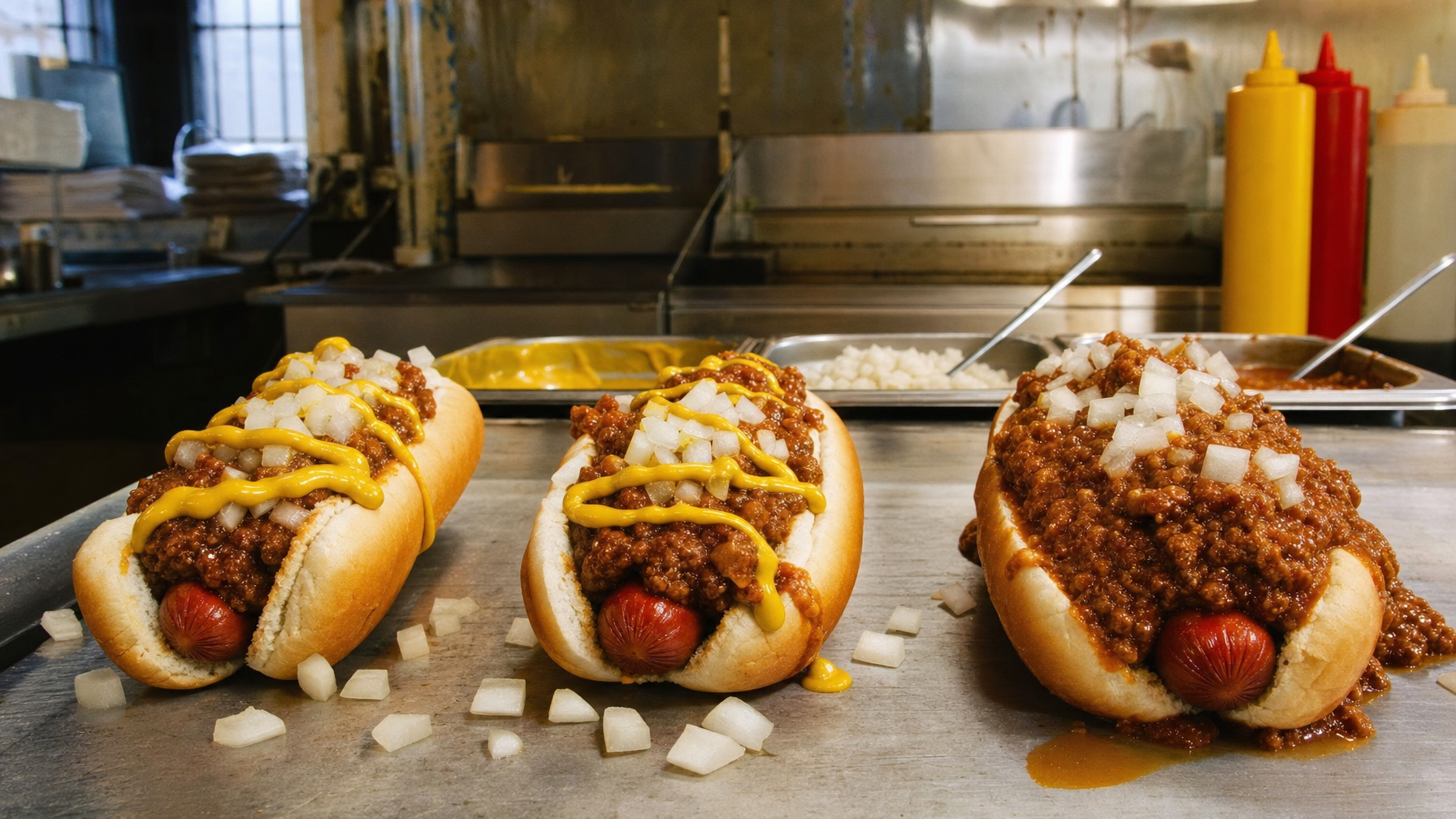
Relish, sauerkraut, and chili can each make a delicious case for themselves, but they alter the moisture balance. If you use one, consider reducing the mustard beneath the dog. The goal is not to fear moisture. It is to account for it before the bun becomes overwhelmed.
A topping should add something specific: texture, acidity, heat, or sweetness. If it contributes none of those and mainly makes the dog taller, it may be performing architecture rather than flavor.
No Ketchup Argument, No Lunch War
I am still a no-ketchup person. Ten years, 50 states, zero ketchup. For this build, mustard brings acidity and sharpness without pushing the entire bite toward sweetness. That is a strong argument for mustard beneath the dog, especially when you want its flavor to show up in every bite.
It is not a claim that ketchup is objectively wrong on every hot dog in every backyard, ballpark, kitchen, or late-night moment of questionable judgment. It is my position, applied to this specific layering question. Your bottle can make its own choices. My mustard is taking the lower level.
Debate the placement. Debate the amount. Debate whether a finishing stripe is elegant or excessive. Just do not treat condiment preference like a moral emergency. Lunch is allowed to be serious without becoming a tribunal.
Verdict: Judge the Bite, Not the Condiment Olympics
Mustard under the dog is worth testing when even flavor and controlled moisture matter more to you than visual topping drama. It puts mustard where the bun can hold it and where the dog can meet it throughout the bite.
Start with this order:
- Warm the bun.
- Spread a measured layer of mustard inside it.
- Add the hot dog.
- Finish with restrained toppings chosen for their moisture and texture.
Whether this becomes your preferred build should come from your own comparison, not my loud mustard evangelism. If a test produces a clear favorite, report the conditions: the bun, the amount of mustard, the toppings, the heat, and what happened from first bite through the final bite. That is useful hot dog evidence. Everything else is condiment theater.
Follow @jasonsgrub on Instagram for more hot dog experiments, place finds, recipes, and hot dog culture coverage.
FAQ: Four Questions From People Who Take Lunch Personally
Does mustard belong under every hot dog?
No. It is a useful build choice when even distribution and a less slippery topping layer are the goal. The bun and the rest of the toppings still determine whether it works.
Will mustard under the dog make the bun soggy?
It can if the layer is heavy or combined with several wet toppings. Use a measured amount and pay attention to how much moisture the full build introduces.
Should mustard go under and on top?
It can, but keep the finishing stripe small. The point is to improve bite consistency, not bury the hot dog in yellow.
Is this an argument against ketchup?
It is my no-ketchup point of view applied to this build, not a claim that one condiment choice settles every hot dog debate.
Enjoyed this? There's more from Jason's Grub.
Follow on Instagram →