The Relish Is Not Decoration: Three Ways to Build a Chicago-Style Crunch Layer
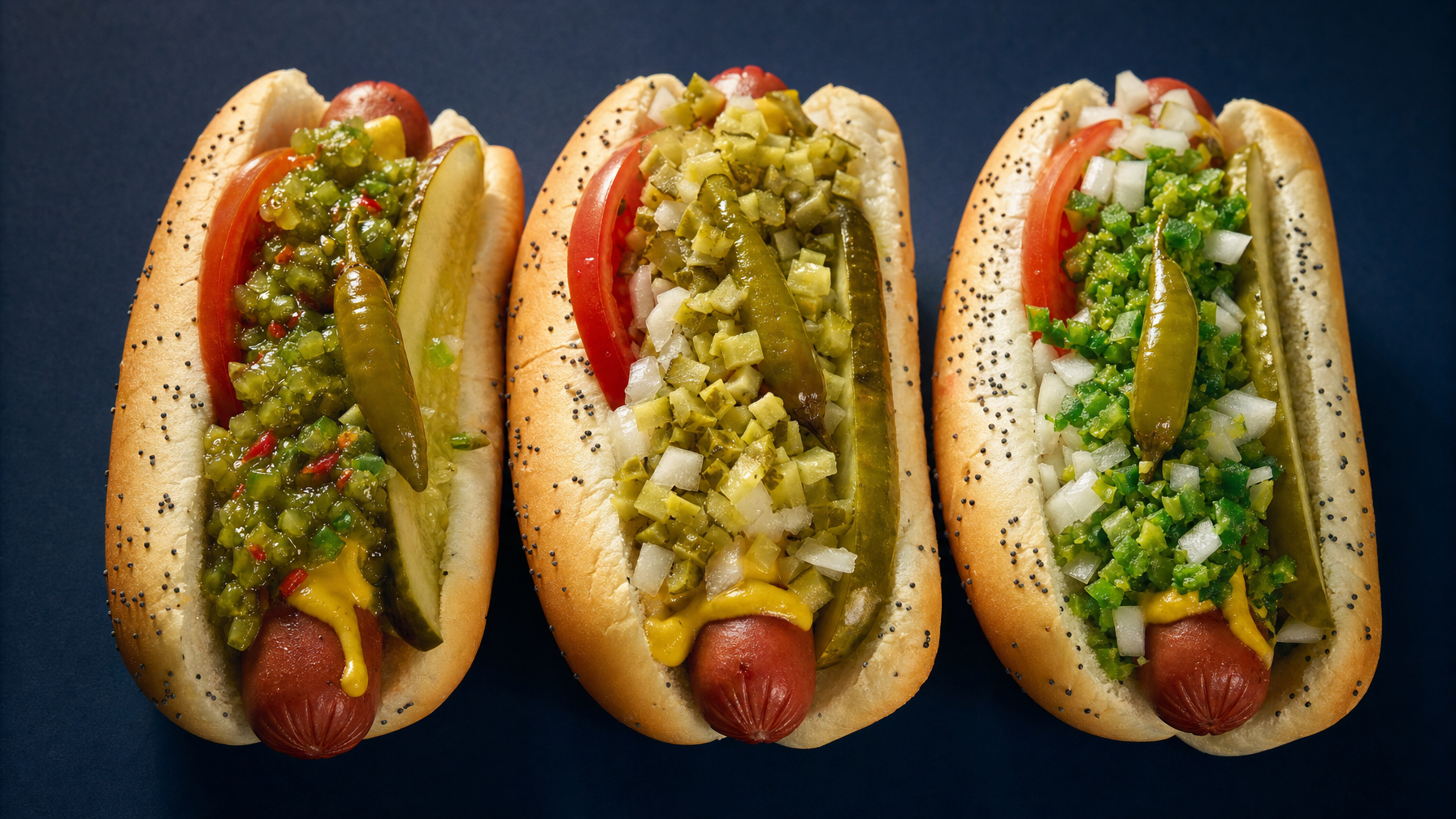
For Chicago-style hot-dog devotees, curious cooks, and anyone who knows a soft bun and a sausage need structural support, relish is not decoration. It brings sweetness, acidity, moisture, and chopped contrast—the little green commotion that makes a bite feel brighter and busier, not merely greener.
After ten years and 50 states of hot-dog research, with zero ketchup in the record, Jason’s position is uncomplicated: toppings are a build, not decorative confetti. Here, crunch layer means the chopped, textured topping zone nestled around the dog and working with the rest of the bite. Pick your personality: classic neon-sweet, sharper and pickle-forward, or fresh with a little more snap in its collar.
1. Classic Neon Relish Should Get Its Own Seat at the Table
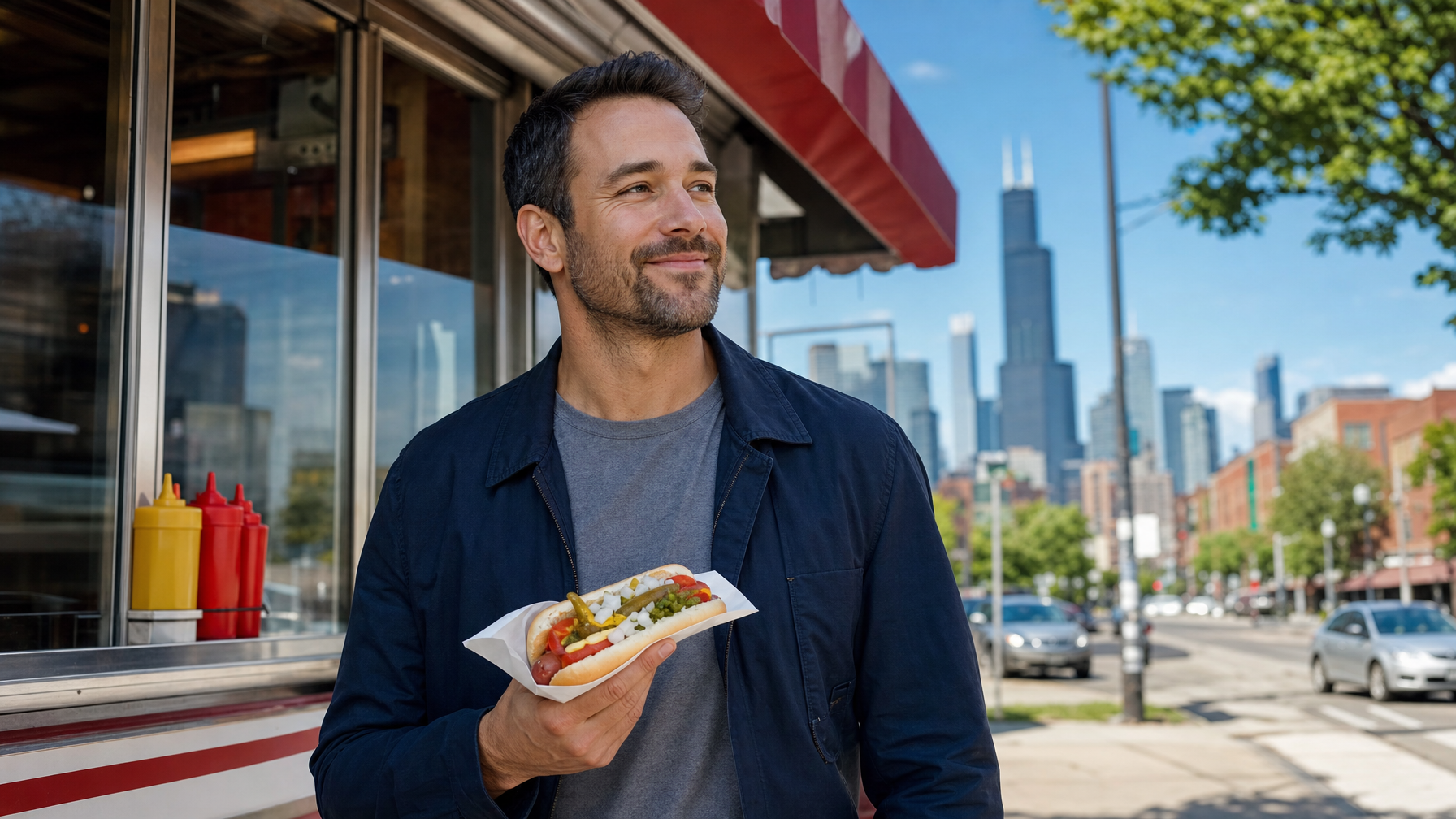
The familiar Chicago-style move starts with sweet pickle relish, preferably visibly chopped rather than beaten into a glossy, sugary smear. That bright-green stripe has a real assignment: sweetness softens the savory edges of the sausage, pickle acidity cuts through richness, and the small pickle pieces give the soft bun something to argue with.
Start with the hot dog in a warm bun. Lay the relish in a defined stripe along one side of the dog, then add the remaining toppings around it rather than burying it under a vegetable avalanche. The point is not for every topping to occupy its own zip code; the point is for the relish to remain present through the final bite.
Give it a quick taste-check before serving. If it tastes like candy, use less of it or choose a relish with a firmer pickle presence. If it slides off in one gelatinous slab, drain away excess liquid and look for a chunkier chop. Do not respond with a mysterious squeeze of sauce. The dog has suffered enough.
2. Let Dill Pickles Grab the Microphone
For cooks who want tang and actual crunch over the sweet-relished classic, use finely chopped dill pickles as the main event. This is Chicago-inspired territory, not a demand to erase the familiar sweet note entirely. A small amount of sweet relish or finely chopped sweet pickle can keep the profile from wandering off and becoming a deli sandwich wearing a hot-dog costume.
The cut matters. Chop the pickle pieces small enough that they stay with the bite, but large enough that they still register as crisp. Pickle paste is wet sadness. Big pickle cubes, meanwhile, have a habit of escaping at the first sign of gravity.
There is a tradeoff: sharper pickle means more acidity, and too much acidity can bully the sausage into silence. Taste the chopped pickle mixture on its own, then taste it on the assembled dog before adding more brine. The target is a clear pickle voice, not a hostile takeover.
3. Make a Fresh Crunch Layer That Refuses to Slouch
This version is for people who want the Chicago-style spirit—pickle, brightness, chopped contrast—with a fresher, more aggressively crisp bite. Build it from finely chopped crunchy vegetables and pickle elements. Crisp onion, cucumber, celery, or bell pepper can play supporting roles if they are used thoughtfully; pickle should still provide the recognizable tang.
Keep every cut compact and reasonably consistent. Huge chunks turn the first bite into a topping landslide. Tiny, wet fragments disappear into mush and contribute nothing but damp paperwork. You want pieces that can sit in a narrow stripe, cling to the dog, and crackle a little when teeth arrive.
Moisture control is the whole game. Drain watery ingredients before assembly, and add acidic seasoning gradually. A good fresh crunch layer brightens the bun; it does not soak the bun until it develops nautical ambitions. This is the most texture-forward option of the three, with less reliance on one jar and more emphasis on snap.
4. Run the Crunch Test Before You Take a Victory Lap
Before that first bite, ask three rude but useful questions:
- Does the relish stay where it was placed? If it flees down the bun like it has outstanding warrants, drain it better, chop it more evenly, or use a smaller portion.
- Can you taste both sausage and pickle? A proper crunch layer supports the dog. It should not turn every bite into a brine monologue.
- Is there a real texture contrast? The bun should be soft, the sausage juicy, and the chopped topping distinct. If every component feels soft and wet, do not solve the problem by piling on more toppings. Fix the texture you already invited.
5. Assemble It Without Triggering a Topping Landslide
Use a simple order that protects the chopped layer:
- Warm the bun.
- Set in the hot dog.
- Add the relish or chosen crunch layer in a visible stripe.
- Arrange the remaining Chicago-style toppings so they frame the relish instead of flattening it into oblivion.
- Serve immediately.
That last step is less glamorous than it sounds, but it matters. Relish and fresh chopped toppings are at their best before their moisture migrates into the bun and turns a lively build into a damp biography.
There is no need to pretend one version is the only righteous version. The neon-sweet route delivers the classic visual and flavor cue. The dill-forward route gives pickle lovers more bite. The fresh version puts texture first. Each is a deliberate choice, which is rather more interesting than treating relish as green table confetti.
6. No Ketchup, No Apology, Plenty of Crunch
Relish is not garnish. It is the hot dog’s bright, chopped counterpunch: sweet or sharp, crisp or classic, but always doing actual work. Ketchup is not required to make the bite complete; a properly built crunch layer already has a job, a personality, and considerably better timing.
Choose your crunch character: neon-sweet classic, sharp and pickle-heavy, or fresh and aggressively crisp. For more of Jason’s hot-dog finds, recipes, and food-culture opinions, follow @jasonsgrub on Instagram.
Enjoyed this? There's more from Jason's Grub.
Follow on Instagram →