Relish, Onion, Mustard, Repeat: A Chicago-Style Dog at Home Without the Ketchup Apology Tour
Yes, you can build a Chicago-style hot dog at home without turning the toppings into a slippery vegetable referendum. For hot dog enthusiasts who care about texture and clean, recognizable flavors, the trick is simple: layer the relish, onion, mustard, tomato, pickle and peppers in a deliberate order, use restrained portions, and keep ketchup off the premises. Jason's no-ketchup stance gives the recipe its opinionated backbone, while proportion keeps every topping from shouting over the dog.
Let the Bun Do Its Job Without Becoming a Tiny Sponge
The target is not a bun crammed with produce until it resembles an anxious farmers market. It is a Chicago-style build where every topping remains visible, every bite has contrast, and the whole thing has a fighting chance of reaching your mouth in one piece.
Use a steamed or gently warmed poppy seed bun when you can find one. Warm is good. Floppy and soaking wet is not. The bun needs enough softness to cradle the dog and enough structure to avoid folding like it just received bad news.
Put the hot dog in the bun before anything else. This sounds almost insultingly obvious until you have tried arranging tomato, pickle, relish, and peppers on a bare bun like a countertop puzzle. The dog is the anchor. Start there.
Mustard First, Chaos Never
Order matters because wet toppings do not magically become well behaved just because everyone is hungry. Build with intention, not the desperate confidence of someone trying to close an overstuffed suitcase.
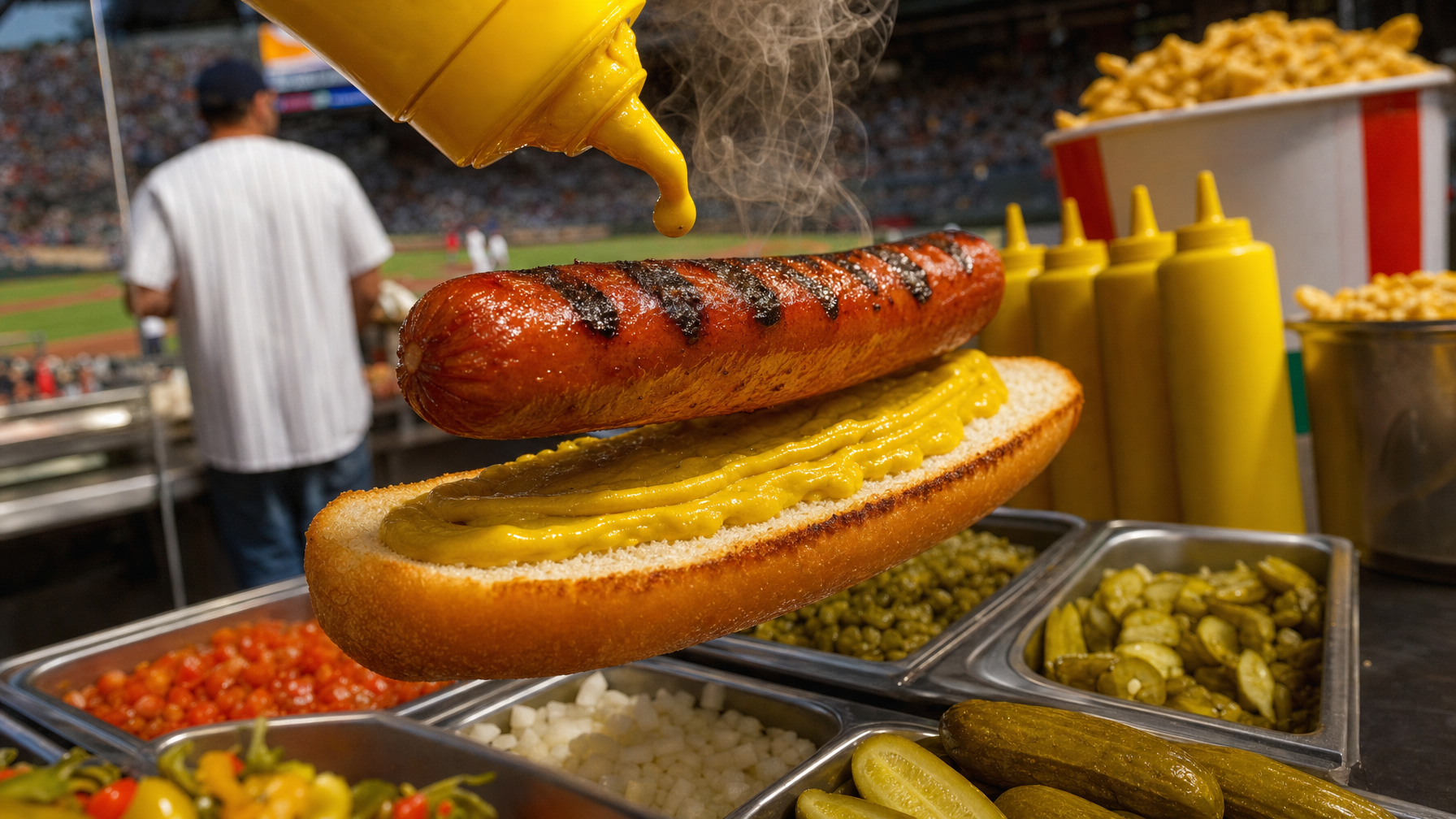
- Start with mustard. Apply it to the hot dog, where it can cling instead of slipping down into the bun's basement.
- Add sweet relish in a modest stripe. It should bring sweetness, color, and crunch. It is not a second filling, and it does not need to arrive as a fluorescent hillock.
- Scatter chopped onion. Place it so its sharpness stays present without occupying every square inch of every bite.
- Set tomato pieces along one side. Let the bun support them. Balancing tomato on top is a fine way to feed the floor.
- Tuck in the pickle spear. Give it a stable side of the bun rather than burying it beneath relish and hoping for the best.
- Add sport peppers to taste. Their heat and tang should be distinct, not lost in a wet pileup.
- Finish with a light dusting of celery salt. Use it as an accent, not a snowstorm.
Ketchup is intentionally absent here. That is both a style choice for this build and Jason's established no-ketchup position. Nobody is being hauled before a condiment tribunal. This is simply the dog Jason wants to eat.
Chicago Is Not Vegetable Baggage
Generous is not the same thing as overloaded. A good Chicago-style dog has contrast: savory hot dog, tangy mustard, sweet relish, sharp onion, fresh tomato, briny pickle, bright pepper, and celery salt. If everything lands as one cold, wet, sweet-tangy blur, the toppings have staged a coup.
Keep the hot dog recognizable as the center of the meal. Toppings should frame its flavor, not conceal it under a garden that requires excavation equipment.
- Keep mustard visible rather than smearing it into the relish.
- Make sure tomato still looks and tastes like tomato.
- Leave the pickle spear and peppers identifiable, with their own space and texture.
- Do not crowd juicy tomato and pickle directly into an excessive concentration of relish.
- Use enough topping for contrast, then stop before the first bite requires a structural engineer.
No fixed quantities are listed here because proportion is worth testing, not pretending. Bun size, dog size, tomato size, and personal tolerance for sport peppers all change the equation. Start restrained and adjust with purpose.
Each Bite Needs a Plot, Not a Topping Pile
A Chicago-style dog is a sequence, not a salad with a bun. The placement creates different bite moments. One bite catches mustard and onion. Another finds pickle and tomato. A pepper announces itself when it should, instead of vanishing beneath a mountain of relish.
Make one test dog before building a whole batch. Take a bite and diagnose the situation honestly.
- If the dog tastes too sweet, ease back on the relish.
- If the onion bullies every other flavor, use less next time.
- If the peppers erase the rest of the build, reduce them before changing anything else.
- If toppings slide off immediately, improve their placement or reduce wet toppings. Do not try to solve a moisture problem by adding more bun.
Change one thing at a time for the second dog. That is not fussy behavior. That is how you learn whether the culprit was too much relish, a reckless tomato placement, or the pepper situation getting out of hand.
Jason's Brief, Firm Ketchup Soapbox
Jason's position is simple: no ketchup. It comes from his stated ten years of hot dog research across 50 states, with zero ketchup in the equation. That is an editorial stance, not a universal law carved into a bun steamer.
Want more moisture or sweetness? Nudge the mustard or relish within the build. That preserves the flavors already invited to lunch instead of introducing a surprise sauce that changes the whole conversation.
Serve It Before the Bun Starts Writing Its Memoir
Assemble immediately before serving. The longer the dog sits, the more moisture migrates, the bun softens, and your tidy plan begins to look like a cautionary tale.
Use a plate or a paper wrapper with room for a stray onion, an ambitious pepper, or a tomato piece making a break for freedom. Structural optimism is not a serving strategy.
Keep a side simple if you add one. The dog already has plenty to say. A basic crunchy or salty companion can work without trying to outshout the relish, pickle, tomato, and peppers.
Recipe Card: The Build Before the Bite
Chicago-Style Hot Dog, Built for Actual Eating
Yield: Assemble as many dogs as you plan to serve.
Ingredients:
- Hot dogs
- Poppy seed buns, steamed or gently warmed if available
- Yellow mustard
- Sweet relish
- Chopped onion
- Tomato pieces
- Pickle spears
- Sport peppers
- Celery salt
Method:
- Warm the buns gently without making them soggy.
- Cook the hot dogs by your preferred method, then place each one in a bun.
- Apply mustard directly to the hot dog.
- Add a controlled stripe of sweet relish and a scatter of chopped onion.
- Place tomato pieces along one supported side of the dog.
- Tuck in a pickle spear and add sport peppers to taste.
- Finish with a light seasoning of celery salt.
- Serve immediately. Keep ketchup out of this particular build.
Build check: Before serving, look for separate colors and textures. Mustard should be visible. Tomato should remain tomato. The pickle and peppers should not be entombed in relish.
Photo Brief: Let the Toppings Testify
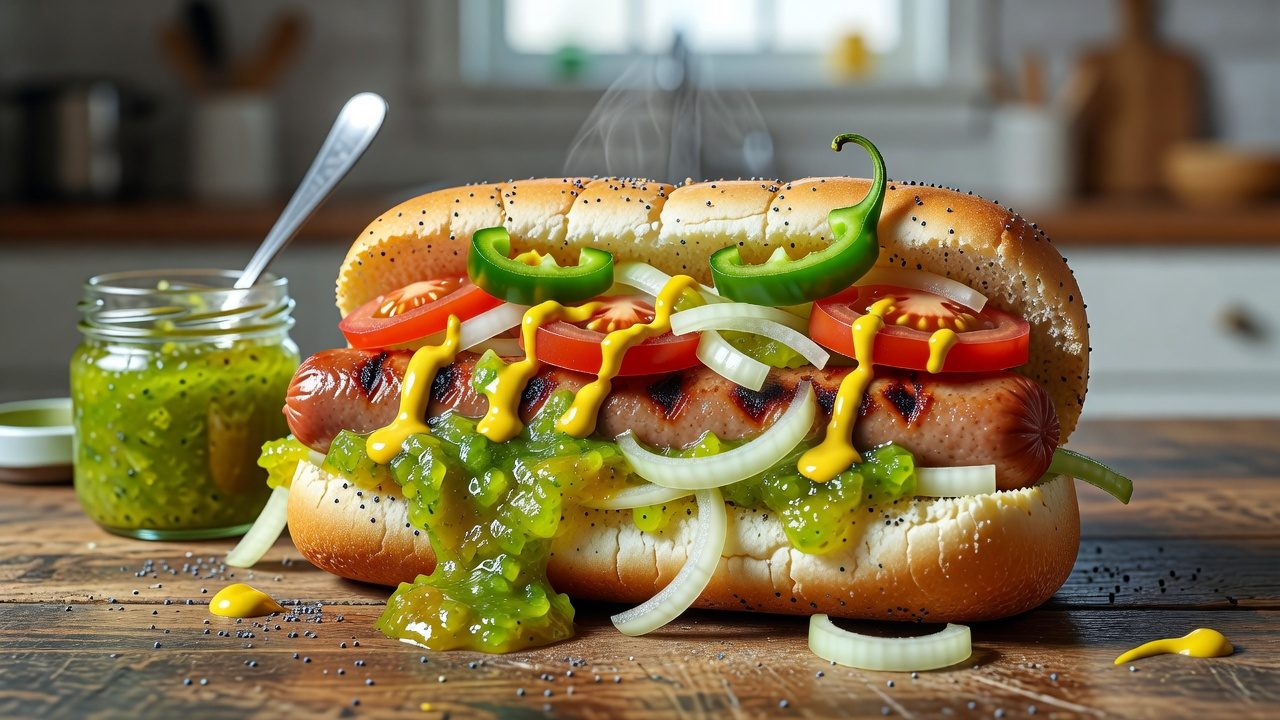
Show an assembled dog in a poppy seed bun with mustard, relish, chopped onion, tomato, pickle spear, and sport peppers visibly distinct. The image should make the sequence and proportion legible at a glance.
Skip the generic bare hot dog, the anonymous overloaded topping mound, and any bun that does not match the stated build. Also skip joke text overlays. The dog has enough going on without a sign yelling at it.
One Last Bite Before the Relish Gets Ambitious
Build with intention, keep portions disciplined, and let each topping remain itself. A Chicago-style dog earns its drama from contrast, not from collapsing into a cold, wet heap halfway to your mouth.
For more hot dog places, recipes, products, and food-culture finds, follow @jasonsgrub on Instagram.
FAQ: Questions Asked While Someone Is Holding Ketchup
Does a Chicago-style hot dog traditionally include ketchup?
This version leaves ketchup out, in line with Jason's stated no-ketchup position. It is the intended choice for this recipe, not a claim that every hot dog eater must agree.
What should go on the hot dog first?
Start with mustard, then add relish and onion. Place tomato, pickle, and peppers in supported positions afterward. The point is separation and stability, not ceremonial topping choreography.
How do I stop the toppings from sliding off?
Use restrained portions, warm the bun without soaking it, and place wetter ingredients where the bun can support them. Assemble just before serving. If the pile still slides, reduce wet toppings rather than adding more bread.
Can I change the amount of relish or peppers?
Yes. Adjust sweetness and heat to your taste, but change one topping at a time. That makes it easier to keep the dog balanced instead of accidentally building a relish-heavy vegetable pile.
What kind of bun should I use?
A gently warmed poppy seed bun fits the intended Chicago-style presentation, provided it remains sturdy enough to hold the toppings without collapsing.
Enjoyed this? There's more from Jason's Grub.
Follow on Instagram →