The Cornmeal Jacket: A Crunchy Regional Detour for People Who Distrust Plain Buns
For hot-dog fans who find a plain bun emotionally underdressed, a cornmeal jacket adds a crisp, savory shell without turning the dog into a carnival stunt. This is for people who want a specific, hands-on build—not another beige list of buns. After ten years, 50 states, and zero ketchup, Jason’s position is uncomplicated: plain buns deserve scrutiny, and ketchup does not get a backstage pass.
1. Name the suspect before it goes undercover
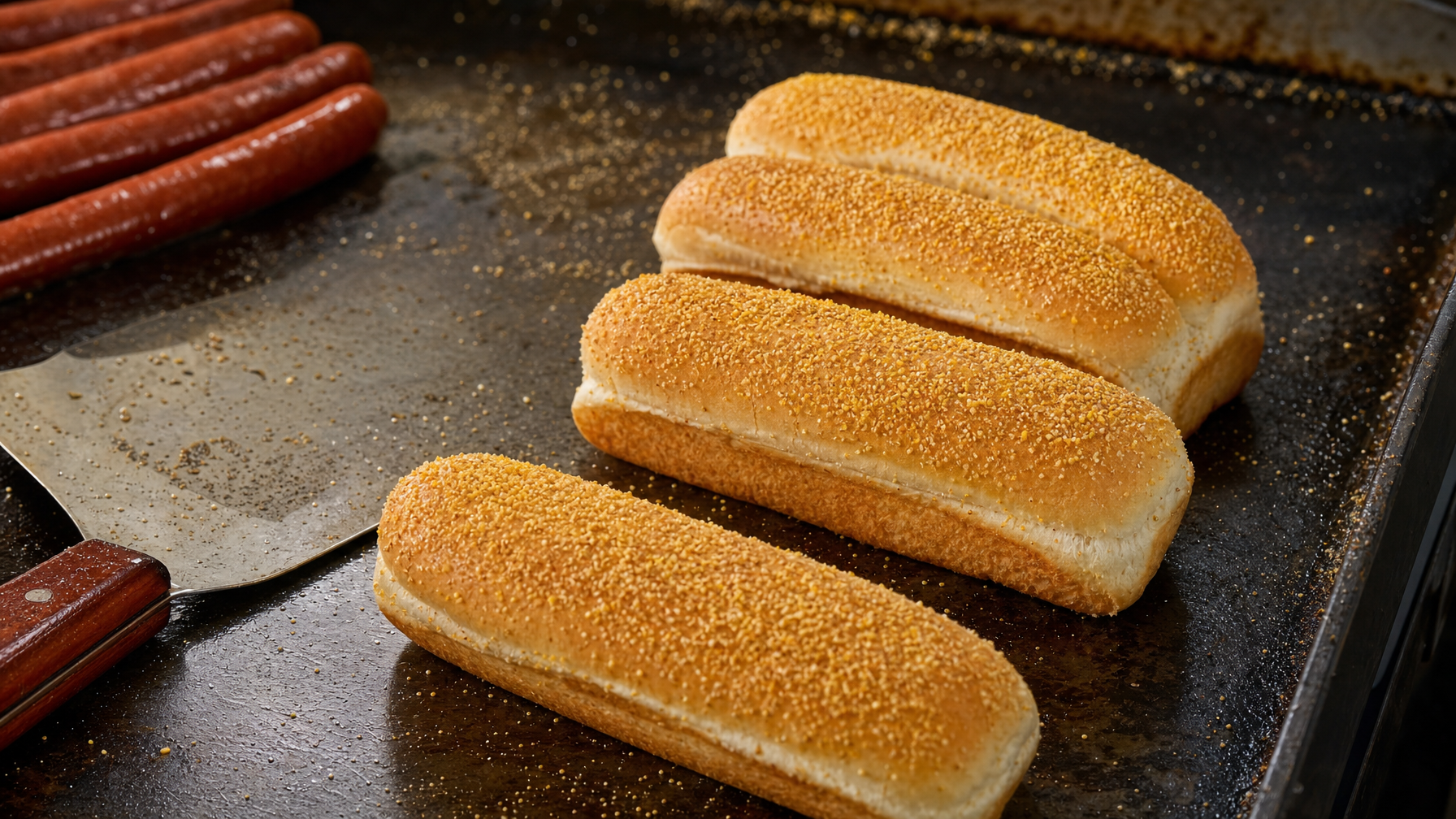
A cornmeal jacket is a thin, crunchy cornmeal coating crisped onto the outside of a hot-dog bun. The goal is contrast: a toasted, grainy exterior around a still-soft interior that can actually hold a hot dog.
Call it a regional detour, not a proclamation from the Department of Bun History. This is a technique-focused build, not a claim that every region, vendor, or hot-dog ancestor makes the same thing in the same way. The useful question is simpler: can a little cornmeal make a bun more interesting without making it impossible to eat? Yes—if you keep your hands steady and your ambitions out of the gravel-pit zone.
2. Pick a bun with enough backbone for the cornmeal tuxedo
Choose a bun with a reasonably sturdy outside, enough side surface to accept a coating, and a soft center that leaves room for the dog and a restrained amount of toppings. A bun that is already splitting, stale, or aggressively airy is not begging for a jacket; it is filing for workers’ compensation.
- Standard side-split bun: A sensible starting point. It offers broad outer sides and opens easily after crisping.
- Top-split bun: Can work well when its sides are tall and intact, though it offers less exterior real estate.
- Soft bakery-style bun: Pleasant inside, but test it first. Very delicate versions can tear when coated or turned in a pan.
- Thicker, sturdier bun: Better equipped for a heavier coating, though it may compete with a smaller or milder hot dog.
Do the squeeze-and-tear test
- Gently squeeze the unopened bun. It should yield without crumbling.
- Open it along its natural split. If the hinge tears immediately, choose another bun or plan a lighter coating.
- Picture the dog and toppings inside. If the bun is already crowded by its own bread, do not add a thick cornmeal shell and expect diplomacy.
The tradeoff is brutally fair: more coating means more crunch, but it also means more risk of a hard shell overwhelming a delicate bun. Start thin. You can always become more feral on round two.
3. Build the jacket instead of dumping cornmeal in a bowl and praying
For one bun, assemble a small coating station:
- 1 tablespoon cornmeal: Medium or fine grind is easier to keep attached than very coarse cornmeal.
- 1 teaspoon adhesive: Mayonnaise, softened butter, or a thin smear of mustard all work. Mayonnaise is especially handy for an even, crispable layer; mustard brings more tang.
- Seasoning: A small pinch of salt and black pepper is enough to begin. Add a pinch of garlic powder, smoked paprika, or chile powder only if it suits the fillings you plan to use.
- Cooking fat: A light coating of butter or neutral oil for the skillet, if needed.
Mix the cornmeal and seasoning in a shallow dish. The target is a thin, even crust that clings to the bun—not a loose pile of pebbles awaiting an insurance claim. If using butter as the adhesive, it should be soft enough to spread, not melted into a runaway puddle.
Season with manners
Keep the first version savory and quiet: salt, pepper, perhaps garlic powder. For heat, add chile powder or cayenne sparingly. For a smokier edge, use smoked paprika. These are variations, not sacred regional commandments. The hot dog should still get to introduce itself.
4. Coat the bun where crunch can actually survive
- Keep the bun mostly closed and lay it on its side.
- Brush or spread a very thin layer of your adhesive over the outer surfaces you want to crisp.
- Press those coated surfaces gently into the seasoned cornmeal mixture.
- Pat lightly so the cornmeal adheres, then shake away loose excess.
Leave the interior cavity and the hinge area mostly clear. The bun needs to open, cradle the dog, and avoid raining cornmeal into your lap with every bite. Coating the outside sides and, if you like, a little of the bottom is plenty.
Your visual checkpoint: the jacket should look continuous and attached, with a light sandy texture. No thick clumps. No shiny wet patches. No bun that appears to have been rolled through a driveway.
Failure modes, plainly stated: too much coating creates a hard shell; too little creates an idea that tastes like a rumor. A thin layer wins.
5. Crisp it gently—this is a bun, not a deep-sea mining operation
Heat the hot dog and crisp the bun as separate jobs. This gives you control over both instead of sacrificing the bun while waiting for the dog, or serving a perfect crust around a lukewarm tube of regret.
Crisp the coated bun
- Warm a skillet over medium to medium-low heat. Add a small amount of butter or neutral oil only if the pan needs it.
- Place the coated bun in the skillet, starting with one coated side down.
- Cook until the cornmeal looks toasted and feels crisp, then turn carefully to brown the other coated side.
- Remove the bun while its interior is still soft and pliable enough to open.
Pale cornmeal means it likely needs more time. Dark spots or a bitter smell mean the heat is too high or the bun has stayed put too long. If the bun splits apart, do not give it a motivational speech: use a lower heat next time, apply less coating, or start with a sturdier bun.
Heat the hot dog on its own terms
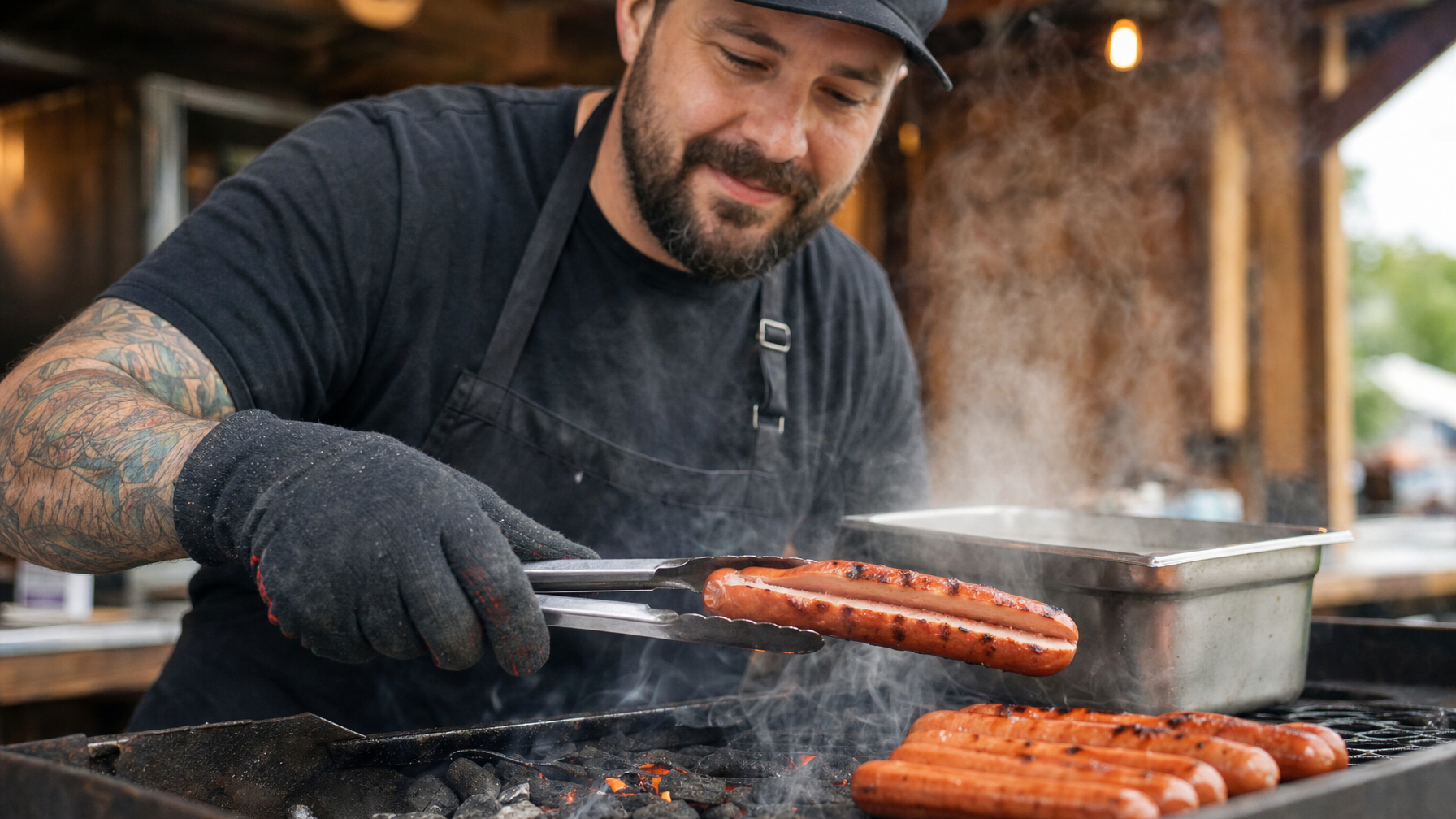
Prepare the hot dog according to its package directions. Use clean utensils and surfaces, and avoid placing cooked food back onto a plate or board that held uncooked ingredients. Once heated, move it directly into the freshly crisped bun.
6. Choose fillings that let the jacket make its case
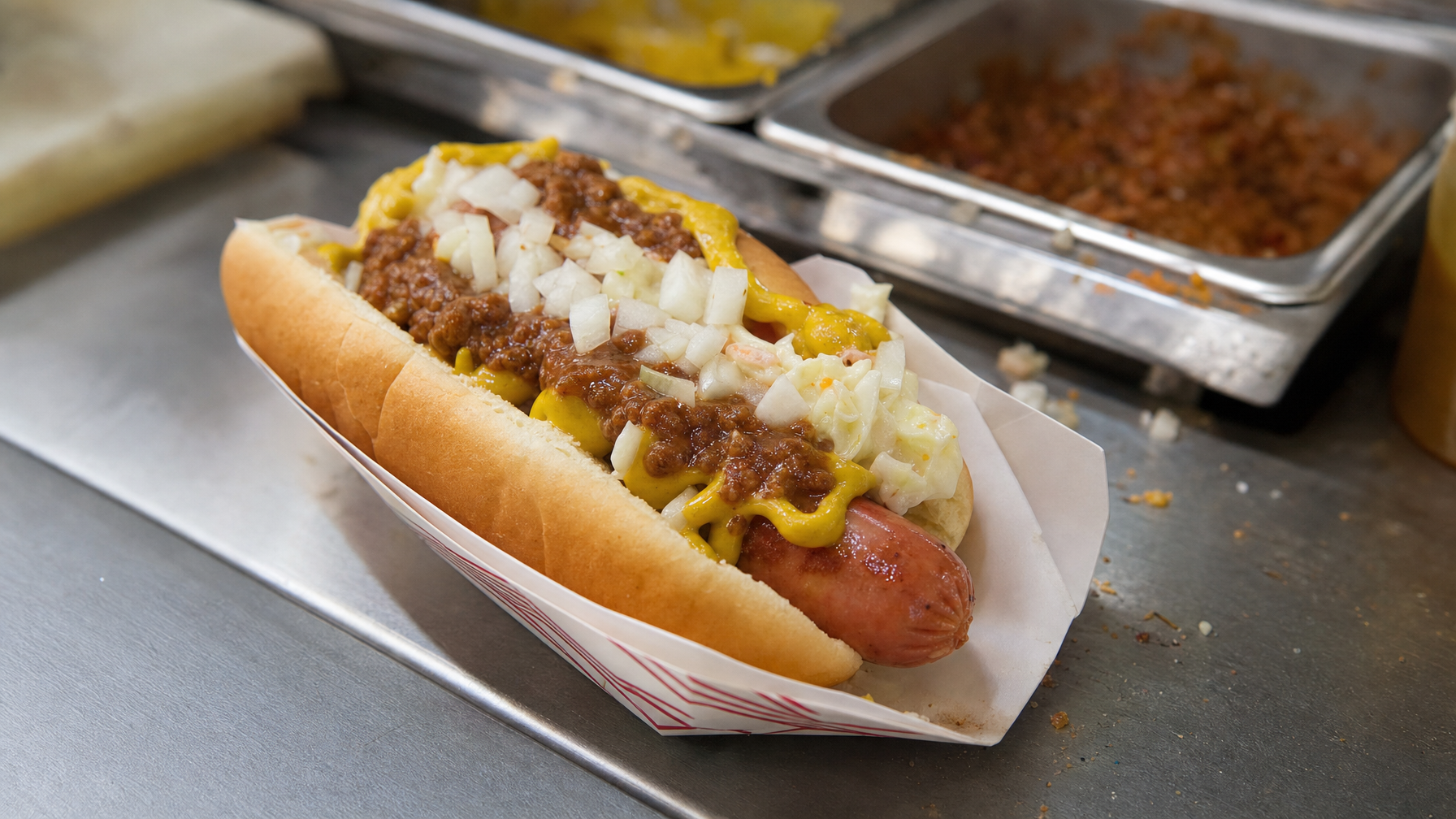
Start with the hot dog. Then add toppings that play against cornmeal’s toasted, grainy character instead of staging a condiment riot in the bun. Crunch is already on the payroll; recruit contrast.
| Contrast | Good direction | What it contributes |
|---|---|---|
| Creamy | A small swipe of mustard-mayo, or a spoonful of slaw with excess liquid drained | Softens the crisp edge without drowning it |
| Sharp | Yellow mustard, brown mustard, or finely chopped onion | Tang and bite |
| Fresh | Thinly sliced scallion or a small amount of finely chopped fresh pepper | Brightness and a clean snap |
| Pickled | Pickle relish or finely chopped pickled peppers, used sparingly | Acid to cut richness |
| Spicy | Hot peppers or a restrained shake of chile seasoning | Heat without turning the coating soggy |
Jason’s no-ketchup stance is an opinion, not a food law enforced by bun police. Still, this is an especially poor place for ketchup: its sweetness and wetness can flatten the toasted corn flavor and soften the crust in a hurry. Mustard is the cleaner argument.
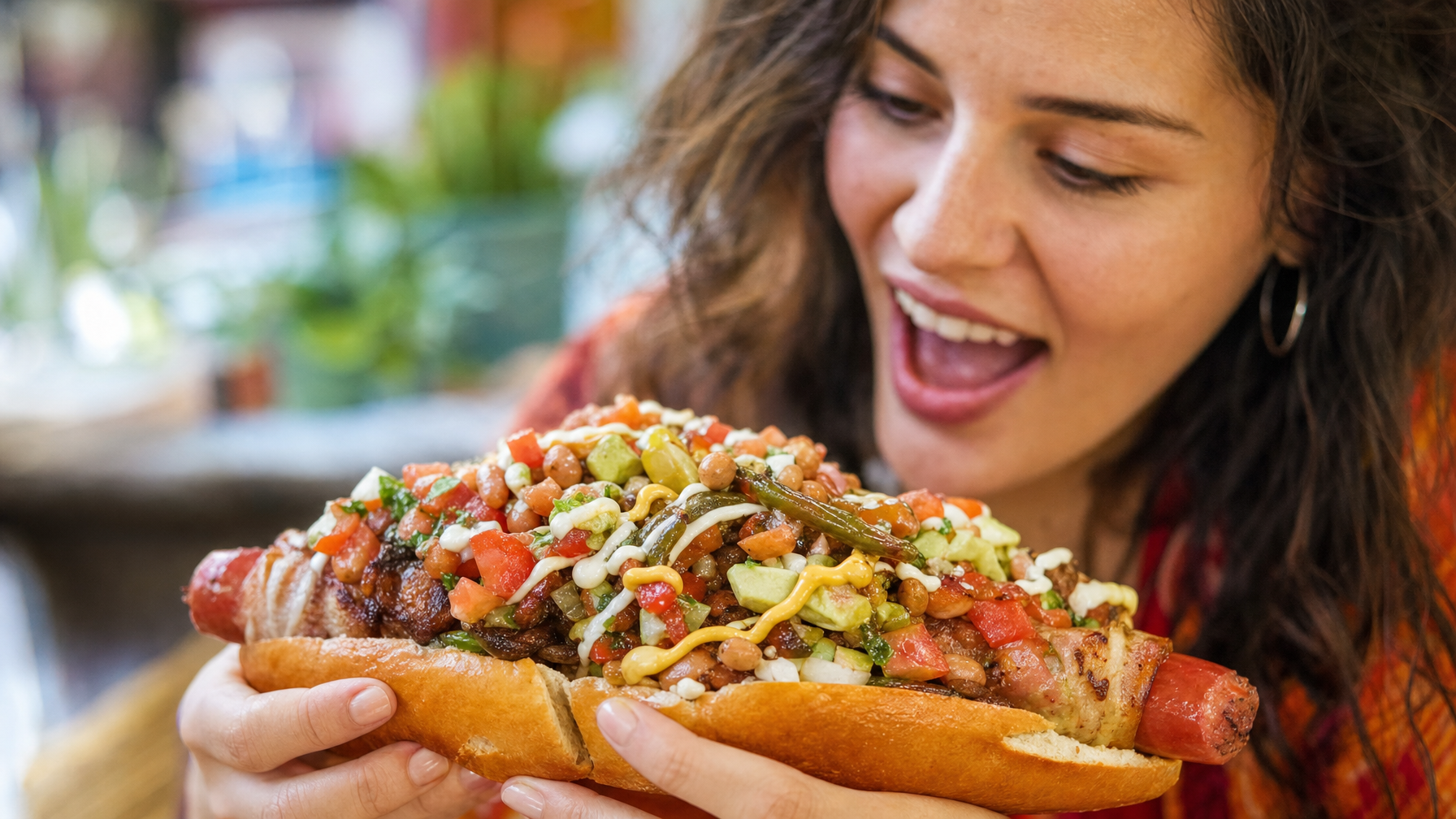
Restraint rule: pick two or three topping elements, not seven. You should taste the jacket, not excavate it.
7. Run the crunch test before declaring a new regional legend
Before you announce a historic discovery from your kitchen, evaluate the build like a person who respects both snacks and evidence.
- Does the cornmeal coating stay attached when you lift and bite the bun?
- Is the bun still easy to bite through, or has it become edible masonry?
- Does the crunch survive the first few bites?
- Does the coating improve the hot dog, rather than merely decorate it?
- Do the toppings support the cornmeal flavor without soaking it?
For the cleanest experiment, make a second hot dog with the same dog and the same toppings in a plain bun. The point is not to humiliate the plain bun—though it can handle the feedback. The point is to notice whether the extra texture makes the full bite more satisfying.
Personal preference is not historical proof. You can call this a compelling detour without inventing a town, a vendor, or a tradition to pin it on. Note what you would change next time: finer or coarser cornmeal, a thinner coating, lower heat, a different adhesive, or fewer toppings.
8. Serve it hot, photograph the evidence, and report back
Assemble and serve immediately. The cornmeal jacket has its best crisp moment right after the bun leaves the pan, before steam and wet toppings begin their inevitable campaign of sabotage.
If you photograph it, take a close-up that shows the cornmeal texture on the outside, the soft interior of the bun, and the deliberately limited toppings. Skip the generic overhead shot if it hides the whole reason you made this thing.
Readers who test the cornmeal jacket can follow @jasonsgrub on Instagram for more hot-dog builds, places, products, and culture.
A plain bun is not a crime. It just should not be the only witness in the courtroom.
Enjoyed this? There's more from Jason's Grub.
Follow on Instagram →