Charred Onion Relish Turns a Plain Hot Dog Into a Barbecue Argument
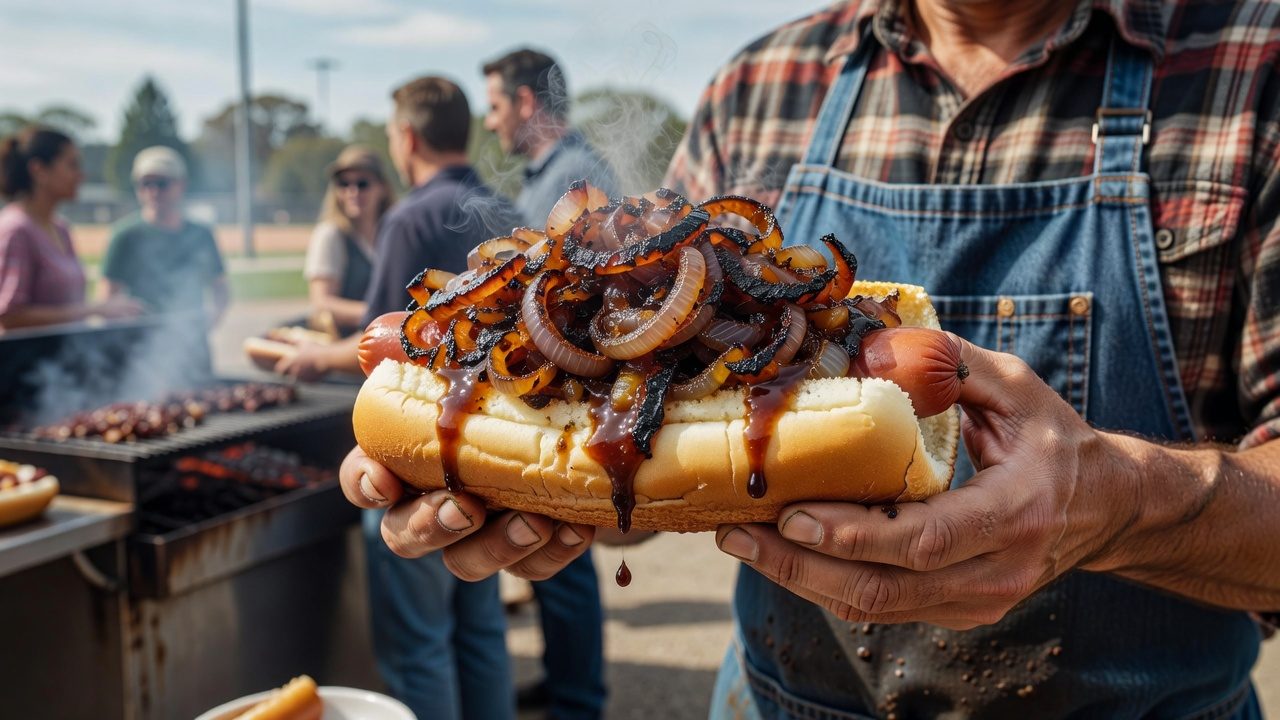
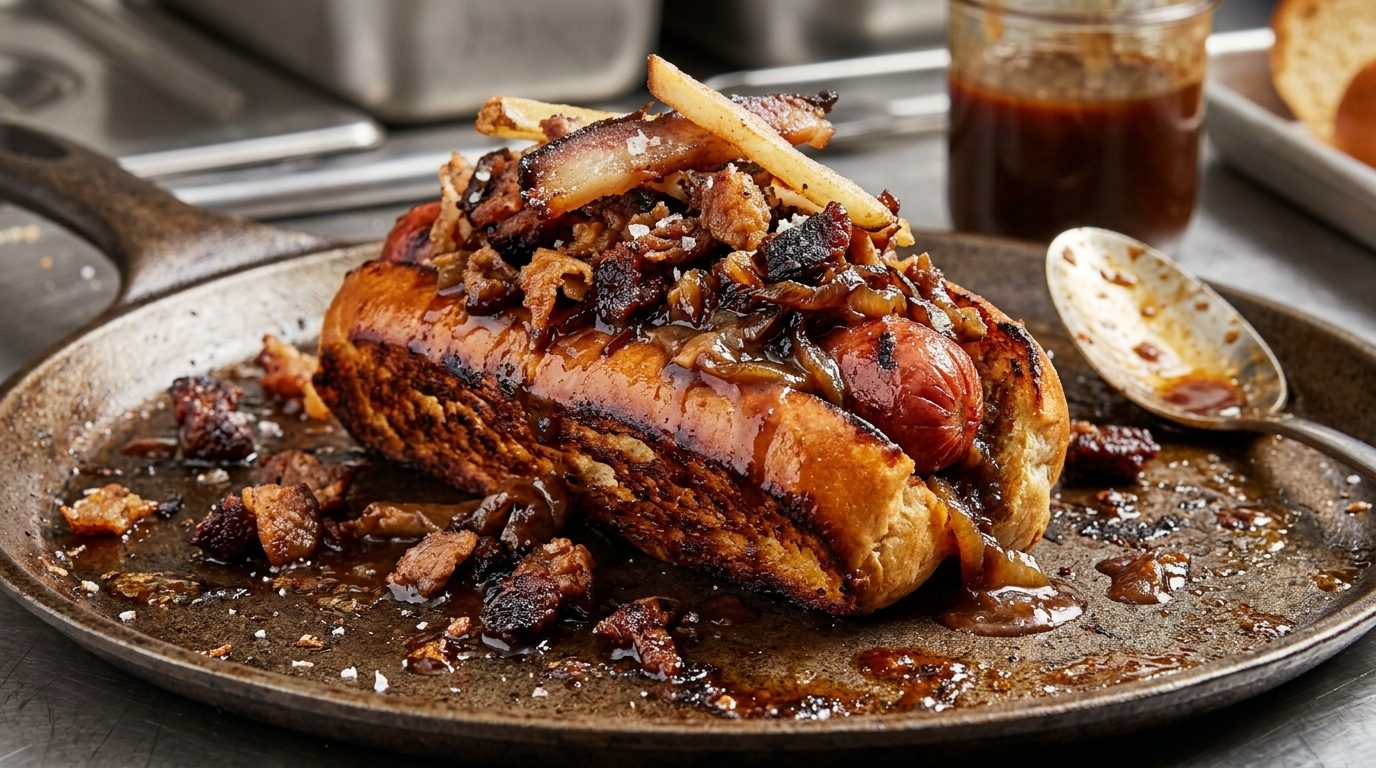
For hot dog enthusiasts who think onions should bring more than sweetness, charred onion relish is the fix: cook the onions past merely soft until their edges are deeply browned, then pile that savory, smoky mess onto a plain dog with no ketchup to hide behind. This is a texture-first topping. Tender onions, dark crunchy-chewy bits, a little tang, and enough confidence to start a barbecue argument at the picnic table.
Soft Onions Are Polite. Charred Onions Start Arguments.
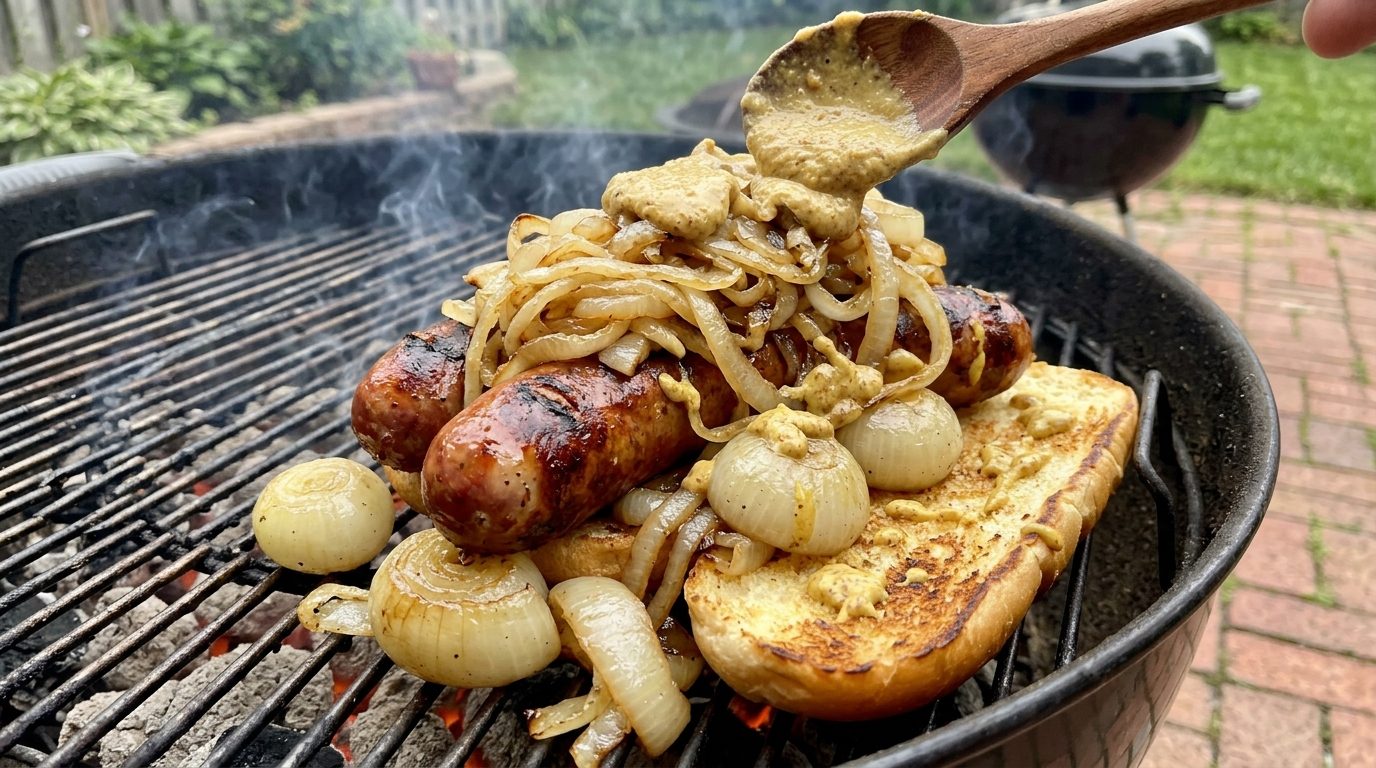
Softened onions have their place. They turn tender, sweet, and translucent, like they have agreed to avoid making a scene. Charred onions have different plans. Once moisture cooks away and the onion spends real time against a hot surface, its edges brown and darken. The flavor gets deeper, more savory, and faintly bitter in a useful way. That is where the barbecue-minded personality shows up.
The target is not onion jam. It is also not a skillet full of blackened onion confetti. Good charred onion relish is tender throughout, with visible onion pieces, distinct browned bits, and enough structure to sit on a hot dog rather than slide away like sad soup.
This topping is for people who want a sharper dog without burying it under a condiment pileup. Jason's position is clear: skip the ketchup. Properly cooked onions can bring sweetness, smoke-like depth, and tang when paired with an acidic element. The dog does not need a red sugar blanket to participate.
The Onion Needs a Little Patience and a Lot Less Babysitting
Onions do not char because someone looks at them intensely. They move through stages. First, they release moisture. Then they soften and become limp. After enough of that moisture cooks off, they can brown where they meet the pan or grill surface.
This is why constant stirring works against the goal. Stirring is useful early on to keep the onions cooking evenly. Once they are soft and the pan is no longer swimming in their released liquid, give them purposeful pauses. Let them sit long enough to build browned contact, then turn and repeat. You are cooking, not conducting a tiny onion orchestra.
Read the pan, not a stopwatch
- Translucent and limp: The onions are softened. They are not charred yet.
- Less liquid in the pan: The moisture is cooking off, which makes browning more possible.
- Deep golden to dark brown edges: The onions are developing the concentrated flavor this relish needs.
- Tender centers with visible pieces: You are close to the right texture for a hot dog topping.
Heat is the annoying but necessary referee. Too little heat can leave onions pale and watery for an eternity. Too much can scorch their outside before the interior has softened. Aim for enough heat to brown in stages, then adjust when the color starts arriving faster than the tenderness.
Build the Relish Around Smoke, Tang, and Actual Onion
Charred onion relish needs a simple argument, not a crowded pantry intervention. The onions supply the main event. An acidic ingredient gives the richness some lift. Seasoning should support the browned onion flavor instead of covering it with sweetness and calling itself helpful.
Because onion size, pan heat, and cooking time all change the final flavor, treat measurements as a starting point when you develop your own batch. Taste after the onions have charred. Their sweetness becomes more concentrated, and their browned edges may bring a pleasant bitterness. That is the moment to decide whether the relish needs more salt, more tang, or a small nudge of sweetness.
What the finished relish should taste like
- Onion-forward: If nobody can identify the onion, the recipe wandered off.
- Deep and savory: Browning should add dimension, not ashtray flavor.
- Bright enough to cut through the dog: Acidity keeps the topping awake.
- Cohesive but textured: Think spoonable relish, not smooth sauce.
My opinion, delivered without a tiny garnish umbrella: this is relish, not a sugary sauce wearing an onion costume. Let the charred onion be unmistakably, gloriously oniony.
The Plain Dog Is Not Plain Once the Onions Show Up
A straightforward hot dog is the right canvas because it leaves room to notice what the relish is doing. A dog already crowded with competing toppings turns this into a committee meeting. Nobody needs that.
The ideal bite has contrast. You get the snap or tenderness of the hot dog, the soft give of the bun, and the sticky, browned texture of the onions. The relish should cling to the dog while retaining enough bite that it does not feel like a puree from a squeeze bottle.
Keep any supporting toppings restrained. A little mustard or another sharp element can make sense if it leaves the onions room to speak. But the finished dog should land savory, smoky, tangy, and unapologetically onion-forward. No ketchup required. Obviously.
Three Timing Mistakes That Produce Sad, Sweet Onions
1. Stopping at soft and translucent
Soft onions are cooked onions. They are not automatically charred onions. Stop at translucence and you get tenderness and sweetness, but not the browned depth that makes this topping worth putting on a dog.
2. Cranking the heat before the moisture is gone
Trying to force char too early often scorches a few exposed strands while the rest remain wet and undercooked. Give the onions time to release and cook off their moisture. Browning gets more even once the pan is not fighting a puddle.
3. Stirring like the onions owe you money
Aggressive, nonstop stirring prevents the contact that creates browning. Stir with intention, then leave the onions alone long enough for the pan to do its part.
If the onions darken too fast
Lower the heat and keep cooking until the interior texture catches up. Dark color alone is not the finish line. You want tender onions with browned edges, not crisp, bitter fragments sitting beside underdone pieces.
A Barbecue Argument, Served in a Bun
Charred onion relish should taste like a deliberate barbecue choice, not a rescue mission for a boring hot dog. Cook the onions until they have something to say, add tang carefully, and let a simple dog carry the point home.
If the onions are only soft, the dog is wearing a side dish. If they are properly charred, they are the headline.
For more hot dog places, products, recipes, and food-culture finds, follow @jasonsgrub on Instagram.
FAQ: The Onion Questions Nobody Wants to Admit They Have
What is the difference between softened and charred onions?
Softened onions are tender and often translucent. Charred onions have browned or darkened edges, more concentrated flavor, and a more pronounced savory quality. The best relish keeps the tenderness while adding those browned, assertive bits.
Should charred onion relish be smooth?
No. It should be cohesive and tender, but it should retain visible onion pieces and real texture. A completely smooth paste misses the point.
Can I use ketchup with this relish?
You can. Jason's no-ketchup approach keeps the focus on the onion, the dog, and the barbecue-like char, though. Ketchup tends to make its presence known even when nobody asked.
Why did my onions soften but never char?
They may still have contained too much moisture, been stirred constantly, or cooked at heat that did not allow enough browning. Let the moisture cook off, create pauses between stirs, and give the onions time in contact with the cooking surface.
What kind of hot dog works best?
Use a straightforward dog with a texture and flavor you enjoy. The simpler the base, the more clearly the charred onion relish can make its case.
Enjoyed this? There's more from Jason's Grub.
Follow on Instagram →