Costume Season Has Made Hot Dogs Weird Again
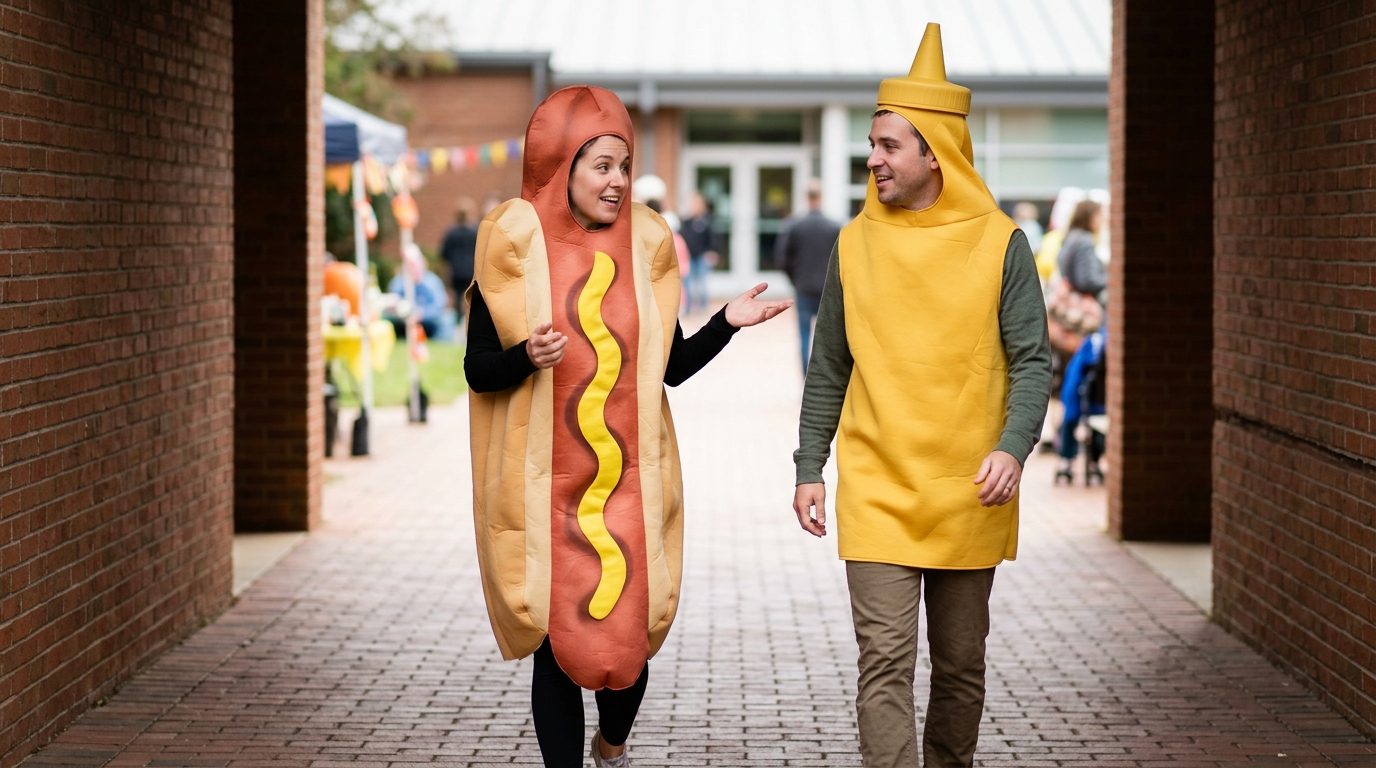
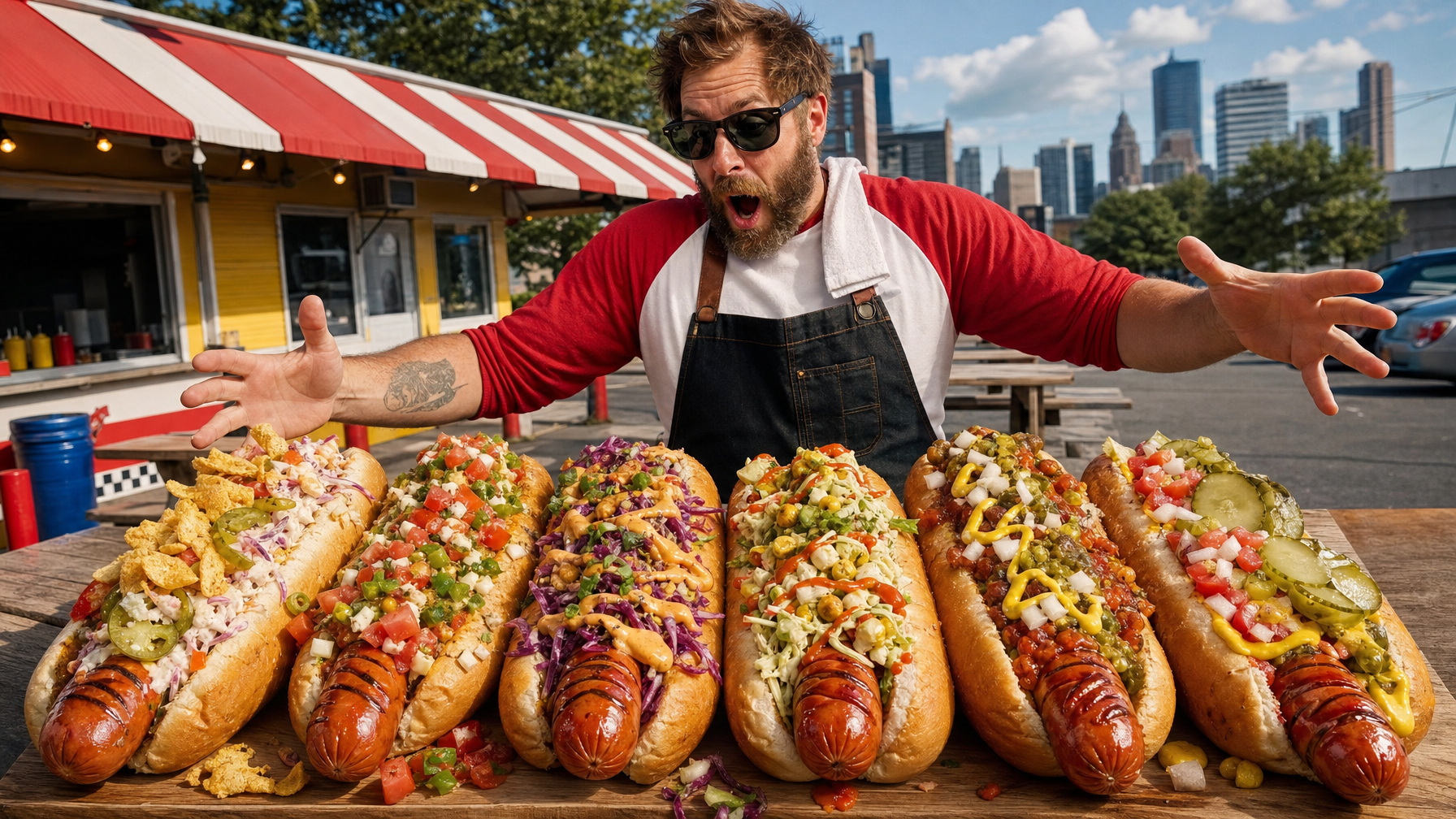
People wear hot dogs instead of simply eating them because a hot dog is already halfway to a visual gag: one long bun, one sausage-shaped center, a squiggle of condiments, and suddenly the whole room gets the joke. For hot-dog fans and food-culture readers, costume season is a reminder that lunch can become theater. I take hot dogs seriously on the plate, after ten years and all 50 states of personal research, but wearing one in public is glorious nonsense. Both positions can coexist. Frankly, they have to.
Why Does a Hot Dog Make Such a Good Costume?
A hot dog has the rare gift of being readable at a distance. The basic silhouette does nearly all the work: long oval bun, contrasting sausage in the middle, perhaps a yellow mustard stripe or green relish dots. No explanatory sign required. Nobody has to squint and ask whether you are a submarine, a banana, or an extremely distressed sleeping bag.
That immediate recognition is useful in a costume, where the first second is the whole game. A hot dog is an ordinary lunch made absurd by scale. Put that lunch around an adult human, and the mismatch does the comedy for you. A food built to fit in one hand has somehow acquired knees.
These are design and cultural observations, not a laboratory report on the human brain. Still, the hot dog has a clarity that fussier foods lack. A burrito is a tube with plausible deniability. A pizza slice can become a traffic cone if the execution gets wobbly. A hot dog announces itself with heroic confidence.
A Crooked Homemade Dog Beats a Sterile Mascot Suit
There is nothing wrong with a polished commercial costume. It can be tidy, durable, and instantly legible. But a homemade hot dog often has the better story because it reveals that someone looked at cardboard, fabric, foam, paper, or whatever was lurking in the craft closet and said, “Yes, this can become lunch.” That is the correct instinct.
A simple homemade version can start with a bun-shaped outer layer, a sausage-colored center, and removable accents for mustard or relish. The removable part matters. It lets the wearer change the bit mid-evening, or defend a condiment position with the seriousness usually reserved for constitutional law.
- Make the bun oversized enough to read from across a room.
- Use a darker center panel so the sausage does not disappear into the bread.
- Add one condiment detail with a bold shape instead of trying to recreate every molecule of lunch.
- Keep movement and visibility in mind. A costume that cannot sit, walk, or locate a doorway is less a costume than a hostile architectural feature.
My opinion: a slightly lopsided hot dog is funnier and more human than a flawless mascot suit. Perfection says “costume department.” A crooked mustard stripe says “I committed to this foolishness after dinner last night.” Give me the second one.
Branded Merchandise Turns Lunch Into a Flag
A costume is usually a one-night act of silliness. Branded hot-dog apparel and accessories do something different. A shirt, hat, pair of socks, or novelty accessory can signal affection for a food, a restaurant, an event, or an identity built around declaring that tube-shaped meat deserves more respect than it gets.
That distinction matters. Merchandise is designed to be recognized, often through a name, logo, or familiar visual language. A homemade costume may be designed to make strangers laugh before they have any clue who made it. One is affiliation. The other is performance. Sometimes they overlap, because human beings contain multitudes and apparently also condiment-themed hosiery.
Neither is automatically better. Branded gear can be a sincere badge of fandom. A homemade dog can be a tiny traveling comedy show. The question is whether the wearer wants to celebrate a particular connection or simply become a walking lunch joke for an evening.
Condiments Are the Punchline, Not Just the Paint
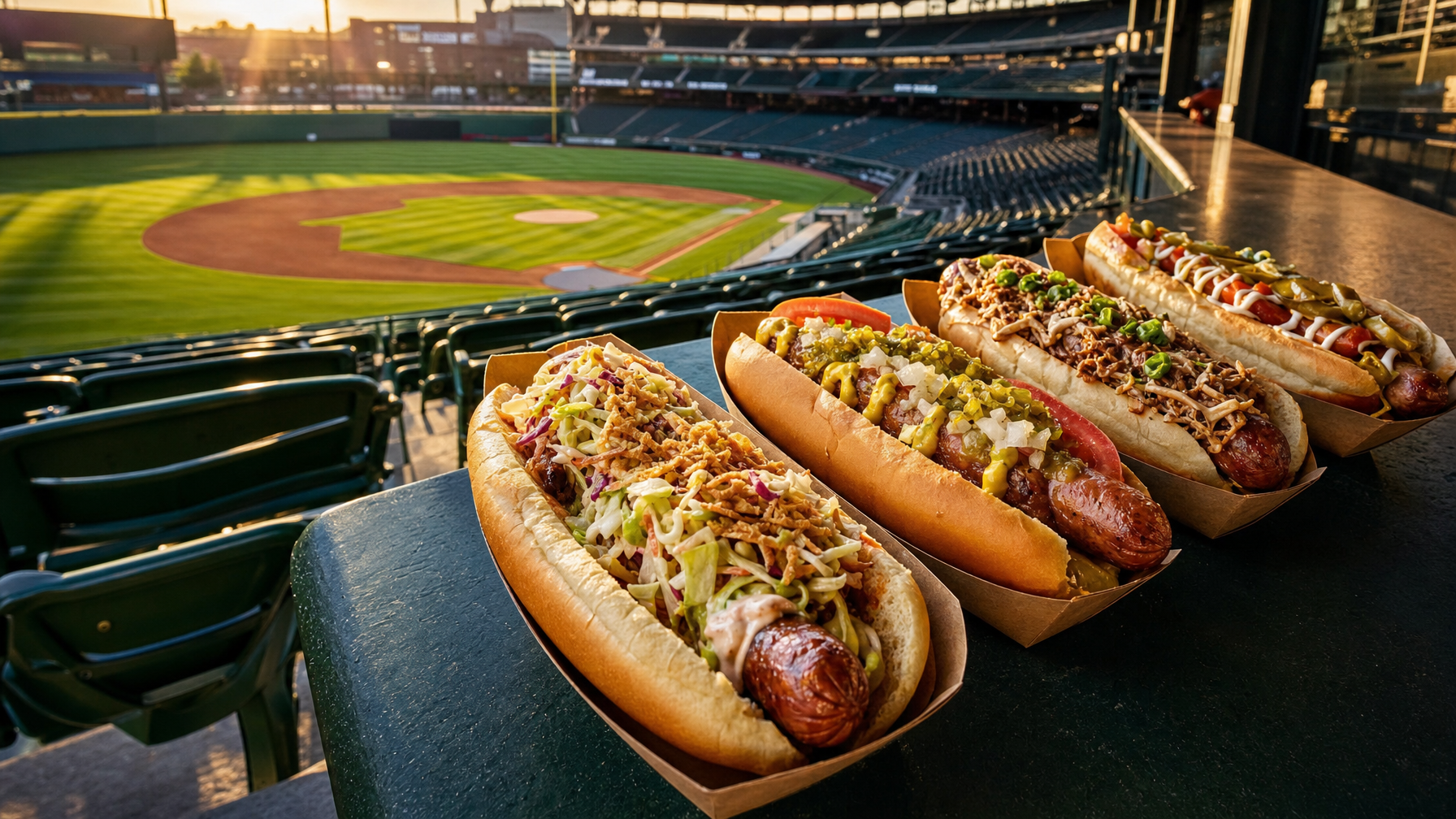
The basic costume works before toppings enter the picture. Then condiments start telling on the wearer. A dramatic mustard stripe reads as bold and classic. Relish can add cheerful chaos. Onions suggest a person who understands that texture has a seat at the table. A bare dog can look stark, minimalist, and perhaps suspiciously unfinished.
Ketchup is the loudest argument in the room. My editorial position remains firm: no ketchup. That is Jason's opinion, not a universal rule or an invitation to confiscate anyone's candy. On a costume, though, a red squiggle is undeniably visible. If you choose it, own the joke. If you skip it, you have my approval and no actual legal protection from your friends.
Condiments function like comic punctuation because they are easy to exaggerate. One absurd mustard loop can turn a wearable hot dog from literal to memorable. This is not a call to pile on every topping known to civilization. The costume is the sentence. The condiment is the exclamation point.
When Dinner Becomes a Wearable Symbol
The central shift is simple: the hot dog stops being dinner and becomes a symbol. Depending on the wearer, it can signal play, appetite, nostalgia, absurdity, food fandom, or a willingness to be photographed by strangers near a bowl of dip.
Recognizable food shapes can carry meaning without a logo or a speech. The hot dog is especially good at this because its parts are visually distinct and culturally familiar. Bun. Dog. Topping. Joke delivered. It does not require a diagram, a menu, or a ten-minute origin story.
After ten years and all 50 states of personal hot-dog research, I have learned that people can have wildly different ideas about what belongs on a dog. That is part of the fun. The wearable version condenses the whole debate into a silhouette, then lets one little stripe of mustard, ketchup, relish, or onions declare a side.
When the Costume Stops Being Funny
Not every hot-dog costume lands. The bit can go flat when the costume relies only on a logo, copies a recognizable person, or feels more like an advertisement than a joke. At that point, the bun is doing unpaid promotional labor. Grim.
A useful question is: what is being celebrated here? The food itself, a particular brand connection, or the easy laugh of becoming an enormous snack? All can be fair game. But a costume with no point beyond “logo, but human-sized” often has the personality of a coupon circular.
Keep it playful. The aim is not to put a hot dog on trial. The aim is to make sure the joke has a pulse.
One Strong Bit Beats a Relish Avalanche
The best hot-dog costume passes a simple test: can someone identify it quickly, and does it have one memorable detail? The shape handles recognition. One strong bit handles the laugh.
- An outrageously oversized bun.
- A mustard stripe with unnecessary operatic drama.
- A specific condiment reference that means something to your crowd.
- A handmade sign that gives the dog a point of view.
- An intentionally imperfect construction that makes the whole thing feel alive.
Restraint is the secret. Add every topping, logo, prop, slogan, and accessory, and you bury the joke under the relish. The hot dog works because it is familiar, clear, and inherently a little absurd. Do not fight the natural advantage of being a person dressed as lunch.
FAQ: Questions From People Who Have Considered Wearing Lunch
Why are hot-dog costumes so recognizable?
The silhouette is simple and familiar: a long bun, a contrasting center, and recognizable condiment colors. That visual shorthand communicates the idea quickly, even when the costume is homemade or intentionally rough around the edges.
Is a homemade hot-dog costume better than branded merchandise?
Not automatically. Homemade costumes tend to express personal humor, while branded apparel or accessories can signal fandom or make a recognizable reference. They serve different purposes, and both can be fun when the wearer has an actual point of view.
What makes a hot-dog costume funny instead of just literal?
The hot-dog shape is the setup. A clear visual joke, an exaggerated proportion, or one surprising detail provides the punchline. Think giant bun, theatrical mustard, or a handmade sign with a deliberately ridiculous message.
Does the condiment choice matter?
It can. Mustard, ketchup, relish, onions, or no topping can communicate a joke or an allegiance. Jason's editorial position is firmly no ketchup, but your costume is still your costume. Choose your squiggle and accept the consequences.
Where can I find more hot-dog opinions?
Follow @jasonsgrub on Instagram for more hot-dog opinions, food finds, and the occasional necessary condiment argument.
Enjoyed this? There's more from Jason's Grub.
Follow on Instagram →