The Ballpark Dog at Home: Why Timing Beats Topping Acrobatics
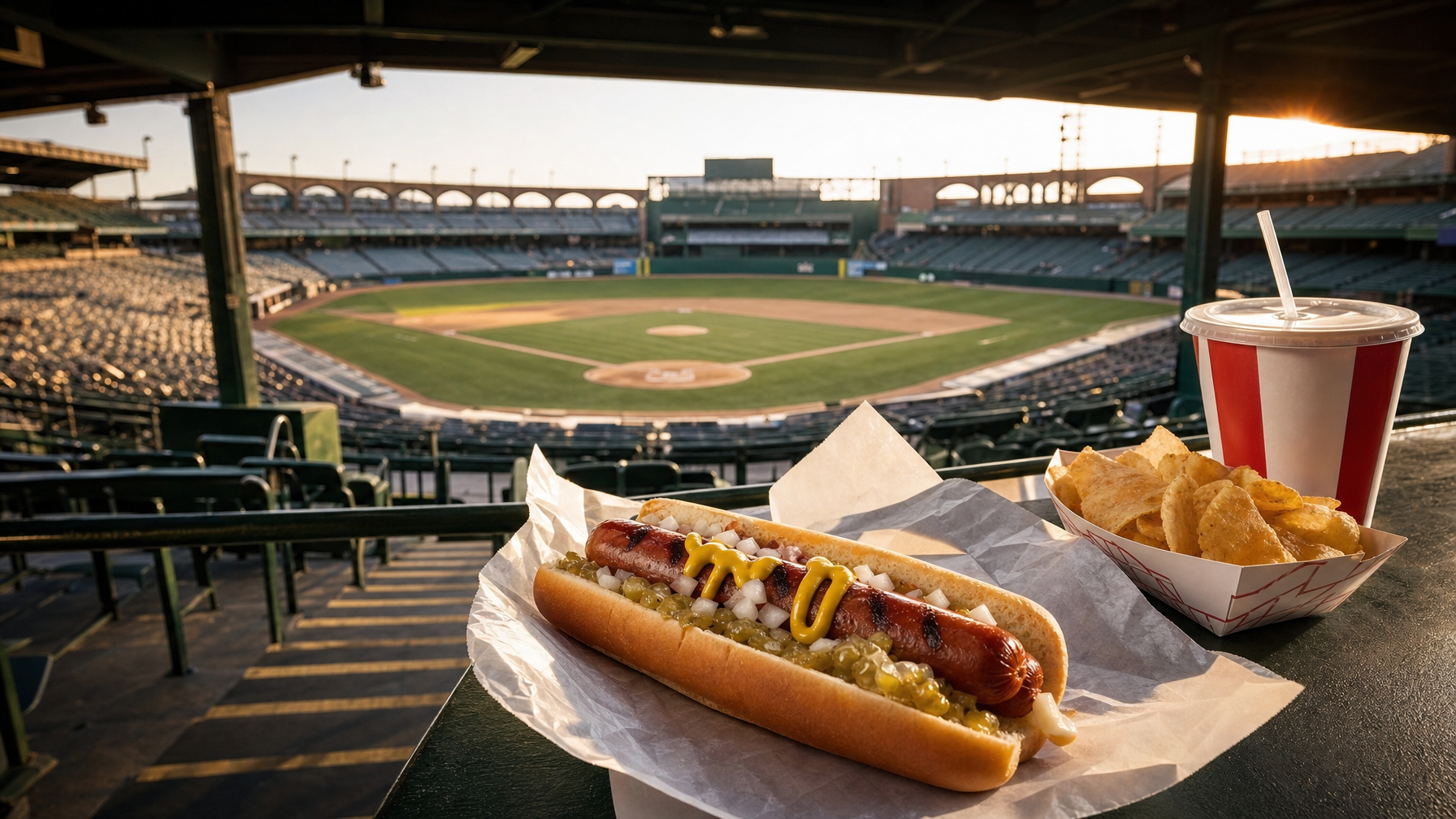
For hot-dog fans and food-culture readers chasing a familiar ballpark-style dog at home, timing beats topping acrobatics every time: warm the bun, heat the frank evenly, and add toppings only when both are ready to meet. This is a repeatable, unfussy build—not a countertop tower of condiments requiring a civil engineer.
1. Start with the dog, not the condiment circus
A ballpark dog is a straightforward proposition: a hot frankfurter, a warmed bun, and a restrained handful of toppings. It is not a blank canvas for every jar in the refrigerator door to audition at once.
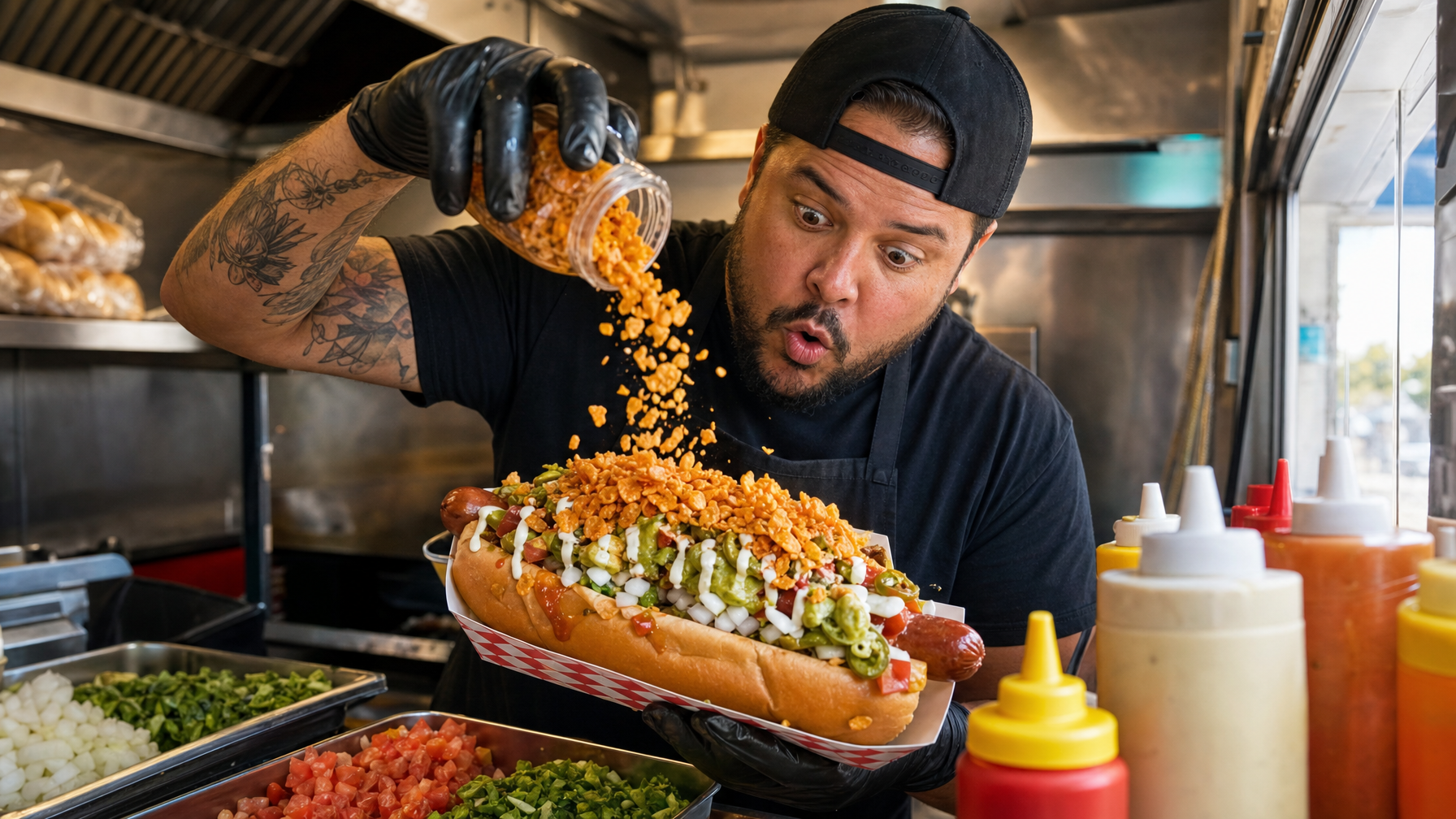
The point is to keep the dog’s heat, snap, and seasoning in the foreground. Toppings can bring tang, crunch, sweetness, or a little heat, but they should support the frankfurter rather than bury it beneath a landslide of wet onions and existential regret.
That makes this approach especially useful for anyone who wants a recognizable stadium-style meal at home: quick enough for a weeknight, deliberate enough to avoid the cold-bun/hot-dog mismatch that ruins perfectly decent ingredients.
2. Choose a frank that can handle the spotlight
Buy a frankfurter you already enjoy and can readily purchase. There is no universal champion here; this is a technique-driven build, not a declaration that one brand or one style has won hot-dog history forever.
Look for three practical things:
- A firm casing or exterior: A little snap gives the dog structure and keeps each bite from feeling mushy.
- Enough seasoning: The frank should still taste like itself once it meets bread and a modest topping or two.
- A sensible fit: Match the frank’s length and thickness to the bun. A tiny dog in a huge roll is melancholy; an oversized dog bursting its bun before the first bite is just needless drama.
Choose the roll at the same time. The bun is not packaging. It is part of the bite, and it needs enough structure to carry the frank without becoming a floury napkin.
3. Warm the bun before it turns into a sad hinge
Prepare the bun before the frank comes off the heat. This is the tiny act of planning that separates a proper home ballpark dog from a hot frank cooling on a plate while its bun sits there, pale and emotionally unavailable.
You have options:
- Give the bun a brief toast, watching closely.
- Warm it gently near the grill or in a covered pan.
- Use another gentle heat source that warms the bread without hardening it.
The goal is warmth and softness with a touch of sturdiness—not deeply scorched cut sides and not dried-out bread. If the bun is ready first, keep it close and move on to the frank. Do not use that gap to write a topping manifesto.
4. Cook the frankfurter with a clock, not panic
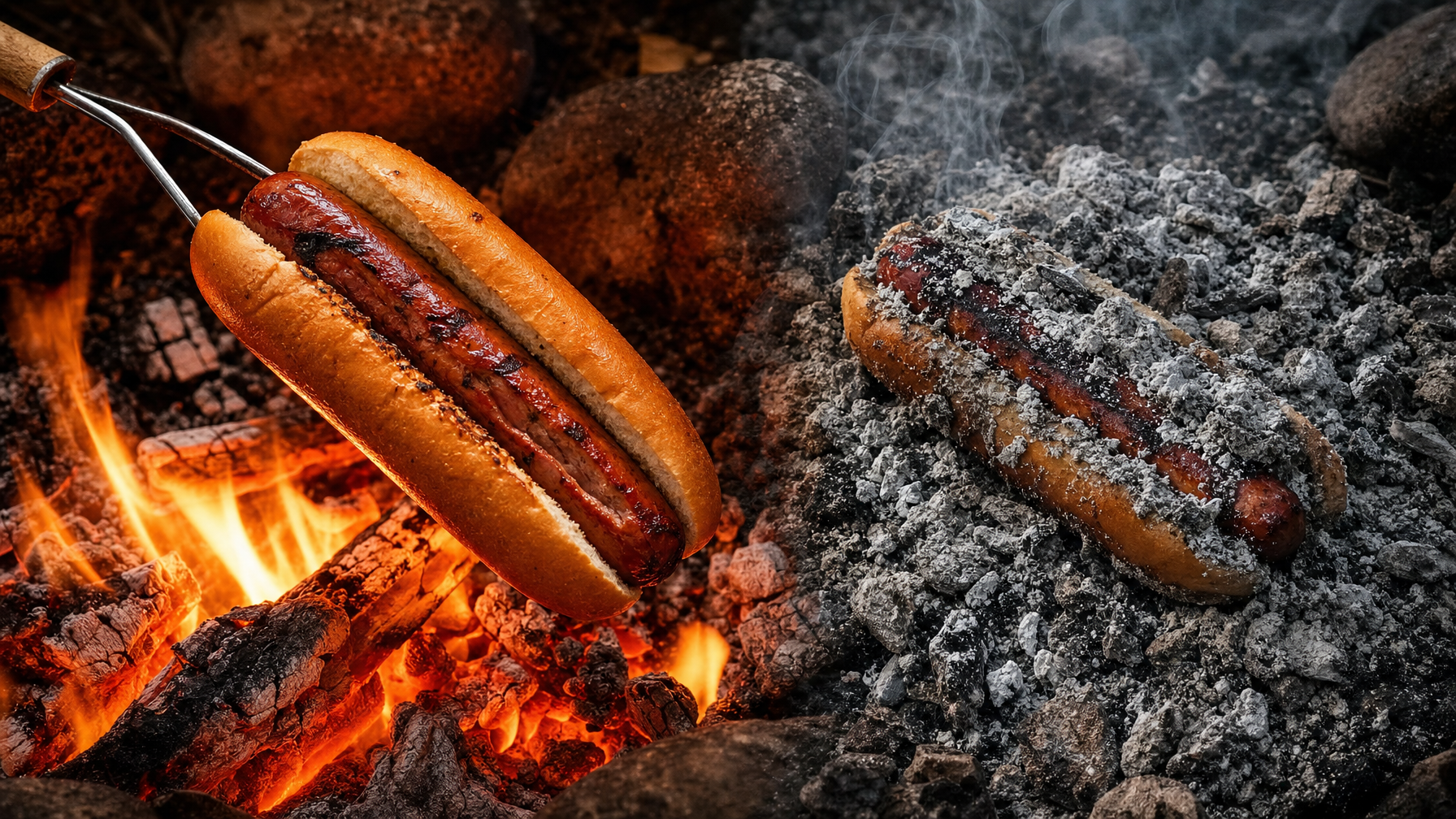
Heat the frankfurter by a method you know: stovetop, grill, or another suitable approach for the product. When package directions apply, follow them. They are more useful than bravado, particularly for storage and safe preparation.
While the frank heats, get the bun warm and portion the toppings. The finish line is not “dog done, then begin everything else.” The finish line is a hot frank and warm bun arriving at the assembly point within moments of each other.
Look for practical cues rather than pretending every frank, burner, grill, and appliance shares one magic timetable:
- The frank is heated through.
- Its casing remains intact rather than split open and leaking its dignity.
- If your cooking method allows, the exterior has picked up light browning or grill character.
- The frank still looks plump, not shriveled from being left over heat too long.
Use tongs or another appropriate utensil for hot food, and keep raw-food handling separate when relevant. Hot dogs are casual food, not careless food.
5. Put the toppings in their proper supporting roles
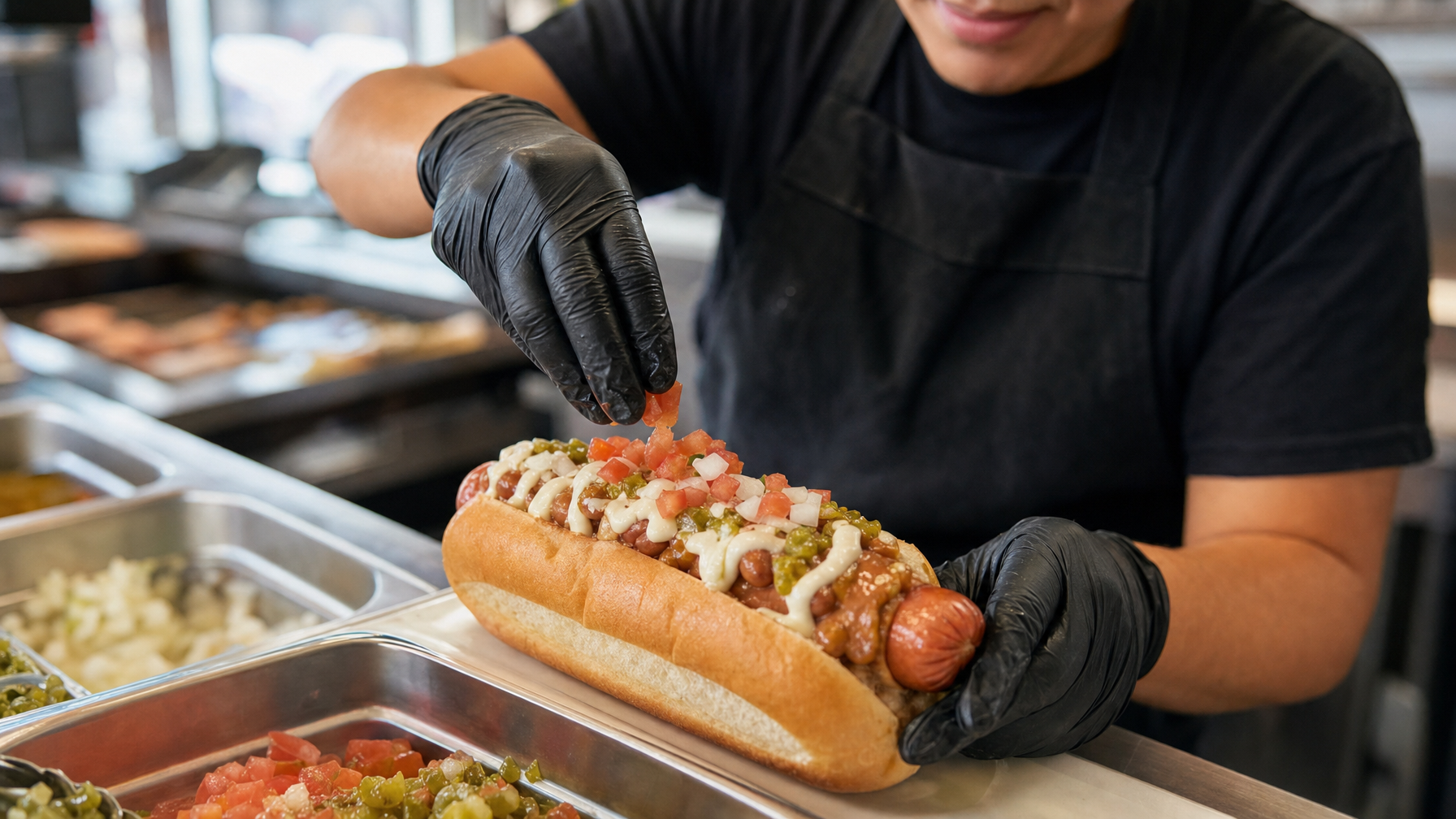
Pick a small number of toppings with a reason to be there. A sharp mustard, onions, relish, peppers, sauerkraut, or another favorite can work beautifully when it adds a distinct note instead of turning the bun into a damp obstacle course.
Think about order as both a texture and mess problem:
- Use wet toppings sparingly and place them where they are less likely to soak the bun immediately.
- Add crunchy ingredients late, so they stay crunchy.
- Keep loose ingredients contained in the bun’s channel rather than scattered across the plate and your shirt.
- Stop before the pile rises higher than the bun can reasonably hold.
Jason’s position is clear: no ketchup. That is Jason’s hard-earned hot-dog opinion, not a law of physics or a demand that you surrender your own taste buds. Build the dog you want to eat; just do not confuse more ingredients with a better dog.
6. Assemble while the timing is still hot
Once the frank is ready, move it directly into the warmed bun. Then add your selected toppings without letting the whole operation loiter on the counter.
Keep the sequence almost offensively simple:
- Warm bun.
- Hot frankfurter.
- Modest toppings.
- Any final seasoning or finishing touch.
This is where restraint earns its keep. The dog should be easy to pick up, possible to bite, and visibly still a hot dog beneath its toppings. If you need a fork, a second plate, and a risk assessment, you have built lunch’s least useful monument.
7. Take one bite before declaring victory
Taste the dog before adding another stripe of sauce or another scoop of something crunchy. One bite tells you whether the seasoning, heat, bun, and toppings are actually in balance.
Then make one adjustment for the next round:
- If the bun collapses: Use less wet topping, drain loose ingredients better, or choose a sturdier bun.
- If the frank dries out: Reduce the cooking exposure next time and pull it once it is heated through.
- If the bun is cool while the dog is hot: Start warming the bun later, closer to the frank’s finish.
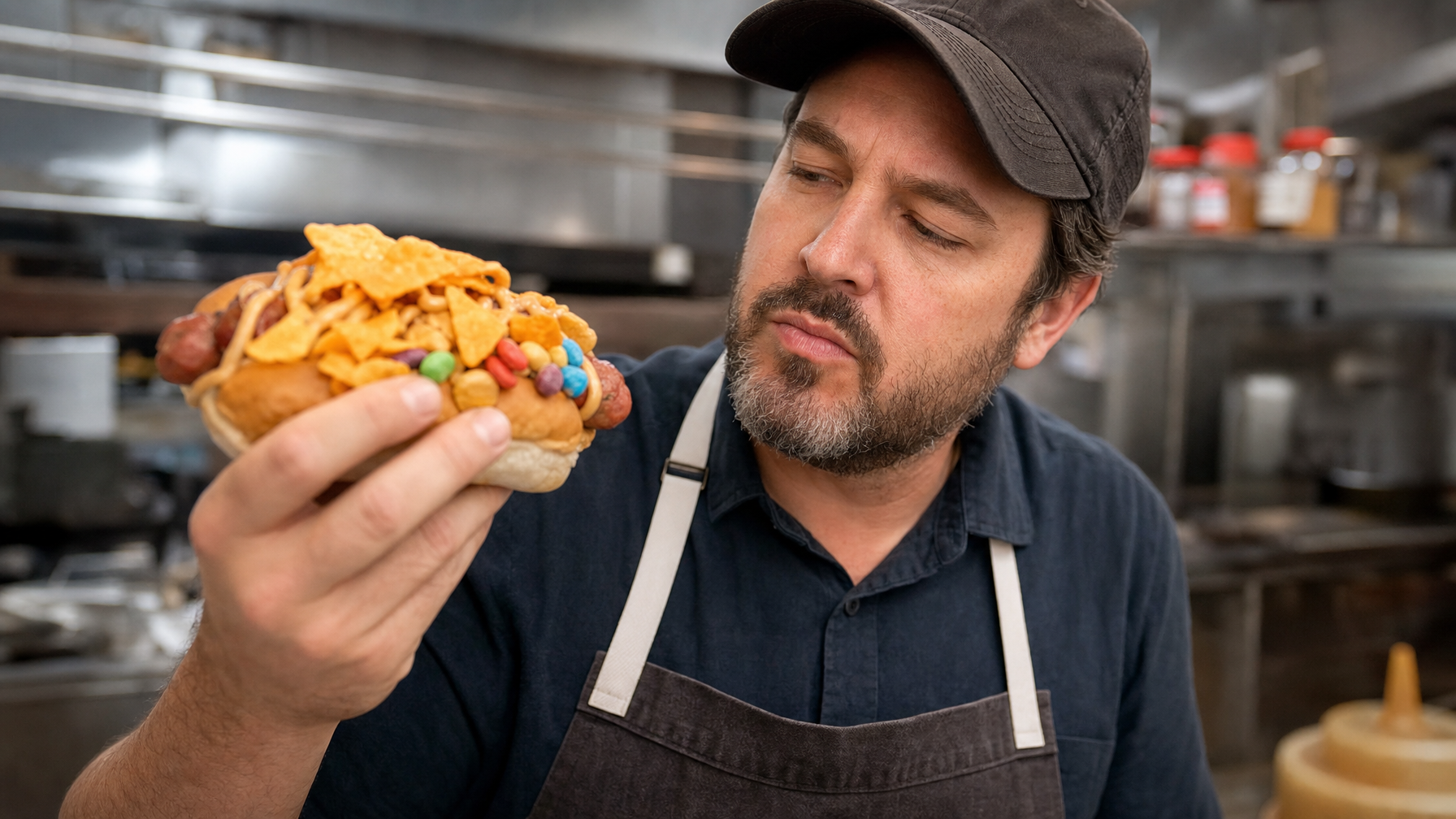
- If the dog tastes buried: Remove a topping before adding a new one. This is difficult advice because jars are persuasive.
The verdict is gloriously unglamorous: a well-timed ordinary build beats an overworked topping stack. Every time.
8. Keep the next dog simple—and follow the field notes
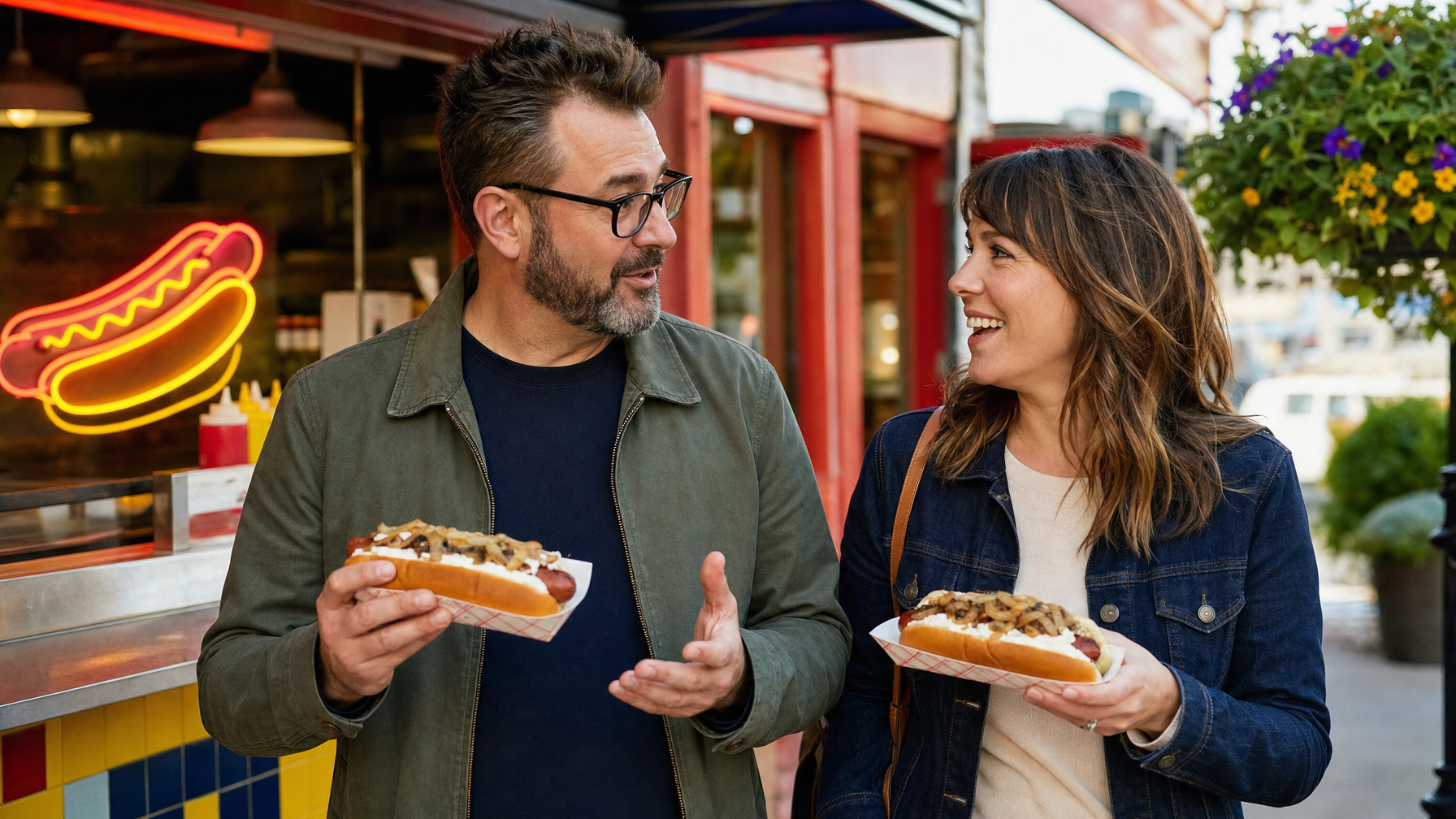
Jason’s Grub comes at hot dogs from a stated ten years of eating across all 50 states, with zero ketchup in the equation. That is a personal body of field notes, not a laboratory ruling—but it does encourage a useful habit: notice what the dog, bun, heat, and toppings are doing before you throw another condiment at the problem.
For more specific hot-dog places, purchasable finds, recipes, and culture coverage, follow @jasonsgrub on Instagram.
Enjoyed this? There's more from Jason's Grub.
Follow on Instagram →