The Algorithm Wants You to Watch Someone Add One More Topping
The algorithm keeps serving topping videos because a hot dog changing before your eyes is irresistible little food theater—not because every extra layer improves the dog. This is for hot-dog obsessives and food-culture readers who care whether the first bite actually works, not merely whether the overhead shot looks like a condiment landslide. Jason’s position, after ten years and all 50 states: spectacle is welcome; a sausage buried under edible drywall is not.
One More Topping, Then One More, Then Structural Engineering
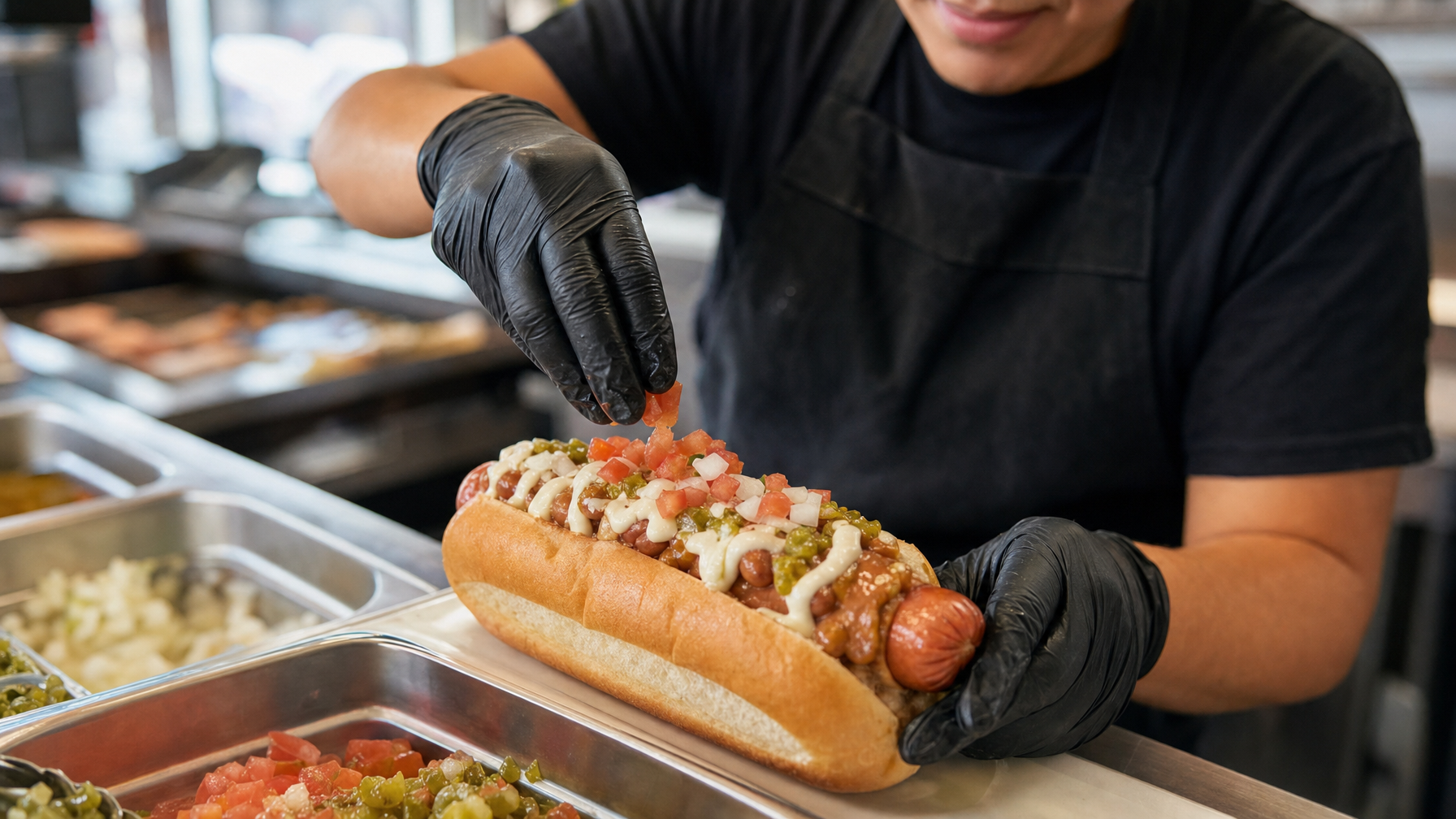
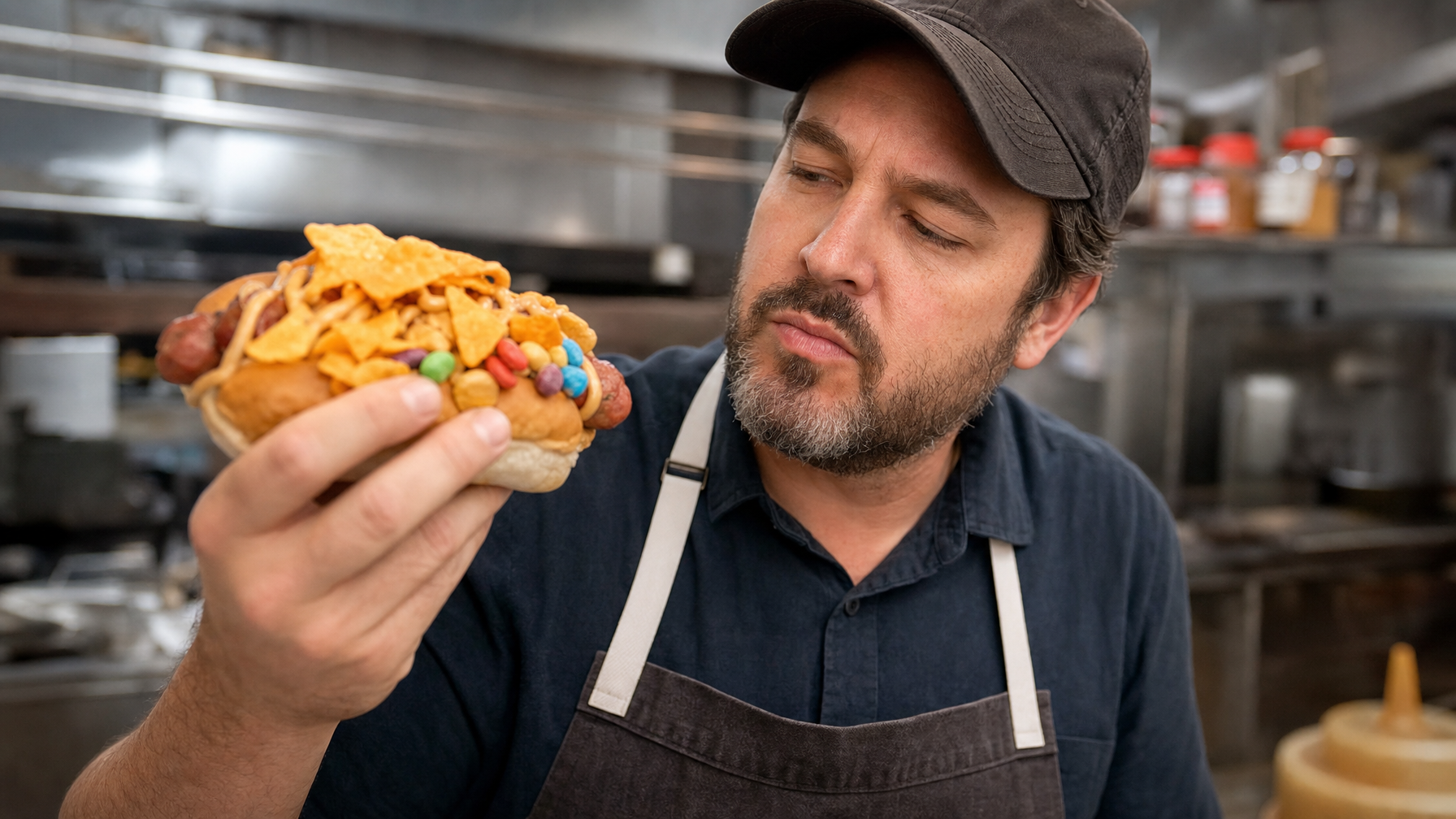
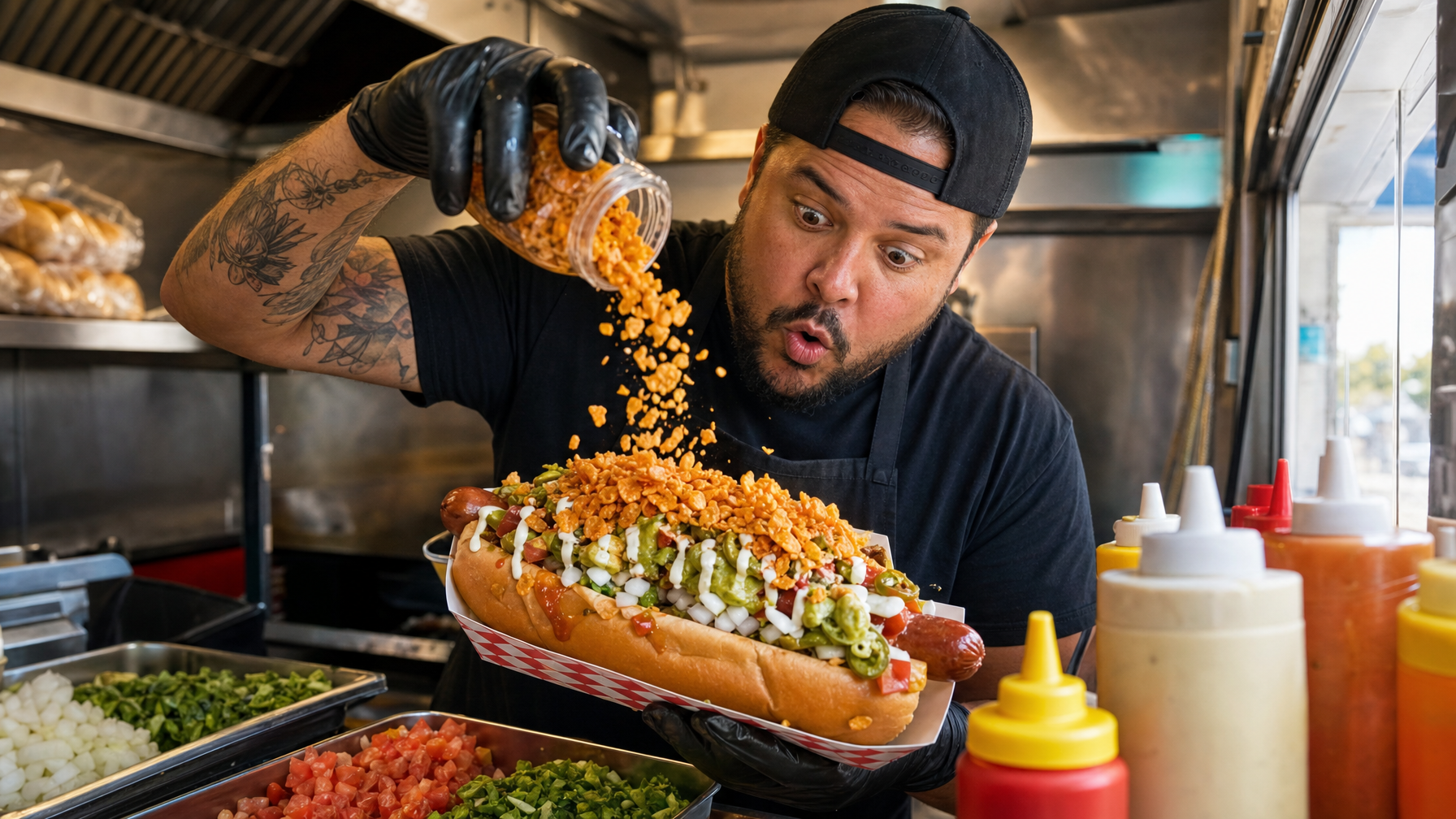
The format is simple: a short food video starts with a dog, then adds topping after topping until the thing looks either inspired or legally classified as a small hill. Each addition makes a tiny promise: now it will become extraordinary. Pickles? Nice. Crunchy bits? Interesting. Sauce? Sure. Another sauce, cheese, slaw, peppers, and something that appears to have arrived by forklift? We are watching. Against our better judgment, we are absolutely watching.
That is the pleasure of the successive-build hot-dog video. It turns lunch into a reveal. But a reveal is not a meal. Visual escalation can be hugely entertaining while producing a worse bite: soggier bun, vanishing sausage, and toppings that abandon ship before the dog reaches anyone’s mouth.
A good loaded dog should still be a hot dog. You should be able to taste the sausage, feel the bun doing its honorable work, and identify what the toppings are contributing beyond altitude.
Why the Algorithm Loves a Hot Dog Pileup
Recommendation systems are built to notice attention, and piling toppings onto a hot dog is remarkably good at earning it. The rhythm is hypnotic: add, spread, scatter, drizzle, repeat. Accumulation gives the eye something to track, suspense gives the brain a reason to stay, and the unanswered question hangs over every shot: “Surely that is the last topping.” It rarely is.
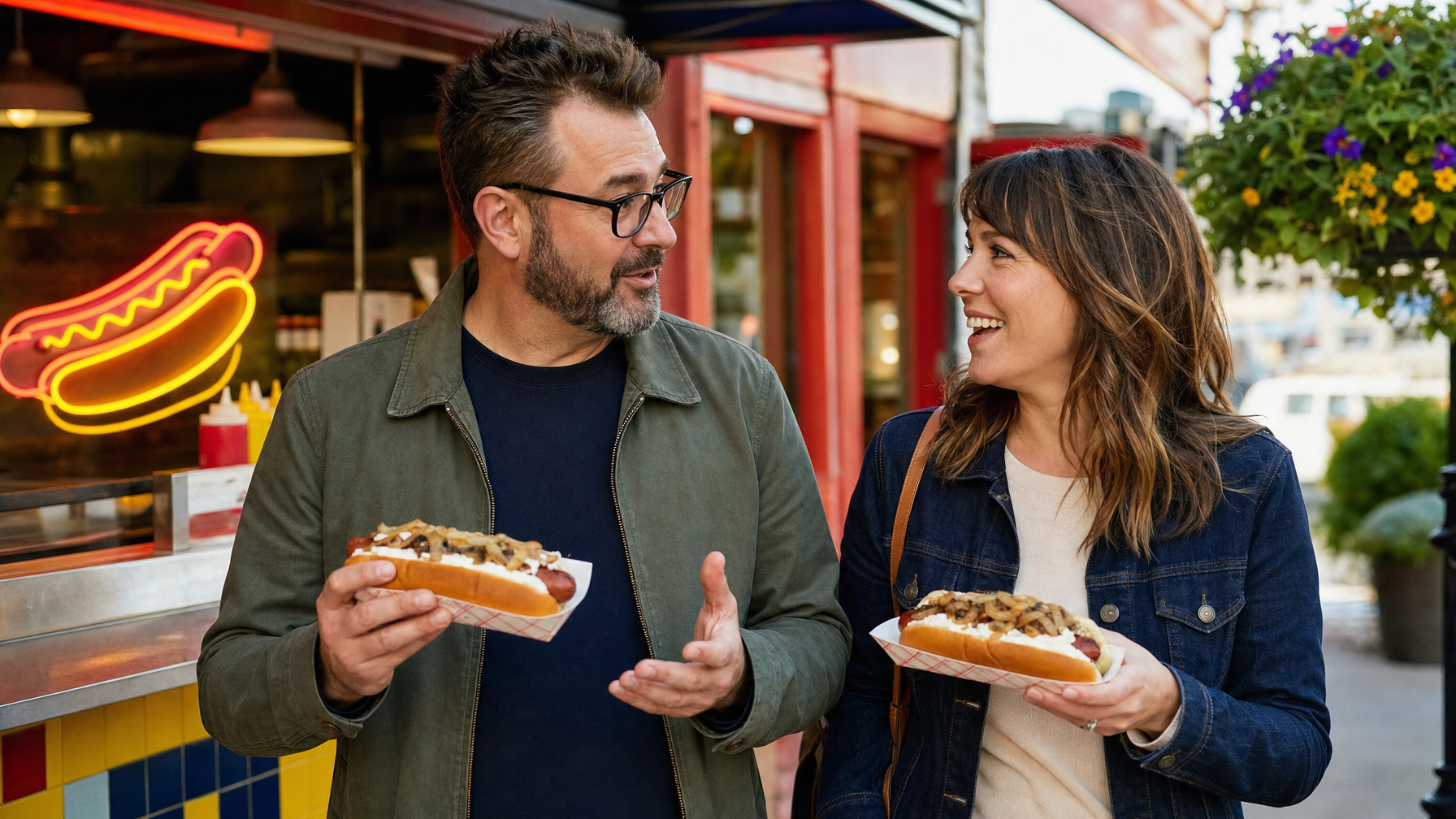
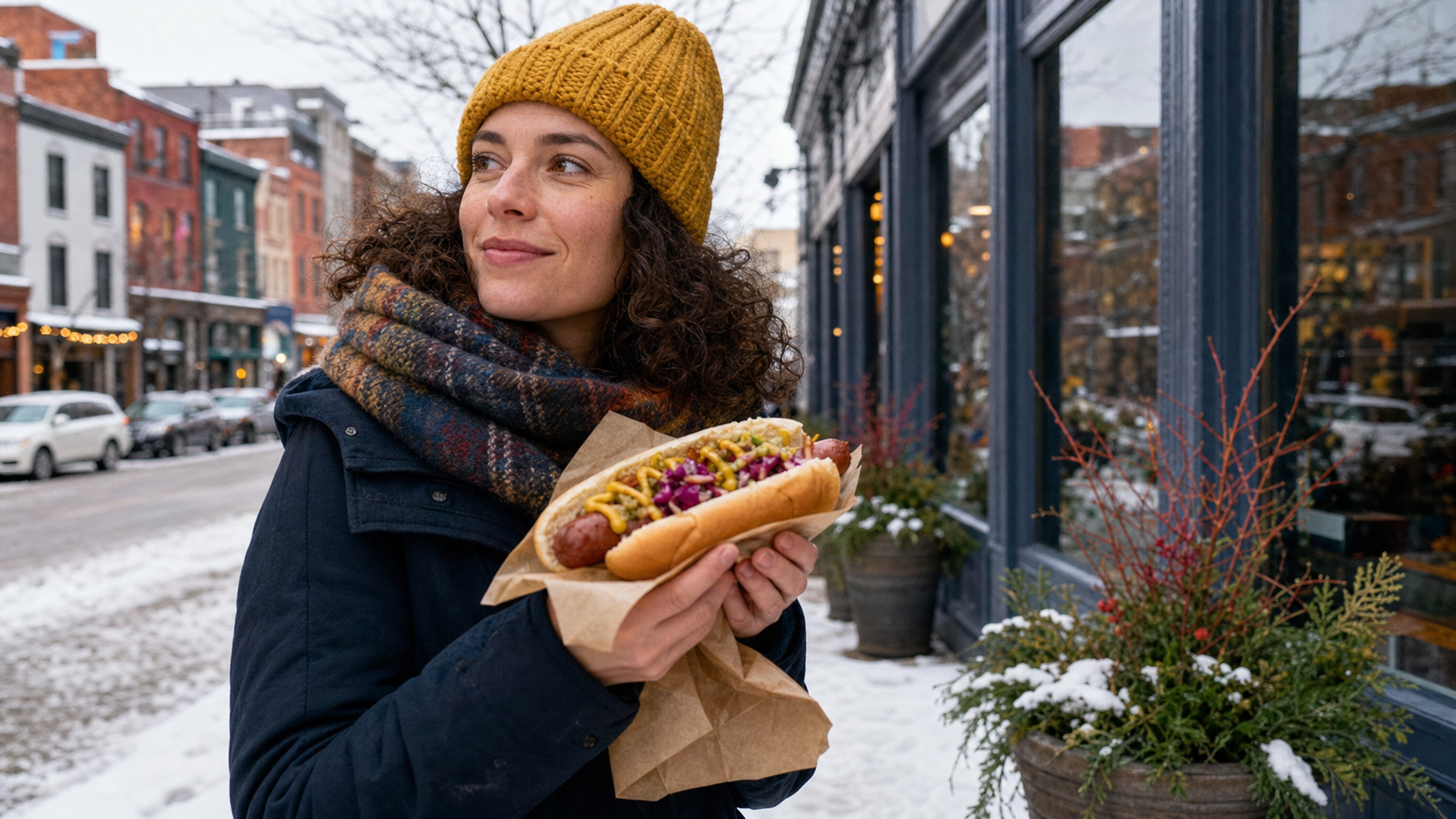
A clean build can be satisfying, too. Mustard finds its lane. Onion stays crisp. A relish or pepper brings a clear jolt. The whole thing looks ready to eat, because it is. A spectacle build may be designed chiefly around the next addition—the next color, the next cascade, the next moment when gravity files a complaint.
Neither approach is morally suspect. One is food theater; the other may be lunch. The trouble starts when a dramatic final frame gets mistaken for proof of a coherent flavor idea.
A Hot Dog Is Not a Loading Dock
Here is the standard: every topping should earn its bunk. It should bring flavor, texture, temperature, or meaningful contrast. Ideally, it brings one or two of those things without bringing a structural emergency.
Layering has a point; clutter has a volume problem
Layering means ingredients remain recognizable and work together. A crisp topping can wake up a soft bun. Something acidic can cut through richness. A warm, savory component can deepen a simple grilled dog. Clutter is when the ingredients become anonymous rubble: technically edible, practically unrecoverable.
Use three blunt tests:
- Can one bite reach sausage, bun, and toppings together? If the sausage is a rumor at the bottom of the pile, the build missed its assignment.
- Does the bun survive? A bun is not decorative packing material. If it dissolves before bite two, it has been asked to do too much.
- Can you put it down without requiring a tarp? A little mess is part of the joy. A total collapse is just lunch losing an argument with physics.
Abundance is not the enemy. Some of the world’s great dogs are generously dressed. The issue is coherence: do the additions create one better bite, or merely several unrelated bites attempting a group project?
The No-Ketchup Question: What Is the Topping Trying to Fix?
Jason’s no-ketchup stance is a strong personal opinion, not a universal culinary law. After ten years of eating hot dogs across all 50 states, he remains unconvinced that ketchup improves the situation. You may disagree. You may be wrong in his kitchen. Both things can be true.
The more useful question applies to every topping, red or otherwise: what problem is this ingredient solving? If the dog needs lift, acidity may help. If it needs texture, crunch has a job. If the sausage is rich, heat or freshness can keep the bite from getting sleepy. If the dog is already balanced, another creamy drizzle may be less of an idea and more of a camera cue.
Give each addition a job
- Crunch: crisp onions, crushed chips, seeds, or another sturdy texture can keep a soft build lively.
- Acidity: pickled ingredients, vinegar-forward sauces, or tart relishes can cut richness.
- Heat: peppers or hot sauces can add energy, provided they do not erase every other flavor.
- Sweetness: sweet relishes or fruit-based accents can work when they are balanced by salt, tang, or spice.
- Freshness: herbs, raw onion, or bright vegetables can stop a heavy dog from tasting like it needs a nap.
- Richness: cheese, creamy sauces, or fatty additions can make a leaner or sharper build feel fuller—until they turn it into a blanket with a bun.
No single combination is the official hot-dog constitution. The point is purpose. A topping that contributes something clear is a collaborator. A topping included solely because the camera was still rolling is an unpaid extra.
When More Actually Is More—and When It Is Just More
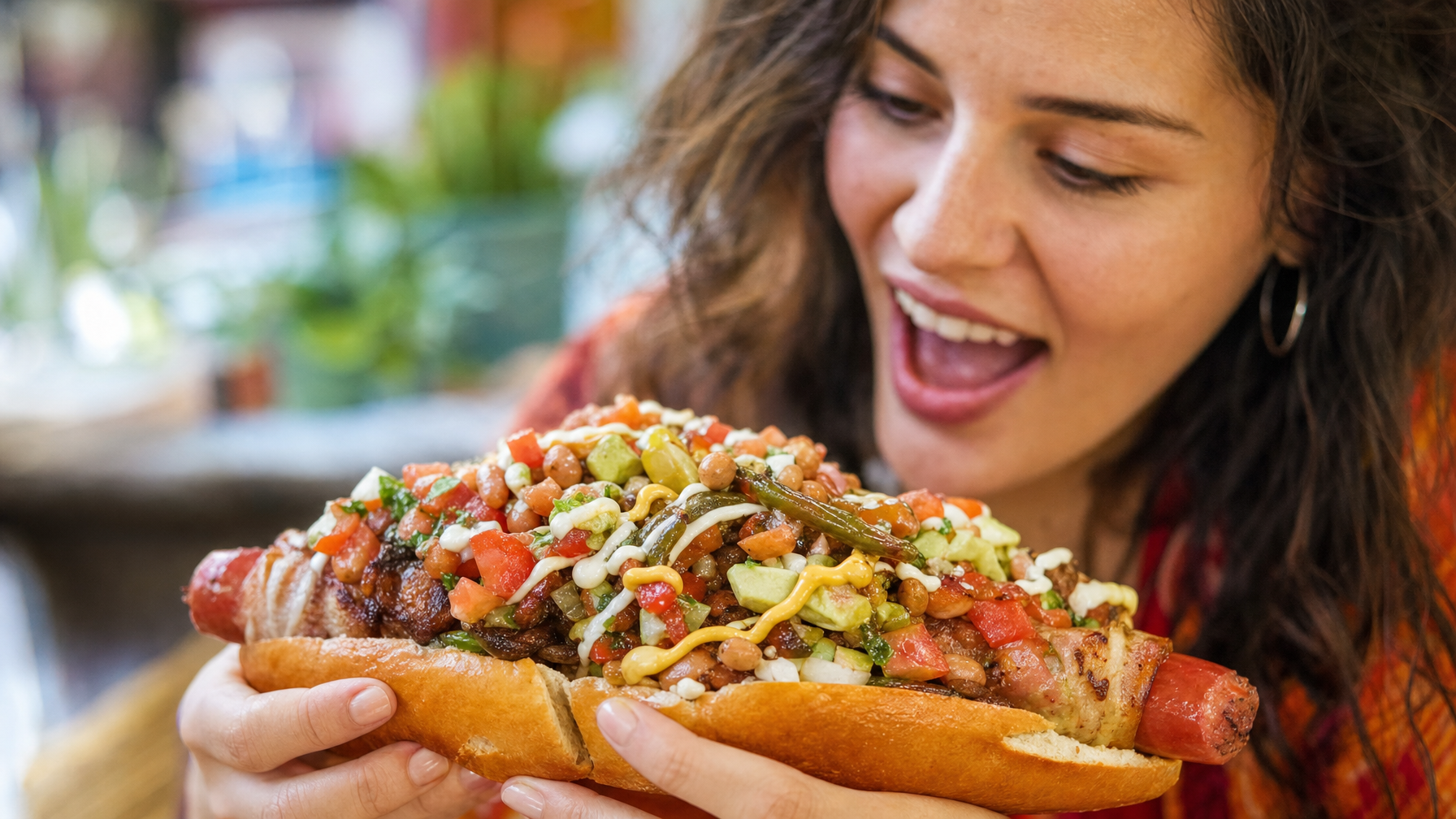
Loaded hot dogs can be intentional, delicious, and full of personality. A generous build may reflect a recognizable local style, a restaurant’s particular point of view, or a deliberate contrast of rich, sharp, crisp, spicy, and soft. Big is not automatically foolish. Sometimes big is the whole glorious point.
The distinction is usually visible before the first bite. A deliberate build has recognizable ingredients and a legible flavor idea. You can look at it and understand the conversation: something savory meets something bright; something creamy meets something crunchy; heat gets cooled down; richness gets cut.
An improvised escalation looks different. It keeps adding components without a clear reason except that empty space remains. The dog becomes a stage for toppings rather than the thing those toppings are meant to improve.
When you encounter a loaded dog, ask three questions:
- Can I name what the major ingredients are?
- Can I imagine the flavor logic without needing a whiteboard?
- Does this appear designed to be eaten, rather than merely filmed?
If the answers are yes, bring napkins and optimism. If not, enjoy the video as performance art and keep your lunch plans flexible.
Watch the Video, Then Judge the Bite
A topping video can be an invitation to investigate. It is not proof that a dog is worth a detour, a purchase, or a declaration of culinary citizenship. Before you chase one down, pause the footage and inspect the fundamentals.
A five-second reality check
- Identify the base: What sausage is carrying this operation, and does it seem likely to stand up to the toppings?
- Check the bun-to-topping ratio: Is there enough bun to hold and balance the build?
- Look for texture contrast: Is everything soft and saucy, or is there something crisp, sharp, or fresh to keep it awake?
- Picture the first bite: Can your mouth get all the important parts at once?
- Investigate before traveling or buying: Check the actual place, product, recipe, or creator details rather than trusting a dramatic close-up alone.
That is the whole deal. Spectacle earns the click; balance earns the repeat visit. A hot dog does not need to be timid, tidy, or precious. It does need to remain edible without a rescue crew.
FAQ: Five Questions Before You Add Another Topping
Is a loaded hot dog automatically better?
No. Extra toppings can add contrast and personality, but they can also bury the sausage, overwhelm the bun, or make the bite impossible to manage. More ingredients only help when they improve the whole bite.
Why are topping videos so satisfying to watch?
The step-by-step escalation creates suspense and a visible before-and-after transformation. Each addition suggests that the next one might be the magic move, even when the finished dog is more entertaining than practical.
How many toppings should a hot dog have?
There is no universal number. Stop when the next addition no longer improves flavor, texture, balance, or the actual eating experience. The hot dog is not obligated to become a landmark.
What should I look for in a good topping combination?
Look for contrast and purpose: crisp with soft, acidic with rich, fresh with savory, or spicy with cooling elements. The ingredients should work together rather than compete for attention.
Where can I follow Jason’s hot-dog opinions and finds?
Follow @jasonsgrub on Instagram for Jason’s ongoing hot-dog discoveries, recipes, place profiles, and cultural commentary.
Enjoyed this? There's more from Jason's Grub.
Follow on Instagram →