Four Steamed Buns, One Chinese-Style Hot Dog, and a Clear Favorite
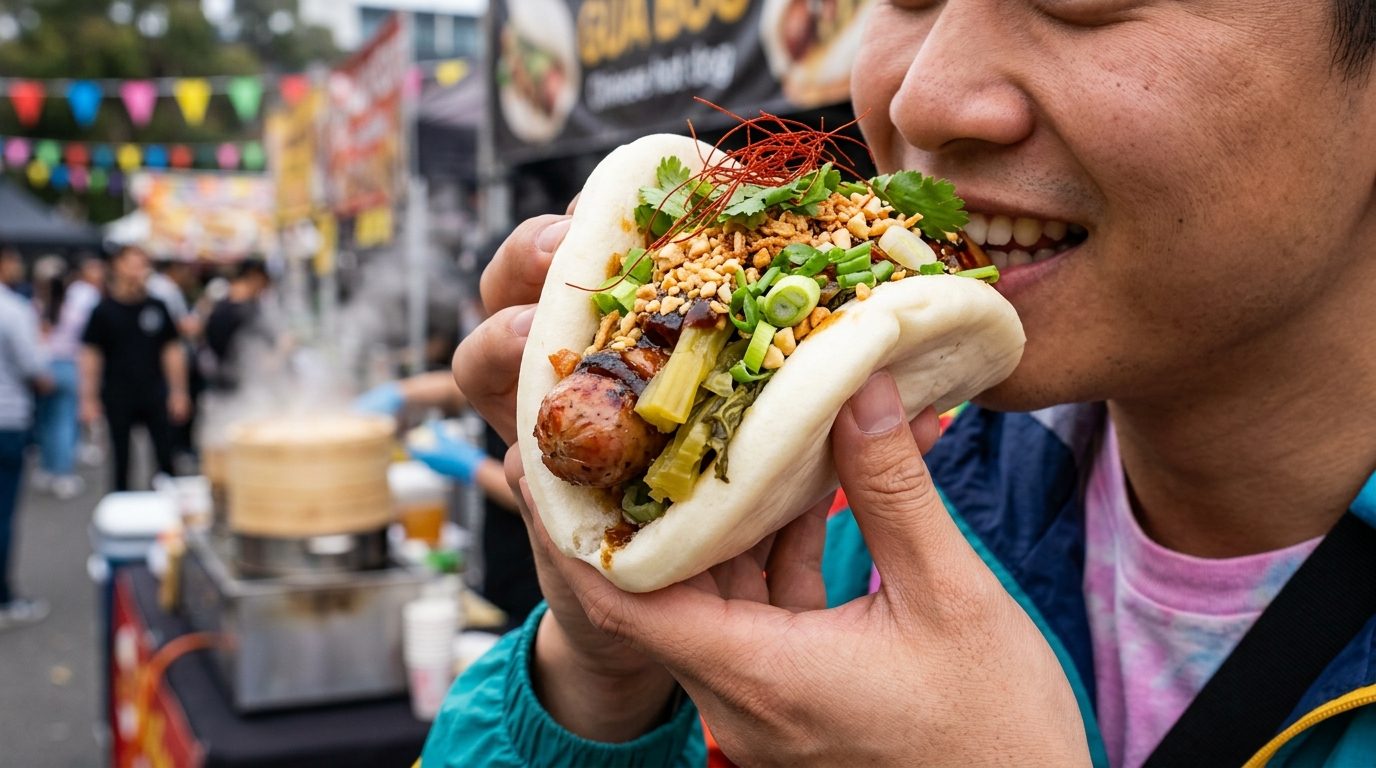
If you want one bun for a Chinese-style hot dog, use a folded gua bao. It is soft without being helpless, roomy without swallowing the sausage, and sturdy enough for a restrained swipe of hoisin, chili crisp, cucumber, scallion, and sesame. A hot dog is not improved by being buried in a cloud of dough. It needs a bun that knows its job.
Four Buns Enter the Steamer. Only One Gets the Good Toppings.
This is a controlled home-kitchen comparison, not a beauty contest for cute steamed bread. Use the same cooked sausage, steam each bun until hot and supple, and give every contender the same topping lineup: cucumber matchsticks, sliced scallion, hoisin sauce, chili crisp, and toasted sesame seeds. The bun is the variable. Sauce chaos is not invited.
For a fair comparison, make all four from one plain bao dough. That removes the usual nonsense where one bun wins because it contains more sugar, oil, or mysterious bakery wizardry.
One dough, four shapes
| Bun | Exact format | How it holds the sausage | Best use |
|---|---|---|---|
| Folded gua bao | A 70 g oval dough piece, folded over a small square of parchment before steaming | Cradles the sausage in an open pocket | The all-around Chinese-style hot dog |
| Slit mantou | A 70 g oval steamed bun, cooled briefly, then split lengthwise about three-quarters of the way through | Holds by pressure, with a narrower opening | A minimal, less-saucy build |
| Lotus-leaf bun | A 70 g round dough piece flattened, folded, and marked with a rolling pin before steaming | Offers a broad pocket with more exposed crumb | A crunchy, vegetable-heavy build |
| Steamed round bao, opened | A 70 g sealed round bao, steamed plain and cut open from the top after steaming | Creates a deep cavity around the sausage | A small sausage with very light toppings |
Use this plain bao dough for every format
- 250 g all-purpose flour
- 6 g instant yeast
- 20 g sugar
- 135 g warm water
- 10 g neutral oil
- 2 g fine salt
Mix the ingredients into a smooth dough, knead until elastic, let it rise until puffy, then divide into four 70 g portions. Shape each portion as listed above. Proof until slightly expanded, then steam over gently simmering water until cooked through. Keep the heat moderate. A furious boil can wrinkle the surface and turn your steamer into a tiny bun panic room.
The verdict: the folded gua bao is the favorite because it combines tenderness, a little chew, a useful opening, and better sauce control than the other three shapes. That conclusion is about eating mechanics, not photogenic fluff.
The Rules of the Bun Fight: Soft, Strong, and Not Weirdly Soggy
A steamed bun has to do two contradictory things. It should feel plush enough to announce that this is not a standard ballpark situation, but it also has to carry a hot sausage and wet toppings without turning into a damp napkin.
What gets judged
- Tenderness: Does the bun compress pleasantly, or does it feel dense and bready?
- Chew: Is there enough resistance to make the bite satisfying without making the sausage work overtime?
- Structural strength: Can the bun survive being picked up, tilted, and bitten?
- Moisture handling: Does it tolerate sauce, or does it become gummy?
- Flavor: Is it mild enough to support the toppings rather than fight them?
- Sausage fit: Can the sausage stay centered, with toppings where a human mouth can reach them?
A simple, non-mystical scorecard
Score each category from 1 to 5 after the first bite and again after the assembled dog sits for five minutes. The second bite is where false heroes get exposed. A bun can feel glorious straight from the steamer and completely lose its nerve once hoisin and chili crisp show up.
| What to record | Question to ask |
|---|---|
| First-bite texture | Does the bun feel soft, light, and pleasantly springy? |
| Five-minute texture | Has sauce made the crumb sticky, wet, or torn? |
| Filling control | Does the sausage stay in place while cucumber and scallion are added? |
| Flavor balance | Does the bun support the savory, sweet, spicy, and crunchy toppings? |
Bun One: The Pillowy Contender
The folded gua bao is pillowy immediately after steaming, but it is not merely soft for soft's sake. Its fold creates a deliberate pocket. The sausage sits low, the cucumber and scallion sit high, and the eater gets a fighting chance of tasting all three in the same bite.
That folded shape also protects the inner crumb. Sauce can be spread in a thin layer along the inside rather than poured into a crater. Hoisin works especially well here because its sweetness and viscosity stay close to the sausage. Chili crisp belongs on top in a modest spoonful, where its crunchy bits stay crunchy.
The danger is overstuffing. Too much hoisin plus too much chili oil can soak the hinge of the fold. This bun rewards restraint, which is not a word hot dog people enjoy hearing, but there it is.
Bun Two: The Chewier Challenger
A slit mantou gives more resistance. That can be useful if you prefer a substantial bite, but it also makes the sausage feel less integrated with the bun. The slit is narrower than a gua bao pocket, so toppings tend to perch on the surface and attempt escape at the first sign of gravity.
This format holds the sausage reasonably well once it is tucked into the cut. The tradeoff is access. Adding cucumber, scallion, hoisin, and chili crisp can force the slit wider, which compresses the crumb and makes the eating experience more athletic than necessary.
Its mild wheat flavor is not a problem, but its firmer chew can compete with a sausage that already has a snappy casing. Use it when you want a simpler dog with cucumber, scallion, and a light touch of hoisin. Do not ask it to manage a glossy sauce flood.
Bun Three: The Sauce-Handling Specialist
The lotus-leaf bun has a broad pocket and a flatter surface. That gives it room for crunchy toppings, particularly cucumber and scallion, but it also exposes more crumb to moisture. It can handle a measured portion of hoisin better than a round bun opened from the top, provided the sauce is spread thinly instead of deposited in one heroic blob.
For a fair comparison, use the same sauce portion in each bun: about 2 teaspoons hoisin and 1 teaspoon chili crisp per sausage. The lotus-leaf shape makes that quantity easy to distribute. It does not demand more sauce. Nothing good has ever begun with the sentence, "This bread seems dry, hand me the ladle."
This bun favors brightness and crunch. Let cucumber and scallion lead, use sesame as a finish, and keep the chili crisp controlled. Richer, wetter topping strategies are more likely to make its broad interior gummy.
Bun Four: The Dark Horse With Something to Prove
A plain steamed round bao, cut open after steaming, looks promising because it creates a deep little nest for the sausage. The aroma is appealing, the crumb is tender, and the round shape has undeniable cartoon confidence. But it is the least natural hot dog holder of the four.
Once opened, the cavity encourages too much filling. Cucumber slides down the sides, hoisin pools near the bottom, and the sausage can disappear into the bun like it is hiding from responsibility. The texture is soft, but the bite is less balanced because there is simply more bread around the sausage.
It still has a role. Choose this format for a smaller sausage and a lighter build with cucumber, scallion, sesame, and only a thin streak of hoisin. It is useful when you want a bao-like snack that happens to contain a sausage. It is not the strongest choice when you want a hot dog that has picked up Chinese-style flavors.
The Toppings Were the Interrogation Room
Every bun should face the same lineup: heated sausage, cucumber matchsticks, sliced scallion, hoisin sauce, chili crisp, and toasted sesame seeds. These toppings cover the major pressure points. Hoisin brings sweet and savory stickiness. Chili crisp brings heat, oil, and crunchy fragments. Cucumber brings water and crunch. Scallion brings sharpness. Sesame contributes a toasty finish.
That lineup reveals more than a pile of random condiments ever could. A weak bun is exposed by hoisin and cucumber. A bun with poor filling control is exposed by chili crisp. A bun that is too thick or chewy can drown out the sausage before the toppings even get a word in.
Toppings that help
- Cucumber: Adds clean crunch and keeps the rich sausage from feeling heavy.
- Scallion: Brings a sharp, savory lift without adding much moisture.
- Toasted sesame: Adds aroma and texture with almost no structural burden on the bun.
Toppings that need discipline
- Hoisin: Useful in a thin layer. Too much turns a tender bun sticky.
- Chili crisp: Excellent in a small spoonful. Its oil travels farther than its jar-based confidence suggests.
The Winner: Soft Enough for the Sausage, Tough Enough for the Sauce
The folded gua bao wins because its open pocket gives the sausage, crunchy toppings, and controlled sauce a place to live without making the whole thing collapse into steamed chaos.
Its best quality is balance. The bun is tender, but the folded hinge and two layers of crumb provide enough support to hold a sausage. Its mild flavor lets hoisin, chili crisp, cucumber, scallion, and sesame do their jobs. Most importantly, it keeps the sausage visible and reachable. This remains a hot dog, not a bread-based scavenger hunt.
The lotus-leaf bun is the runner-up for a crunch-forward version with extra cucumber and scallion. Its wider pocket is generous, but it needs more attention around wet ingredients. The slit mantou is a good choice for someone who values chew and prefers less sauce. The opened round bao is for a snack-like build, not for the full hot dog experience.
Jason's ruling is simple: a Chinese-style hot dog should be playful and bold, but the bun still has to do the unglamorous work of holding dinner together. Let the toppings dance. Do not make the bun file for workers' compensation.
Build the Winning Chinese-Style Hot Dog Without Losing the Plot
Use the folded gua bao and keep the assembly brisk. Steam makes the bun tender. Time makes sauce migrate. Those are different things, and only one is helpful.
Ingredients for one hot dog
- 1 folded gua bao
- 1 cooked sausage, heated through
- 2 teaspoons hoisin sauce
- 1 teaspoon chili crisp
- A small handful of cucumber matchsticks
- 1 tablespoon thinly sliced scallion
- 1 teaspoon toasted sesame seeds
Assembly order
- Steam the folded gua bao until hot, soft, and pliable.
- Heat the sausage separately, then place it in the bun pocket.
- Spread the hoisin in a thin line alongside the sausage, not across the entire interior.
- Add cucumber matchsticks and scallion over the sausage.
- Spoon the chili crisp over the toppings in a controlled amount.
- Finish with toasted sesame seeds and eat immediately.
Steaming the bun and heating the sausage separately gives you better control. The bun stays soft without absorbing sausage moisture, and the sausage can be heated by the method that best suits it. Add the wet ingredients after the sausage is in place, then serve right away. This is not Jason's Signature Charcoal Snap Dog wearing a different hat. The whole point here is the tender bun, the open pocket, and the Chinese-style sweet, spicy, crunchy balance.
FAQ: The Questions Your Bun Is Too Soft to Answer
Can any steamed bun work for a Chinese-style hot dog?
Many can work, but they will not behave the same way. Choose folded gua bao for the best overall balance of softness, chew, and topping control. Pick a lotus-leaf bun for a crunch-heavy build, a slit mantou for a firmer bite, or a round bao only when you want a lighter, snack-like result.
Should the bun and sausage be steamed together?
For the winning build, steam the bun and heat the sausage separately. That keeps the bun from taking on extra moisture and lets you assemble while both components are hot. If you test another method, keep it consistent across all four buns so the comparison stays meaningful.
Which toppings are easiest on a delicate bun?
Cucumber matchsticks, scallion, and toasted sesame seeds are the easiest toppings to manage because they add crunch and flavor without much moisture. Use hoisin in a thin layer and chili crisp in a controlled spoonful, especially with the softer buns.
What makes this different from a standard hot dog?
The sausage and handheld format keep it firmly in hot dog territory. The steamed bun, hoisin, chili crisp, cucumber, scallion, and sesame shift the texture and flavor toward a Chinese-style pairing. It is a hot dog with a new accent, not an identity crisis.
Where can I see more of Jason's hot dog experiments?
Follow @jasonsgrub on Instagram for more hot dog opinions, bun investigations, and a firm zero-ketchup outlook.
Enjoyed this? There's more from Jason's Grub.
Follow on Instagram →