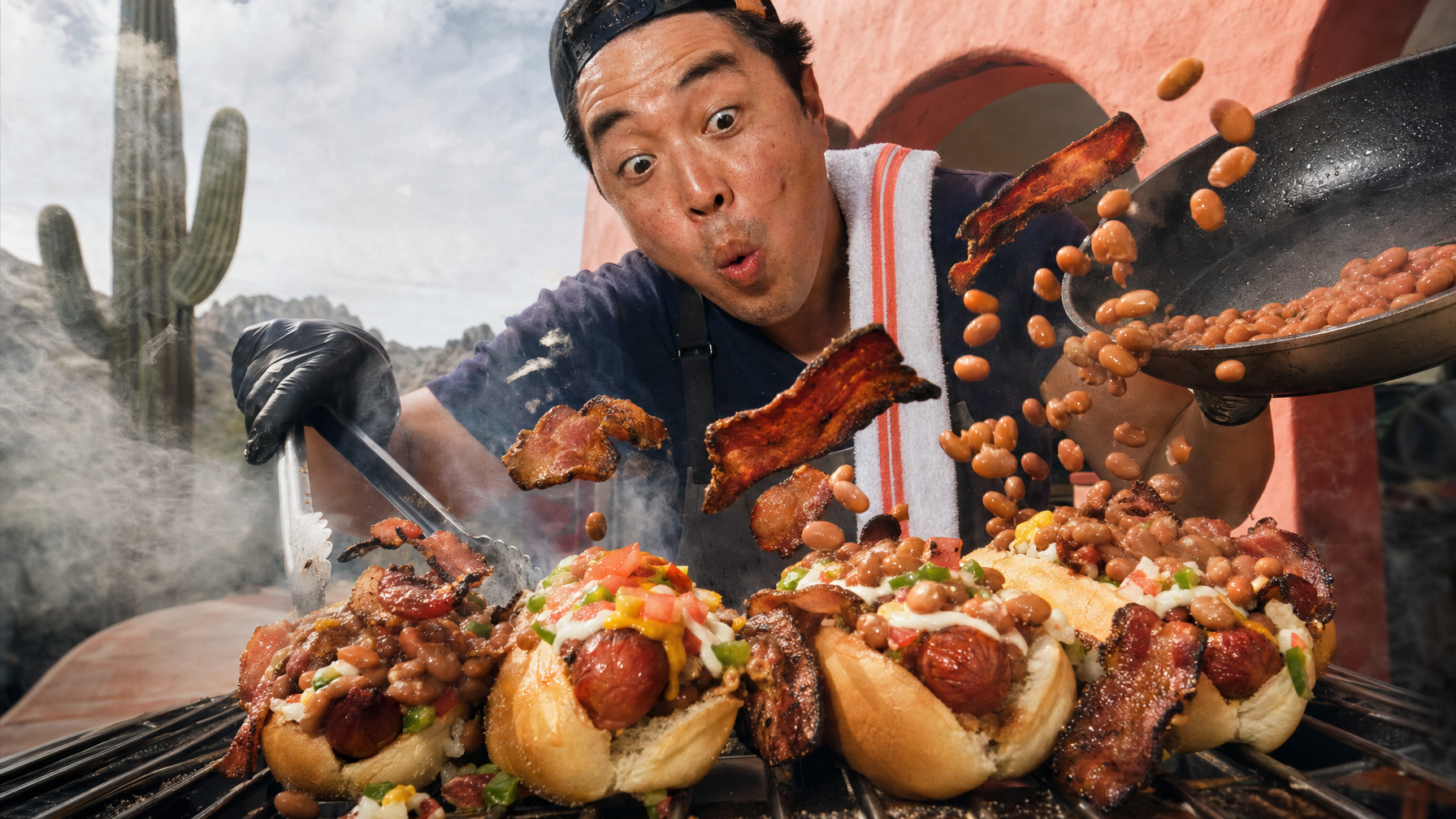
I Charred 5 Different Pepper Relishes for a New Mexico Dog and Apologized to My Smoke Alarm
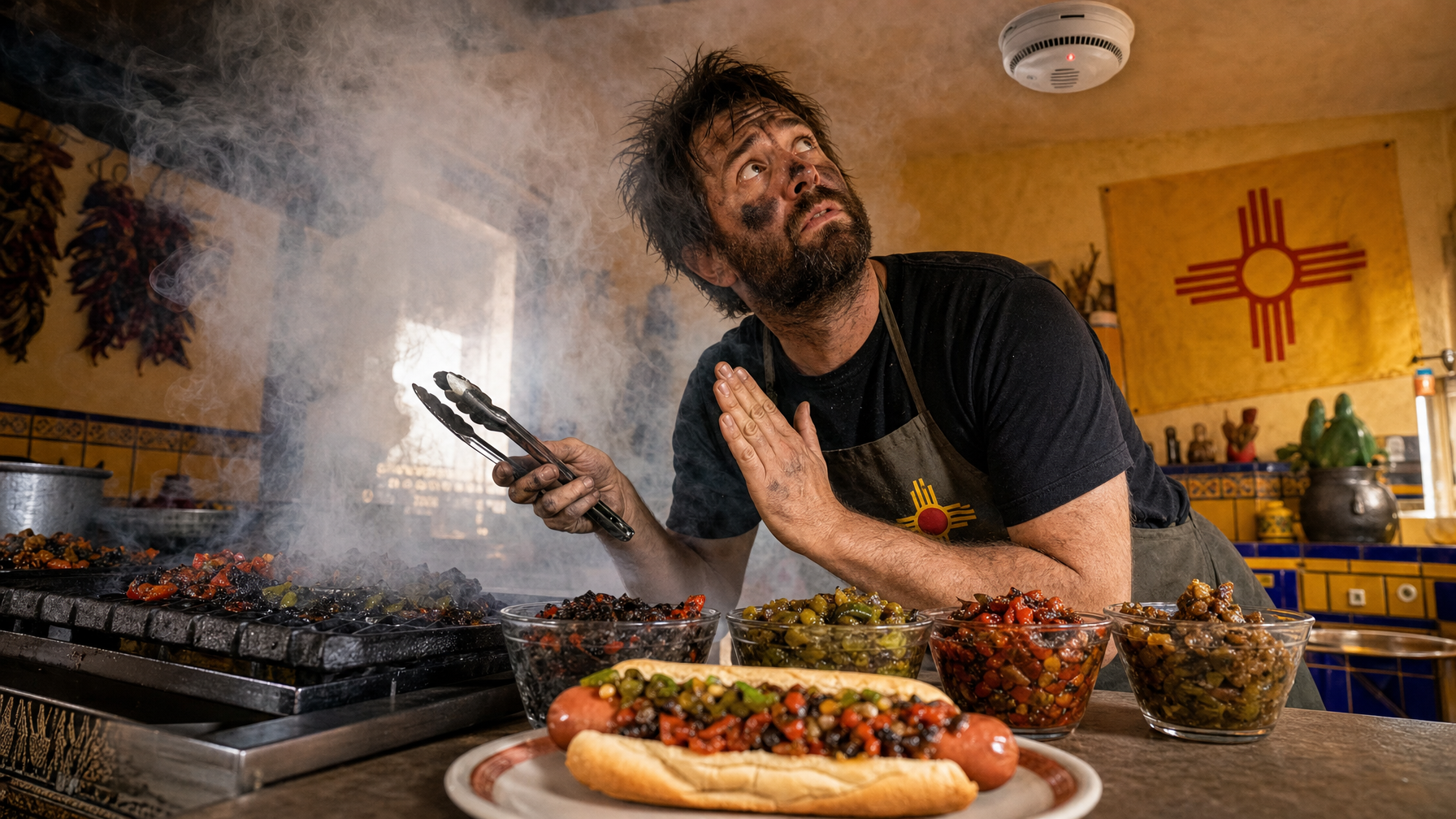
For hot dog fans who want New Mexico-style pepper character without converting dinner into a neighborhood smoke alert, the best move is a moderately charred, sharply dressed, chunky relish. In this five-relish kitchen throwdown, the deep-blackened batch brought drama, the sweet batch got a little too eager to please, and the brighter acidic version made the strongest case for staying in the bun. The smoke alarm had a point. It did not need to be quite so theatrical about it.
Five Relishes Enter the Kitchen. One Smoke Alarm Files a Complaint.
This is for people who care whether a pepper topping is actually helping a hot dog, not people looking for a damp mystery scoop labeled “spicy.” The question was simple enough to sound dangerous: does charring make pepper relish deeper and sweeter, or does it just create an edible fire drill?
I built five small relishes around the same basic idea: charred peppers, a little salt, a measured acidic liquid, and a chop that still lets the topping behave like food instead of salsa runoff. Each one had a different plan for smoke, sweetness, acid, and heat. All five were judged on an assembled dog, because a relish that struts around brilliantly on a spoon can become a bun-soaking tyrant once meat enters the chat.
Before the Peppers Hit the Pan, What Is This New Mexico Dog Supposed to Be?
This is my New Mexico-inspired interpretation, not a claim that there is one official, state-approved New Mexico dog guarded by a committee in a locked hatch. The point is a savory hot dog build led by pepper flavor. Heat is welcome, but it cannot be the only personality trait.
The target is balance:
- Hot dog: savory enough to stand up to the peppers.
- Bun: toasted enough to resist a wet topping without becoming crouton cosplay.
- Peppers: aromatic, lightly sweet from heat, and recognizably vegetal rather than burnt.
- Acid: enough to cut richness and wake up the whole bite.
- Texture: a coarse chop that gives the dog some snap and does not slide out in one tragic avalanche.
No ketchup. That is not a negotiation point. It is also not the main event here. The relish has too much to say already.
Five Pepper Relishes, Each With a Different Personality Problem
These were small-batch comparisons, not five unrelated toppings tossed into a witness-protection program. Each batch started with peppers chosen by role: mild peppers for body and aroma, medium-heat peppers for lift, or hotter peppers for a deliberate threat. Use peppers you know and can source, then control the heat with the ratio rather than treating your guests like test subjects.
1. The Bright One, Who Refused to Wear a Campfire Costume
- Pepper mix: three parts mild peppers to one part medium-heat peppers.
- Charring method: brief blistering in a very hot dry skillet, turning until the skins showed scattered dark spots but remained mostly intact.
- Chop: medium dice.
- Liquid components: apple cider vinegar, a small splash of water, and salt.
- Intended role: preserve fresh pepper flavor and give the hot dog a clean, lively edge.
This version had the clearest pepper aroma. It was pleasant, but it flirted with being too polite. On the dog, its acid did useful work, though the brief char did not bring enough bass note to make the topping unforgettable.
2. The Smoke Monster, Who Needed an Editor
- Pepper mix: mostly mild peppers with a small portion of medium-heat peppers.
- Charring method: blackened over high heat until much of the exterior was dark, then cooled and scraped before chopping.
- Chop: fine dice.
- Liquid components: apple cider vinegar, neutral oil, and salt.
- Intended role: bring deep roasted flavor and a soft, almost jammy texture.
It smelled sensational from across the kitchen. It also pushed the relish toward bitterness once it hit the bun. The scraping helped, but the aggressive char blurred the pepper's fresher flavor. Delicious in tiny doses, exhausting in a full hot dog bite.
3. The Sweet Talker, Who Nearly Joined a Barbecue Sauce Band
- Pepper mix: mild peppers with a modest amount of medium-heat peppers.
- Charring method: medium blistering, followed by a short covered rest so the peppers softened before chopping.
- Chop: small dice.
- Liquid components: apple cider vinegar, a small amount of sugar, and salt.
- Intended role: test whether caramelized pepper flavor and sweetness could stand up to the dog.
This one was friendly, glossy, and a bit too ready to flatter everyone at the table. A little sweetness rounded off the heat, but too much made the hot dog taste less like a pepper-forward build and more like it had wandered into a cookout condiment aisle. Not a felony. Not the winner.
4. The Acid Freak, Who Understood the Assignment
- Pepper mix: three parts mild peppers to one part medium-heat peppers.
- Charring method: medium blistering, with only a few truly black patches per pepper. No full incineration.
- Chop: coarse, with a few finer pieces to help the relish cling together.
- Liquid components: apple cider vinegar, a small splash of water, and salt.
- Intended role: cut through the richness of the dog while keeping char, pepper flavor, and crunch in view.
This was the one. It had enough char to smell roasted, enough vinegar to keep the dog from getting sleepy, and enough chunk to make every bite feel intentional. It did not bury the sausage. It made the sausage seem smarter for inviting it over.
5. The Heat Goblin, Who Mistook Pain for Depth
- Pepper mix: one part hot peppers to two parts mild peppers.
- Charring method: quick, controlled blistering to avoid amplifying bitterness in the hotter peppers.
- Chop: very fine dice, so the hot peppers dispersed through the mild ones.
- Liquid components: apple cider vinegar, water, and salt.
- Intended role: find out whether more heat makes a better dog or simply louder regret.
The answer: extra heat can be fun, but it does not automatically improve anything. This batch was exciting for a few bites and then began erasing the hot dog, the bun, and most thoughts formed after lunch. Heat needs a job beyond causing a forehead situation.
Char Peppers, Not Your Lease Agreement
Charring peppers is simple. The line between char and bitter ash is where the plot gets spicy.
- Heat a dry heavy skillet over high heat, or use another very hot cooking surface that you can safely ventilate.
- Add whole or large pepper pieces in a single layer. Do not crowd them. Steam is not char's glamorous cousin.
- Turn the peppers as their skins blister and darken. Look for irregular dark patches and softening, not a uniformly black corpse.
- Transfer them to a bowl and cover briefly if you want the skins to loosen.
- Peel or scrape away only the loosened, heavily blackened skin as needed. Leaving some char is flavor. Leaving all of it is a cry for help.
- Remove stems and seeds as desired, then chop and dress the peppers while they are cool enough to handle.
Open a window. Run the fan. Use strong ventilation. The smoke alarm is a safety device, not a doneness indicator and certainly not your sous-chef.
Watch the peppers, not a rigid clock. Small peppers, thick-walled peppers, and moist peppers all behave differently. Stop when the surface smells roasted and the flesh has softened, before the kitchen starts smelling like a fireplace that lost its purpose in life.
The Relish Scorecard: A Spoon Is Not a Hot Dog
These notes are about the complete bite: toasted bun, hot dog, and relish together. A relish can taste wildly acidic by itself and still be exactly what a rich dog needs.
| Relish | Aroma and pepper flavor | Acid and sweetness | Texture and bun behavior | Heat | Verdict on the dog |
|---|---|---|---|---|---|
| Bright | Fresh, clean, lightly roasted | Brisk acid, no noticeable sweetness | Chunky and tidy | Gentle to medium | Good balance, but wanted more roasted depth |
| Smoke Monster | Big smoke, less distinct pepper character | Acid present but fighting bitterness | Soft and spreadable | Medium | Too smoky for a full serving |
| Sweet Talker | Roasted and round | Soft acid, noticeable sweetness | Glossy, slightly loose | Gentle to medium | Tasty, but distracted from the savory dog |
| Acid Freak | Roasted, fragrant, still clearly peppery | Bright acid, restrained sweetness | Coarse, stable, and bun-friendly | Medium | Winner. Complete bite, no nonsense. |
| Heat Goblin | Pepper flavor fades behind the burn | Acid helps, but cannot rescue the balance | Fine and contained | Hot | For people seeking heat first, hot dog second |
The Winning Dog Needs More Than a Pepper Pile
My preferred finished build is deliberately spare:
- Toast a split bun until the cut sides are dry and lightly crisp, but still flexible.
- Add one cooked savory hot dog.
- Spoon on the Acid Freak relish in a modest line from end to end.
- Serve immediately, before the relish has time to turn the bun into a damp legal document.
Start with a few spoonfuls, not a shovel. The dog should still be visible, structurally speaking. If your relish is especially wet, drain the excess liquid before topping the bun. If it is heavily chopped, a sturdier toast on the bun matters even more.
This is my personal verdict, not a universal commandment etched into a griddle: medium char, coarse texture, and assertive vinegar make the best New Mexico-inspired pepper relish for this particular dog. The whole point is pepper flavor with a pulse, not a vegetable landslide or a smoke-flavored punishment.
What the Smoke Alarm Got Right, and What It Absolutely Did Not
The alarm correctly identified that the kitchen had become unusually smoky. Credit where due. It was wrong to suggest that the solution was abandoning char altogether.
The useful tradeoff is plain: more char creates deeper roasted complexity, but past a certain point it flattens the pepper's bright flavor and adds bitterness. The winning version stopped at scattered black blistering, then used vinegar and a coarse chop to keep the relish lively.
Do not assume an untested swap will behave exactly the same. Different peppers release different amounts of water, bring different heat, and brown at different speeds. If you change the pepper mix, make a small batch first and adjust the vinegar, salt, and chop size after tasting it on an actual hot dog.
My strong opinion: a great pepper relish should taste smoky enough to be interesting, acidic enough to be useful, hot enough to wake you up, and chunky enough to prove it was made by a human with standards. The winner hit that line. The smoke alarm can stay mad about it.
FAQ: The Questions That Arrive After the Peppers Start Smoking
Does a New Mexico-style dog have to be painfully hot?
No. The heat level is adjustable. A good relish still needs pepper flavor, acidity, and texture. Use a larger share of mild peppers and a smaller share of hotter ones if you want warmth without turning dinner into an endurance event.
Can I char peppers without setting off the smoke alarm?
Usually, yes. Use strong ventilation, open a window, run a fan, avoid crowding the pan, and stop at blistered and darkened rather than fully burned. Equipment, pepper size, and moisture level all affect how quickly smoke develops, so visual and aromatic cues matter more than a fixed minute count.
Should the relish be smooth or chunky?
For this dog, chunky wins. A coarse chop gives the topping texture and keeps it from behaving like a sauce. If your peppers are very wet or intensely hot, chop them a little finer so the relish distributes more evenly and does not overwhelm one bite.
Can the relish be made ahead?
It can be made a day ahead and kept covered in the refrigerator, but expect it to release extra liquid as it sits. Stir it before serving and drain excess liquid if the bun needs protecting. This is a fresh relish, not a shelf-stable preservation project, so chill it promptly and handle it as a perishable topping.
Which of the five relishes is best?
The sharper, moderately charred Acid Freak relish won this particular tasting because it worked best on the complete dog. It delivered roasted aroma, pepper flavor, vinegar brightness, manageable heat, and a chop that stayed where it belonged. If you prefer fire above all else, the hotter batch may be your chaos agent. I am taking the balanced one.
Enjoyed this? There's more from Jason's Grub.
Follow on Instagram →