Part of the Regional Hot Dog Styles hub
Harissa Merguez Baguette With an Egg That Refuses to Stay in Its Lane
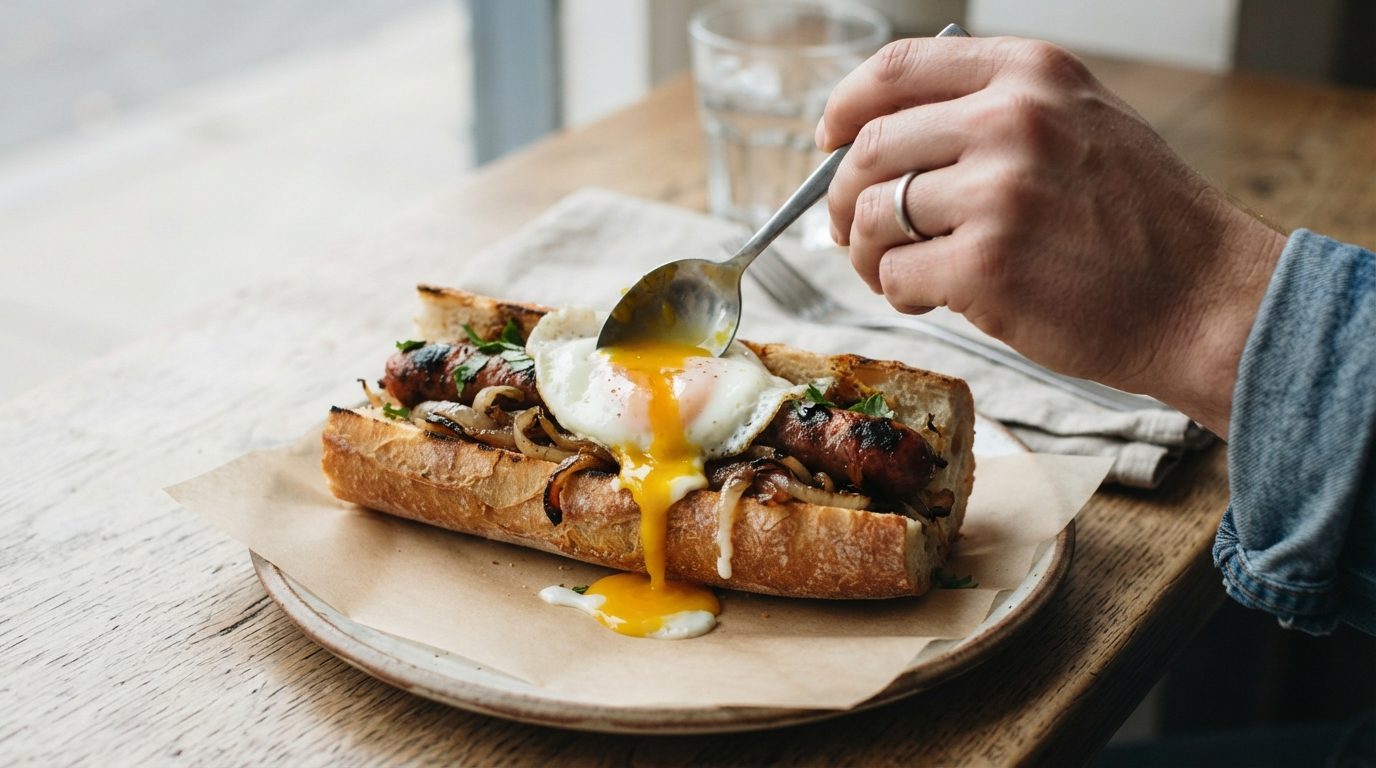
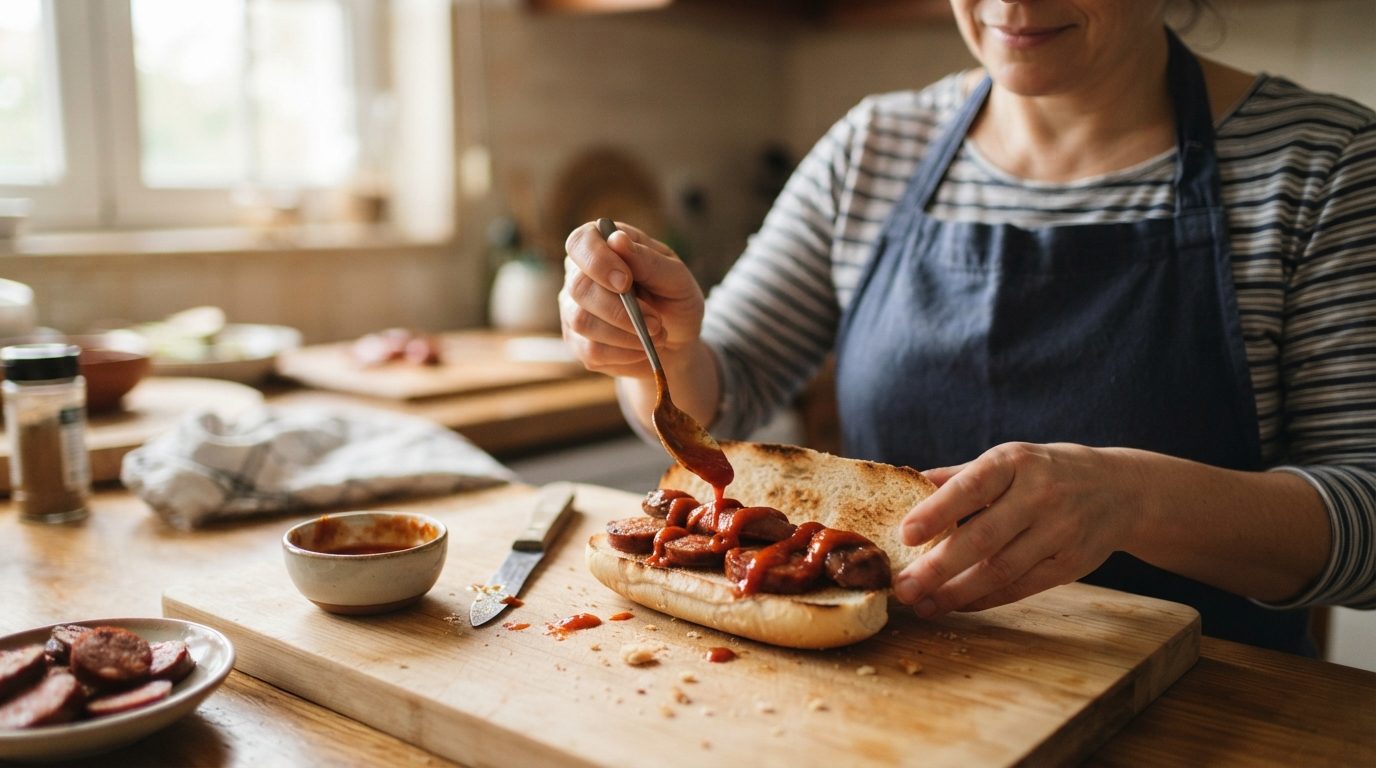
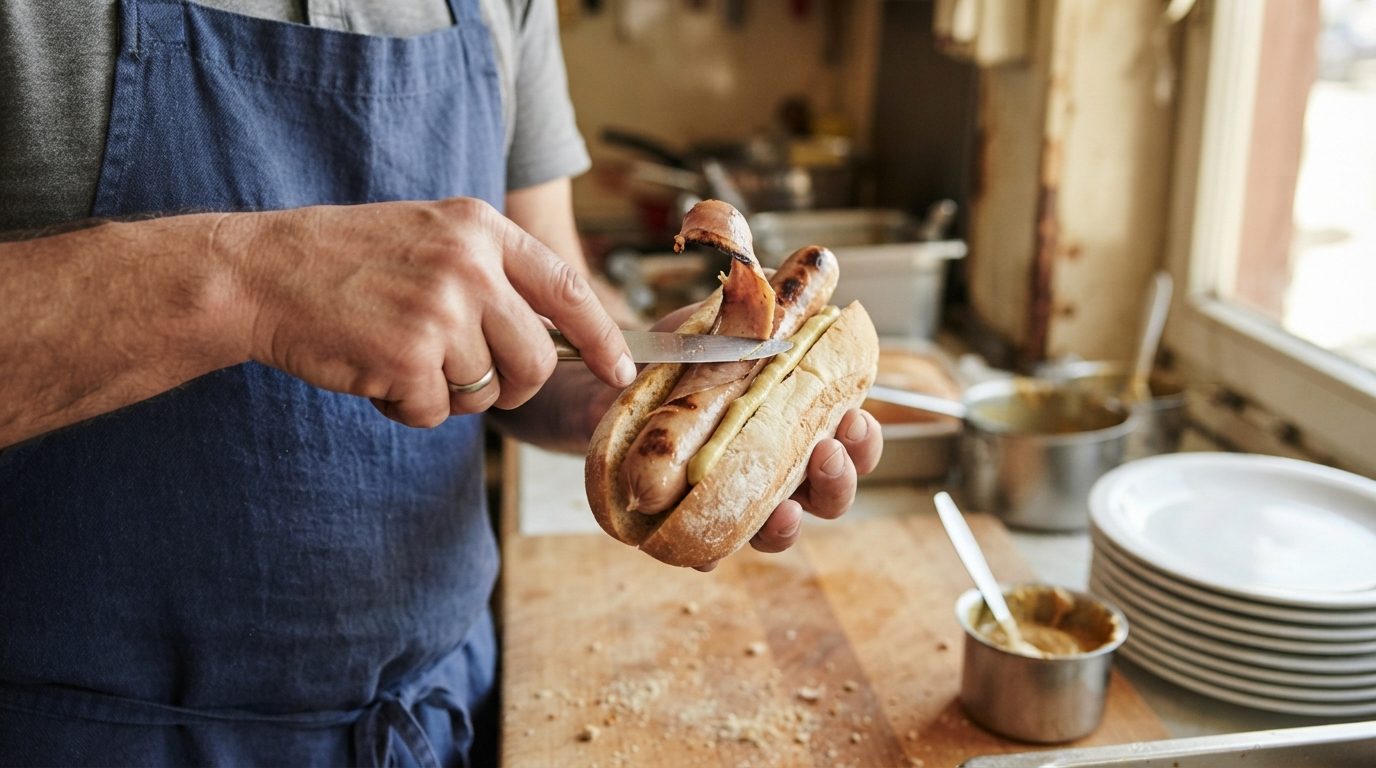
This harissa merguez baguette works when the sausage stays in charge, the harissa behaves itself, the olives bring a sharp salty jab, and the egg delivers richness without turning lunch into a landslide. It is for hot dog enthusiasts and food culture readers who like bold builds, strong opinions, and an egg with absolutely no respect for personal space.
- Use merguez as the spicy, savory anchor.
- Spread harissa in a controlled layer so it brings heat without burying the sausage.
- Scatter olives across the baguette for briny contrast in more than one bite.
- Cook the egg last and serve immediately while the yolk is still ready to make a tasteful mess.
- Jason's opinion: A sandwich becomes gloriously overstuffed when every ingredient has a job, not when the filling simply reaches escape velocity.
Why does this baguette work when the egg clearly has other plans?
The sandwich works because each major ingredient handles a different sensation around the merguez. The sausage brings spiced, savory depth. Harissa supplies concentrated chile heat. Olives cut through with briny sharpness, while the egg rounds out those louder flavors with richness.
The egg is support staff, not a second main course. Its job is to coat the sausage and catch the harissa on the way down, not to turn this into breakfast wearing a baguette costume. Jason's stated experience across ten years and fifty states has produced one firm rule: even a wildly stuffed sandwich needs a readable flavor order. First sausage, then heat, then salt, then yolky relief.
The cast of characters, with no ketchup invited
The ingredient list should stay compact so the harissa, merguez, olives, baguette, and egg remain distinct. This is ingredient choreography, not a pantry clearance event.
- Merguez sausage: Choose a sausage with enough spice and savory character to stand up to harissa and olives. Follow the package directions for cooking and handling.
- Crisp baguette: Use bread with a sturdy crust and enough interior softness to take on juices without instantly collapsing.
- Harissa: Use a paste or sauce with flavor beyond raw heat. A modest layer is the move.
- Olives: Chop or slice them so their briny flavor can reach multiple bites instead of ambushing one unlucky bite.
- Egg: A fried egg with a rich yolk fits the intended mess, though a more firmly cooked egg is completely fair game.
- Optional fresh element: A few herbs or peppery greens can brighten the build, but only if they sharpen the contrast rather than create decorative shrubbery.
Ketchup is explicitly excluded. Jason's answer is no, with the confidence of a person who has spent a stated ten years chasing hot dogs through fifty states. Harissa already brings heat and personality. Ketchup would arrive late, loud, and wearing the wrong shoes.
The choreography starts before the baguette hits the plate
Prepare each component separately so the finished sandwich has contrast instead of one undifferentiated pile. A good build begins with components that each know their assignment.
- Cook the merguez according to its label and safe handling guidance. The USDA Food Safety and Inspection Service provides current safe minimum temperature guidance for meat products.
- Warm or lightly crisp the baguette. It should be ready to resist sausage juices and yolk for at least the journey from plate to mouth.
- Taste the harissa. If it is too dense or intense to spread in a thin layer, loosen it with a small amount of a suitable spread or dressing until it is controllable.
- Chop or slice the olives. The goal is distribution, not a single giant pocket of salt.
- Fry the egg last. Keep the yolk rich and cohesive if you want the full runny effect, or cook it further if you value a cleaner bite.
Use clean utensils and cook the sausage and egg with food safety in mind. The USDA Food Safety and Inspection Service offers handling guidance for eggs and egg products as well as temperature guidance for meat.
Build it in layers before the egg stages its escape
Layer the sturdy ingredients first and place the egg on top so the yolk can season the sandwich naturally. The order keeps flavor close to the sausage and gives the egg somewhere useful to land.
- Open the warmed baguette.
- Spread a thin, even layer of harissa on the bottom piece of bread.
- Set the cooked merguez over the harissa.
- Scatter the olives across the sausage.
- Add a restrained amount of herbs or greens, if using.
- Place the fried egg on top, ideally near the cut edge where the yolk can make its dramatic entrance.
- Rest the top piece of baguette over everything and press lightly.
Harissa should touch both bread and sausage because it needs to season the whole bite, not sit in one fiery corner. Olives should be distributed, not dumped. Close the baguette with a light press, not a wrestling match. Serve it on a plate or paper that can catch the yolk. The mess is part of the design, not a kitchen failure.
When does a hot dog style sandwich become gloriously overstuffed?
It becomes gloriously overstuffed when the sandwich is difficult to eat but still easy to understand. Every filling must contribute heat, salt, richness, texture, or structure. If an ingredient cannot name its job, it does not get a seat in the baguette.
Layered excess means the merguez gives savory spice, harissa adds direct heat, olives add brine, bread provides structure, and egg connects it all with richness. Random excess is adding whatever is in the refrigerator and hoping gravity becomes cuisine. Those are not the same thing, no matter how photogenic the collapse may be.
If the full baguette is too unwieldy, cut it into manageable portions after assembly. A sandwich should not require architectural drawings, but it is allowed to require both hands.
The final bite should taste like a controlled argument
The final bite should move from spicy sausage to harissa heat, olive salinity, and egg richness without one element flattening the others. This is a bold build, not a delicate breakfast roll pretending it has plans.
- Too hot: Use less harissa, or loosen it before spreading so it lands in a thinner, more even layer.
- Too salty: Reduce the olives first. Their job is contrast, not domination.
- Too rich: Use a more firmly cooked egg or add a small amount of herbs or greens for lift.
- Too dry: Warm the baguette more gently and make sure the harissa is spread evenly. A yolkier egg can also bring the build back into balance.
Taste the harissa and olives together before assembly. Their combined intensity tells you whether the sandwich needs restraint or whether it is ready to pick a fight. Adjust balance, not clutter.
Follow the next build: Follow @jasonsgrub for more hot dog builds, food finds, recipes, and strong opinions about what belongs near a sausage.
FAQ for readers who are already reaching for another egg
Can I use a different sausage instead of merguez?
Yes. Choose a sausage with enough spice and savory character to hold its own against harissa, olives, and egg. A mild sausage can work, but it may need a more restrained harissa layer so the sandwich does not become all chile and no center.
How hot is the sandwich?
The heat depends on both the merguez and the harissa. Taste the harissa first, then add it gradually rather than treating the amount as a dare.
Should the egg yolk be runny?
A rich yolk suits the sandwich because it acts like a sauce, but you can cook the egg further for a neater bite. The flavor structure remains intact either way.
Can I prepare the components ahead of time?
You can cook the sausage and prepare the olives ahead of time. Assemble the warmed baguette and freshly cooked egg close to serving so the bread keeps its texture and the egg stays where you intended, briefly.
Is ketchup allowed?
Jason's answer is no. Harissa already supplies the heat and personality this sandwich needs. Ketchup would only distract from a perfectly good argument between sausage, olives, and egg.
Sources
Enjoyed this? There's more from Jason's Grub.
Follow on Instagram →