Nacho Dog Technique: Keep the Queso Pourable and the Chips Crunchy
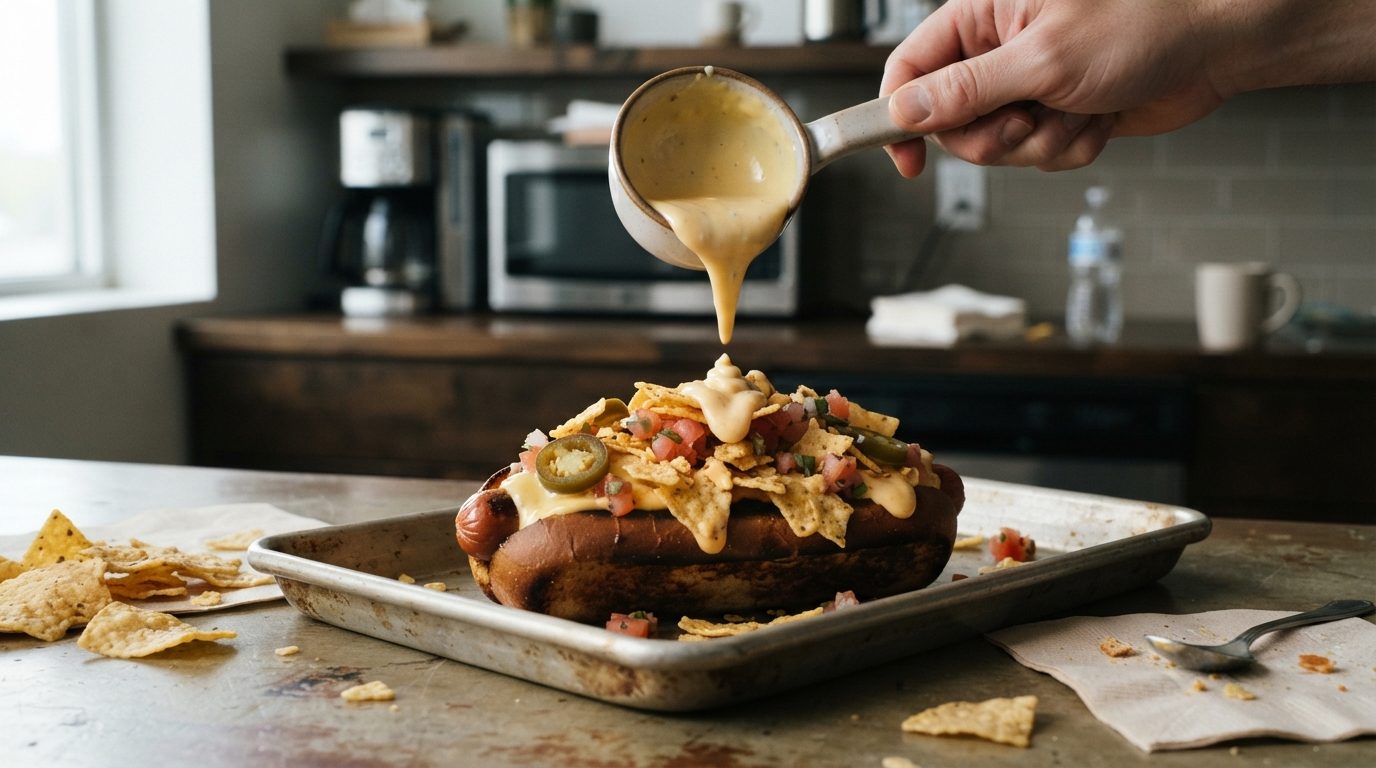
A nacho dog stays balanced when you build the hot dog and bun first, add warm fluid queso, then finish with jalapeño and chips. The goal is a loaded dog that still eats like a hot dog, not a plate of nachos that happens to have a sausage hiding in it.
- Warm queso until it pours easily, then use a controlled pour instead of flooding the bun.
- Put jalapeño on the queso so its sharp, bright flavor cuts through the richness.
- Scatter tortilla chips at the last possible moment, then serve immediately.
- Use enough topping for contrast, but not enough to require a fork.
- Treat chips as the final crunch, never as the foundation layer.
Nacho Dog Technique: Keep the Queso Pourable and the Chips Crunchy
This technique is for hot dog fans who want a properly loaded dog that still survives a handheld bite. The central problem is a texture brawl: warm queso wants to soften everything, juicy toppings want to wander, chips demand to stay crisp, and the bun has only so much patience.
Jason's ruling is simple: a nacho dog must remain handheld. Once the toppings demand cutlery, the hot dog has lost the argument.
The winning build gives every component a job. The sausage brings the savory center, the bun holds the line, queso provides creamy coverage, jalapeño wakes up the richness, and chips arrive with the crunchy finale. None of them should smother the others.
Build the Dog Before the Toppings Start a Custody Dispute
A stable base prevents the toppings from sliding into the bun or taking a dramatic leap onto the plate. Start with a warm, lightly toasted bun and a hot dog placed squarely in its center.
If you want a supporting spread or seasoning, keep it restrained. A thin swipe or a small scatter can support the build, but this is not the moment to turn the bun into a condiment reservoir. The bun should be warm and sturdy enough to carry sauce without becoming the main casualty.
Most importantly, the hot dog should remain the first thing a bite recognizes. If queso, chips, and jalapeño arrive before the sausage does, the build has wandered off into snack bar theater.
Queso Wants Warmth, Not a Boiling Punishment
Gently warmed queso pours better and is less likely to seize or form a skin than queso that sits cooling on the dog. Aim for a smooth ribbon that coats the hot dog rather than a stiff mound that sits there like it has paid rent.
Warm the queso shortly before assembly and stir it until it flows easily from a spoon. The right consistency is generous but controlled: it should travel along the dog, not race into the bun cavity and pool at the bottom.
The Right Queso Landing Zone
Pour queso along the length of the hot dog, concentrating on the sausage rather than flooding the open space inside the bun. Leave some bun and sausage visible. That little bit of exposed structure makes the dog easier to hold and gives each bite more than one texture.
Begin with a modest pour. If part of the dog looks dry, add a little more exactly there. It is far easier to add queso than to rescue a bun that has become a cheese sponge.
When the Queso Misbehaves
- Too thick: Warm it gently and stir until it becomes fluid enough to pour in a ribbon.
- Too hot: Let it settle briefly before pouring so it coats the dog instead of immediately making the bun floppy.
- Cooling too quickly: Keep the queso warm until the dog is ready, then pour just before the jalapeño and chips go on.
- Too much: Stop before it reaches the bottom of the bun. The goal is coverage, not a cheese moat.
Jalapeño Is the Traffic Cop Between Creamy and Crunchy
Jalapeño should follow the queso and precede the chips so it stays visible and helps separate soft and crisp textures. A light scatter across the queso gives the build contrast without creating a slippery green barricade.
Fresh slices bring a crisp, direct bite and a clean look. Pickled slices bring tang and can be excellent when the queso feels especially rich. Neither is the automatic winner. Pick the one that suits the kind of nacho dog you want to eat.
If you use pickled jalapeño, drain the slices before assembly. Excess pickling liquid has no business creeping toward your chip layer. Place slices with some space between them so chips can still reach the queso and stay proudly visible.
Chips Go on Last Because They Have One Job
Tortilla chips should be added at the final moment because their appeal is audible crunch. Once chips sit under wet toppings, their brief, noble career as chips is over.
Break chips into varied pieces. A few larger shards can crown the dog and make each bite feel unmistakably nacho inspired, while smaller pieces can settle lightly into the queso. Keep them on top. Do not bury them under another wet layer and then act surprised when they become tortilla confetti.
Serve as soon as the chips are scattered. This is not a dog built for lingering on the counter while everyone debates where to sit.
How Much Topping Can a Hot Dog Carry Before It Becomes a Fork Meal?
The limit arrives when the toppings stop staying on the dog during a normal bite. A loaded dog can be dramatic, but it still needs to close in the bun and travel from plate to mouth without a rescue operation.
- The bun should close around the sausage without splitting under pressure.
- The chips should remain partly exposed, not vanish under queso.
- The first bite should not require plate excavation.
- The sausage should remain easy to find and grasp.
Watch for the danger signs: queso pooling in the bun, jalapeño sliding off in a wet little landslide, chips disappearing beneath sauce, or a sausage that cannot be located without moving toppings aside. Jason's rule is final: if the dog needs a fork before the second bite, it is nachos wearing a sausage costume.
A Simple Assembly Order That Protects Every Texture
Toast the bun, add the hot dog, pour warm queso, place jalapeño, scatter chips, and serve immediately. That sequence keeps the hot components where they belong and saves the chips for their one glorious crunchy moment.
- Toast the bun until it is warm and has enough structure to hold the dog.
- Set the hot dog into the bun.
- Stir warmed queso until it is smooth and pourable, then pour a modest ribbon over the sausage.
- Add a light scatter of fresh or well drained pickled jalapeño.
- Break tortilla chips and scatter them over the top.
- Serve immediately while the queso is fluid and the chips are loud.
You can slice jalapeño and break chips ahead of time. The queso pour and chip finish should wait until serving. Those are the two moves that decide whether this eats like a real hot dog or a soggy countertop incident.
Four Mistakes That Turn Crunch Into Sadness
- Chips first: Queso immediately softens them.
- Queso too cool: It lands in clumps instead of coating the dog.
- Jalapeño too wet: Extra liquid works against the chip layer.
- Toppings taller than the bun can contain: The first bite becomes structural engineering.
Jason's Grub Action Box
Follow @jasonsgrub on Instagram for more hot dogs that respect the bun and know when to stop. Expect builds, places worth seeking out, and strong opinions from a person who has no time for ketchup.
FAQ: The Questions People Ask Before the Queso Hits the Dog
Should the chips go under or over the queso?
Put chips over the queso at the last moment. Underneath, they lose the crunch that makes the topping worth adding.
Can I assemble the nacho dog ahead of time?
Prepare the components ahead, but wait to add queso and chips until serving. That is how the texture contrast survives.
What kind of jalapeño works best?
Fresh slices bring a crisp, direct bite. Pickled slices bring acidity and should be drained before assembly. Choose based on whether you want fresh crunch or tang.
How do I stop the bun from collapsing?
Toast it, control the queso pour, and avoid piling wet toppings into the bun cavity. Keep the queso mostly on the sausage, where it can do its job without soaking the foundation.
When is a nacho dog too loaded?
It is too loaded when the toppings prevent a clean handheld bite or turn every bite into a rescue mission with a fork.
Sources
These food safety resources offer general guidance for handling and serving hot dogs and prepared foods.
Enjoyed this? There's more from Jason's Grub.
Follow on Instagram →