Grocery Aisles Are Turning Hot Dogs Into a Label Reading Contest
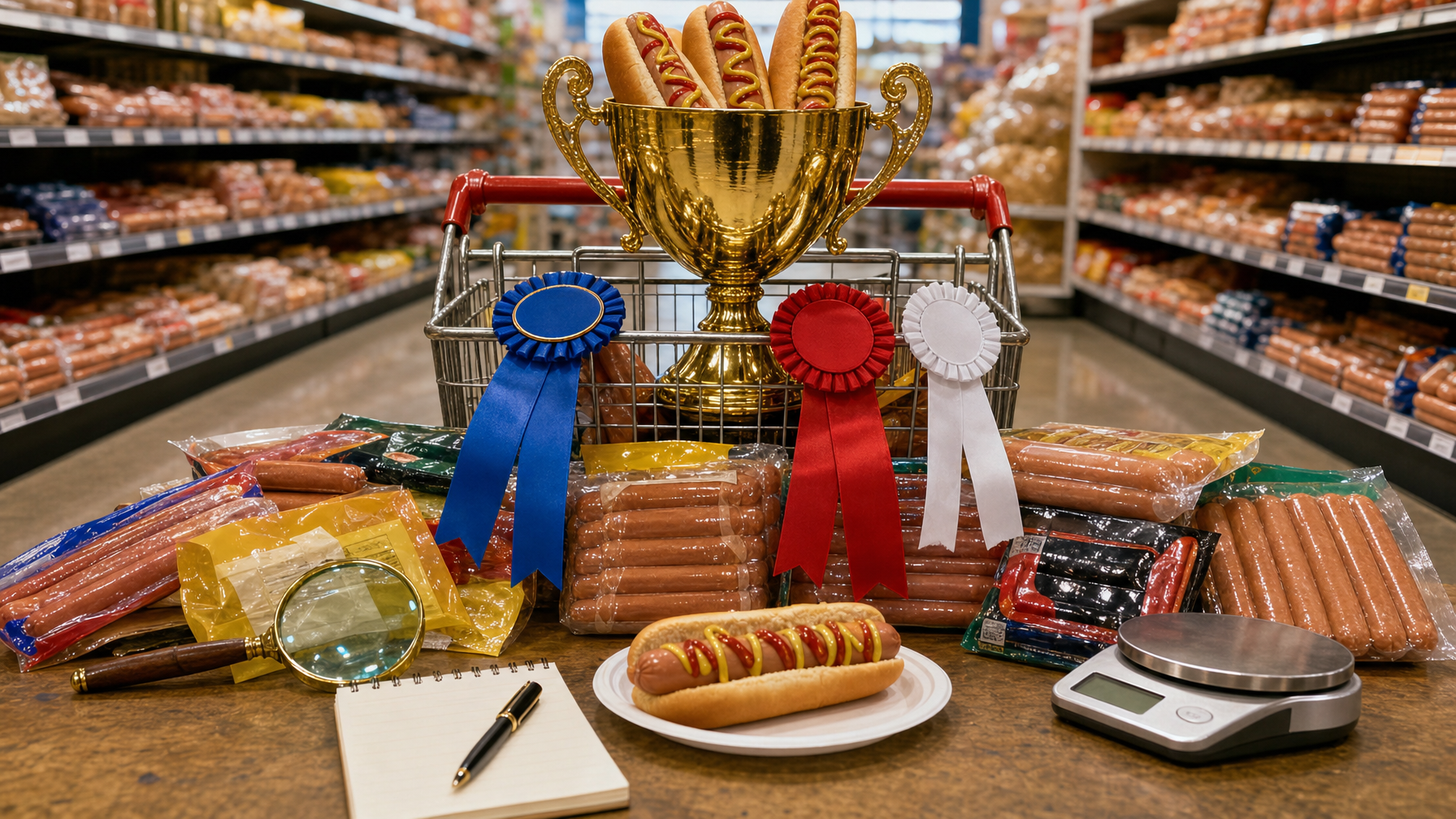
For hot-dog shoppers, the label should answer three useful questions: what kind of flavor to expect, how the dog should be prepared, and whether the price makes sense for your cookout. This is for people who want a better grocery-store dog without turning the meat case into a courtroom. Jason’s ten-years-in-50-states perspective, plus a firm zero-ketchup policy, keeps the focus where it belongs: eating well.
The package is talking. Ask it better questions.
Modern hot-dog packaging can feel like a pop quiz written by a committee with too many fonts. “All beef.” “Uncured.” “Natural casing.” “No this.” “Made with that.” Fine. Useful, sometimes. But the goal is not to reward the package that looks most morally prepared for a school photo.
Use the label to make a practical dinner decision. Ask what flavor you are likely to get, what texture you want, how you plan to cook the dog, what toppings it must survive, how many people you are feeding, and whether the price fits the occasion.
Label facts are information. Ingredients, meat type, package weight, casing details, handling instructions and cooking directions are things a package can tell you. Whether a dog is worth buying is editorial judgment. That part happens when it hits heat, bun and mustard.
“All beef” tells you what it is, not whether you’ll love it
“All beef” describes the meat category used in the hot dog. It does not automatically promise a particular flavor, texture, level of smokiness or degree of snap. It is a starting point, not a gold medal.
Two all-beef dogs can still eat very differently. When the package provides the details, look beyond the big front label for clues about seasoning, smoke character, casing, size and suggested preparation. A plump dog built for a grill may not give the same experience as a slimmer frank designed for a quick pan heat.
Jason’s opinion is blunt: do not buy “all beef” because you think you are supposed to salute it. Buy it if the rest of the package points toward the bite you want. There are too many dogs waiting to be grilled for category loyalty to become a personality.
The ingredient list is not a flavor review
An ingredient list is a clue, not a verdict written on a stone tablet. Read it to understand what is in the product and to spot flavor cues that matter to you. Then remember that a list cannot tell you exactly how the dog will taste after it has browned in a pan or picked up a little char over coals.
Try these questions instead:
- Do I recognize the main ingredients, and am I comfortable serving them?
- Am I craving a smoky, salty, garlicky or simpler flavor profile?
- Will this dog stand up to mustard, relish, onions, chili or whatever chaos my cookout has planned?
- Do I want the dog itself to carry the meal, or am I building a toppings vehicle with a pulse?
No single ingredient automatically earns a halo or a villain cape. A package can contain a short list and still produce a bland bite. Another can have a longer list and deliver the seasoning balance you actually enjoy. Judge the eating experience, not the package’s ability to look virtuous under fluorescent grocery lighting.
“Uncured” did not escape chemistry class
“Uncured” is one of those label words that can cause unnecessary squinting. Read it alongside the full ingredient list and the product’s preparation information rather than letting one front-of-package phrase do all the talking.
The term can relate to a product’s curing process or labeling category, but it does not, by itself, predict a great hot dog. It also does not settle every question a shopper may have about ingredients or nutrition. If those details affect your decision, compare the complete package information and choose based on your own needs.
Most importantly, check the handling and cooking directions. Do not guess that a dog needs less cooking, more cooking or some ceremonial treatment because one word on the package sounds scientific. The package should tell you what it expects. Your skillet gets the final say.
Natural casing or skinless: pick your bite, not a side in a tiny civil war
Natural-casing hot dogs are made with a casing that can create a firmer, more noticeable snap when you bite through it. Skinless hot dogs are typically sold without that casing, which can produce a softer, more uniform bite. Neither is automatically superior. This is texture preference, not an election.
| What you want | Practical shorthand |
|---|---|
| A firmer bite and a more pronounced snap | Choose casing. |
| A softer, more even bite | Choose skinless. |
That shorthand is useful, not universal. Cooking method, product formulation and how aggressively you heat the dog all affect texture. Still, casing information is one of the more helpful clues a package can offer to someone who has strong feelings about the first bite. As one should.
Preparation is where the label meets reality
Before a hot dog reaches the cart, ask a question far more useful than “Does this package look fancy?” Ask: How am I actually cooking this?
Check whether the package identifies the product as fully cooked and follow its stated handling and cooking directions. Then choose your method based on the experience you want. Grilling can bring browning and char. Pan-searing can build color and a concentrated exterior. Steaming can prioritize plumpness and tenderness. The best method is the one that suits the dog in front of you, not the one that creates the loudest smoke signal.
For a simple home comparison, buy two styles and keep everything else boringly consistent:
- Use the same bun and the same modest toppings for both.
- Cook each dog according to its package directions, using a method that supports the texture you want.
- Compare aroma, skin or exterior, juiciness, salt level and overall balance.
- Decide which one works better for your preferred toppings and cooking setup.
Jason’s opinion: charring can be glorious, but it should not be used to bury a dog that has nothing to say. Smoke is a supporting actor. Do not give it the entire monologue.
Price, pack size and the hot-dog math nobody asked for
The large price on the shelf tag is not the whole story. Compare the price per hot dog, then look at the package weight and number of dogs. One package may cost more because it contains larger franks, fewer franks, a casing, a different ingredient profile or a brand that has decided its typography deserves a raise.
A higher price may reflect differences in size, ingredients, casing or brand positioning. It is not proof of a better bite. A less expensive dog that cooks well and makes your crowd happy has completed the assignment.
Match the purchase to the occasion. For a backyard gathering, a familiar crowd-pleaser may be the smart move. For a two-person grill experiment, buy the distinctive dog with the promising casing or seasoning profile and pay attention. Not every Tuesday dinner needs to become a blind tasting panel, but it is available if you need a hobby.
Five questions before the cart rolls away
Run this quick test before you commit:
- What flavor am I expecting? Smoky, savory, garlicky, salty, mild or something else?
- What texture do I want? Pronounced snap, a softer bite or a middle ground?
- How will I cook it? Grill, pan, steam or another method supported by the package directions?
- What toppings will it face? A delicate dog and a mountain of chili are not always natural allies.
- Is the price worth this specific experience? Compare the pack, not just the sticker.
Skip the label theater. If a package makes grand promises but gives you little useful information, return to the ingredient list, cooking directions, size, pack count and your own preferences. Jason’s rule of thumb is simple: buy for the bite you want, not for the label you think you are supposed to admire.
No ketchup, no panic, just a better dog
Jason’s ten years of eating hot dogs across all 50 states is an argument for curiosity, not food purity contests. The no-ketchup stance is a brand opinion. It is not a nutritional claim, a moral rule or an excuse to interrogate someone at a cookout. Put ketchup on your own dog if you must. Jason will simply be over here making a face and reaching for mustard.
Good grocery-store shopping is less dramatic than packaging wants it to be. Read enough to predict the meal. Cook according to the product and your preferred texture. Build the dog you actually want to eat.
For more specific places, products, recipes and hot-dog culture, follow @jasonsgrub on Instagram.
FAQ: Questions asked while blocking the meat case
Is an all-beef hot dog automatically better?
No. It tells you the meat category, but flavor, texture, seasoning, preparation and personal preference still decide whether it is a good buy.
What should I look for if I want a hot dog with a snap?
Look for casing information, then prepare the dog in a way that supports browning and texture while following the package directions. A casing clue is useful, but the bite is the final judge.
Does “uncured” mean a hot dog is healthier?
Do not assume that from the word alone. Read the full package information and compare nutrition and ingredients based on your own needs and preferences.
Should I choose skinless or natural casing?
Choose natural casing if you want a more pronounced snap. Choose skinless if you prefer a softer, more even bite. Neither wins every hot-dog argument.
What is the most important label question?
Ask what eating experience the package is promising, then decide whether that matches your bun, cooking method, toppings and appetite.
Enjoyed this? There's more from Jason's Grub.
Follow on Instagram →