Detroit's Coney Dog Has One Rule: Do Not Mistake It for a Chili Dog
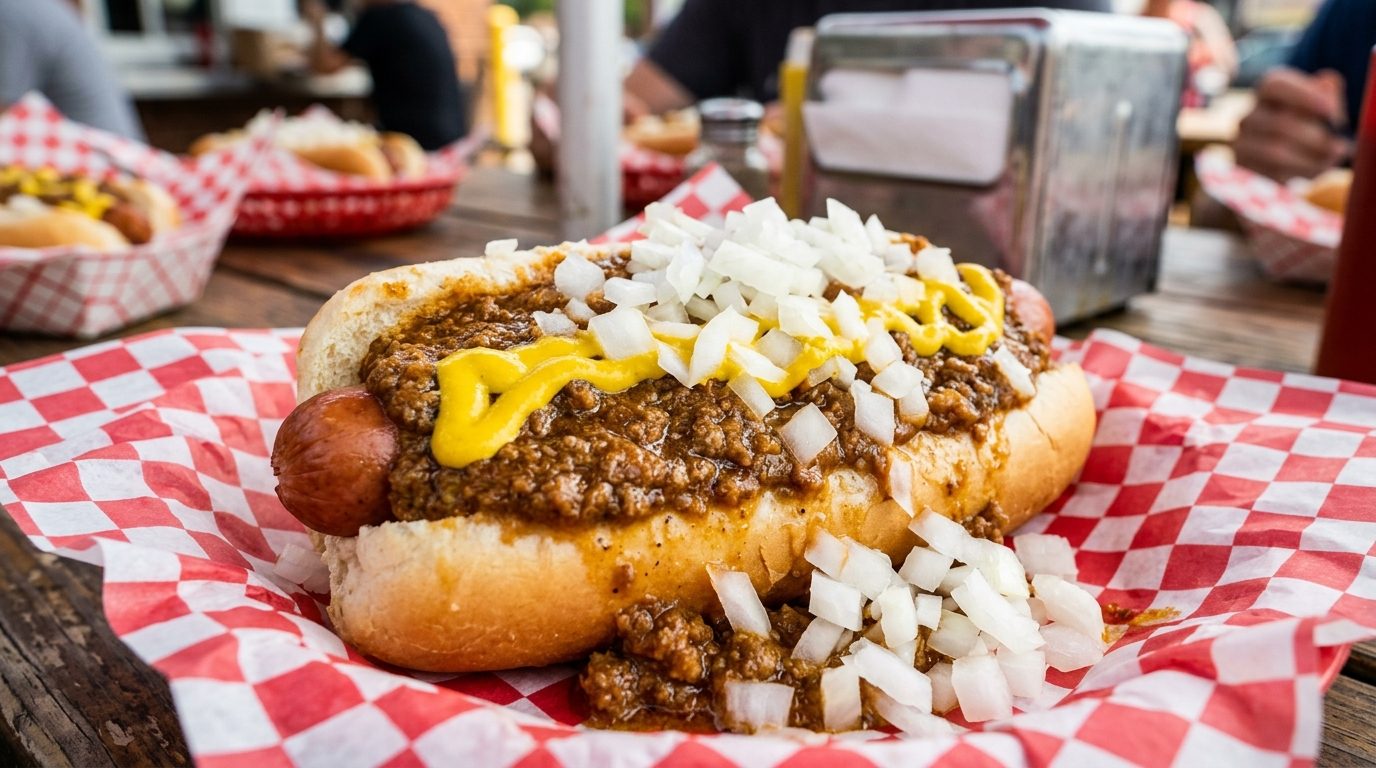
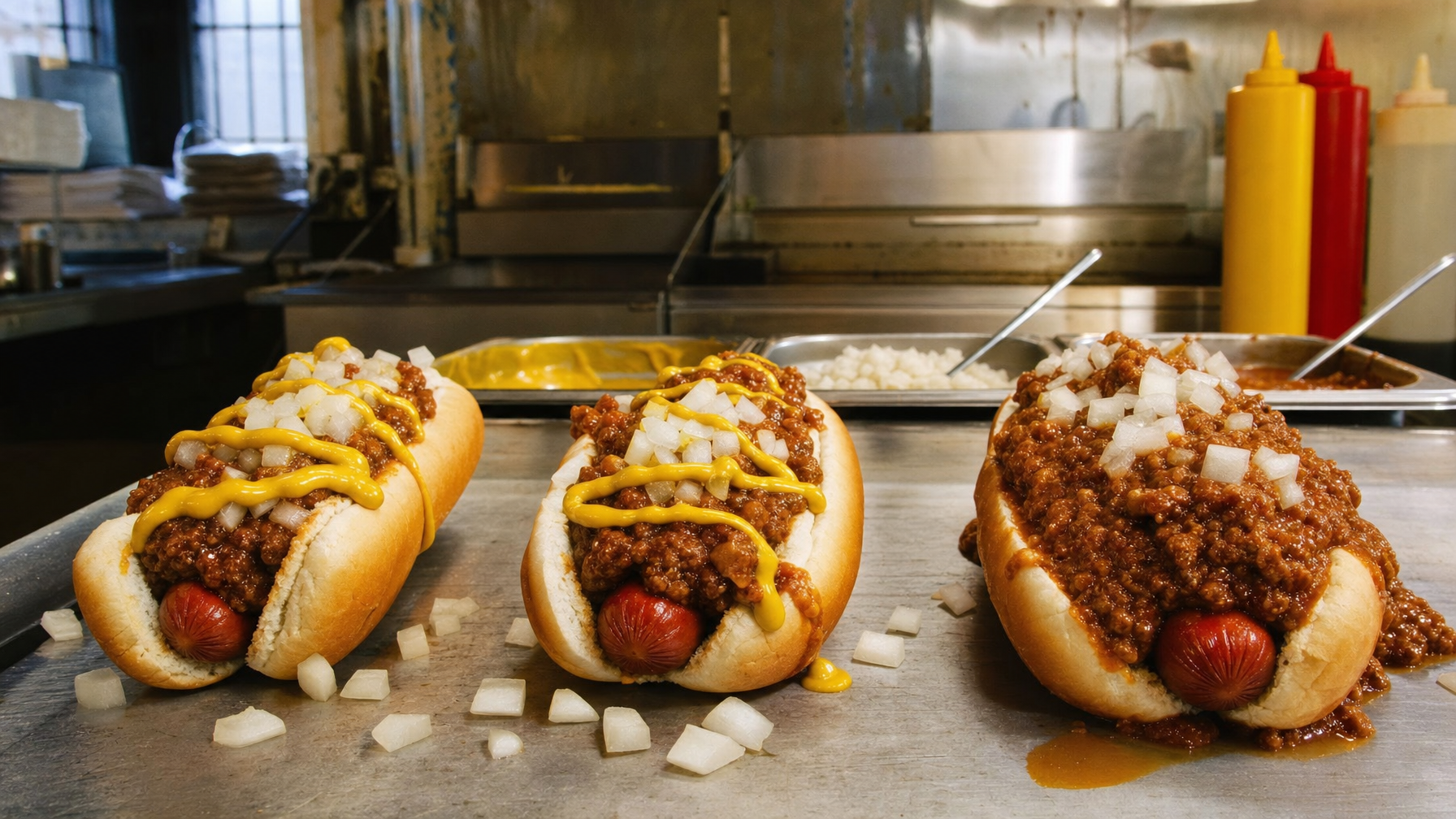
For hot dog fans and food-culture people who care whether a named style actually means something, here is the answer: a Detroit Coney dog is not generic chili dumped on a bun. It is a specific build of hot dog, bun, beanless Coney sauce, yellow mustard, and diced onion. Pull out the mustard or onion and you have not merely edited the decoration. You have messed with the whole bite. After ten years, 50 states, and zero ketchup, Jason's position is not universal law, but it is firm: a Coney deserves to be treated like a Coney, not a chili dog wearing a fake mustache.
Beans, Please Exit the Bun
The defining topping is a beanless, meat-forward Coney sauce, often described as chili-style because it shares a savory, spiced family resemblance with chili. That resemblance is real. The identity is still more specific than "chili on a hot dog."
Recipes and textures vary from one institution and kitchen to another, as they should. Nobody needs a tiny clipboard inspector policing every pot. But the style depends on a sauce that reads as a cohesive, finely textured topping rather than a bowl of chunky chili rerouted through a hot dog.
Beans are where the distinction gets especially useful. A bean-heavy topping can be delicious, but it pushes the experience toward the broad category of chili dog. A Detroit Coney sauce is meant to join the dog, bun, mustard, and onion in one composed bite. This is not a bowl of chili taking a detour onto a hot dog.
Can the Sauce Hug the Dog, or Is It Applying for Soup Status?
Texture is the quiet boss of a Coney dog. The sauce should be finely textured, cohesive, and spoonable. It needs enough body to cling to the hot dog and settle into the bun without flooding the entire operation.
Think of the desired result as a savory layer, not a loose pile. The sauce should mingle with the sharp mustard and fresh onion, while the bun remains a bun rather than becoming a damp paper towel with career regrets.
A quick plate test before you build
Spoon a small amount of sauce onto a plate and look at it before it gets near the bun.
- Good sign: It holds together in a thick, fine-grained layer and moves slowly when tilted.
- Also good: It has a smooth-to-finely-ground texture with no large bean pieces competing for attention.
- Warning sign: Liquid runs away from the meat immediately and forms a moat.
- Another warning sign: Large chunks turn every bite into an excavation project.
This is a practical home-kitchen test, not a claim that every authentic Detroit Coney sauce must hit one laboratory-approved viscosity. Real cooks have styles. The point is that the sauce should serve the dog, not drown it.
Yellow Mustard Brings the Counterpunch
Yellow mustard is not a yellow accessory placed there for color coordination. It supplies a bright, sharp counterpoint to a rich hot dog and dense, savory meat sauce. Without that tang, the bite can flatten into a long, brown paragraph.
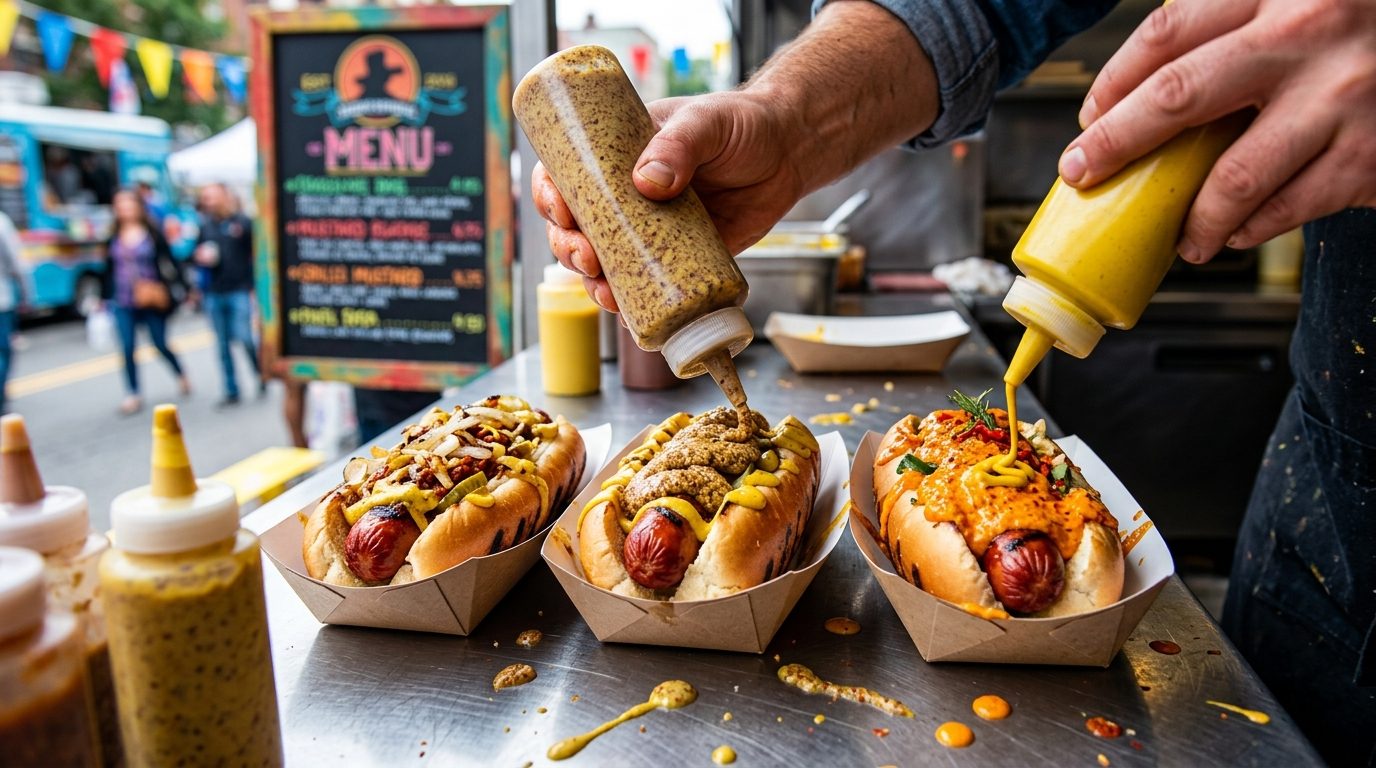
Use classic yellow mustard when you are aiming for this build. A sweet, grainy, or fancy mustard may be perfectly welcome elsewhere, but quietly swapping it in changes the flavor structure. This is not decorative parsley. Mustard is doing actual culinary work.
And ketchup? Jason's brand position is gloriously uncomplicated: zero ketchup. That is a strong personal opinion from a person with a long-running hot dog obsession, not a commandment for every Detroit diner or home cook. Still, if the goal is a clear Coney build, ketchup brings sweetness where the mustard is trying to bring snap. Let mustard have the microphone.
Onion Has a Job, Despite Being Tiny
Fresh diced onion adds crunch, raw sharpness, and aroma against the soft bun, hot dog, and sauce. It is not confetti. It is the brisk little interruption that keeps the rich components from becoming one uninterrupted soft-and-savory blob.
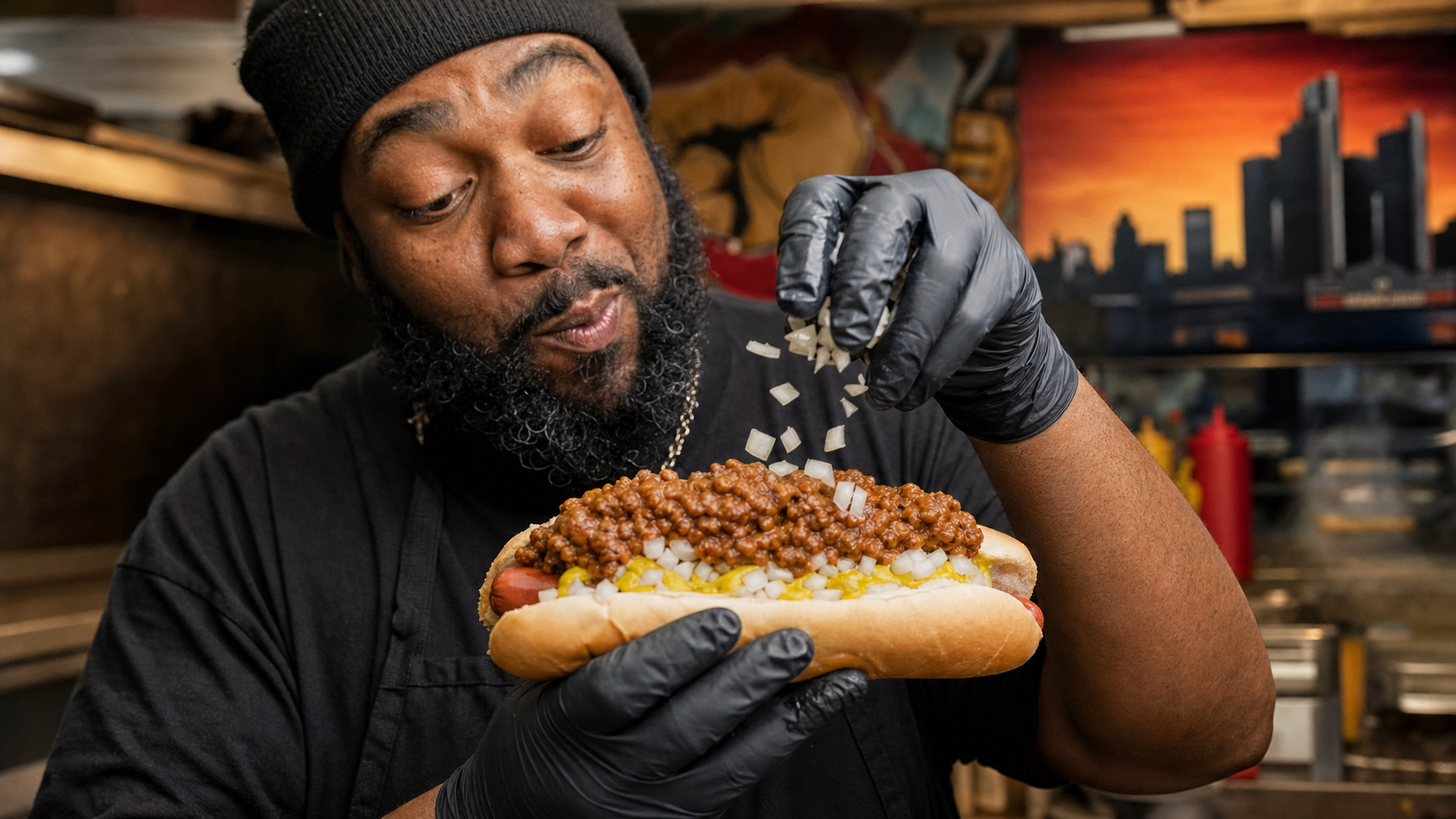
Scatter the onion across the length of the dog so it shows up in every bite. Do not dump it in one lonely pile at the end and call it distribution. A Coney without onion is dressed like it has somewhere to go but forgot its shoes.
Leave off the onion if you must. Your lunch, your choices. But understand what disappears: not just a bit of white garnish, but a textural and aromatic layer that helps make the build recognizable.
Build It in Order, Then Keep the Ketchup Holstered
For a home-built Detroit-style Coney, this sequence gives each component room to do its job:
- Start with a warm bun.
- Add the hot dog.
- Spoon beanless Coney sauce over the dog.
- Add yellow mustard so its sharpness remains noticeable.
- Finish with evenly distributed diced onion.
The sauce stays central in this arrangement, while the mustard and onion remain distinct enough to register in the bite. It is a practical assembly method, not a declaration that every Detroit restaurant uses the exact same order. Restaurants have their own rhythms. The important part is the finished balance.
Five ways a home Coney goes sideways
| Problem | What happened | Useful correction |
|---|---|---|
| Sauce too loose | It runs into the bun and makes a mess before the first bite. | Cook it a little longer to reduce excess moisture, then cool it briefly so it thickens. |
| Sauce too chunky | Big pieces interrupt the cohesive topping texture. | Break the meat up more finely while cooking. Keep the topping beanless if the Coney distinction is the goal. |
| Mustard disappears | The sauce overwhelms its sharpness. | Add mustard where it remains exposed or use a slightly more visible line. |
| Onion overwhelms the dog | A mountain of onion takes over every bite. | Use a finer dice and scatter a lighter, even layer. |
| Bun collapses | Too much sauce or too much liquid reaches the bread. | Use a thicker sauce, apply a more restrained amount, and assemble just before eating. |
Detroit Coney or Chili Dog? Put Both on the Plate
Neither style needs to lose for the other to make sense. A chili dog is a broad category with plenty of delicious interpretations. A Detroit Coney is a named style with a more defined set of expectations.
| Detroit Coney dog | Generic chili dog |
|---|---|
| A named hot dog style with a deliberate, recognizable build. | A broad category that can change widely by cook, restaurant, or mood. |
| Beanless, finely textured Coney sauce is central. | Chili may be beaned, chunky, loose, smooth, or built from many different recipes. |
| Yellow mustard and diced onion are integral to the intended balance. | Toppings may vary widely and can be optional or absent. |
| The aim is one unified bite of sauce, hot dog, mustard, onion, and bun. | The aim may simply be a hot dog topped with chili, however that kitchen defines it. |
Here is the useful plate test: does the topping, mustard, and onion taste like one deliberate build, or does it taste like chili placed on a hot dog? The first answer points you toward Detroit Coney territory. The second may still be lunch, and possibly very good lunch, but it is making a different argument.
Detroit Is in the Construction, Not Just the Sauce
A Detroit Coney dog earns its name through the whole construction. The beanless Coney sauce brings savory depth. Yellow mustard brings a sharp edge. Diced onion brings crunch and raw lift. The hot dog and warm bun hold the meeting together.
Treat any one of those pieces as optional decoration and the style loses its point. It becomes a chili bowl with a bun problem, which is a perfectly legal meal but not the same thing.
For more place-specific hot dog opinions, builds, and the occasional refusal to let ketchup near the proceedings, follow @jasonsgrub on Instagram.
FAQ: Four Questions From People About to Start an Argument
Is a Detroit Coney dog just a chili dog?
No. There is overlap, because both involve a hot dog and a chili-style topping, but the terms are not interchangeable. A Detroit Coney is a specific build centered on beanless Coney sauce, yellow mustard, and diced onion.
Does an authentic Detroit Coney dog contain beans?
The classic distinction emphasized here is a beanless sauce. Recipes and vendor preparations can vary, and no article should pretend every kitchen uses one identical formula. Still, beans move the topping closer to conventional chili-dog territory than the Coney style described here.
Can I leave off the mustard or onion?
You can, but you remove part of the intended balance. Mustard provides sharpness, and onion adds crunch and aromatic contrast. This article treats both as structural components, not optional decoration.
What consistency should Coney sauce have?
It should be cohesive and finely textured enough to cling to the dog without running everywhere. It should not behave like watery soup or a bowl of chunky bean chili.
Is ketchup allowed?
Jason's position is zero ketchup. That is an explicit brand opinion, not a universal rule for every Detroit diner or every person holding a squeeze bottle.
Enjoyed this? There's more from Jason's Grub.
Follow on Instagram →