Maxwell Street Polish at the Backyard Grill: Onions First, Apologies Never
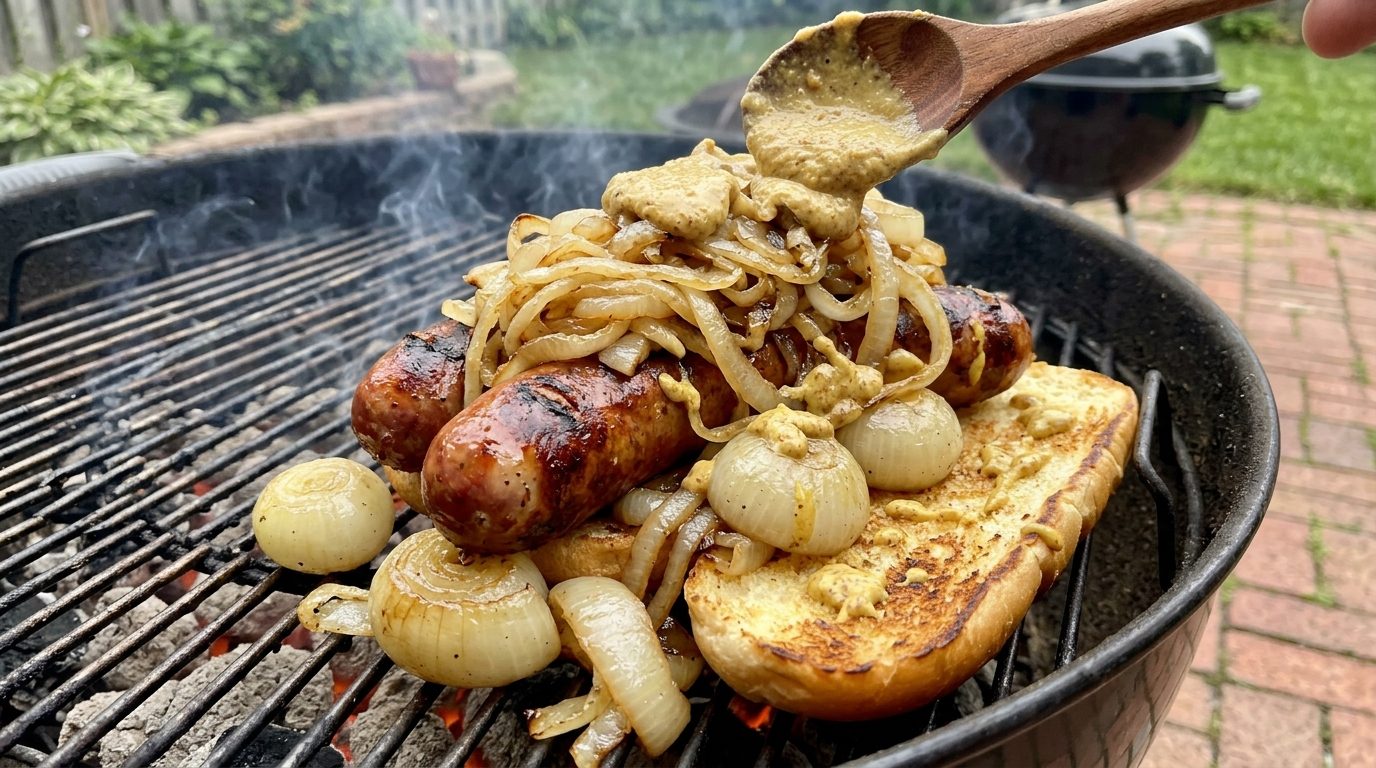
A Maxwell Street Polish lives or dies by the onions, not a crowded ingredient list. This backyard-grill version is for hot dog fans who want the Chicago classic’s big, savory personality without turning the bun into a soggy napkin. Start the onions before the sausage, cook them until tender but still present, then put them on top where they can do their job loudly.
Onions First, Because They Are Not a Garnish
My position is not subtle: onions are a cooked component here, not confetti sprinkled over the finish line. They need their own pan space, their own heat management, and enough attention to avoid becoming accidental onion jam.
The target is not one rigid shade of brown decreed by a sandwich tribunal. Aim for onions that are softened, deeply savory, and substantial enough to register in every bite. They should bend easily and taste cooked through, but they should not melt into a wet, anonymous paste.
- Tender onions: Soft, pale to lightly golden, with a little structure left. Clean, sweet, and useful.
- Browned onions: Deeper color and more savory character, while still clearly sliced onions. This is the loudest version.
- Overcooked onions: Very dark, bitter, collapsed, and suspiciously jam-like. The grill has started freelancing. Stop it.
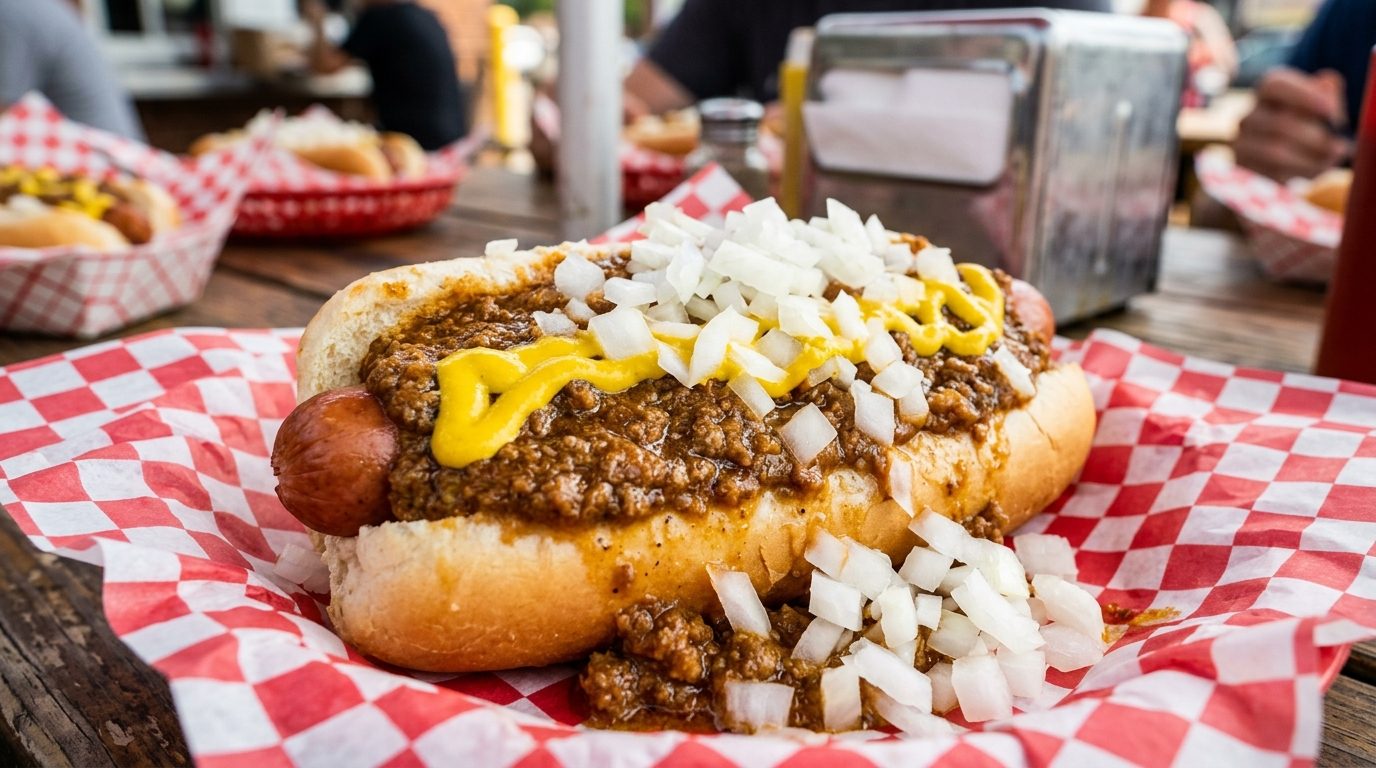
For a finished photo, show the sandwich close enough that a reader can actually see the onion texture. If the onions look like beige weather, the photo has failed the assignment.
Chicago Built a Polish With Something to Say
A Maxwell Street Polish is a Chicago food tradition centered on grilled Polish sausage and onions. This is not a broad history lecture, nor an attempt to crown one official version from every corner of Chicago. It is a focused backyard build built around the part too many recipes treat like an afterthought.
One clarification before anyone arrives with a clipboard: “Backyard Grill” here means a home grilling setup, not a claim about a restaurant, a current menu item, or a sandwich available at a particular business. No phantom menu specials. No imaginary counter service. Just a Polish, a grill, and onions getting the respect they deserve.
Jason’s position comes from ten years, 50 states, and zero ketchup. That is a personal flag planted firmly in the lawn, not an objective law enforced by Chicago sandwich police.
Put the Onions on Before the Sausage, Obviously
The sequence is simple because the sequence is doing real work: preheat the grill, begin the onions, cook the Polish, warm the bun, and assemble immediately. If the onions are not underway before the sausage arrives, you are asking the sausage to wait around while the onions figure out who they are. Unfair to everybody.
A sensible backyard order of operations
- Preheat the grill and create a hotter area plus a gentler area.
- Set sliced onions in a grill-safe pan or other secure grill setup over gentler heat.
- Cook the onions, stirring as needed, until they reach your preferred tender or browned finish.
- Cook the Polish according to its package instructions and safe handling guidance, using the hotter area for browning and gentler heat when needed.
- Warm or lightly toast the bun near the end.
- Place the Polish in the bun and crown it with the onions immediately.
Do not chase an invented clock. Grill heat changes with the equipment, the weather, the pan, the wind, and the person who keeps opening the lid to “check.” Judge onions by texture and color. Cook the sausage according to its package guidance, with safe handling as the boss of the operation.
Two heat zones prevent needless drama
Use the hotter zone for browning the sausage and the gentler zone for giving onions time to soften without scorching. If the onions are racing toward black edges while their centers are still crunchy, move the pan away from the hottest heat. A grill is not a test of toughness. It is a machine that will happily burn your lunch if you let it.
The Onion Texture Test Nobody Prints on the Grocery List
Before assembly, pick up a piece of onion with tongs or a fork. The answer is in the feel, not in a fantasy stopwatch.
- It bends easily: The onion should yield without a sharp raw crunch.
- It feels tender: It should be cooked through, not merely warmed into submission.
- It still has body: It should not disappear the moment it meets the bun.
- It tastes savory, not bitter: If the dark bits dominate the flavor, the heat won that round.
There are three perfectly useful notes to make after a test batch: lightly softened, browned and savory, or too dark and bitter. A side-by-side photo or a plain cooking note can help you remember which finish you actually liked. Declaring one color universally perfect is how otherwise nice lunches become tedious seminars.
This build deliberately does not invent a magic oil, seasoning blend, or cooking liquid. Those details should be added only after a tested version establishes what the onions need on a specific grill setup. The essential instruction is texture: tender, savory, and still visibly onion-shaped.
Assembly Is Engineering Wearing a Bun
Put the bun down. Add the Polish. Put the onions on top. Then add only finishing elements that belong to the tested version. This is not food theater. It is structural common sense.
Onions placed over the sausage stay visible, spread their flavor across the bite, and are less likely to get trapped below the meat in a damp bottom-bun basement. A top layer also lets you judge whether you have enough onions. The correct amount is not “a decorative pinch.” The correct amount makes itself known.
Keep the bun warm, not weaponized
Warm or lightly toast the bun enough to help it hold the filling. Do not turn it into a hard shell that fights the sausage on every bite. A bun should support the sandwich, not demand dental insurance.
For this focused version, the required components are straightforward: bun, Polish sausage, and onions. Other additions should be treated as optional unless they have been tested in the final build. Common associations and personal habits are not excuses to dump a whole condiment shelf onto a sandwich that is already making a clear argument.
Ketchup Can Sit This One Out
Jason’s no-ketchup line: Zero ketchup. Not because every person in Chicago is required to agree, but because this sandwich already has sweetness and savoriness from properly cooked onions. It does not need a sugary rescue mission.
That is brand opinion, served with conviction. If ketchup is your thing, nobody is confiscating your bottle. Jason is simply not inviting it into this particular bun.
Four Ways a Nearly Great Polish Goes Sideways
The onions burn before they soften
Move them to gentler heat and pay attention to the pan or grill setup. High heat can color onions fast without giving their interiors time to become tender. The solution is less bravado, more control.
The sausage browns before it is hot through
Use indirect or gentler heat as needed, and follow the package cooking instructions instead of pursuing dramatic grill marks at all costs. A handsome exterior is not a substitute for properly cooked food.
The bun collapses
Warm or toast it briefly, then assemble at the last possible moment. Letting a finished sandwich sit around is how a respectable bun becomes a damp resignation letter.
The onions vanish into the sandwich
Cook them until tender but substantial, then place them on top of the sausage. If they have become a slippery paste, they will hide beneath the sausage and take your hard-earned flavor with them.
Every grill has opinions. Equipment, weather, pan choice, heat level, and lid habits all change the result. Use the texture test, watch the color, and adjust instead of treating any single batch as sacred scripture.
A Small Sandwich With a Very Loud Opinion
The finished bite should be clear and orderly: browned Polish sausage, tender onions with real presence, and a warm bun that stays together long enough to finish the job. Each component should remain identifiable. Nothing should be there merely because somebody felt an ingredient list looked lonely.
Judge your version by texture and balance, not by whether it matches an invented restaurant standard. If the sausage is properly cooked, the onions are tender and savory, and the bun has not surrendered, you have built a sandwich worth repeating.
Serve it hot, while the onions are still proud of themselves.
Follow @jasonsgrub on Instagram for more hot dog stops, builds, and strong opinions.
FAQ: Before You Put the Onions on the Grill
What goes on the grill first?
The onions. They generally need more time to become tender than the Polish needs to brown and heat through. Start them first, then judge their progress by texture and color.
Should the onions be soft or browned?
Aim for tender onions with enough body to remain noticeable. Lightly softened and browned, savory onions are both valid finishes. Very dark, bitter, collapsed onions are not the prize.
Does a Maxwell Street Polish require ketchup?
Jason’s answer is no. That is this site’s stated no-ketchup opinion, not a claim that every Chicago diner or every eater follows the same rule.
Can I make this without a backyard grill?
A grill pan or stovetop setup may be workable, but it should be tested as its own method rather than promised to produce identical results. The same core goal applies: tender onions, properly cooked sausage, and a bun warmed just enough to hold on.
Is Backyard Grill currently serving this item?
This article uses “backyard grill” to describe a home cooking setup. It does not claim that a restaurant or venue called Backyard Grill currently serves this sandwich.
Enjoyed this? There's more from Jason's Grub.
Follow on Instagram →